
A new study has shown that skin cells harvested from patients with Alzheimer’s disease can be reprogrammed to form brain cells, offering clues to dementia and the prospect of early diagnosis as well as new treatments. Alzheimer’s disease causes neurodegeneration and strikes late in life. However, the disease is almost impossible to diagnose before actual symptoms develop. Currently, there are no drugs in existence that can change the course of the disease.
By the time dementia is noticed in a patient, they’ve been suffering from it for years, even decades, states Larry Goldstein, neuroscientist at the University of California, San Diego, lead author of the study which was published in Nature.
 The team created induced pluripotent stem (iPS) cells from four patients with Alzheimer’s and two from people without any dementia. The iPS cells were made by treating fibroblasts, a kind of skin cell, with reprogramming factors, allowing them to revert to an embryonic-like state. Just like stem cells from early embryos, iPS cells can form any tissue in the body, including neurons.
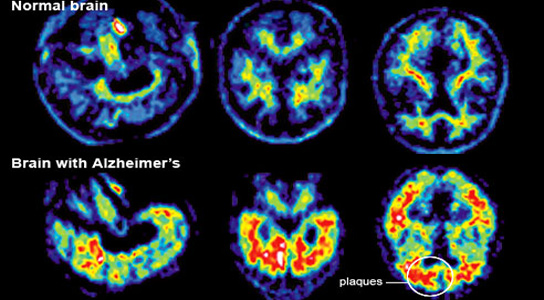
These reprogrammed neurons from patients with familial Alzheimer’s showed defects that had been seen before in the actual brains of Alzheimer’s patients, which allowed researchers to compare them to unaffected cells. These neurons produced higher levels of the protein amyloid-β, which forms plaques in patients with Alzheimer’s. The neurons also produced elevated amounts of the protein tau, which forms tangles in the brains of patients.
Other researchers have voiced concerns that these disease-in-a-dish models based on iPS cells may not reflect the real disease, but the discoveries might actually be artifacts of the reprogramming process. However, previous studies using different mutations have shown similar molecular defects as the ones in the Goldstein study. This suggests that the changes seen are actual ones instead of artifacts.
Such cells will help scientists develop new drugs and tailor them to individual patients, based on how their reprogrammed brain cell responded. They could also allow early Alzheimer’s diagnosis.
Reference: “Probing sporadic and familial Alzheimer’s disease using induced pluripotent stem cells” by Mason A. Israel, Shauna H. Yuan, Cedric Bardy, Sol M. Reyna, Yangling Mu, Cheryl Herrera, Michael P. Hefferan, Sebastiaan Van Gorp, Kristopher L. Nazor, Francesca S. Boscolo, Christian T. Carson, Louise C. Laurent, Martin Marsala, Fred H. Gage, Anne M. Remes, Edward H. Koo and Lawrence S. B. Goldstein, 25 January 2012, Nature.
DOI: 10.1038/nature10821
Never miss a breakthrough: Join the SciTechDaily newsletter.
Follow us on Google and Google News.
1 Comment
Today, on October 9 2012, the above article has borne fruit in getting Nobel Prize 2012 for the scientists John Gurdon and Shinya Yamanaka in medicine. The path of pluripotent cells reprogramming from ordinary cells to yield desired specialised cell is great discovery of mankind. Let us hope to break the ice in all hitherto impossible curing of diseases. Thank You.