
Close Menu
    Facebook X (Twitter) Instagram
    SciTechDaily
    • Biology
    • Chemistry
    • Earth
    • Health
    • Physics
    • Science
    • Space
    • Technology
    Facebook X (Twitter) Pinterest YouTube RSS
    SciTechDaily
    Home»Technology»Robonaut 2: A Robotic Space Station Crew Member
    Technology

    Robonaut 2: A Robotic Space Station Crew Member

    By Lori Keith, NASA's Johnson Space CenterApril 30, 2012No Comments3 Mins Read
    Facebook Twitter Pinterest Telegram LinkedIn WhatsApp Email Reddit
    Share
    Facebook Twitter LinkedIn Pinterest Telegram Email Reddit
    Robonaut 2
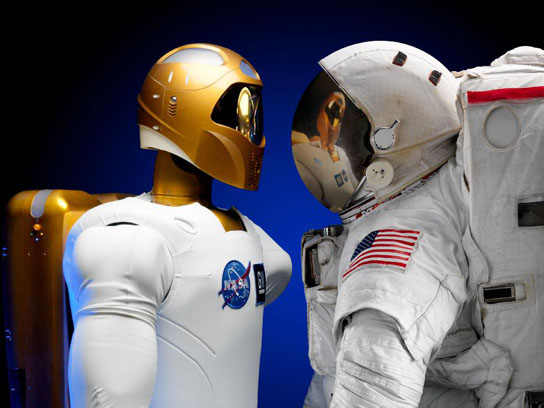
    Robonaut 2, a dexterous, humanoid astronaut helper, will fly to the International Space Station aboard space shuttle Discovery on the STS-133 mission. Although it will initially only participate in operational tests, upgrades could eventually allow the robot to realize its true purpose — helping spacewalking astronauts with tasks outside the space station. Credit: NASA/JSC Robert Markowitz

    A joint effort between NASA and General Motors to improve robotic technology and capabilities for future space exploration platforms has led to Robonaut 2, NASA’s first dexterous humanoid robot. Robonaut 2 was built to work on space stations, assisting astronauts with dangerous or repetitive jobs.

    Robonaut 2, NASA’s first dexterous humanoid robot, has successfully hitched a ride to the International Space Station. Built for the specific purpose of working on the space station, its robotic hands work like human hands with the ability to use human tools to assist astronauts with tasks that are simple, repetitive or potentially dangerous. The technology development demonstration will serve as a springboard to help explore and evolve new robotic capabilities in space and on Earth. Robonaut is a joint project of NASA and General Motors (GM) to improve robotic technology and capabilities for future space exploration platforms, along with advanced vehicle safety systems and manufacturing plants. GM expects Robonaut to validate manufacturing technologies that will improve the health and safety of GM team members throughout the world.

    In a recent interview with Nic Radford, Robonaut deputy project manager from NASA’s Johnson Space Center, he shared, “This is one of the first payloads ever on the space station that can actually impart forces in its environment.” Radford added that an ultra-sensitive, built-in safety system can automatically power down Robonaut if it makes unexpected contact with astronauts or equipment on the station. How many ways this technology can be used is yet to be defined, though many people have envisioned interacting with robots their whole lives – even the Jetsons and the Robinsons “lost in space” had a robotic humanoid. “Our whole lab has this sense of ushering in this new paradigm and we are really excited to be in the front of that,” Radford said.

    During the interview, Radford talks about Robonaut shaking hands with Expedition 30 Commander Dan Burbank, as well as what the future holds for the robot aboard the International Space Station. With human-like hands and arms, Robonaut is able to use the same tools station crew members use. This technology could potentially change the way we explore our solar system and how the world manages manufacturing and other processes. You can watch Robonaut working the task board in this additional short video, demonstrating its dexterity, vision system, tactile feedback sensors and remote control capabilities on the station. For more information, visit the Robonaut main website.

    Never miss a breakthrough: Join the SciTechDaily newsletter.
    Follow us on Google and Google News.

    Astronaut Exploration JPL NASA Popular Robotics
    Share. Facebook Twitter Pinterest LinkedIn Email Reddit

    Related Articles

    Moon’s New Scouts: NASA’s Autonomous Rovers Ready To Roll On Lunar Terrain

    Shape-Shifting Serpent of Space: NASA’s EELS Robot Revolutionizes Extraterrestrial Exploration

    The Incredible Story of “The Camera That Saved Hubble”

    NASA Aquatic Rover, Designed to Search for Alien Life, Goes for a Drive Under the Ice

    NASA’s X1 Robotic Exoskeleton to Help Astronauts in Space

    NASA’s Curiosity Readies for First Drive on Mars

    New NASA InSight Mission Set to Explore the Depths of Mars

    Superconducting Amplifier Designed to Study the Universe

    Harvard Scientists Develop $5 Rubber Robot

    Leave A Reply Cancel Reply

    • Facebook
    • Twitter
    • Pinterest
    • YouTube

    Don't Miss a Discovery

    Subscribe for the Latest in Science & Tech!

    Trending News

    Researchers Discover a Hidden Vitamin D Problem That Persists Year-Round

    Interstellar Comet 3I/ATLAS Reveals Strange Chemistry Beyond Our Solar System

    A Newly Found Cellular Shift May Explain Why Aging Leads to Disease

    Scientists Discover Gut Signal That Turns Off Sugar Cravings

    Scientists Discover Rogue Gene That Could Unlock New Cancer Treatments

    Constantly Tired? Scientists Say These Vitamin Deficiencies May Be Why

    A Surprising Discovery Inside Fish Could Change What We Know About the Ocean

    Scientists May Have Finally Solved the Mystery of the Strange Hum Heard Around the World

    Follow SciTechDaily
    • Facebook
    • Twitter
    • YouTube
    • Pinterest
    • Newsletter
    • RSS
    SciTech News
    • Biology News
    • Chemistry News
    • Earth News
    • Health News
    • Physics News
    • Science News
    • Space News
    • Technology News
    Recent Posts
    • The Kombucha Surprise: One Ingredient Dramatically Changes Its Chemistry and Health Potential
    • Hidden Solar Storms May Be Lighting Japan’s Skies With Massive Red Auroras
    • UCLA Scientists Uncover a “Hidden Weakness” in Some of the World’s Deadliest Cancers
    • Oak Trees Outsmart Caterpillars With a Brilliant Spring Trick
    • Scientists Discover a Hidden Disease Crisis Spreading Through Wild Snakes
    Copyright © 1998 - 2026 SciTechDaily. All Rights Reserved.
    • Science News
    • About
    • Contact
    • Editorial Board
    • Privacy Policy
    • Terms of Use

    Type above and press Enter to search. Press Esc to cancel.