
Close Menu
    Facebook X (Twitter) Instagram
    SciTechDaily
    • Biology
    • Chemistry
    • Earth
    • Health
    • Physics
    • Science
    • Space
    • Technology
    Facebook X (Twitter) Pinterest YouTube RSS
    SciTechDaily
    Home»Biology»Science Made Simple: What Is Biomolecular Imaging?
    Biology

    Science Made Simple: What Is Biomolecular Imaging?

    By U.S. Department of EnergySeptember 13, 2021No Comments3 Mins Read
    Facebook Twitter Pinterest Telegram LinkedIn WhatsApp Email Reddit
    Share
    Facebook Twitter LinkedIn Pinterest Telegram Email Reddit
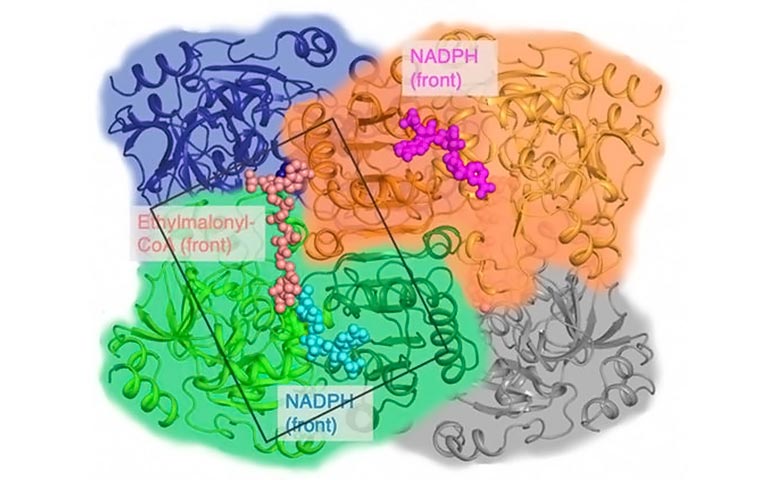
    Enoyl-CoA Carboxylases/Reductases
    Biomolecular imaging reveals the structure of a type of enzyme called Enoyl-CoA carboxylases/reductases. These enzymes, which are involved with photosynthesis, are extremely effective at fixing carbon dioxide and removing it from the atmosphere. Credit: Stoffel et al., 2019 PNAS, https://doi.org/10.1073/pnas.1901471116

    What Is Biomolecular Imaging?

    Just like an auto mechanic or automobile engineer needs to understand the components of every system in many kinds of vehicles, scientific researchers need to understand the components of biological organisms, such as animals, plants, and microbes. Many layers of biological systems, including molecular components, underpin how organisms live and behave.

    Seeing what something looks like can help us understand how it works, including at the molecular level. Because molecules are too small for scientists to directly see or manipulate them, scientists use a range of approaches to study them indirectly. Scientists can use visible, “regular” light to take images of molecules using special dyes. Another approach is to create an image with powerful microscopes, such as those that use wavelengths of light that can’t be seen by the human eye, such as X-rays or infrared light. These biomolecular imaging techniques, together with other indirect ways of understanding molecules, are critical in scientists’ efforts to understand complex biological systems.

    Biomolecular Imaging Facts

    • A fungal protein may hinder formation of certain degenerative diseases. Here’s what that hinderance looks like.
    • Scientists can decipher 3-D structures of proteins from tiny crystals that are about one-fiftieth the width of a human hair.
    • A special strain of soil bacteria can produce highly toxic compounds to protect itself from other organisms without harming itself.

    DOE Office of Science & Biomolecular Characterization and Imaging Science

    Biomolecular Characterization and Imaging Science (BCIS) supports two major areas. One area develops advanced technologies to make images of living plants and microbial systems for bioenergy research. These systems use both visible and laser light and combine multiple imaging approaches to make images of live, functioning systems.

    The other area of BCIS develops technologies to characterize biological molecules and systems using imaging based on special types of light, including X-ray and ultraviolet light. Most of these technologies are located at facilities supported by DOE’s Basic Energy Sciences program. These techniques make it possible for scientists to use a range of indirect characterization approaches to understand systems’ composition and structure at scales down to single atoms.

    Other advances allow scientists to use electron microscopes (EM) to characterize biological molecules and systems. One new technique, “Cryo-EM,” allows scientists to create images of cryo (frozen)-preserved molecules, molecular systems, and cells to understand their 3D structure with much easier preparation than older techniques.

    Never miss a breakthrough: Join the SciTechDaily newsletter.
    Follow us on Google and Google News.

    Biochemistry DOE
    Share. Facebook Twitter Pinterest LinkedIn Email Reddit

    Related Articles

    Unlocking Nature’s Secrets: Revolutionary Imaging Unveils Plant Degradation Mysteries

    Microbe Genetic “Rewiring” Technique Promises a Boom in Biomanufacturing of Fuels, Materials and Chemicals

    Building a Cell Membrane Defense Against COVID-19

    p65 Protein and Its Interaction With Telomerase RNA

    Carbon Increases Oil Production From Algae

    Insight on the Evolution of Cocaine Biosynthesis

    Comprehensive Analysis of Cell Membrane Reveals Independent Domains

    Cost-Effective 3-D RNA Modeling Technique

    Scientists Create Brain Cells from Skin Cells

    Leave A Reply Cancel Reply

    • Facebook
    • Twitter
    • Pinterest
    • YouTube

    Don't Miss a Discovery

    Subscribe for the Latest in Science & Tech!

    Trending News

    The 4,000-Year-Old City That Defied History’s Rules on Wealth and Power

    The World’s Biggest Population Fear Has Flipped – and It Could Change Everything

    This “Fake” Pill Improved Memory and Physical Performance in Just 3 Weeks

    Scientists Say Frequent Ejaculation May Improve Sperm Quality and Fertility

    Scientists Have Found “The Heaven Sword” After Years of Looking

    Can Time Flow in Reverse? A Quantum Breakthrough Challenges Our Assumptions

    Hidden Alzheimer’s Biomarker Could Change How Doctors Prescribe Hormone Therapy

    Koalas Nearly Vanished 100,000 Years Ago – Long Before Humans Arrived

    Follow SciTechDaily
    • Facebook
    • Twitter
    • YouTube
    • Pinterest
    • Newsletter
    • RSS
    SciTech News
    • Biology News
    • Chemistry News
    • Earth News
    • Health News
    • Physics News
    • Science News
    • Space News
    • Technology News
    Recent Posts
    • 17,000 Brain Scans Reveal Surprising Ethnic Differences in Alzheimer’s Biology
    • New Autism Treatment Strategy Restores Key Brain Receptor Function
    • Younger Generations Are Aging Faster – and It May Be Fueling a Surge in Cancer
    • Scientists Turn Ordinary Sunlight Into UV Light in Major Energy Breakthrough
    • New Discovery Could Unlock Quantum Computers the Size of a Coin
    Copyright © 1998 - 2026 SciTechDaily. All Rights Reserved.
    • Science News
    • About
    • Contact
    • Editorial Board
    • Privacy Policy
    • Terms of Use

    Type above and press Enter to search. Press Esc to cancel.