
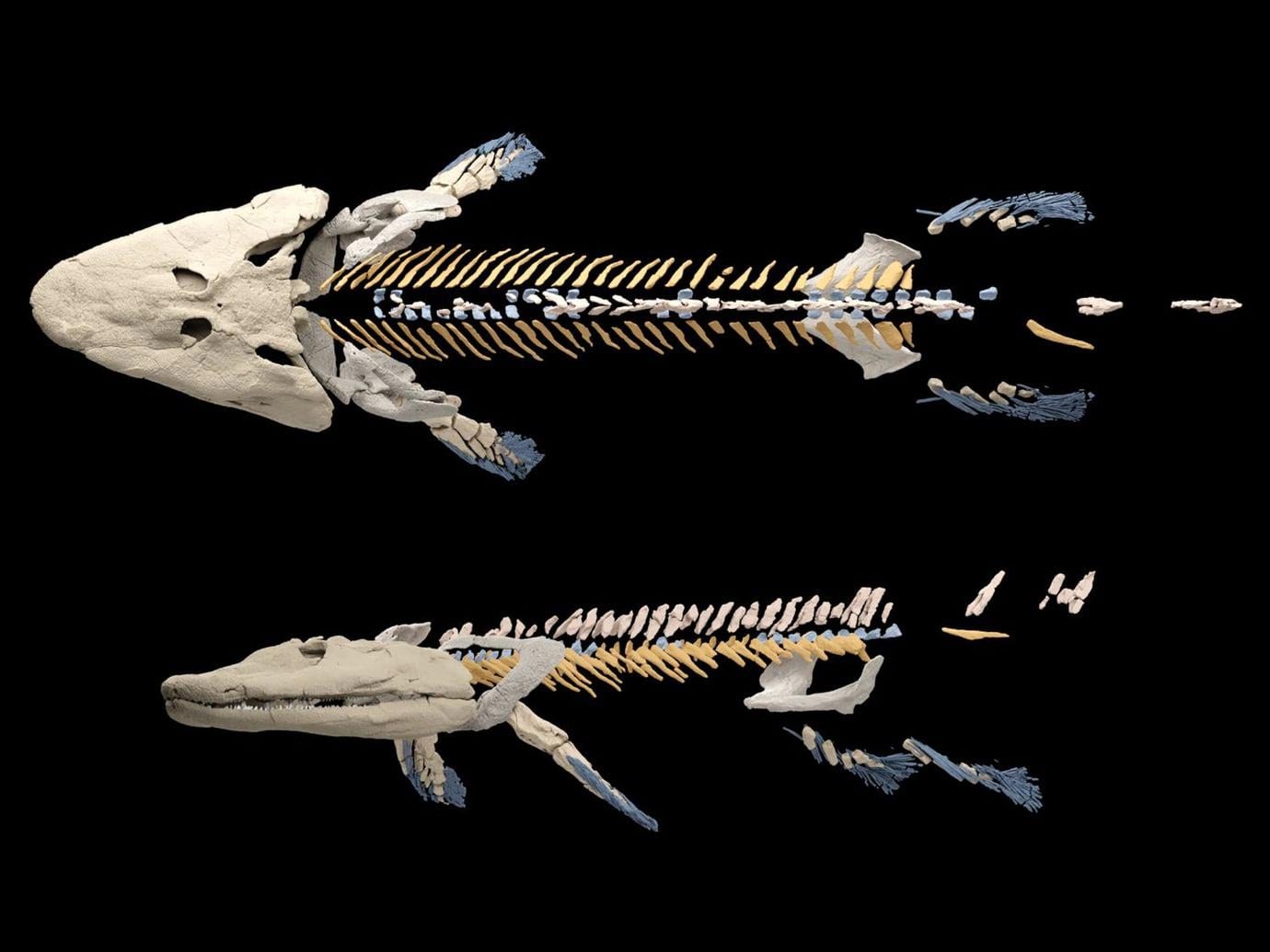
The first necks may owe more to the beginnings of walking than to looking around, according to models showing how little our early ancestors could move their heads.
In fish, the shoulders attach directly to the skull, so looking left or right means turning the whole body. Some of the animals making the transition from water to land about 380 million years ago began to develop a separate neck. Yet new research suggests that this change did not give them much more freedom to move their heads.
Models combining new fossil evidence with mechanical tests on living fish indicate that these early necks remained stiff, challenging the long-standing idea that they evolved to let the head move more freely. The international study, which included Tom Stewart, an assistant professor of biology at Penn State, was published October 14 in Nature.
The presumed advantage of looking around
Fossils from the Devonian Period, about 420 million to 360 million years ago, capture animals with a mixture of aquatic traits and features associated with life on land. Some had robust fins that might have supported their weight, allowing them to prop themselves up or push along the bottom in shallow water. Distinct necks also began appearing in these transitional fish.
“This is a really interesting time in Earth’s history where some of the first forests are forming, and there’s a really radical reorganization of the Earth,” Stewart said. “So, understanding exactly when our lineage made that transition from water to land, how it was achieved, and which anatomical systems were changing is an important part of that story. What’s cool is that many of the changes that were occurring in the skeleton at this time, about 380 million years ago, are still reflected in our own bodies today.”
One of those transitional fish was Tiktaalik, whose fossils come from Ellesmere Island in Nunavut, Canada, in the northern Arctic.
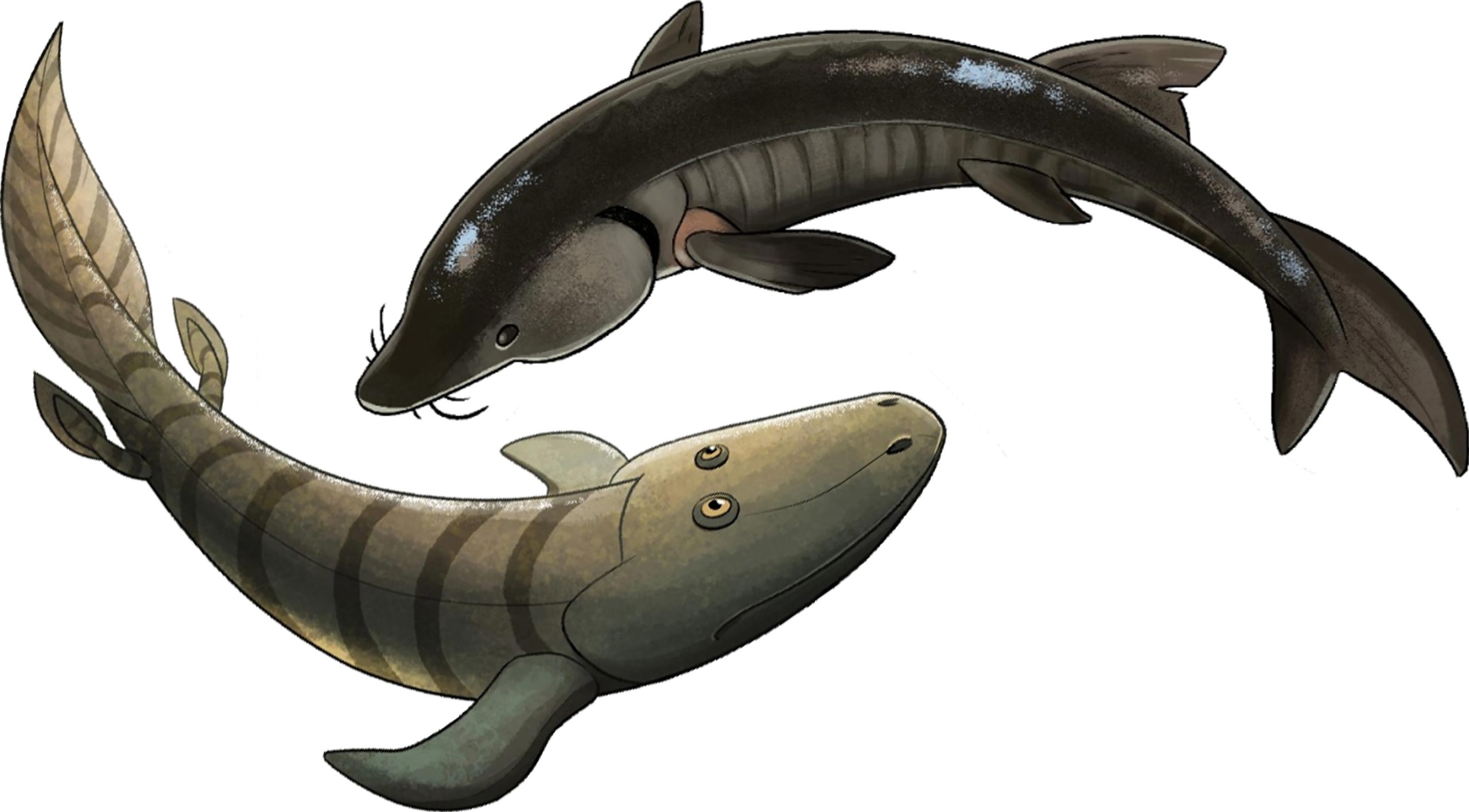
“The materials have been really important because Tiktaalik is one of the closest relatives to limbed vertebrates,” Stewart said. “It helps us to reconstruct a lot of intermediary steps in the transition to life on land, such as the move from suction feeding in water to biting on land or from swimming to walking.”
For the ancestors of four-limbed animals, known as tetrapods, the ability to look down or from side to side could have helped them find food and avoid predators in shallow water or on land. Scientists reasoned that these environments might make independent head movement more useful than it was in deeper water.
“Tiktaalik is one of these fossil fish, and it was first described in 2006,” Stewart said. “It has been reasonably assumed for decades that this separation of head and shoulders must have allowed the head to move more freely, so the hypothesis that neck mobility was an evolutionary driver for this change in the tetrapod body plan has prevailed, at least until now.”
Living fish help reconstruct ancient movement
Testing that explanation required reconstructing a backbone unlike those of most vertebrates alive today. Early tetrapods and their close relatives had a long rod of tissue called the notochord running through the entire vertebral column. Their vertebrae were small and arranged around this large core of soft tissue, which behaved differently from the joints between vertebrae typical of modern animals.
“The fish that were undergoing these changes had a vertebral column that was largely made up of soft tissue, which, unlike bone, is rarely preserved in the fossil record,” Stewart said. “In these cases, we can look to modern animals to serve as analogs for the past, like how living birds can teach us about now extinct dinosaurs.”
Backbones built around a notochord are rare today, although they were common throughout the history of life on Earth. Sturgeon, distantly related fish sometimes called living fossils because of their primitive features, retain this kind of backbone. That made them a useful way to investigate the mechanical properties missing from the fossils.
“We want to understand how these early tetrapods were living and how that is reflected in changes to their bodies,” Stewart said. “Trying to reconstruct where an animal lived, how it moved, what its behavior was, is a really difficult thing. The cool part of this story is that it combines data from fossils and studies of living animals in a mechanical, functional perspective to reconstruct what the changes we see in the animal’s anatomy mean for their behavior.”
A neck without much head movement
The researchers measured the stiffness of modern sturgeon notochords, then applied those material properties to models of the necks of early tetrapods and transitional relatives such as Tiktaalik. The models allowed them to test whether separating the shoulders from the skull would have freed the head to move despite the backbone’s structure.
“I undertook this study to find out how big of a difference this change in anatomy made for these animals,” said Dana Korneisel, a postdoctoral researcher at Uppsala University in Sweden and first author of the paper. “The vertebral columns of sturgeon are built a lot like those of early tetrapods, but they didn’t seem terribly stiff. So, after doing the modeling, the lack of significant head mobility for almost all of these animals was a huge surprise.”
The estimates considered only the backbone. Muscles, skin, and, in many of these animals, bones embedded in the skin could have restricted movement further, meaning the living animals may have had even less neck mobility than the models suggest.
“Head elevation in these animals was no more than what you would expect in fish and, sometimes, even less,” Korneisel said. “We found that the kind of head twisting that we can do when we shake our heads was not feasible in any of these animals.”
With little extra head movement available, the researchers suggest that a distinct neck likely arose instead from anatomical changes associated with using the front limbs for locomotion. Greater flexibility appears to have been a later benefit, rather than the advantage that initially drove the separation of head and shoulders.
“We know that tetrapods did eventually gain higher neck mobility,” Korneisel said. “Clearly it was advantageous eventually, but it was not an advantage available to these early tetrapods yet because of the limitations of their anatomy.”
Reference: “Early tetrapod neck mobility modelled using an extant analogue” by Dana E. Korneisel, Cassandra M. Donatelli, Linfang Han, Thomas A. Stewart, Andrew L. Traynor, Benjamin K. A. Otoo, Marcos Martinez, Tetsuto Miyashita, Emily M. Standen and Hillary C. Maddin, 14 October 2026, Nature.
DOI: 10.1038/s41586-026-11158-3
The research was supported by The Steven Cohen Award for Student Research presented by the Society of Vertebrate Paleontology and the Natural Sciences and Engineering Research Council of Canada (RGPIN-06442).
Never miss a breakthrough: Join the SciTechDaily newsletter.
Follow us on Google and Google News.