
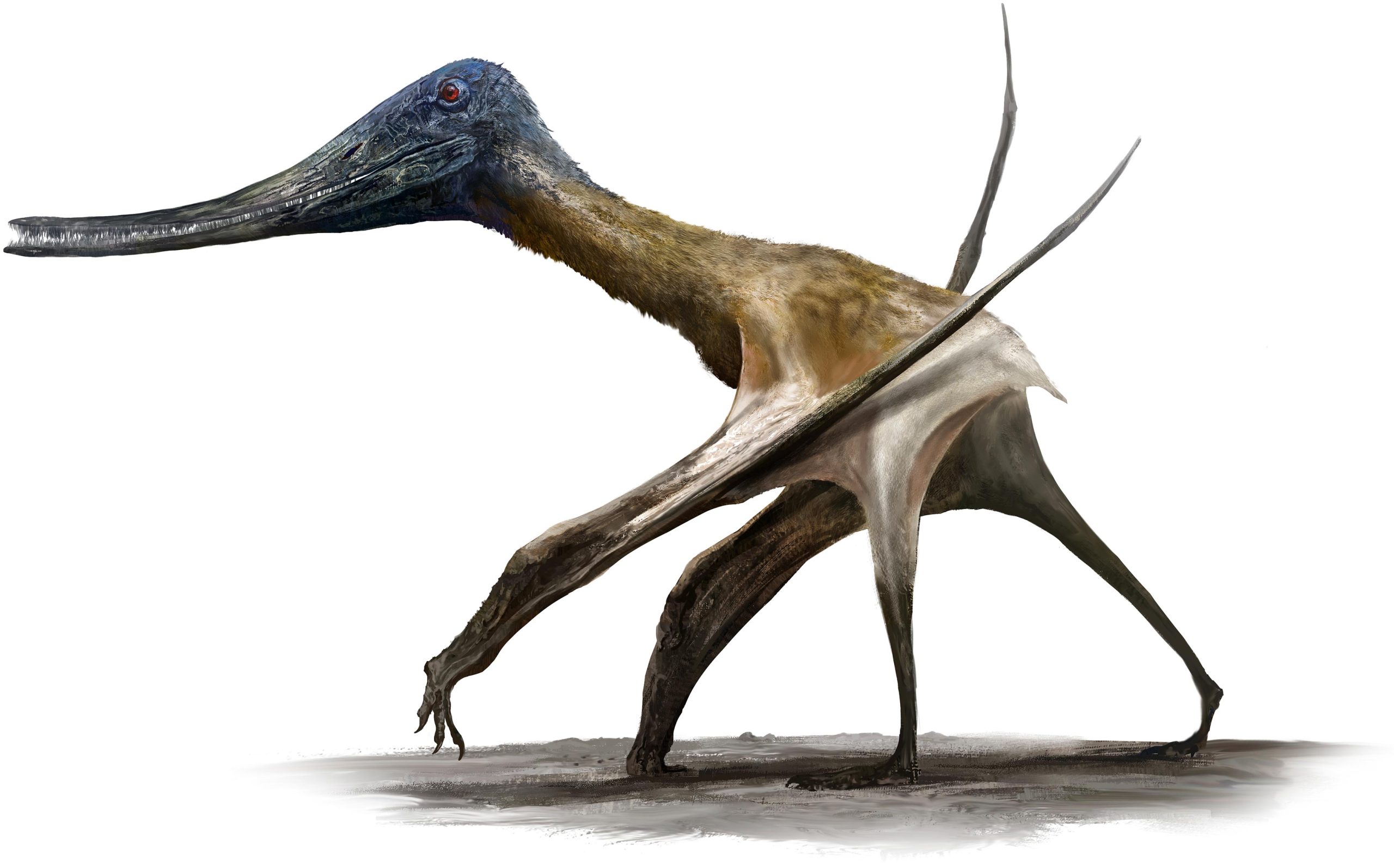
Paleontologists have discovered that efficient ground mobility allowed ancient pterosaurs to evolve into giant sizes, transitioning from tree-dwelling to ground-based lifestyles, and adopting unique feeding strategies.
Paleontologists at the University of Leicester’s Centre for Palaeobiology and Biosphere Evolution have identified the evolutionary adaptations that allowed ancient pterosaurs to grow to enormous sizes. They discovered the ability to walk efficiently on the ground played a crucial role in determining how large the biggest flying animals could grow, with some reaching wingspans of up to 10 meters.
Terrestrial Adaptations of Pterosaurs
In the study, recently published in Current Biology, a team of researchers led by the University of Leicester examined the hands and feet of pterosaurs from around the world and across their entire evolutionary history.
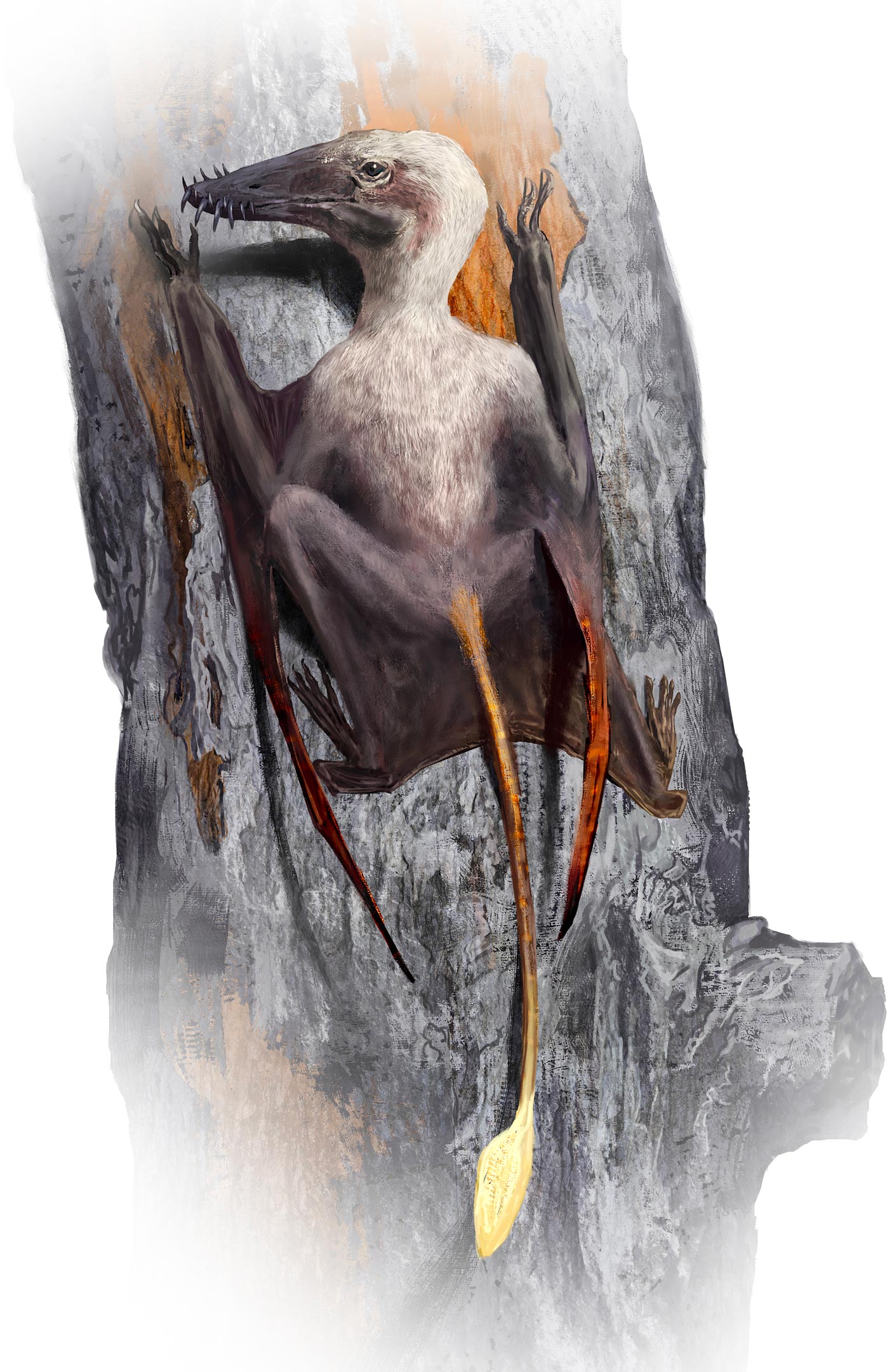
They uncovered a surprising level of variation similar to that seen across living birds. This discovery indicates that pterosaurs were not confined to life in the skies but were also adapted to a wide range of terrestrial lifestyles, from tree-climbing in early species to more ground-based lifestyles in later ones.
Diversity in Pterosaur Lifestyles
The evolution of pterosaurs, the first true flying vertebrates, showcases some of the most remarkable adaptations in the history of life. While these creatures are best known for their ability to soar through the prehistoric skies of the Mesozoic era (252-66 million years ago), a new study has revealed a surprisingly high degree of diversity in where and how pterosaurs lived when they were not airborne.
“Early pterosaurs were highly specialised for climbing, with extreme modifications in their hands and feet, similar to those found in climbing lizards and birds like woodpeckers today. Clinging to vertical surfaces by your fingertips for long periods is hard work — it’s a lot easier for small, lightweight animals,” explained lead author Robert Smyth, a doctoral researcher in the Centre for Palaeobiology and Biosphere Evolution (School of Geography, Geology and the Environment at the University of Leicester).

Shifts in Pterosaur Mobility and Size
These early pterosaurs were likely restricted to arboreal habitats and consequently, small body sizes. However, a major evolutionary shift occurred during the Middle Jurassic period, when pterosaur hands and feet changed to look much more like those of ground-dwelling animals. These adaptations to ground-based movement opened up new ecological opportunities, leading to a wide variety of feeding strategies. Freedom from the size constraints imposed by vertical living allowed some pterosaurs to evolve to gigantic sizes with wingspans of up to 10 meters.
Co-author Dr David Unwin from the University of Leicester added: “In early pterosaurs the hind limbs were connected by a flight membrane which severely impeded walking and running. In later, more advanced pterosaurs, this membrane became separated along the midline, allowing each hind limb to move independently. This was a key innovation that, combined with changes to their hands and feet, greatly improved pterosaurs’ mobility on the ground.
“Freed from the constraints of climbing, these later pterosaurs could grow to enormous sizes, with some species becoming true giants of the Mesozoic.”
Ground Adaptations and Ecological Niches
The details of the hands and feet are a clear giveaway. In early pterosaurs, the bones at the base of the fingers and toes were relatively short, while those farther from the body were greatly elongated, ending in large, curved claws – together these modifications resulted in a powerful grip – ideal for climbing. By contrast, later, more advanced pterosaurs showed the opposite pattern: the bones at the base of their fingers and toes were much longer, while those closer to the tips were shorter. Their claws were also flatter and less curved, suggesting they were better adapted for walking rather than climbing.
Smyth added: “These findings underscore the need to examine all aspects of pterosaur locomotion, not just flight, to fully understand their evolution. That pterosaurs could fly is only one part of their story. By exploring how they lived in the trees or on the ground, we can begin to understand the roles that they played in ancient ecosystems.”
When pterosaurs arrived on the ground, it was already inhabited by a wide range of animals, including dinosaurs and many other reptiles. Pterosaurs cleverly avoided competition with these established groups by exploiting ecological niches that required both flying and walking abilities. This resulted in some bizarre feeding strategies such as evolving hundreds of fine, needle-like teeth that were used for filter-feeding. This remarkable feature, resembling the feeding method of modern flamingos, emerged at least 120 million years before the first flamingos evolved.
Reference: “Hand and foot morphology maps invasion of terrestrial environments by pterosaurs in the mid-Mesozoic” by Robert S.H. Smyth, Brent H. Breithaupt, Richard J. Butler, Peter L. Falkingham and David M. Unwin, 4 October 2024, Current Biology.
DOI: 10.1016/j.cub.2024.09.014
Never miss a breakthrough: Join the SciTechDaily newsletter.
Follow us on Google and Google News.
11 Comments
Flying gator again
Long tail pterosaur the primitive pterosaur whale nose is like modern crocodilian a clear aquatic feature no talk about that why.the advance pterosaur the short tail pterosaur the nose like more Whaley .how about web toes
Pterosaur clearly is a dinosaur it has serrated teeth it is digitigrade .a very aquatic dinosaur less osteoderm smooth skin .the arm move like dinosaur the mean it was awful quadrupedal a one step quadrupedal it was mostly bipedal with bird like long arm bigger than leg the theropod dinosaur like alligator and t.rex the arm smaller than the leg.the bird feature are convergent evolution it is flightless it was more like a sea turtle
The ankle of pterosaur show it could not sprawl a dinosaur ankle the ankle fuse to tibia .if were a land animal the nose would be in front of snout they were right first time that it was marine animal the fight of pterosaur science as not age well.
Fight flight.sorry
Pterosaur is a thecodont that mean it is crocodilian that a fact it was allways a crocodilian the trouble came by change the name.archosaur was allways was a theory .pterosaur is a primitive dinosaur some of teeth are like tuatara the palate teeth they can find that in early dinosaur eoraptor .the pterosaur flight feature
The pterosaur glenoid is bird like the shoulder joint .it high up like modern bird and maniraptoran bird so dinosaur can have bird glenoid so creation story on YouTube is wrong but clearly pterosaur is not tetanuran dinosaur 4 finger and 5 toes the cliam is bird came from tetanuran dinosaur which is not true.the glenoid hole fossa fenestra is bird like saddle shape the glenoid on the shoulder but arm is saddle shape in bird arm is not saddle shape for more movement .for early dinosaur pterosaur show some advance feature .most dinosaur glenoid is down no flopping flight the maniraptoran bird microraptor has flopping wing like today flying bird all thou glenoid was not advance like modern bird but it’s a bird glenoid nothing like dinosaur glenoid.
The pterosaur allso has a furcula found in today early mammal that live in Australia today allso in dinosaur and bird.pterosaur allso has fuse sternum found in bird and mammal .pterosaur allso has wing found in aquatic animal like sting ray and crocodile the alligator lacks wing so last surviving dinosaur the crocodile has wing so modern spinosauridae the caiman lack wings.so convergent evolution can be any animal
Why pterosaur as not age well the massive snout like a crocodilian like aquatic animal very heavy skull not good for flight armor skull crest the osteoderm skin very big and heavy .the modern bird reduce snout size in the skull the early bird like velociraptor and archaeopteryx had a big snout the beak is not the skull it’s like the finger nail all modern bird have small snout to reduce weight .so pterosaur was a flightless dinosaur.it had giant crest skull like fellow aquatic dinosaur duckbill dinosaur that why they have unique occified tendon
Scitechdaily Paleo artist did a good job on pterosaur nose .clearly see it’s Whaley and it was extreme aquatic animal sea turtle like and flightless .pterosaur pygostyle the fuse tail another aquatic convergent evolution .bird has a pygostyle all tetanuran dinosaur has a pygostyle include modern crocodilian it’s feature of tetanuran dinosaur .clearly pterosaur is not a tetanuran dinosaur for a early dinosaur it show lot of advance feature likely its close to pseudosuchus tetanuran dinosaur.its skull does not look like tetanuran dinosaur it’s norrow bird like .tetanuran dinosaur and pseudosuchus has a wider skull
The bird long flight arm is found in some gator type mesoeucrocodylia and sauropod it’s rare in dinosaur .the cliam that thylacine is alive by that scientist that run the YouTube channel ambiguous world the video show it’s not long no stripe the eyes are line with ears I saw picture of dingo that true then I saw wolf then that not true then many picture quoll it true not true I do not know were the ears start the devil is like thylacine the legs of devil quoll are too small to be a thylacine in the video the ear are rounded like thylacine only can see that sideways the video is sideways the gait of thylacine is right it’s not injury the left leg it actrul stop lift the right leg .the ankle look smaller than a thylacine in some video thylacine ankle look small and some fox .video can be tricky .mange fox has thin hair the thermal is right for thylacine the juvenile has lion tail that the video I thought it was thylacine tail then mange then lion tail .i think it’s thylacine about 90 percent .thylacine has 2 sacral vertebrae marsupial has 3 lost of vertebrae is like modern crocodilian all are bipedal .most vertebrae at least 2 some have one they going say they allways has one this show in can be reduce for a bipedal animal