
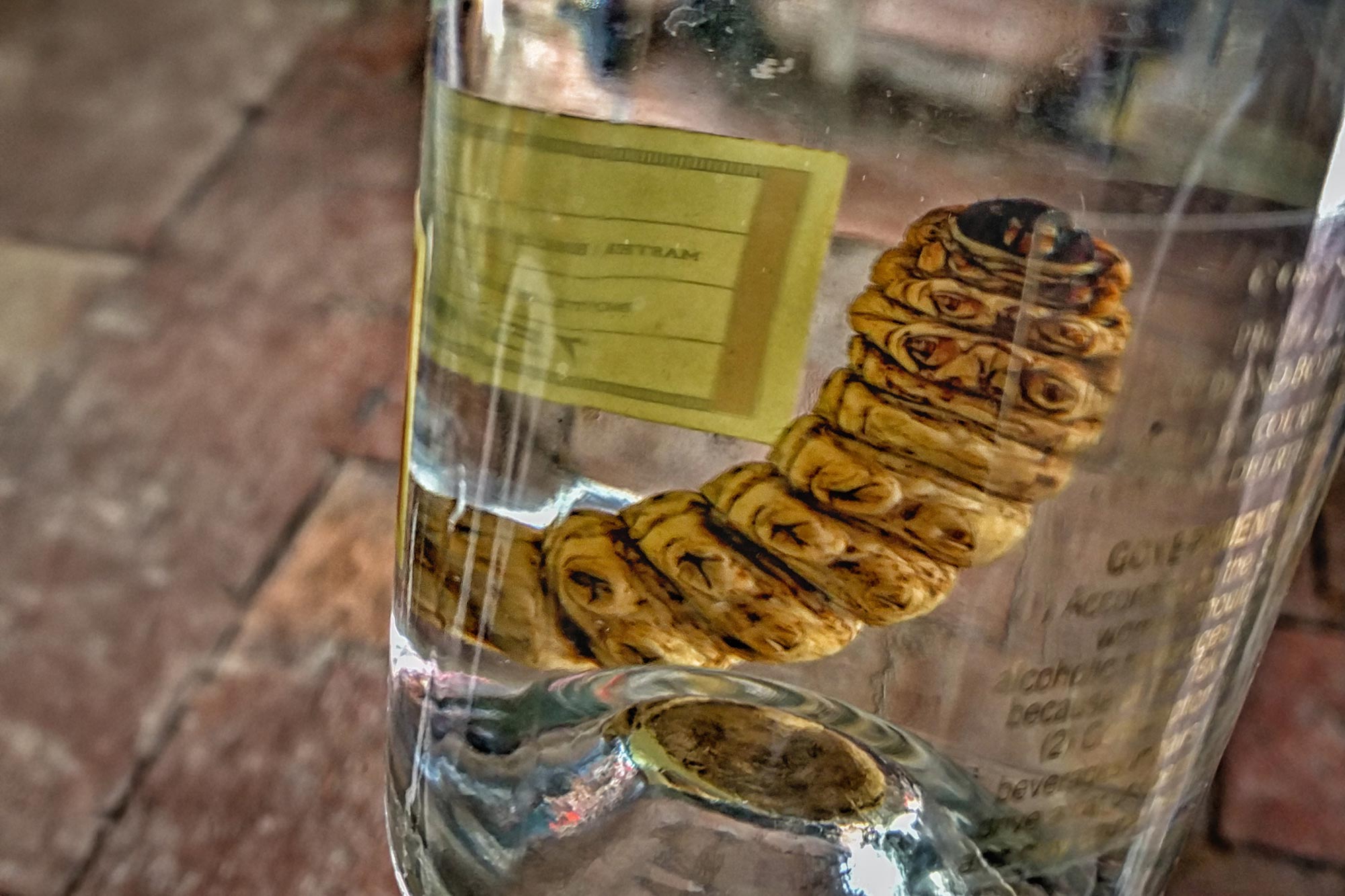
That strange “worm” at the bottom of some mezcal bottles has finally been identified, and the answer overturns decades of guesses.
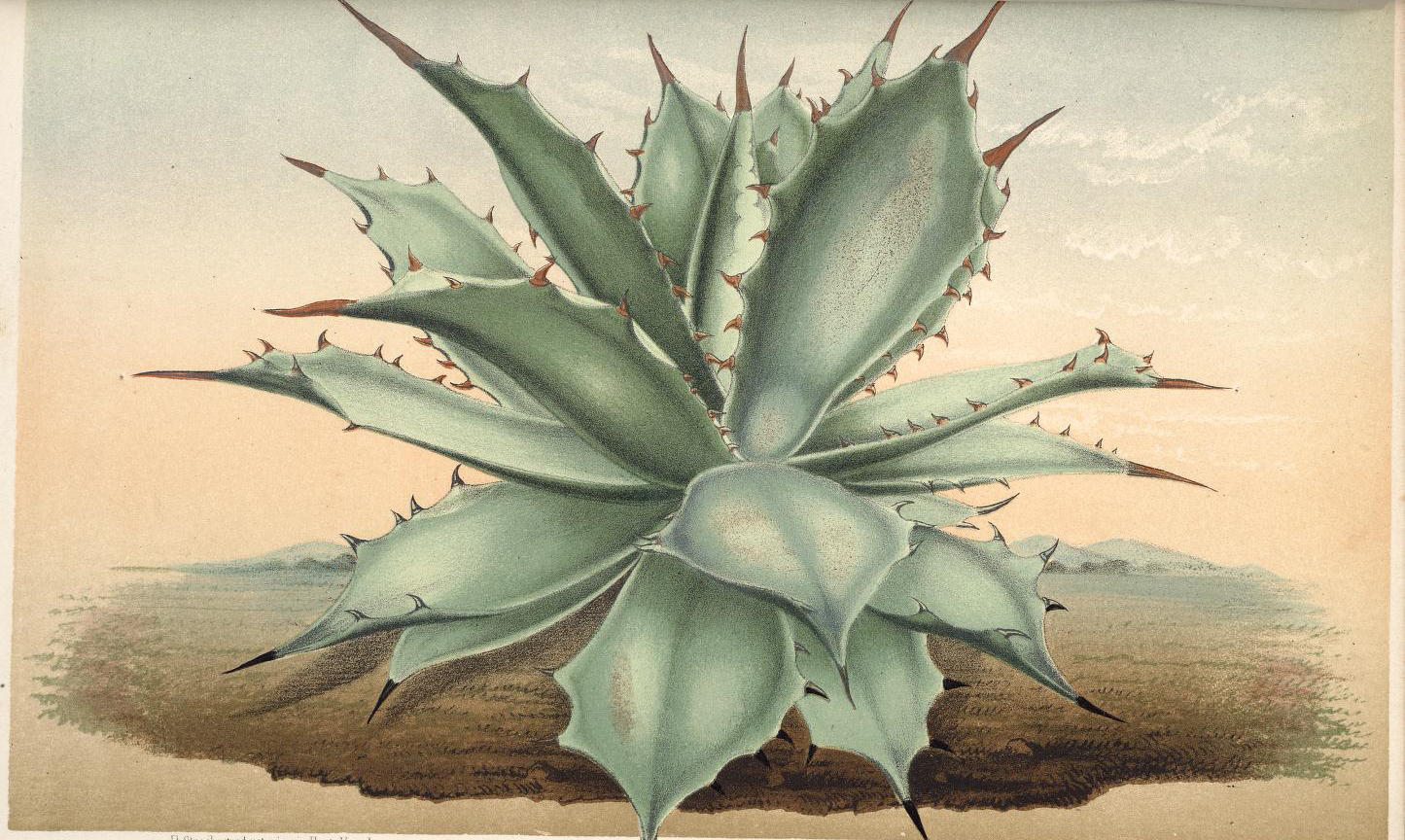
Mezcal begins with agave. Producers cook the plant, ferment it, and distill it into a spirit with deep roots in Mexican culture. Most bottles are sold as clear, pure distillates, including every brand of tequila. A small number, however, contain something far stranger: a larva resting at the bottom of the bottle.
These famous “worms” are known as gusanos de maguey (Spanish for agave worms). Despite the name, they are not worms at all. They are insect larvae, and they became part of the mezcal story much more recently than the drink itself. Mezcal production dates back to the early Spanish presence in Mexico, but larvae did not begin appearing in bottles until the 1940s.
A Strange Stowaway With an Unclear Identity
For decades, the gusano helped make mezcal more recognizable and marketable, especially outside Mexico. Yet one basic question remained unsettled: What exactly was it?
Different explanations pointed in different directions. Some identified the larvae as moths. Others suggested butterflies. Still others proposed a weevil. It was not even clear whether mezcal producers were using one species or several.
“It’s relatively easy to broadly determine the kind of larva based on the shape of the head, but their identity has never been confirmed,” said Akito Kawahara, curator at the Florida Museum’s McGuire Center for Lepidoptera and Biodiversity. “This is probably because most biologists are not looking inside mezcal bottles.”
To settle the question, Kawahara and his colleagues turned to DNA. Their study, published in 2023 in PeerJ Life & Environment, focused on larvae found in commercially available bottles of mezcal. The team traveled to Oaxaca, Mexico, in 2022 and visited distilleries in one of mezcal’s most important historic production regions. They collected as many different brands as possible so their samples would reflect a broad range of bottled gusanos.

Mezcal Preserved the Evidence
The larvae offered few obvious physical clues. After sitting in alcohol, many had lost features that might have helped researchers identify them by sight. But the mezcal itself had done something useful: it preserved the specimens and the genetic material inside them.
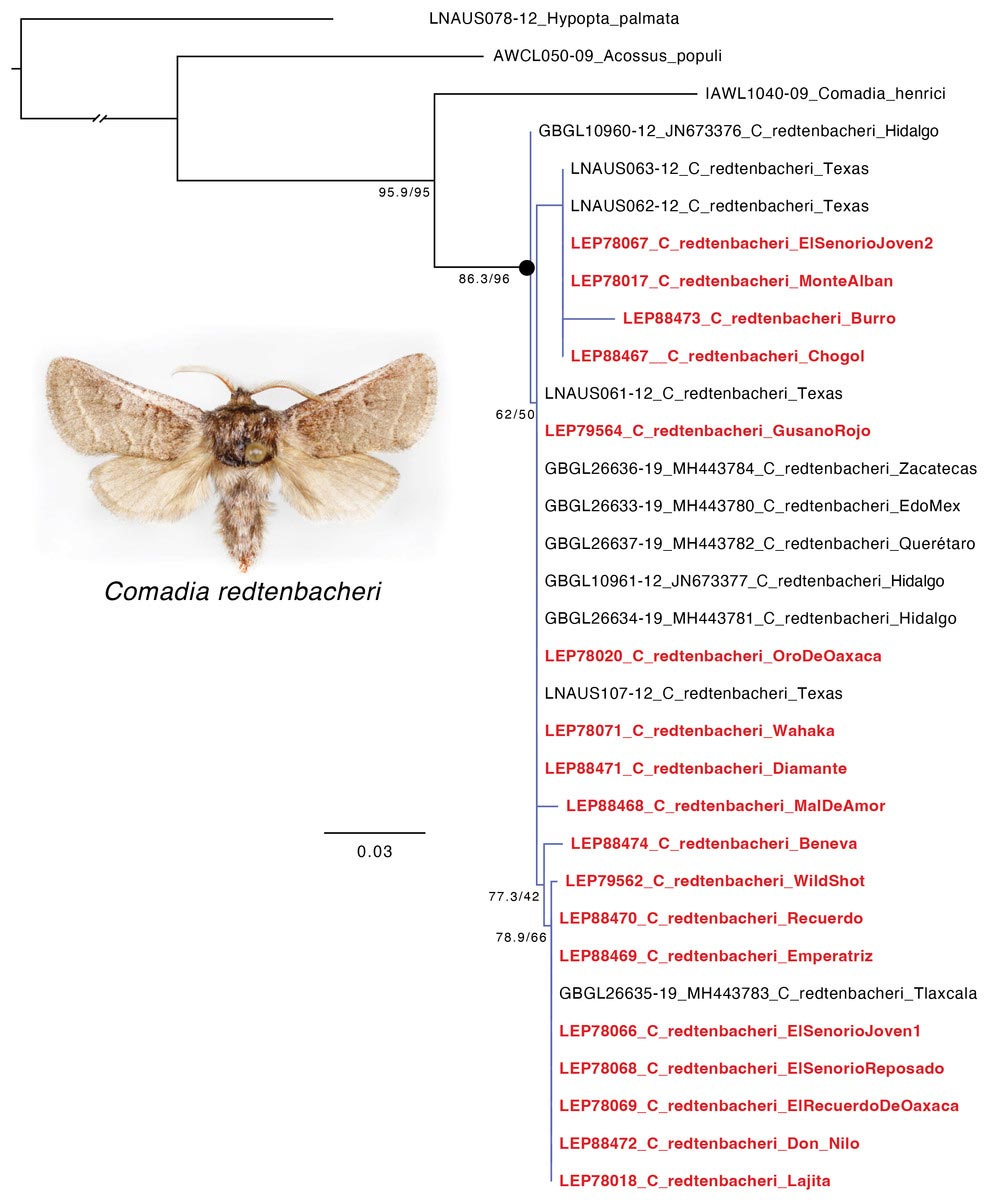
The researchers successfully extracted and analyzed DNA from 18 larvae. They expected variety. Because gusanos de maguey are not commercially farmed, it seemed likely that producers might gather larvae from several unrelated insects living on or near agave plants.
One strong suspect was the tequila giant skipper (Aegiale hesperiaris), a butterfly whose caterpillars feed on agave. Its large, pale larvae tunnel into agave leaves, and their whitish color matched many of the preserved gusanos seen in bottles. The name alone made it sound like an obvious candidate.
But the DNA told a different story.
The “Worm” Was a Moth Caterpillar
Every larva that yielded usable DNA matched the agave redworm moth (Comadia redtenbacheri). The specimens that did not amplify successfully were also identified morphologically as the same species, according to the study.
That means the legendary mezcal “worm” appears to be far more specific than many people assumed. Rather than a mix of agave-eating larvae, the samples all pointed to the caterpillar of one moth.
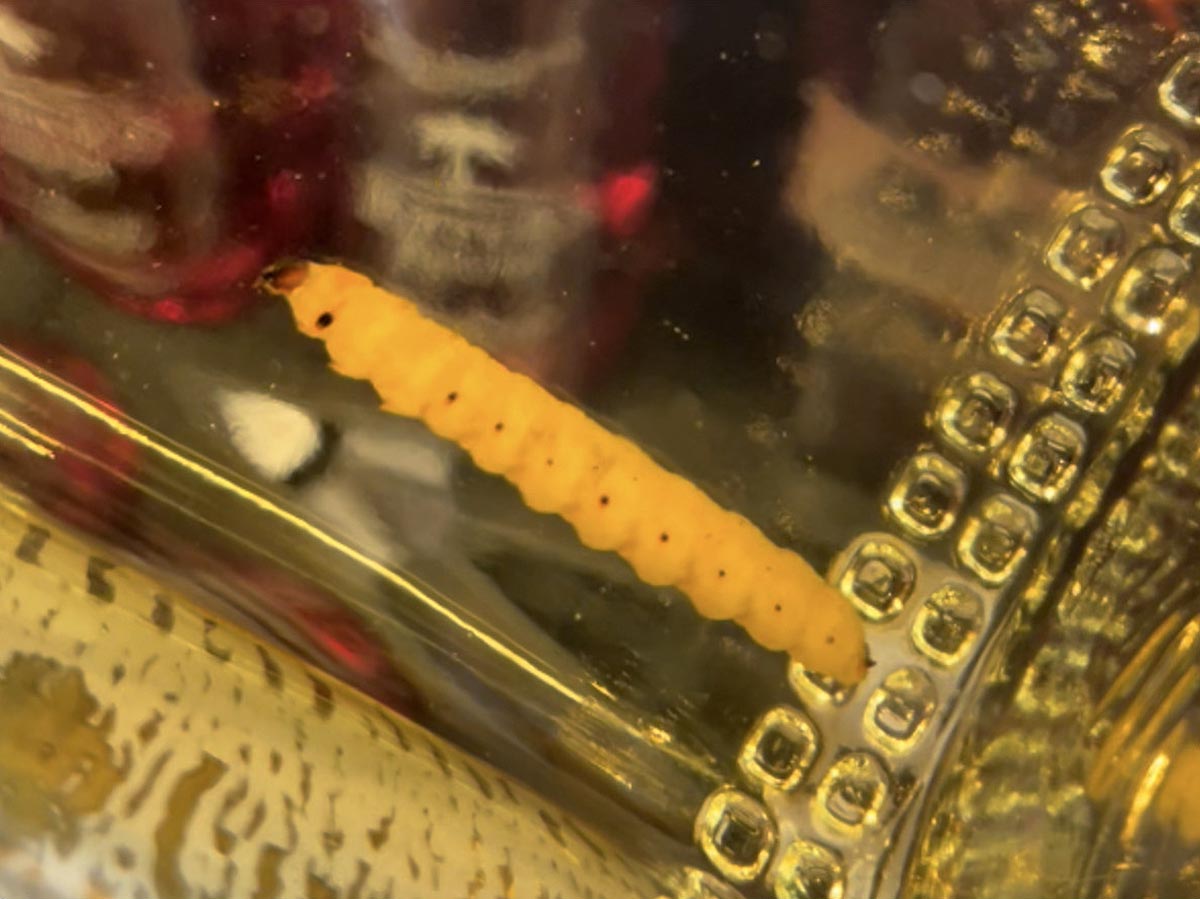
The finding also helps explain a long-standing confusion over color. Agave redworm moth larvae are naturally rosy or reddish, but many gusanos de maguey in bottles appear pale. The researchers suspect that long exposure to alcohol may bleach the larvae over time, making red caterpillars look white.
A Boom in Mezcal Raises New Questions
The discovery comes as mezcal’s global profile continues to grow. A report from Straits Research cited by the researchers projected that mezcal sales would rise 22% over the next decade and reach $2.1 billion in profits by 2030, driven partly by demand for artisanal and ethically made products.
That growth creates a complicated challenge. Tequila is often produced at industrial scale, including through the use of autoclaves. Many mezcals, by contrast, still come from smaller rural operations in Mexico’s dry countryside. Producers roast the thick agave cores in pits or kilns, crush the cooked plant material, ferment it, and distill it in relatively small batches.
Scaling that tradition is not simple. It is still unclear whether mezcal producers, landowners, and agave farmers can increase output sustainably while preserving the ecosystems and practices that make the spirit distinctive.
The Sustainability Problem Beneath the Bottle
The agave redworm moth faces its own pressure. Maguey worms have been eaten in Mexico for centuries, with a culinary history that reaches back to the Aztecs. More recently, demand from restaurants and specialty food markets has grown. Because these caterpillars are generally collected from the wild, researchers have warned that local populations could be vulnerable to overharvesting.
“Agave worms are still fairly common, but the impact of mezcal becoming popular can have long-term negative effects on local populations because they are harvested in the wild,” Kawahara said.
The harvest can also harm the plant. Red agave caterpillars burrow deep into the core of their agave hosts. Removing them often means damaging or killing the agave itself. If demand keeps rising, local harvesters may need to raise caterpillars on agave farms or develop ways to produce them without relying entirely on wild plants.
Follow-Up Research Adds a Warning
More recent research has strengthened the sustainability concern. A study on chinicuil extraction and ixtle maguey populations found that harvesting Comadia redtenbacheri larvae can reduce populations of Agave applanata by up to 57%. The study also found that juvenile agaves are especially important for population persistence, yet they are often the plants harvested to obtain larvae.
That work looked at a different agave use context, not bottled mezcal specifically, but it underscores the same biological problem. When larvae live inside agave, collecting them can mean sacrificing the plant that supports them. The 2025 study recommended responsible management to protect ixtle maguey populations threatened by chinicuil extraction.
The mezcal worm may be a marketing icon, a culinary tradition, and a scientific curiosity all at once. DNA has now clarified what it is. The harder question is how to keep that tradition from putting too much pressure on the moths and agaves that make it possible.
Reference: “Mezcal worm in a bottle: DNA evidence suggests a single moth species” by Akito Y. Kawahara, Jose I. Martinez, David Plotkin, Amanda Markee, Violet Butterwort, Christian D. Couch and Emmanuel F.A. Toussaint, 8 March 2023, PeerJ.
DOI: 10.7717/peerj.14948
Never miss a breakthrough: Join the SciTechDaily newsletter.
Follow us on Google and Google News.
2 Comments
Everyone already knew they were larvae. You gey guasanos in dried chiles.
thanks for this