
Getting stronger might be less about working harder and more about slowing down.
If you think building stronger muscles requires pushing yourself to the limit, new research suggests a different approach. A study from ECU found that muscle size, strength, and performance can improve without exhausting workouts or post-exercise soreness.
“The idea that exercise must be exhausting or painful is holding people back,” ECU’s Director of Exercise and Sports Science, Professor Ken Nosaka, said.
He emphasizes that a simpler method may actually be more effective. “Instead, we should be focusing on eccentric exercises which can deliver stronger results with far less effort than traditional exercise – and you don’t even need a gym!”
What Is Eccentric Exercise
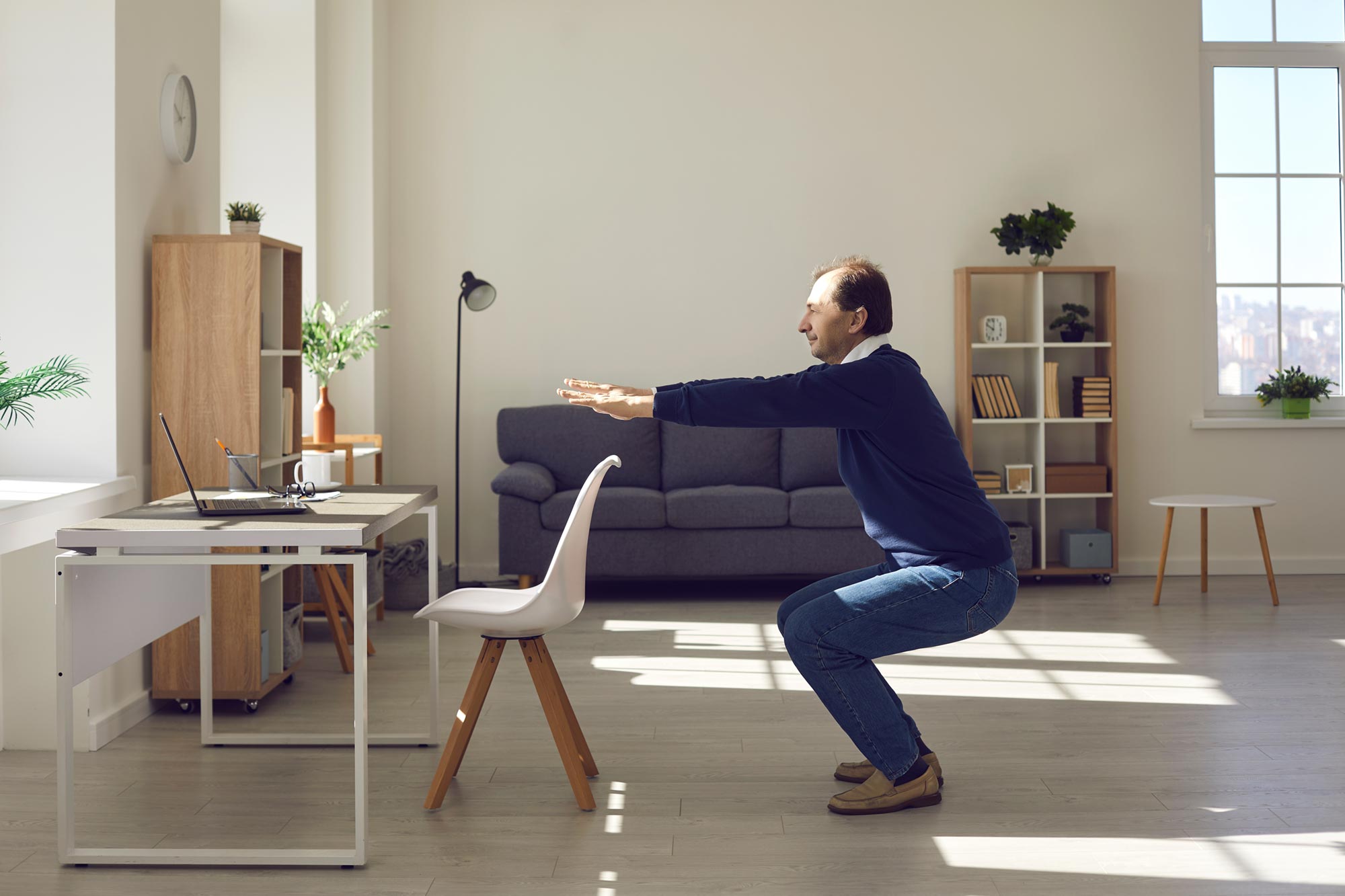
Eccentric exercise refers to movements where muscles are active while lengthening. This typically happens during the ‘lowering’ phase of a motion, such as lowering a dumbbell, walking downstairs, or slowly sitting down in a chair.
The research showed that muscles can produce greater force during these lengthening actions, while using less energy compared to lifting, pulling, or climbing movements.
Build Strength With Less Effort
“You can gain strength without feeling as exhausted. So, you get more benefit for less effort. That makes eccentric exercise appealing for a wide range of people,” Professor Nosaka said.
Although these exercises can sometimes cause soreness, especially when you are not used to them, discomfort is not required to see results.
Simple At-Home Exercises That Work
Eccentric movements are easy to incorporate into daily routines and do not require special equipment. Examples include chair squats, heel drops, and wall push-ups. Research shows that just five minutes a day of these exercises can lead to meaningful improvements in health and strength.
Ideal For Older Adults And Everyday Fitness
Because eccentric exercise places less strain on the heart and lungs, it can be especially beneficial for older adults and people with chronic health conditions. These movements also feel familiar, making them easier to stick with over time.
“These movements mirror what we already do in daily life. That makes them practical, realistic, and easier to stick with,” Professor Nosaka said.
“When exercise feels achievable, people keep doing it.”
Reference: “Eccentric exercise: Muscle damage to the new normal” by Kazunori Nosaka, 21 January 2026, Journal of Sport and Health Science.
DOI: 10.1016/j.jshs.2026.101126
Never miss a breakthrough: Join the SciTechDaily newsletter.
Follow us on Google and Google News.
1 Comment
It looks good. I am man of 94 yrs ,I do .analog vilom 200 times ,Kapalbhati 300times and leg exercises regularly everyday.Even then I am loosing my muscle and also I am having sciatica pains in the morning when I get up up to 30 minutes and they subside. PLEASE TELL ME WHETHER THE MUSCLE EXERCISE IS USEFULL FOR ME.