
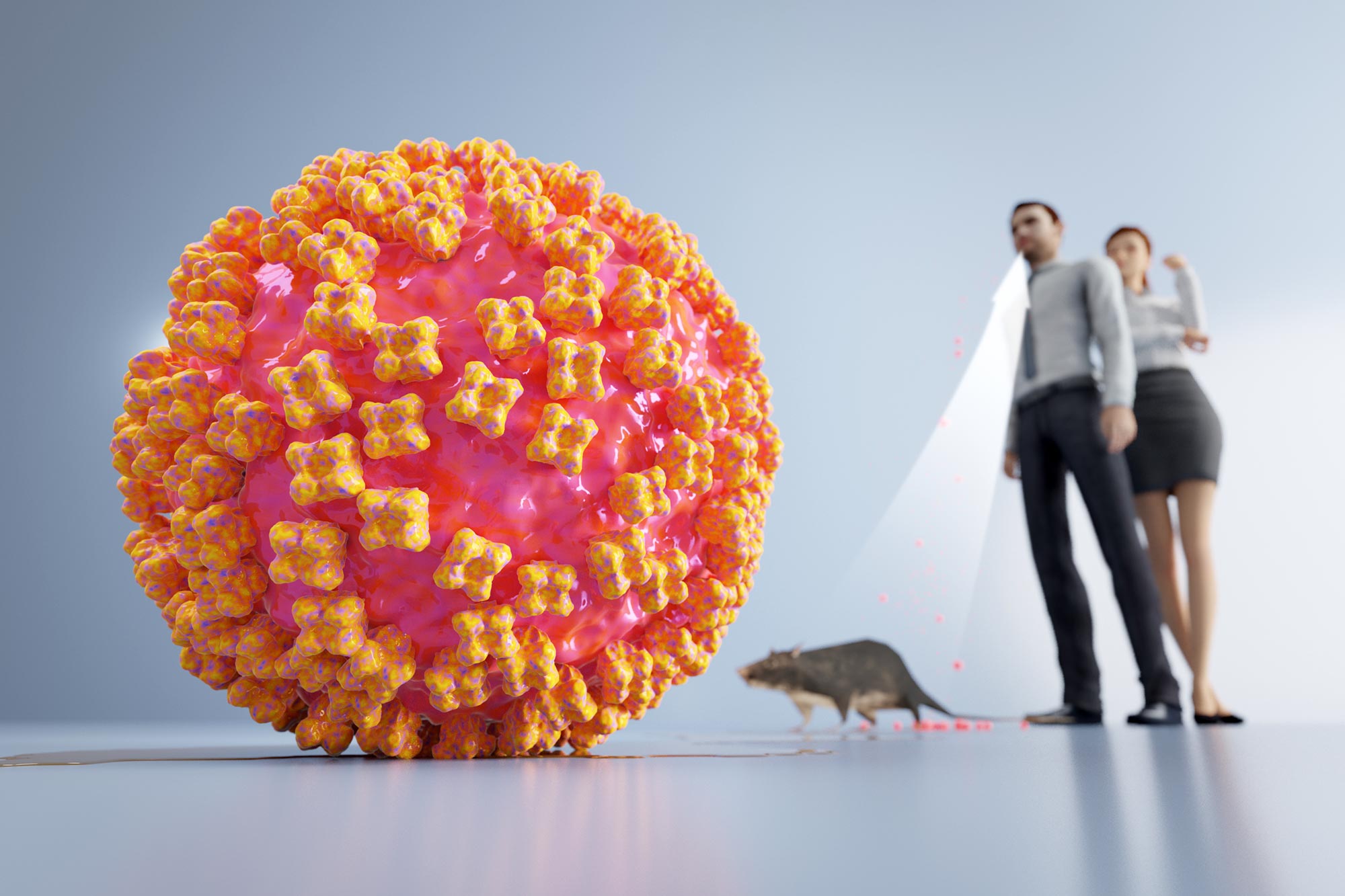
Hantavirus spreads through airborne rodent waste particles and can cause deadly lung or heart failure. Early diagnosis and supportive care are critical because no approved antiviral treatment is available.
A cruise ship stranded off the coast of South Africa because of a deadly hantavirus outbreak has drawn global attention to the rare but serious disease.
Hantaviruses are a group of viruses that usually spread from rodents to humans. Only one type, called the Andes virus, has been linked to possible person-to-person transmission, and even then, experts say it is uncommon and generally requires close contact.
“There is no concrete evidence that there is human-to-human transmission for most hantaviruses,” said Safder Ganaie, Ph.D., an assistant professor of molecular genetics and microbiology in the University of Florida College of Medicine and a member of the UF Emerging Pathogens Institute. His research focuses on how hantaviruses affect cells and on potential treatments. “It’s not nearly as airborne as influenza or other common respiratory viruses.”
Hantaviruses have been known for decades. Ganaie said the viruses were first identified during the Korean War in the 1950s. The World Health Organization formally classified them in 1987. In 1993, an outbreak in the Four Corners region of the United States led researchers to identify hantavirus pulmonary syndrome, the illness that killed Betsy Machiko Arakawa Hackman, Gene Hackman’s wife. Scientists later divided hantaviruses into two groups: Old World strains, which can lead to kidney failure, and New World strains, which can cause severe lung disease.
How it spreads
People mainly become infected by breathing in airborne particles from rodent urine or droppings. John Lednicky, Ph.D., an EPI member and research professor at the UF College of Public Health and Health Professions, explained how the virus can spread in enclosed spaces.
“Rats jump on ships or are carried onto them in cargo, they poop and pee, air currents aerosolize it, carry it, and it can get in the lungs, causing serious pulmonary illness,” said Lednicky. The U.S. Centers for Disease Control and Prevention identifies Andes virus as the most common and deadliest strain in South America. Lednicky warned that “very dangerous versions of hantavirus are proliferating.”
Experts stress that hantavirus does not spread as easily as influenza. “You have to inhale virus-carrying particles released when rodent-contaminated materials are disturbed, and even then, the virus only survives on surfaces for a few days,” Ganaie said. “Aerosolized viruses, like measles virus or influenza, stay in the air much longer and transmit more easily than hantaviruses.”
Rodent bites are considered an uncommon source of infection. “It’s the inhalation that is the major route,” said Ganaie. He also noted that risk is not limited to visibly dirty places. “Even clean homes and cabins can pose a risk; if rodents are present, the virus may be as well.” Infection usually occurs when contaminated materials are disturbed in poorly ventilated areas.
Symptoms and diagnosis
Early signs of hantavirus infection include fever, muscle pain, headaches, nausea, vomiting, and diarrhea. Because these symptoms resemble many common illnesses, diagnosis can be difficult. “The symptoms are very non-specific, especially in the beginning,” said Amy Vittor, M.D., Ph.D., an associate professor of infectious disease at the UF College of Medicine and the EPI’s biomedical officer. However, New World hantavirus infections can quickly progress to heart or lung failure within days.
Doctors diagnose hantavirus using antibody blood tests or tests that detect viral genetic material, although results may take several days or even weeks. Fatality rates range from 1% to 15% for Old World strains. New World strains can have mortality rates as high as 50%, even with treatment.
Treatment
“Luckily, there isn’t nothing,” Vittor said about current treatment options. One of the most effective treatments is ECMO, or extracorporeal membrane oxygenation, which temporarily takes over heart and lung function to reduce strain on the body. “This decreases mortality from 50% down to 20%. Unfortunately, ECMO requires a well-resourced Intensive Care Unit.”
Doctors must carefully manage fluids because low blood pressure can cause fluid buildup in the lungs. Vittor also said steroids should be avoided because they may interfere with the immune system’s response during infection.
Researchers are still developing antiviral drugs for hantavirus, but none have been approved in the United States. For now, treatment focuses on supportive care and helping patients survive the illness. In severe cases, advanced life support can improve survival chances. Experts say early diagnosis and rapid supportive treatment remain critical.
Never miss a breakthrough: Join the SciTechDaily newsletter.
Follow us on Google and Google News.
4 Comments
I’m just going to say I am victim of the fact I have virus in my body and my stomach is so dam mad that brought it on my system
Yes, it is transmitted through “breathing”—just like COVID. An “enhanced,” manufactured virus. Hantavirus is extremely rare and is not typically transmitted from person to person—unless we return to the Middle Ages. Hey, Bill Gates, where are you now?
lol
Sorry, no one is alarmed, no one is having another artificial pandemic and no one really cares. Keep your globalist WEF dark triad manipulations to yourself.