
Anhedonia reduces the ability to feel joy and affects nearly 90% of people with major depression. Most conventional therapies do little to treat it.
Most people think of depression as a disorder defined by sadness. For millions of patients, however, one of the most disabling symptoms is different: a reduced ability, or complete inability, to feel positive emotions.
Anhedonia affects nearly 90% of people with major depression. It is linked to longer and more severe illness, makes recovery harder, and is a major predictor of suicidal behavior. It also occurs in anxiety disorders, PTSD, substance use disorders, and schizophrenia, yet most standard therapies do not directly treat it.
For decades, depression treatment has focused mainly on reducing negative emotions, leaving the loss of positive emotion largely overlooked. Many patients, however, say their main goal is to regain positive feelings, even more than reducing negative symptoms.
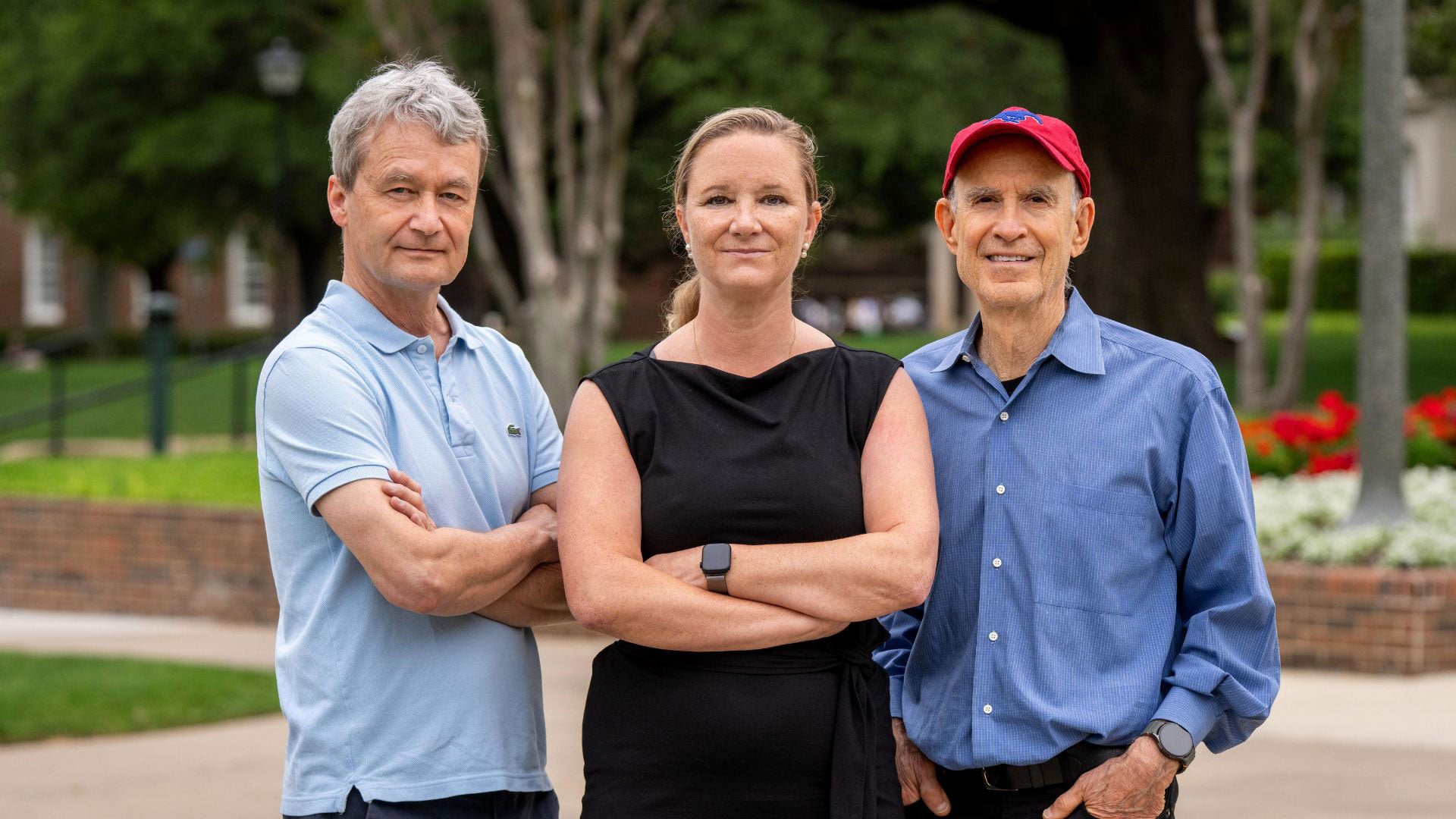
A new study in JAMA Network Open by SMU psychologists Alicia E. Meuret and Thomas Ritz, along with Michelle G. Craske at UCLA, suggests that directly targeting positive emotions may be a more effective treatment strategy. The work brings together more than a decade of clinical trials on Positive Affect Treatment, or PAT, a 15 session psychotherapy designed to help restore joy, purpose, motivation, and sensitivity to reward.
“There’s a difference between feeling helpless and feeling hopeless,” said Meuret, who leads the Anxiety and Depression Research Center at SMU. “When you feel helpless, you still have the drive and the will to want to change things. When people feel hopeless, they don’t believe anything will change. That’s what anhedonia can look like, and taking away negative emotions doesn’t fix it.”
Targeting the brain’s reward system
PAT was created to act directly on the brain’s reward system, which helps people look forward to positive experiences, feel pleasure from them, and learn from rewarding events. The therapy aims to retrain what the researchers describe as the brain’s “positive system” through exercises that reconnect patients with rewarding activities, shift attention toward positive experiences, and strengthen habits such as gratitude, savoring, and loving kindness.
Unlike many conventional treatments, which focus directly on negative emotions, PAT works entirely through positive affect. That makes the findings especially notable: patients improved on both positive and negative measures, even though the therapy did not directly target negativity.

In a randomized controlled trial involving 98 adults with severe anhedonia, depression, and anxiety, PAT led to greater improvements in overall clinical status than a conventional therapy focused on negative affect. That advantage remained at the one-month follow-up. Patients also had significant reductions in symptoms of depression and anxiety. The researchers found that changes in reward and threat processing were central to those improvements.
Reducing key risk factors in depression and anxiety
The researchers concluded that improving impaired reward processing is important for reducing major risk factors in depression and anxiety, including suicidality and relapse.
“It’s not enough to take away the bad,” Meuret said. “Treatment needs to ask: Is this activity meaningful to you? Will it give you joy or a sense of accomplishment? Does it foster connection?”
The study used 9 measures to track changes in reward sensitivity across three areas: anticipation and motivation for reward, response after receiving a reward, and reward learning. It also included 5 measures of threat processing, based on self-report, behavioral tasks, and physiological assessments. Six of the seven self-reported reward and threat measures helped explain clinical outcomes. Behavioral and physiological measures did not show the same effect.
Reference: “Positive Affect Treatment for Depression, Anxiety, and Low Positive Affect: A Randomized Clinical Trial” by Alicia E. Meuret, David Rosenfield, Emily Wang, Christina M. Hough, Thomas Ritz and Michelle G. Craske, 24 April 2026, JAMA Network Open.
DOI: 10.1001/jamanetworkopen.2026.7403
The research was supported by the National Institute of Mental Health under Award R61MH115138 (PIs Craske, Meuret, Ritz).
Never miss a breakthrough: Join the SciTechDaily newsletter.
Follow us on Google and Google News.
29 Comments
It is definitely a new Pathway to Study. A new way Treat is has been needed for a long time. But as I looked at the Researchers and the lucky Students who are getting the chance of breaking new ground, History making. There weren’t any Black Researchers or Students. Disappointing.
There we go. You miss blacks go watch crime news on TV. There is plenty.
There s nothing like a sickening racist comment in the middle of the day.🤬
Everyone can benefit from PAT. Even a person stuck in the mud.
This sounds a lot like CBT rebranded. If as a therapist you aren’t already including focus on making more positive experiences with your patient then you have a poor understanding of major depressive disorder. Not all patients are open to doing things that will require them to make changes to their lifestyle. At least initially. Some just want to be able
to take a pill and think they’ll magically get better. Typically medication and decent talk therapy are most effective. But if there isn’t change it’s hard to make lasting progress. In the beginning with severe depression and anxiety it is hard for the patient to believe anything they do will change anything. The worried well type patient is more likely to do fine with a course of manualized therapy like CBT or perhaps PAT. It frequently requires more time for clinically depressed people. First you need to help them get to a place where they have more belief in their ability to get well. CBT could be done by AI. Many many patients are skeptical when at the end of a fixed number of sessions that promises you’ll be well, they are discharged with no lasting change. When the patient has a severe and persistent mh problem expecting real change to occur in 8 sessions for example, is ignoring the problem.
So true! Didn’t expect to see that type of slop here on an article about mental health.
May be they used people that were actively seeking help or receiving help. Maybe no as you say blacks were in that situation.
Username checks out. You got a convicted felon president don’t pretend to care about crime.
What about Brown or Latinx people?
I, too, noticed the absence of Black faculty and student researchers. I would like to find out how everyone was selected for the study. If the selection method is unfairly eliminating Black people, I hope there will be changes.
🙄
It sounds like you have not heard the latest news, the amount of melanin in one’s skin does not matter! Please let racism die once and for all.
Darkness is I’m the absence of light. You can’t eliminate darkness, without creating light. Depresion is the absence of joy. You can’t eliminate bad feelings without creating good ones.
Yea! I ain’t acceptin no white man sycallogy. If Ther ain’t no brothers in it then it no good.
What does skin color have to do with this study? Humans are humans. Skin is pigment.
Yea Darcass is rite, I ain’t acceptin no white man sycallogy. If Ther ain’t no brothers in it then it no good.
A single small study is worth very little. 98 people is a ridiculously tiny group. Did they take into account any other treatments, ie medication or therapy, or health concerns. If all participants received the same treatment then there was no control.
Until there is a large group double blind randomized study with a control with the participants properly pre screened- which can then be repeated for verification- then no solid conclusions can be drawn.
The ‘control’ was they split the cohort in half, and gave half a few weeks of slightly different manualized cognitive strategies. Basically a fancy way of saying with some group they said “don’t be so hard on yourself and blame yourself for things that aren’t your fault” and the other group they said “hey you should pay more attention to what makes you happy.” That’s it. They just say it at you by reading a script. Then they ask people to self report if they feel better after and since generally getting out of the house, talking with others, and talking generally about how you feel tends to help, people feel slightly better, the researchers pat themselves on the back and everyone goes home. Meanwhile any deeper longitudinal studies shows these manualized treatments have an effect similar to a placebo.
I have AuDHD though… The reward system of my brain just doesn’t work. I don’t think this would help me at all
It sounds like you are doubting the premise that feeling and thinking better will likely lead to less depression. Aka feeling and thinking better. While this article is not news but pretty obvious that focusing on feeling better will lead to more feeling better and focusing on how terrible you feel and did the drugs help it or not may lead to more of what you focus on and there fore not as effective as the former.
That’s what this program was designed to due. Provide a framework which other researchers, ones receiving the funding that allows for double bind placebos, can work from to reproduce the results. The question is whether someone thinks its monetization is easy enough for studies to be profitable. Do you think there will be further studies based upon that?
You can’t be depressed, but you can feel depressed. How can you allow something to take power away from you?
Besides PTSD schizophrenia anxiety and depression what about people with MDD or other serious mental health conditions like it I’m sure you’ve not taken that into consideration and I’m sure that you have not taken medication ect into consideration either and quiet frankly that’s a small group you can’t just magically bring joy back it don’t work like that
Ridiculous study. Your comparison is your own design. How can you know the PAT had any real effect when you’re comparing it to such a flimsy variable. A few weeks of focusing on basic manualized cognitive strategies on appraisal vs a few weeks of focusing on more positive self atrribution and THATS proof it treats depression? With that you make such grandiose claims? How can you even consider that garbage therapy?
People actually need help! Why not look at how they’re actually doing following the treatment? How about 6 months later? A year? You can’t because you know what the results will be. Humans are deeply complicated creatures, and depression has a wide range of factors contributing to it including ses, culture, genetics, personality, physical health. But when scumbags only care about getting publications out for their own career they reinforce the belief that these are discrete illnesses that can be treated with discrete interventions and shift the conversation away from things that will actually help. Do proper studies or stop wasting people’s time. Smu and scitech should be ashamed of this pop psych garbage.
Ridiculous study. Your comparison is your own design. How can you know the PAT had any real effect when you’re comparing it to such a flimsy variable. A few weeks of focusing on basic manualized cognitive strategies on appraisal vs a few weeks of focusing on more positive self atrribution and THATS proof it treats depression? With that you make such grandiose claims? How can you even consider that garbage therapy?
People actually need help! Why not look at how they’re actually doing following the treatment? How about 6 months later? A year? You can’t because you know what the results will be. Humans are deeply complicated creatures, and depression has a wide range of factors contributing to it including ses, culture, genetics, personality, physical health. But when scumbags only care about getting publications out for their own career they reinforce the belief that these are discrete illnesses that can be treated with discrete interventions and shift the conversation away from things that will actually help. Do proper studies or stop wasting people’s time. Smu and scitech should be ashamed of this pop psych trash.
Very well said Brandon. With 8 years of schooling and 4 years of clinical private practice as a trauma therapist for PTSD
I couldn’t agree more and couldn’t have said it better. Thank you for trying to educate others with them facts!
As a psychologist, this is nothing new. Positive reinforcement and recognitizing it’s rewards, either consciously, or through chemical changes in the brain, like dopamine or serotonin release, will make you happier and less depressed, and retrain you to seek out these behaviors.
All people need is God in their life. He is greater than anything in this world (seen and unseen). Therapy, counseling and man healing does not work. Turn to prayer.
I would love to be able to get help from them.