
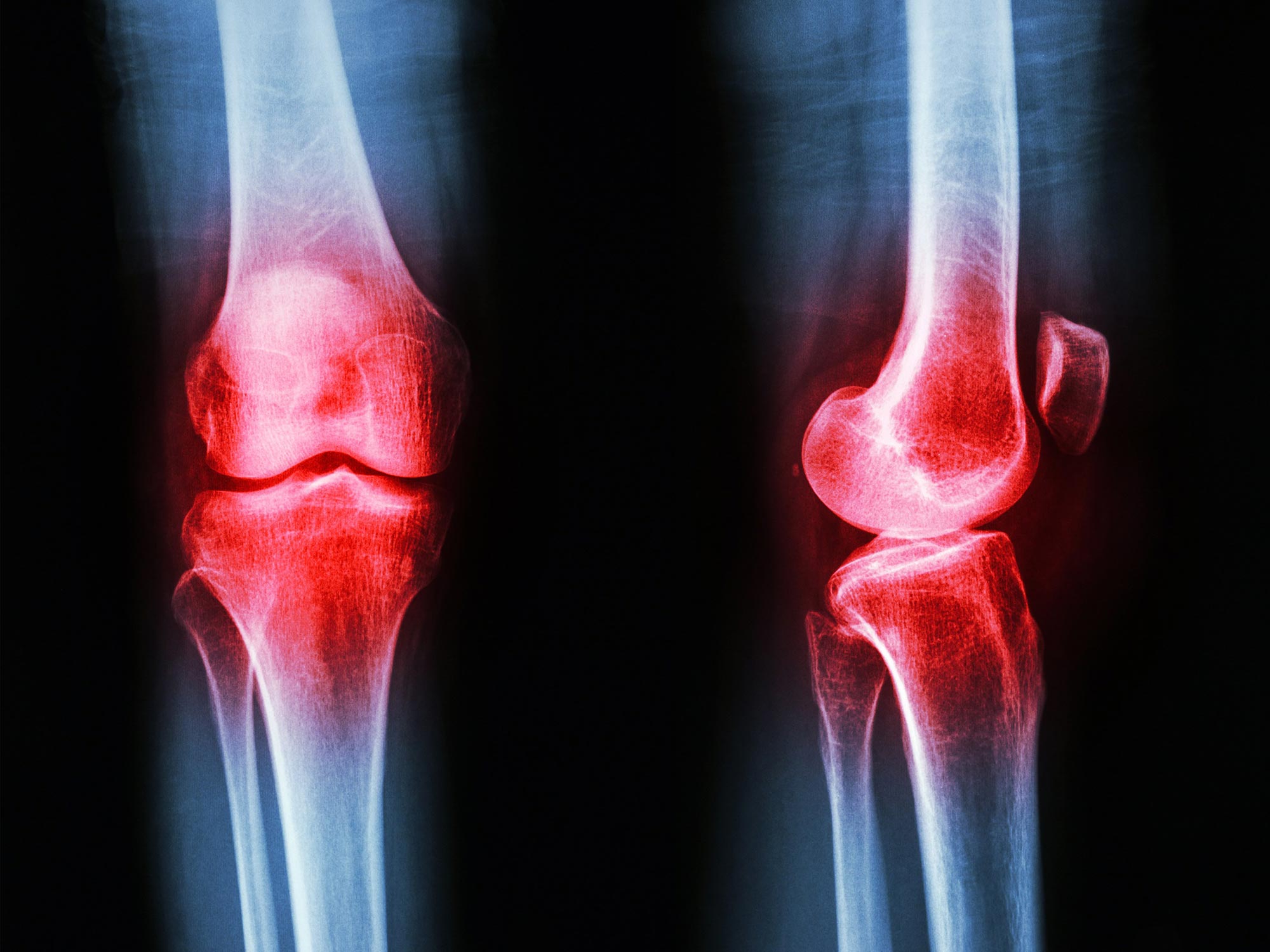
Researchers have identified the SHP protein as a key regulator that suppresses cartilage-degrading enzymes and slows osteoarthritis progression.
For millions of people living with osteoarthritis, treatment options have long focused on one thing: managing pain. But while medications and injections may temporarily ease aching knees and stiff fingers, they do little to stop the slow destruction of cartilage that lies at the heart of the disease.
Now, scientists in South Korea say they may have uncovered a powerful new way to protect joints before the damage becomes irreversible.
In a new study published in Nature Communications, researchers identified a protein called SHP (NR0B2) that appears to act as a natural defender of cartilage. The team found that SHP levels decline as osteoarthritis progresses, accelerating joint deterioration. Restoring the protein in animal models not only reduced cartilage damage but also improved joint function and eased pain, raising hopes for therapies that could one day slow or even halt the disease itself.
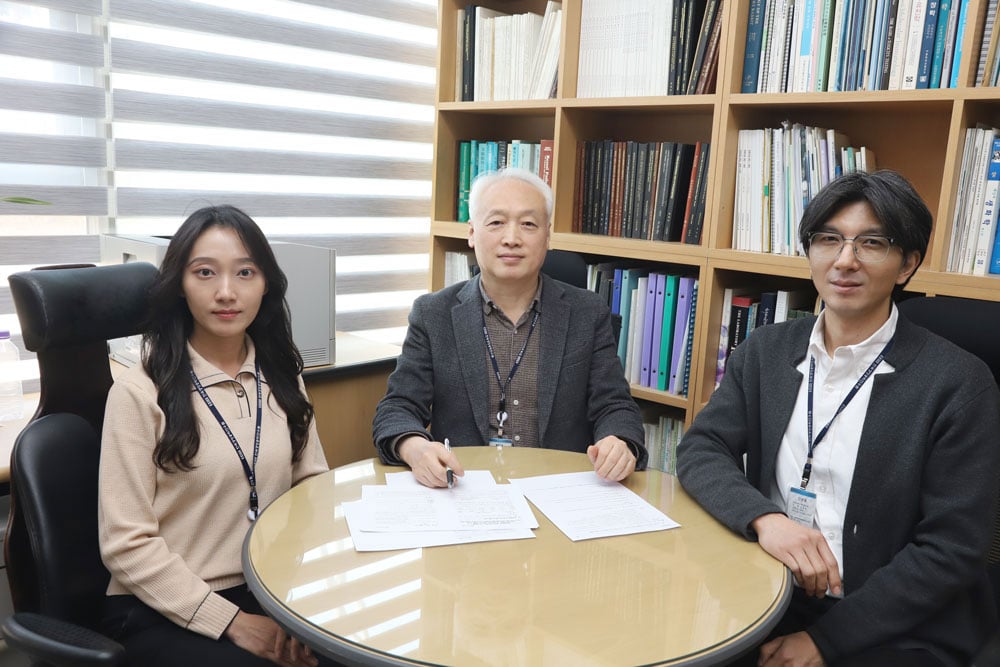
The research was led by Dr. Chul-Ho Lee and Dr. Yong-Hoon Kim at the Laboratory Animal Resource Center of the Korea Research Institute of Bioscience and Biotechnology (KRIBB), in collaboration with Prof. JinHyun Kim at Chungnam National University Hospital.
SHP protects vulnerable cartilage
To investigate SHP’s role, the researchers analyzed cartilage tissue from osteoarthritis patients as well as animal models of the disease. They discovered that SHP protein levels dropped sharply as osteoarthritis advanced, suggesting that the loss of this protective molecule may contribute directly to cartilage breakdown.
Further experiments revealed just how important the protein may be. Mice lacking SHP developed more severe pain and experienced faster cartilage degeneration than normal mice. In contrast, restoring SHP levels in affected joints significantly reduced cartilage damage and improved mobility, highlighting the protein’s potential as a therapeutic target.
A pathway slows cartilage breakdown
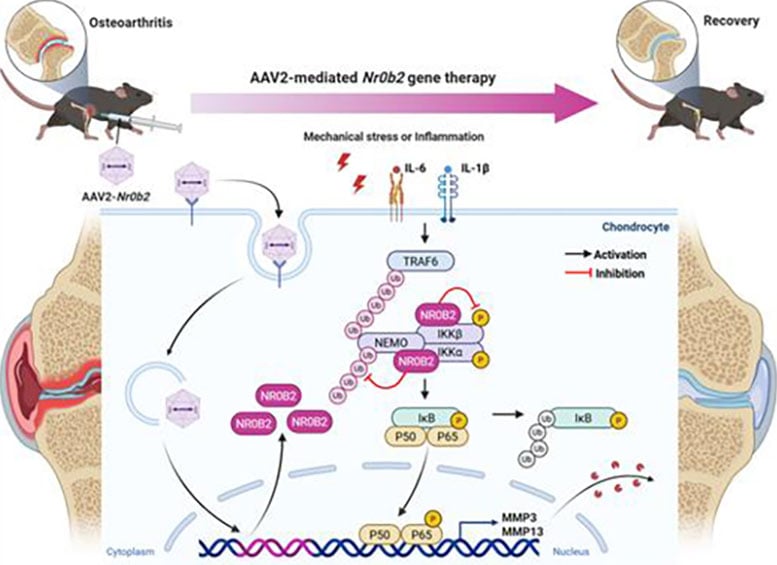
The mechanistic work showed that SHP helps defend cartilage by reducing the production of enzymes that destroy the tissue, especially MMP-3 and MMP-13.
These enzymes are known to break down cartilage. For the first time, the researchers showed that SHP blocks these enzymes at the signaling level by controlling the IKKβ/NF-κB pathway, helping preserve cartilage structure.
Gene delivery reduces damage
The team then tested whether SHP could be used therapeutically through gene delivery. After injecting a viral vector carrying the SHP gene into affected joints, the researchers observed lasting benefits from a single treatment.
Even in animals that already had osteoarthritis, the approach significantly reduced cartilage damage and relieved pain.
“This study is the first to demonstrate that the SHP protein plays a critical role in protecting cartilage during the development and progression of osteoarthritis,” said Dr. Chul-Ho Lee, the study’s lead investigator. “Therapeutic strategies targeting SHP may offer a new approach to slowing or preventing osteoarthritis progression.”
Reference: “Small heterodimer partner protects against osteoarthritis by inhibiting IKKβ/NF-κB-mediated matrix-degrading enzymes in chondrocytes” by Eun-Jung Kang, Jung-Ran Noh, Jae-Hoon Kim, Ji Ah Park, Jeong-Pin Ahn, Min-Chan Kim, Jung Hyeon Choi, Young-Keun Choi, In-Bok Lee, Dong-Hee Choi, Yun Jeong Seo, Yoon Seok Jung, Kyoung-Shim Kim, Jung Hwan Hwang, Yong-Bum Kim, Jong-Soo Lee, Bon Jeong Ku, Jin-Ok Jeong, Hueng-Sik Choi, Jinhyun Kim, Yong-Hoon Kim and Chul-Ho Lee, 21 February 2026, Nature Communications.
DOI: 10.1038/s41467-026-69864-5
This research was supported by the Mid-career Researcher Program of the Ministry of Science and ICT and by the Major Research Programs of the Korea Research Institute of Bioscience and Biotechnology (KRIBB).
Never miss a breakthrough: Join the SciTechDaily newsletter.
Follow us on Google and Google News.
79 Comments
What is the name of new treatment for wornout cartelages/ osteoarthritis
I suffer with knee joint pain in both of my legs
Very encouraging news. In my case it’s early stage of knee bone on bone. Any treatment to avoid total knee replacement is highly appreciated. Please let me know.
Try a carnivore diet or keto, ive been on it now for 4 years i am 78 years old it’s fixed my knees no longer use walking stick, I do deep squats twice a week
When will this be available to the public? 10-15 years? Have human clinical studies begun?
What are the side effects?
I am a 70 yo female who has been suffering from Osteoarthritis and bone to bone knees for 15 years. Now all of my major joints are affected and I use a walker to get around. This is not the life I planned at this age. Have clinical trials for humans started? How can I get more information about SHP, foods to eat, and getting my mobility back? Please help. Thank you.
Hi
kindly advise what to eat & how much to eat your tablets ? Where do we get in Europe for orthotics in both knees. I am 55 years old & my mom is 82 years old. We both have same problems
Encouraging articals which can help people with knee cartridge problem and waiting for surgery long time IS IT WORTHWHILE TO HAVE GO ?
Is it not for me but close friends
Known suffering- thanks
Avoid eating these foods you will not suffer, gluttonous rice, food make from gluttonous rice, sugar, ikan bilis, duck meat, and peanuts and certain nuts and beans, those food that produce uric acid.
I would definitely try this , suffer in knees ,back and feet
Meri bati h 1 month ki usky tang main bht dar hota h kia kry usky ly
What??
Bad knees trying to avoid surgery. Need relief
It is encouraging source of joint pain releaver,what iscthe source of this protein?
I am also suffering in this pain it is good news please let me know
I suffer with knee pain as I ostio arthritis, what can I eat to help with the pain in the joints
My right and left knee hurts
I suffered eith osteoporosis osteoarthritis osteopenia in hip fema back hands ,what can I eat or do to heal and get rid of this psin, its destroyed my life forv7 years now since I broke my hip and fema allmlegiments, crushed it and destroyed my lower lumber spine and hands and fingers
I suffer with knee joint pain in one of my legs
I suffer with knee joint pain in both of my legs and hands
I have athristis on both knees wat do you think i can take please im in so much pain and im 61 years old
Look into stem cell therapy.
I suffer from knee pian
Dear sir I can’t walk because knee pain.please tell me the medicine to remove knee pain. Thanks
I suffer. With knee..join pain.in both of my legs and hands.and i.60 old
I suffer from ankle pain and have to walk for it to subside.
Look up the Amish. They cure you
From where do they harvest stem cells?
Where this medication found
Sounds very encouraging.
Probably too late for me, I, 68 ,bone on bone, if there’s a study let me know, [email protected]
I was diagnosed with extremely advanced Osteoarthritis when I was 36, by 46 I had a Total hip replacement surgery on my right hip, now @ 55 I need my left hip replacement, right knee and my right shoulder. I am very interested in this breakthrough, what is this called?
I have bone on bone and mainly when I go out in a wheelchair- I’d love to be able to walk but I don’t want the operation..
I’m in so much pain it’s about to get the best of me, hands, shoulders, both knees bone on bone, if you need someone to try it out on , I’m available!!!
Hello can pain go away
Neurotomy in knee. I am a below the knee. amputee in the right leg. And have torn both of my meniscous in the left knee and with one leg for so long bearing all the weight. I had complications it took me over two years to get a prosthetic. So left leg had to do everything. Go to a pain surgeon/specialist someone who is really good and get the nerves that are causing the pain in that area supressed . I have a neurotomy every six months in my left knee and it has allowed me to learn to use my prosthetic. I can do water therapy which is very nice also water yoga. I need to lose a little more weight maybe a year ill be ready for a knee replacement.
Yup anything to prevent knee surgery
Also protect joints wrist ankle etc too.
What is the new medicine
I suffer eith knee pain my husband has bone on bone on right knee.
It’s was being any good news, and I would like to get more updated about this treatment.
I have knee and hip pain since late 2024; until now my knee movement is okay but when sit longer than 15 minutes my hip and knee become stiff and pain full so help me
I am 62 years old and have severe osteoarthritis in both knees. I receive hyalonic acid injections in both knees every 6-8 months which help with the lubrication of the joint but it doesn’t cure the osteoarthritis. I am interested in finding out more about this protein therapy and will it be widely available in North America anytime soon?
I’m spunky and have a lot of sass. However, Im not running any marathons lately ….in fact I have to be lifted from my reclinerI and haven’t been able to walk at all for about 6 months and as I see my muscles getting weaker…..Im getting very very grumpy and want to get moving again!!
Unfortunately somehow Im 82 and have bone on bone that progressed from from 2009 when I was jumping on a trampoline trying to lose 5 more pound before departing on a 9 week book tour. I will not have knee replacements.
Please help me.
I’ll try this out any time
Sounds very encouraging, i also have been diagnosed with ostio in both knees.can’ t wait for something like this to be availiable to relieve pain. I also still try to do as much as possible & work through the oain barrier.(like so many others)
Please whats the solution.
I Would try this. Im only 40 with back and leg aches and pain from arthritis. I’ve been through all the hoops and still nothing has helped years of injections and pain medicine. Prednisone works great but can’t be taken daily. I also have bulging discs in lower back and neck from apparently digerenitive disc disease. So I would definitely be willing to give it a try. Im sick of the pain and fatigue and not wanting to move but it’s hurts to lay also .I just get sad so that has caused me to be but on antidepressants. because there’s nothing that can really be done for it . Was told it just gets worse with age and nothing has really helped yet. If anyone one here reads this and has any suggestions that has helped them at all please let me know.
Neurotomy in knee. I am a below the knee. amputee in the right leg. And have torn both of my meniscous in the left knee and with one leg for so long bearing all the weight. I had complications it took me over two years to get a prosthetic. So left leg had to do everything. Go to a pain surgeon/specialist someone who is really good and get the nerves that are causing the pain in that area supressed . I have a neurotomy every six months in my left knee and it has allowed me to learn to use my prosthetic. I can do water therapy which is very nice also water yoga. I need to lose a little more weight maybe a year ill be ready for a knee replacement.
對於疼痛的關節可以得到緩解~我想試試
Need help being trying to do my best with this pain I’m 69 very hard to get around trying to do my best going to the gym 3 days a week eating healthy can’t walk like before little steps at a time still trying to hold a job have no choice bills have to be patient or I will be in the streets? I lots jobs could not work the pain is so bad
What is the name of the product great information but the name thank you and please
I am also suffering in this pain it is good news please let me know
I have bone on bone and so much pain all I can do is cry I can’t drive having work since January I don’t want the surgery but look like I’m going to how to break down and do it because it’s not fair to my husband we are used to travel . I just want to get back with my life. I’m only 57 years old I wish I could get happy. Please please.
Get a replacement, I did and 3 weeks later I was playing pickleball
I feel pain when I go upstair or downstairs. Could you please help me
Just had knee replacement surgery and it’s so worth it.. I had it done robotically and it’s just 3 weeks and doing great!!!!
I am 70
My cat loves delicious lima beans. She does not have knee pain.
My cat eats Doritos and has a lot of knee pain
I am 56 years old doing Custodial work for 30 years my hands and my knees and feet everyday I wake up in pain and swollen!! Need HELP!!
Let your docter prescripe Panamor 100mg
use Oasteo Ease . I am 77 and if I dont drink these medication I will be in a wheelchair. I still walk and do extra classes from 2pm to 7 pm. Try to do walking on one place next to your bed so that if you fall it can be on the bed. IStart with 50 steps and I can’t tell you what difference it bring back to my knees
Help me am in pain
I’m just starting to get arthritis pain so this would be great for me, too catch it early. I have hip, feet, shoulder and hand pain.
I learns same. Because I have pain in my knees and also moistly gut
What is name of product ??
How to order ??
Any s8de effect of it??
As I have stated I have pain in my knees and guts if send me more advice’s I am happy
I am 56 years old doing Custodial work for 30 years my hands and my knees and feet everyday I wake up in pain and swollen!! Need HELP!!
After my laparoscopic hysterectomy, removal of ovaries, removal of 10 cm. Mayoma, removal of polyps… after two months of recovery my left knee has problems at first it is so difficult to walk and after two weeks I can’t bend it I went to ER then after meds I can’t slowly bend it and can slowly walk but I walk funny, yesterday I can’t take it anymore so I’ve had my x ray is normal ultrasound is also normal then after three days I will have the results of my MRI. I wish to Allah it’s not that serious… Otherwise I needed help.
In Sha Allah Khair
My bone on bone gives me a lot of pain and swelling
I am 51. A healthcare assistant for five years here in The Emirates. I have been living and working here for fifteen years and counting. I’m jobless and bills are piling up I just want my normal life back I can’t work like this my job is so physical and multitasking so toxic I can’t afford to lose my knee like this! I have a son who’s in college back in Manila, and a very sick mom who needs my care and financial support.
I needed knee meds that’s effective not like this after the orthopedic will prescribe meds mafi fayda nothing else changed Shu hadha meniscus, cyst it’s just a diagnostic bs
I have a right hip that is shaped like a roof on house. I am staring to us Hyloronomic Acid so I don’t know whether it will work or not,plus 8 paracetamol a day and I am at the bottom of the list. I am84 years old
I’m 80 yrs old and have bone on bone pain in both knees and one shoulder. Had gel shots in the knees and get cortisone shots in the shoulder. Anything that can be done would be great. If you need someone to try it out I’m available.
Hi ..I’ve had 3 total knee replacement surgeries and 2 repair surgeries,,,I have disc fusion in my lower back with chronic degenerative disc disease,,and a lot of arthritis everywhere else ,,,my left thumb is really bad it’s deformed now from being on crutches for 2 years solid plus a few other years on and off and my left shoulder has been badly affected from the crutches, my right knee was operated on 4 of the 5 surgeries so my leg is now 3’inches shorter which completely sets me off balance,,i suffered badly with whiplash for over 2 years so i have neck issues too n worked midnights for many years in a nursing home n have ankle issues as well all before and im only 50 yrs old…..if there is anything u want me to try im definitely available,,i want so bad to get back to work but i feel my legs failing more n more and my day consists of continuous diet and physio n aerobics,,i dont take any pain pills or alcohol or drugs and i dont smoke ..im really pretty healthy other than my bones n joints ,my heart is in excellent shape i just had an ECG done too ..
Am 51 I couldn’t walk due to pain as the result of arthritis, for more than three years now I could not bend my legs.. I will be very grateful if you can use me to test your product am in Nigeria.
Is this cure available to anyone ….. where can i perchase this please??🙂
Please how do I get this product or test.trial. I suffer from sever osteoarthritis, I can move or do anything. I have been stuck in the house 3years now with life passing me by.
I would like to try your help for osteoarthritis. I suffer from knee and finger joint pains
What is Known About the SHP (NR0B2) Protein?How it protects joints: SHP prevents the breakdown of cartilage by blocking the inflammatory enzymes (specifically MMP-3 and MMP-13) that deteriorate joint tissue.The Mechanism: It acts at the signaling level, binding to the enzyme switch (the IKK\(\beta \)/NF-\(\kappa \)B pathway) that usually triggers cartilage degradation.Scientific Status: Discovered by researchers at the Korea Research Institute of Bioscience and Biotechnology (KRIBB), the findings were published in Nature Communications. Animal studies using gene delivery (a viral vector to restore SHP) successfully reduced cartilage damage and relieved pain.
How to Increase Intake or SHP Levels no Dietary Options: SHP is an intracellular protein produced naturally by your body; it is not a nutrient or compound found in food, nor is it available as a dietary supplement.Future Treatments: Because it is an internal protein, it cannot be swallowed in pill form (digestion would destroy it). Instead, scientists are actively researching gene therapy to deliver the SHP gene directly into affected joints.When Will It Be Available? The research into SHP gene delivery is highly promising, but it is currently in the preclinical (animal study) stage. It will require human clinical trials before it becomes a standard, accessible treatment.
What You Can Do NowWhile you wait for SHP-based therapies to move through human trials, you can protect your joints using established methods to minimize cartilage wear and tear:Maintain a healthy weight: Excess weight puts continuous stress on knee and hip cartilage.Low-impact exercise: Activities like swimming, cycling, or walking strengthen the muscles supporting your joints without high impact.Consult a specialist: If you are experiencing joint discomfort, speaking to a rheumatologist or orthopedist will help you explore currently available disease-modifying treatments and therapies.
I am 66 years old from South Africa, I was diagnosed with arthritis,radiated to my bones after given Covid vaccines. I am now suffering from osteoarthritis, I cannot work or sleep properly due to this severe pains.I am on anti-inflammatory tablets that has now caused me to have ulcerativecholitis, I do not not know what to do.any more,,please help.