
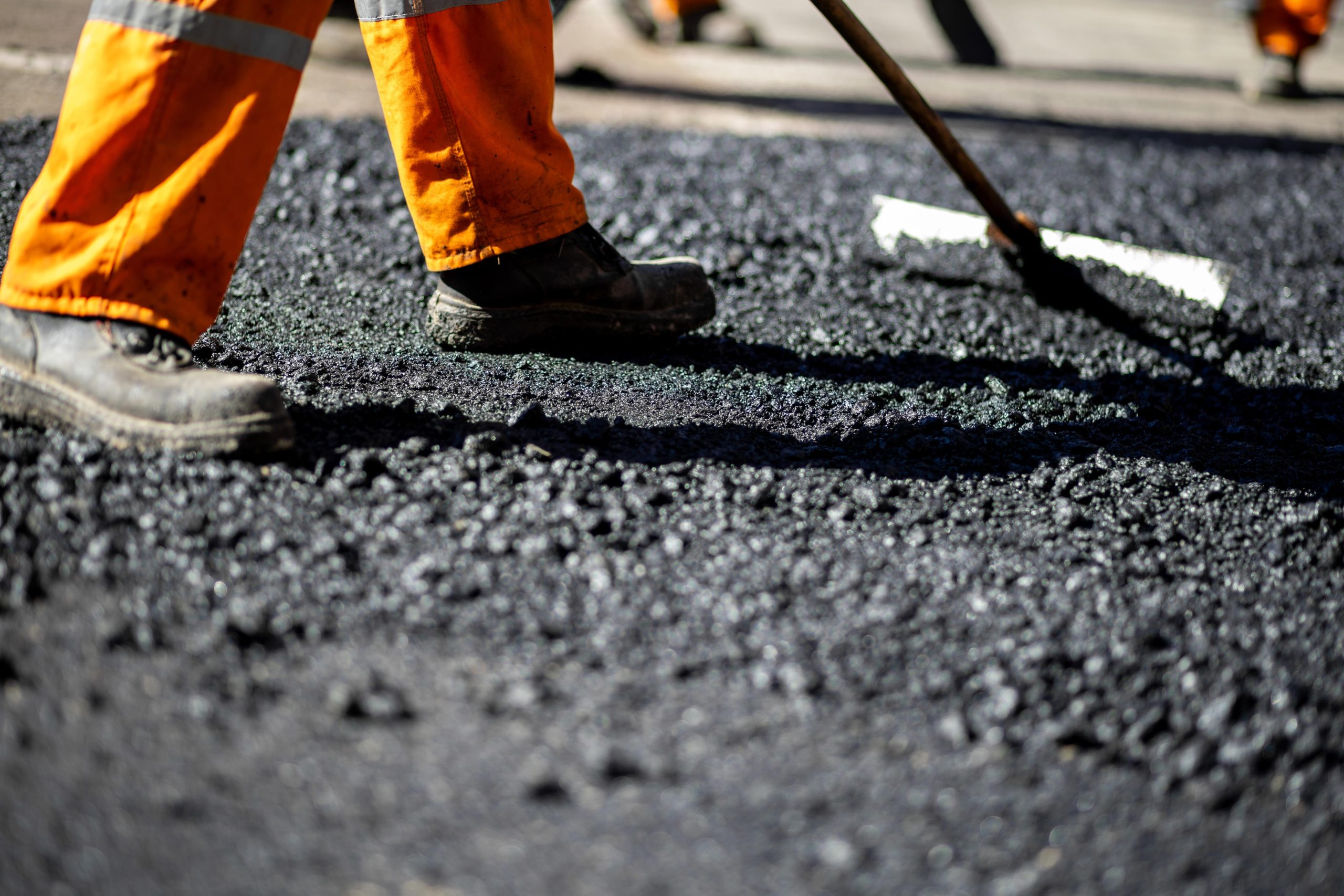
Hawaii researchers are testing whether plastic waste and abandoned fishing nets can be safely reused in asphalt roads.
Hawaii is struggling with plastic waste. Recycling is difficult and expensive for the island state, especially when the waste includes marine debris that remains in the surrounding ocean waters. Researchers in Hawaii are testing a way to turn discarded fishing nets and household plastic trash into asphalt roads. Early trials suggest these materials could give some of the islands’ waste a practical local use at the end of its life.
Jeremy Axworthy, a researcher at the Center for Marine Debris Research (CMDR) at Hawaiʻi Pacific University, presented the team’s results at the spring meeting of the American Chemical Society (ACS).
“This work investigates whether it’s responsible to use recycled plastics in Hawaii’s roads,” shares Axworthy. “By reusing plastic waste that is already in Hawaii, we can reduce the environmental and economic impacts of transporting waste plastics from the islands, incinerating it or dumping it in Hawaii’s overflowing landfills.”
Road asphalt offers a local outlet
Since 2020, most roads in Hawaii have been paved with polymer-modified asphalt (PMA) to make pavement stronger and longer-lasting. Compared with regular asphalt, PMA is more flexible and better able to resist cracking, rutting, and water damage.
Those qualities are especially useful in Hawaii’s tropical climate. PMA is produced by melting styrene-butadiene-styrene (SBS; a type of copolymer) pellets into a sticky asphalt binder made from petroleum. The binder is then mixed with hot aggregates (rocks and sand) inside a rotating drum so it fully coats the material.
The question was whether waste plastic could replace or supplement some of that material in road pavement as a more useful disposal route. The Hawaii Department of Transportation (HDOT) wanted to know how asphalt made with recycled plastics would perform, and whether it might release microplastics or related chemicals into the environment. To investigate, HDOT contacted environmental chemist Jennifer Lynch, director of CMDR and lead of the research team.
Fishing nets became test material
HDOT made two requests of Lynch’s team. First, the department needed derelict fishing nets collected from Hawaii’s marine environment to use in recycled plastic modified asphalt. “Foreign plastic derelict fishing gear is the largest contributor of Hawaii’s marine debris problem,” shares Lynch. “To date, CMDR’s Bounty Project, which pays a financial reward to licensed commercial fishers for marine debris removal, has removed 84 tons of large, derelict fishing gear from the Pacific Ocean.”
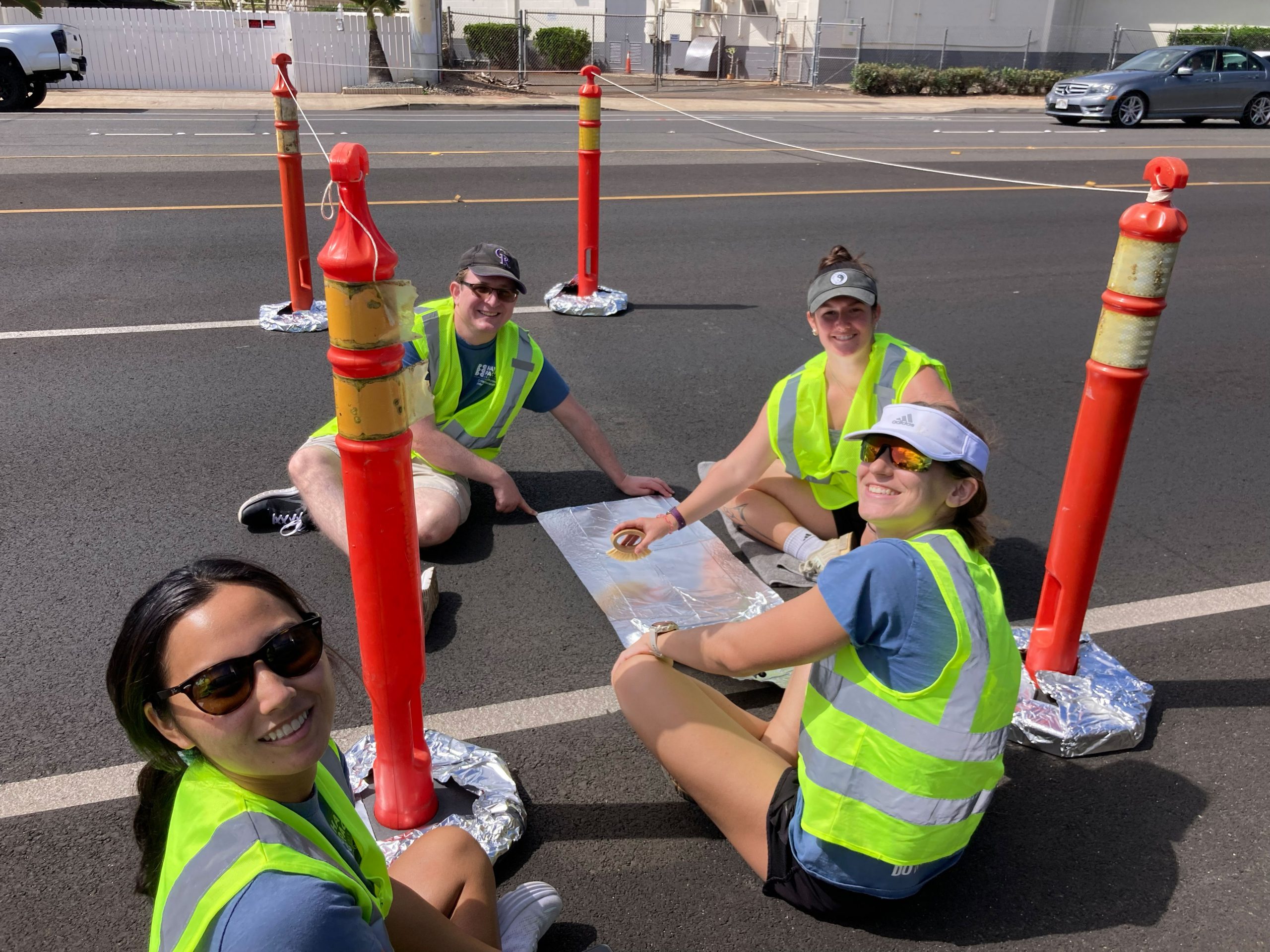
Second, HDOT asked the researchers to test whether pavement made with plastic waste shed more microplastics than standard pavement modified with SBS. “CMDR’s laboratory is equipped with state-of-the-art chemical instrumentation for quantifying and characterizing microplastics in environmental samples,” explains Lynch. “This capability is incredibly unique and impactful, especially when coupled to our marine debris-removal project and our mission to recycle the debris into long-term, locally necessary infrastructure products.”
Road dust tested the risk
After a company based in the United States converted the waste into materials suitable for asphalt, HDOT moved the experimental mixes onto real streets. A local paving company installed sections of a residential road on Oahu using asphalt that contained standard SBS, repurposed polyethylene from Honolulu recycling bins, and polyethylene from fishing nets. After roughly 11 months of normal traffic, Lynch’s team collected road dust from each pavement section to look for microplastic shedding that could affect nearby soil.
The researchers used a process that separates polymers from other road dust materials, including microplastics, larger plastic fragments, and tire rubber. With pyrolysis gas chromatography mass spectrometry (Py-GC-MS), they traced the polymers back to their sources: styrene and butadiene from standard PMA, polyethylene from pavement made with plastic waste and fishing nets, and isoprene and butadiene rubber from tires.
Early results showed that pavement made with recycled polyethylene did not shed more polymers than the control pavement made with SBS. Lynch’s team found the same pattern in mechanical performance tests using pavement samples and in simulated stormwater collected from the experimental road sections.
Microplastic-sized particles were found, but very few were identified as polyethylene, regardless of which pavement type was tested. The likely reason is that the polymers are melted into the asphalt binder, so fragments that break away are not pure plastic. They contain a mixture of rock, binder, and melted polymer chains.
The CMDR team is also comparing polymer shedding from pavement with polymer shedding from tires found in road dust. “In our initial Py-GC-MS data,” continues Lynch, “we saw tire wear swamps the signal of polyethylene by orders of magnitude, like gigantic peaks! We had to search the weeds of the chromatogram to find signs of polyethylene.”
Recycling remains an open test
More work is still needed to determine how durable the pavement will be over time. Even so, the researchers hope that turning used plastics into pavement could eventually help Hawaii reduce landfill pressure and marine debris.
“Some people think plastic recycling is a hoax — that it doesn’t work; it’s too challenging,” Lynch shares. “But this work demonstrates that recycling can work when society prioritizes sustainability.”
Meeting: ACS Spring 2026
The research was funded by the Hawaii Department of Transportation.
Never miss a breakthrough: Join the SciTechDaily newsletter.
Follow us on Google and Google News.
1 Comment
thanks for this