
Close Menu
    Facebook X (Twitter) Instagram
    SciTechDaily
    • Biology
    • Chemistry
    • Earth
    • Health
    • Physics
    • Science
    • Space
    • Technology
    Facebook X (Twitter) Pinterest YouTube RSS
    SciTechDaily
    Home»Technology»Bacteria-Sized Metallic Robots Take On Microplastics – And Win by Breaking Them Down
    Technology

    Bacteria-Sized Metallic Robots Take On Microplastics – And Win by Breaking Them Down

    By American Chemical SocietyJune 11, 2021No Comments3 Mins Read
    Facebook Twitter Pinterest Telegram LinkedIn WhatsApp Email Reddit
    Share
    Facebook Twitter LinkedIn Pinterest Telegram Email Reddit
    Metallic Microrobots
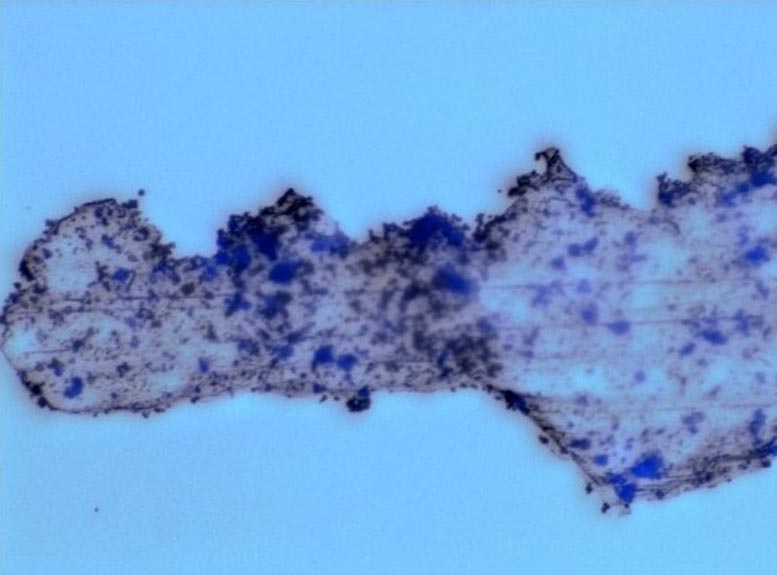
    Metallic microrobots (dark blue dots) colonize a jagged piece of microplastic under visible light, breaking down the plastic into smaller molecules. Credit: Adapted from ACS Applied Materials & Interfaces 2021, DOI: 10.1021/acsami.1c04559

    Light-powered microrobots made of bismuth vanadate and iron oxide can swim toward and degrade microplastics, offering a scalable solution for cleaning plastic pollution without mechanical intervention.

    Small pieces of plastic are everywhere, stretching from urban environments to pristine wilderness. Left to their own devices, it can take hundreds of years for them to degrade completely. Catalysts activated by sunlight could speed up the process, but getting these compounds to interact with microplastics is difficult. In a proof-of-concept study, researchers reporting in ACS Applied Materials & Interfaces developed self-propelled microrobots that can swim, attach to plastics, and break them down.

    While plastic products are omnipresent indoors, plastic waste and broken bits now litter the outdoors, too. The smallest of these — microplastics less than 5 mm in size — are hard to pick up and remove. In addition, they can adsorb heavy metals and pollutants, potentially harming humans or animals if accidentally consumed. So, previous researchers proposed a low-energy way to get rid of plastics in the environment by using catalysts that use sunlight to produce highly reactive compounds that break down these types of polymers. However, getting the catalysts and tiny plastic pieces in contact with each other is challenging and usually requires pretreatments or bulky mechanical stirrers, which aren’t easily scaled up. Martin Pumera and colleagues wanted to create a sunlight-propelled catalyst that moves toward and latches onto microparticles and dismantles them.

    To transform a catalytic material into light-driven microrobots, the researchers made star-shaped particles of bismuth vanadate and then evenly coated the 4-8 μm-wide structures with magnetic iron oxide. The microrobots could swim down a maze of channels and interact with microplastic pieces along their entire lengths. The researchers found that under visible light, microrobots strongly glommed onto four common types of plastics. The team then illuminated pieces of the four plastics covered with the microrobot catalyst for seven days in a dilute hydrogen peroxide solution. They observed that the plastic lost 3% of its weight and that the surface texture for all types changed from smooth to pitted, and small molecules and components of the plastics were found in the left-over solution. The researchers say the self-propelled microrobot catalysts pave the way toward systems that can capture and degrade microplastics in hard-to-reach locations.

    Reference: “A Maze in Plastic Wastes: Autonomous Motile Photocatalytic Microrobots against Microplastics” by Seyyed Mohsen Beladi-Mousavi, Soňa Hermanová, Yulong Ying, Jan Plutnar and Martin Pumera, 19 May 2021, ACS Applied Materials & Interfaces.
    DOI: 10.1021/acsami.1c04559

    The authors acknowledge funding from the European Regional Development Fund.

    Never miss a breakthrough: Join the SciTechDaily newsletter.
    Follow us on Google and Google News.

    American Chemical Society Materials Science Microplastics Nanotechnology Plastic Pollution Polymers Popular Robotics
    Share. Facebook Twitter Pinterest LinkedIn Email Reddit

    Related Articles

    Microrobots Swarm the Seas, Capturing Microplastics and Bacteria [Video]

    Artificial Muscles Flex for the First Time: Ferroelectric Polymer Innovation in Robotics

    Polymer-Eating Enzymes Make “Biodegradable” Plastics Truly Compostable

    MagicDNA: Tiny, Complex DNA Robots Designed in Minutes Instead of Days

    Remarkable New Fabric Efficiently Transfers Heat – Could Help Keep You Cool Even Without A/C

    Multifunctional Nanofiber Protects Against Explosions – For Soldiers, Firefighters, Astronauts and More

    Pavlov’s Soft Robot: Liquid Crystal Polymer Learns to Move and Grab Objects

    Tubulane Inspired Ultrahard Polymers Are Full of Holes, but Stop Bullets Better Than Solid Materials

    Spray Paint Battery Can be Painted on Virtually Any Surface

    Leave A Reply Cancel Reply

    • Facebook
    • Twitter
    • Pinterest
    • YouTube

    Don't Miss a Discovery

    Subscribe for the Latest in Science & Tech!

    Trending News

    Breakthrough Bowel Cancer Trial Leaves Patients Cancer-Free for Nearly 3 Years

    Natural Compound Shows Powerful Potential Against Rheumatoid Arthritis

    100,000-Year-Old Neanderthal Fossils in Poland Reveal Unexpected Genetic Connections

    Simple “Gut Reset” May Prevent Weight Gain After Ozempic or Wegovy

    2.8 Days to Disaster: Scientists Warn Low Earth Orbit Could Suddenly Collapse

    Common Food Compound Shows Surprising Power Against Superbugs

    5 Simple Ways To Remember More and Forget Less

    The Atomic Gap That Could Cost the Semiconductor Industry Billions

    Follow SciTechDaily
    • Facebook
    • Twitter
    • YouTube
    • Pinterest
    • Newsletter
    • RSS
    SciTech News
    • Biology News
    • Chemistry News
    • Earth News
    • Health News
    • Physics News
    • Science News
    • Space News
    • Technology News
    Recent Posts
    • After 37 Years, the World’s Longest-Running Soil Warming Experiment Uncovers a Startling Climate Secret
    • NASA Satellite Captures First-Ever High-Res View of Massive Pacific Tsunami
    • ADHD Isn’t Just a Deficit: Study Reveals Powerful Hidden Strengths
    • Scientists Uncover “Astonishing” Hidden Property of Light
    • Scientists Discover Stem Cells That Could Regrow Teeth and Bone
    Copyright © 1998 - 2026 SciTechDaily. All Rights Reserved.
    • Science News
    • About
    • Contact
    • Editorial Board
    • Privacy Policy
    • Terms of Use

    Type above and press Enter to search. Press Esc to cancel.