
Close Menu
    Facebook X (Twitter) Instagram
    SciTechDaily
    • Biology
    • Chemistry
    • Earth
    • Health
    • Physics
    • Science
    • Space
    • Technology
    Facebook X (Twitter) Pinterest YouTube RSS
    SciTechDaily
    Home»Earth»NASA Satellite Lets Scientists Track Ocean Microplastics From Space
    Earth

    NASA Satellite Lets Scientists Track Ocean Microplastics From Space

    By Sofie Bates, NASA’s Earth Science NewsJuly 3, 2021No Comments3 Mins Read
    Facebook Twitter Pinterest Telegram LinkedIn WhatsApp Email Reddit
    Share
    Facebook Twitter LinkedIn Pinterest Telegram Email Reddit
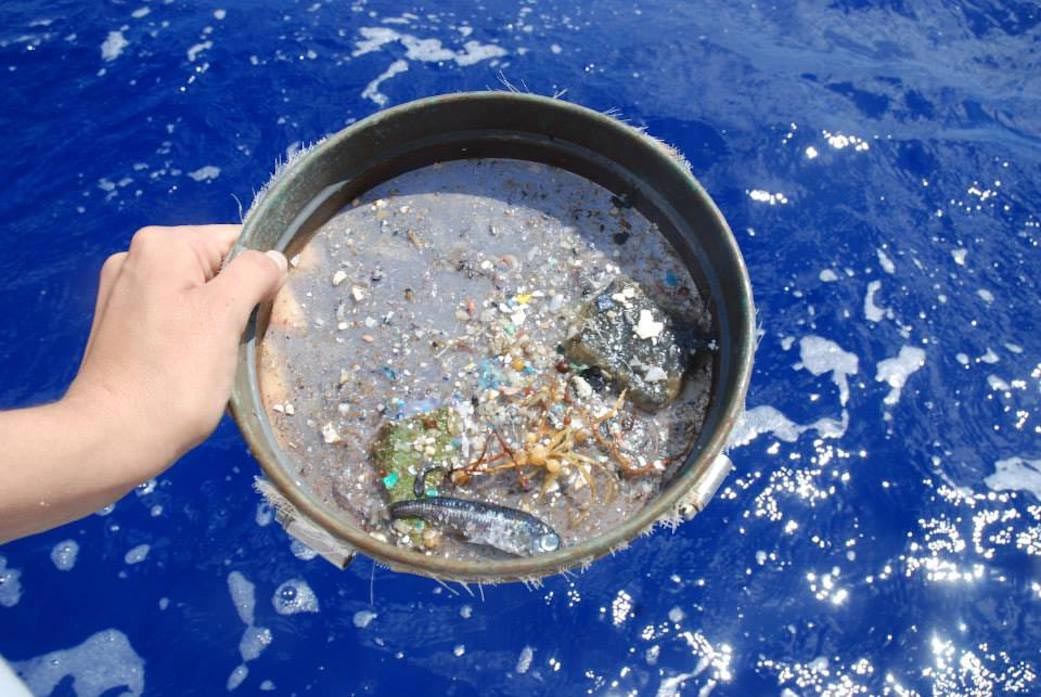
    Microplastics Sifted From Ocean
    Assortment of microplastics that were sifted from the ocean. Credit: NASA

    NASA satellite data now helps scientists detect ocean microplastics by identifying unusually smooth sea surfaces, offering a powerful new monitoring tool.

    Scientists from the University of Michigan have developed an innovative way to use NASA satellite data to track the movement of tiny pieces of plastic in the ocean.
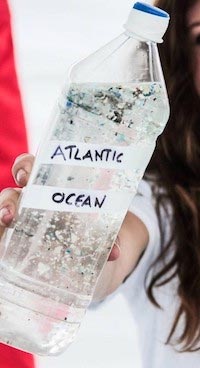
    Microplastics From Atlantic Ocean
    An assortment of microplastic fragments, filaments, and fibers from the North Atlantic Subtropical Gyre displayed in a disposable water bottle. Credit: Courtesy of Nicole Trenholm / Ocean Research Project

    Microplastics form when plastic trash in the ocean breaks down from the sun’s rays and the motion of ocean waves. These small flecks of plastic are harmful to marine organisms and ecosystems. Microplastics can be carried hundreds or thousands of miles away from the source by ocean currents, making it difficult to track and remove them. Currently, the main source of information about the location of microplastics comes from fisher boat trawlers that use nets to catch plankton – and, unintentionally, microplastics.

    The new technique relies on data from NASA’s Cyclone Global Navigation Satellite System (CYGNSS). This is a constellation of eight small satellites that measure wind speeds above Earth’s oceans and provides information about the strength of hurricanes. CYGNSS also uses radar to measure ocean roughness, which is affected by several factors including wind speed and debris floating in the water.

    Working backward, the team looked for places where the ocean was smoother than expected given the wind speed, which they thought could indicate the presence of microplastics. Then they compared those areas to observations and model predictions of where microplastics congregate in the ocean. The scientists found that microplastics tended to be present in smoother waters, demonstrating that CYGNSS data can be used as a tool to track ocean microplastic from space.


    Scientists from the University of Michigan have developed a new way to find sources of ocean microplastics and track their movements using NASA satellite data. Credit: University of Michigan

    The results were published online on June 9, 2021, in IEEE Transactions of Geoscience and Remote Sensing. The work was done by Chris Ruf, professor at the University of Michigan and principal investigator for CYGNSS, and undergraduate student Madeline C. Evans.

    Reference: “Toward the Detection and Imaging of Ocean Microplastics With a Spaceborne Radar” by Madeline C. Evans and Christopher S. Ruf, 9 June 2021, IEEE Transactions of Geoscience and Remote Sensing.
    DOI: 10.1109/TGRS.2021.3081691

    Never miss a breakthrough: Join the SciTechDaily newsletter.
    Follow us on Google and Google News.

    Ecology Microplastics NASA Oceanography Plastic Pollution University of Michigan
    Share. Facebook Twitter Pinterest LinkedIn Email Reddit

    Related Articles

    Tracking Ocean Microplastics From Space – See the Great Pacific Garbage Patch Like Never Before

    Science and Social Media Show How Ship’s Plastic Cargo Dispersed From Florida to Norway

    Microplastics Found in Europe’s Largest Ice Cap – In a Remote and Pristine Area of Vatnajökull Glacier

    Plastic Pollution Is Everywhere: Research Reveals How It Travels

    Mount Everest: Microplastics in the Death Zone

    Plastic Flow Into Ocean Expected to Triple by 2040, But Action Could Stem Tide More Than 80%

    Each Year More Than 1000 Tons of Plastic Rains on Western US Protected Lands

    The Missing 99%? Highest Ever Level of Microplastics Found on Seafloor

    Four Billion Microplastic Particles Discovered in the Waters of Tampa Bay

    Leave A Reply Cancel Reply

    • Facebook
    • Twitter
    • Pinterest
    • YouTube

    Don't Miss a Discovery

    Subscribe for the Latest in Science & Tech!

    Trending News

    Bone-Strengthening Discovery Could Reverse Osteoporosis

    Scientists Uncover Hidden Trigger Behind Stem Cell Aging

    Scientists Find Way to Reverse Fatty Liver Disease Without Changing Diet

    Could Humans Regrow Limbs? New Study Reveals Promising Genetic Pathway

    Scientists Reveal Eating Fruits and Vegetables May Increase Your Risk of Lung Cancer

    Scientists Reverse Brain Aging With Simple Nasal Spray

    Scientists Uncover Potential Brain Risks of Popular Fish Oil Supplements

    Scientists Discover a Surprising Way To Make Bread Healthier and More Nutritious

    Follow SciTechDaily
    • Facebook
    • Twitter
    • YouTube
    • Pinterest
    • Newsletter
    • RSS
    SciTech News
    • Biology News
    • Chemistry News
    • Earth News
    • Health News
    • Physics News
    • Science News
    • Space News
    • Technology News
    Recent Posts
    • Scientists Unlock Hidden Secrets of 2,300-Year-Old Mummies Using Cutting-Edge CT Scanner
    • Men vs. Women: Scientists Uncover Dramatic Differences in How the Immune System Ages
    • Eating Chili Peppers Linked to Longer Life
    • Bread Might Be Making You Gain Weight Even Without Eating More
    • 4,000-Year-Old Tablets Reveal Lost Magic, Medicine, and Ancient Kings
    Copyright © 1998 - 2026 SciTechDaily. All Rights Reserved.
    • Science News
    • About
    • Contact
    • Editorial Board
    • Privacy Policy
    • Terms of Use

    Type above and press Enter to search. Press Esc to cancel.