
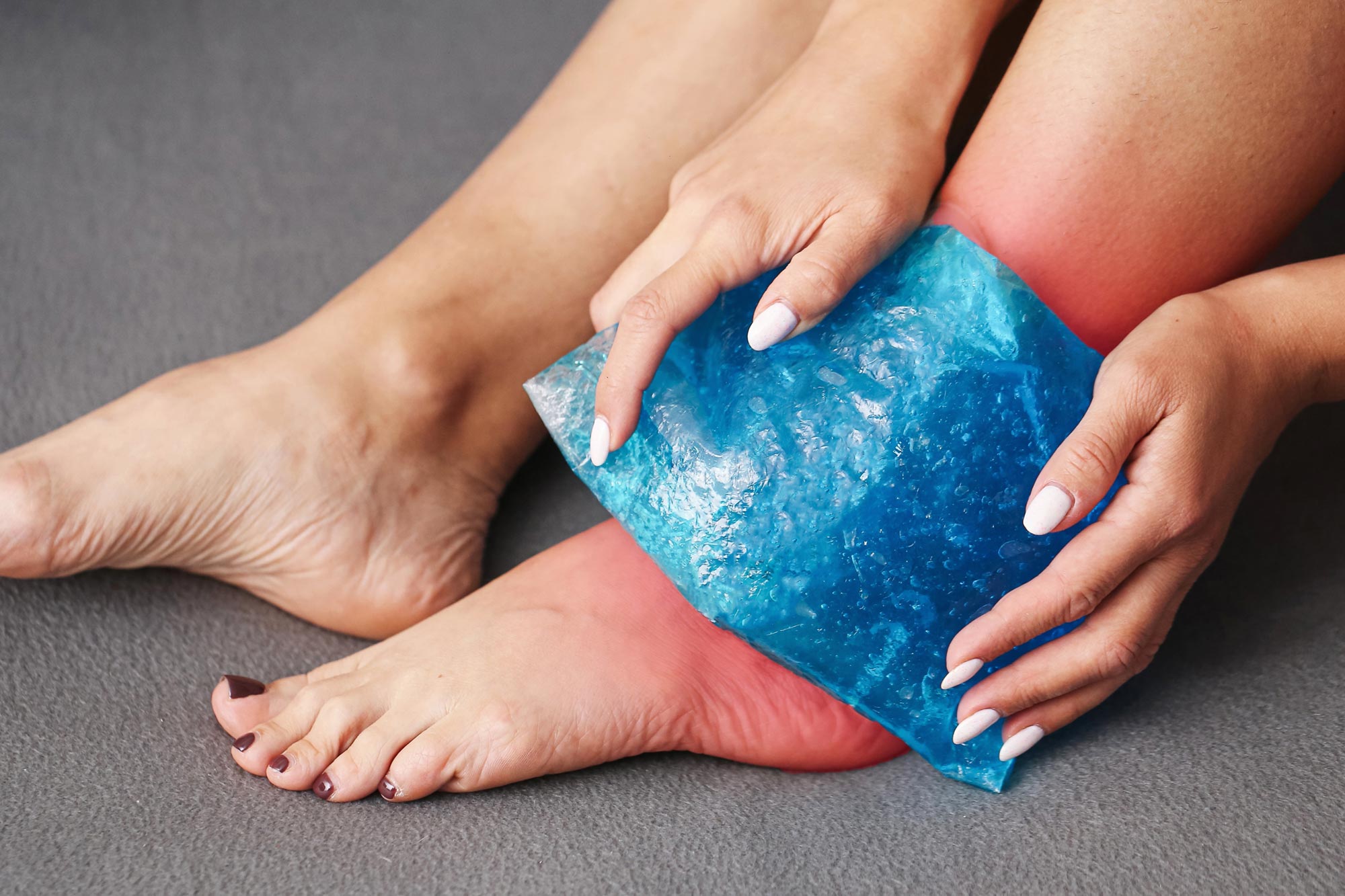
A new study is raising questions about one of the most common injury treatments: ice.
Icing a sprained ankle or aching muscle has long been a go to way to ease pain and swelling, but new research suggests it may come with a tradeoff. Over time, icing could slow recovery and make pain last longer.
In a preclinical study published in Anesthesiology, McGill University researchers found that cryotherapy (icing) did reduce pain at first. However, in some cases, the overall recovery period more than doubled.
“These results highlight a paradox: treatments that reduce inflammation and relieve pain in the short term may, in some cases, interfere with the biological processes required for full recovery,” said lead author Lucas Lima, a research associate at the Alan Edwards Center for Research on Pain.
Pain relief may slow healing
Lima said the results add to a growing line of research that is raising questions about the lasting value of common approaches that suppress inflammation. Earlier studies have found that drugs such as acetylsalicylic acid (Aspirin) may lengthen how long pain persists, while animal studies have suggested that icing can slow tissue repair.
The new work offers the first direct evidence that icing may also change how long pain lasts. The findings are based on experiments in mice designed to model inflammatory injuries and injuries related to exercise.
A familiar injury ritual faces scrutiny
Icing is often used as part of the RICE protocol, a common injury care method that includes rest, ice, compression, and elevation. Athletes, clinicians, and people treating everyday injuries widely rely on it, but the researchers said evidence for its longer-range benefits remains limited.
Human evidence is still pending
“Our results suggest we need to better understand when anti-inflammatory strategies are helpful and when they are not,” said senior author Jeffrey Mogil, James McGill Distinguished Professor and E. P. Taylor Chair in Pain Studies.
Mogil stressed that the findings cannot yet be applied directly to people. A clinical trial is now testing whether a similar effect occurs in patients recovering from procedures such as wisdom tooth removal.
Reference: “Cryotherapy and Duration of Inflammatory Pain in Mice” by Lucas Vasconcelos Lima, Charlotte Pittman, Boaz Laor, Injy Fouda, Mohamad Karaky, Melanie Di Maria, Olivia Cargnel, Parmis Kanani, Aitana Rickert-Llàcer, Natalie C. Wilcox, Susana G. Sotocinal, Nader Ghasemlou, Luda Diatchenko and Jeffrey S. Mogil, 8 May 2026, Anesthesiology.
DOI: 10.1097/ALN.0000000000006066
The study was supported by the Canadian Institutes of Health Research Foundation and the Louise and Alan Edwards Foundation.
Never miss a breakthrough: Join the SciTechDaily newsletter.
Follow us on Google and Google News.
1 Comment
For millions of years, humans survived sprained ankles without icing them. Who are we to think we know better? The same could probably be said for most 20th and 21st century medical “discoveries.”