

Research indicates that training near the point of failure enhances muscle growth, although its effects on strength gains remain unclear.
When engaging in resistance training, such as weight lifting, there is significant interest in understanding how approaching muscle failure—the point where you can no longer complete another repetition—impacts your results.
While research has looked at this concept in different ways, to date, no meta-analysis has explored the pattern (i.e., linear or non-linear) of how the distance from failure (measured by repetitions in reserve) affects changes in muscle strength and size.
As such, it’s still unclear how close to failure one needs to go to maximize muscle growth and strength.
Researchers from Florida Atlantic University and collaborators analyzed how training close to failure or not impacts muscle growth and strength. The study primarily looked at how training close to failure affects muscle growth in the main muscles used in an exercise. For example, if an individual was doing leg presses, the focus was on how training close to failure affects the quadriceps.
Researchers estimated the number of repetitions in reserve, which means how many more reps you could have done before reaching failure. They collected data from 55 various studies and ran detailed statistical analyses to see how different reps in reserve levels affected strength and muscle growth.
Findings on Muscle Growth and Strength Training
Results of the study, published in the journal Sports Medicine, found that how close you train to failure doesn’t have a clear impact on strength gains. Whether you stop far from failure or very close to it, your strength improvement appears to be similar. On the other hand, muscle size (hypertrophy) does seem to benefit from training closer to failure. The closer you are to failure when you stop your sets, the more muscle growth you tend to see.
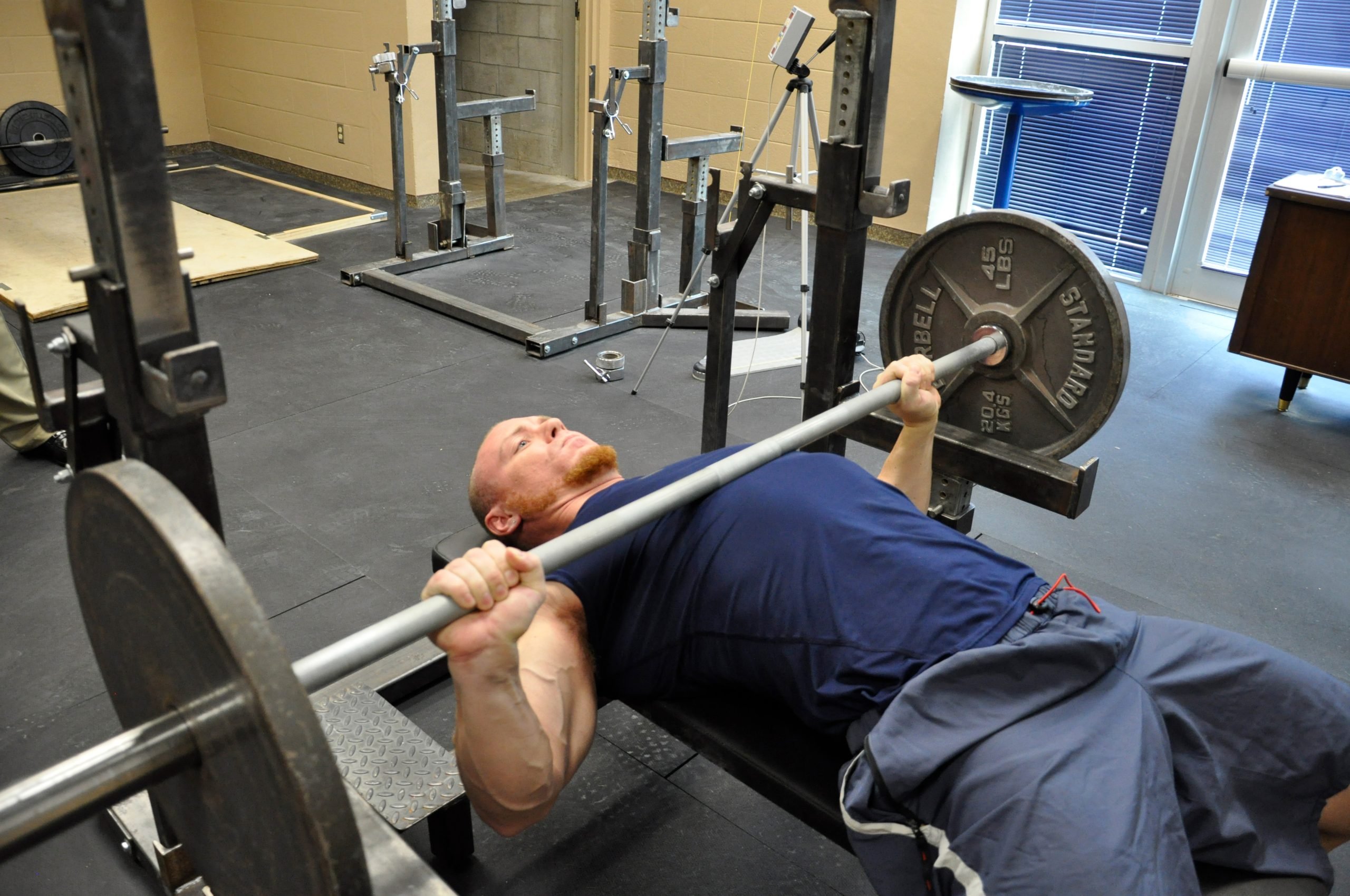
“If you’re aiming for muscle growth, training closer to failure might be more effective. In other words, it doesn’t matter if you adjust training volume by changing sets or reps; the relationship between how close you train to failure and muscle growth remains the same,” said Michael C. Zourdos, Ph.D., senior author and professor and chair of the Department of Exercise Science and Health Promotion within FAU’s Charles E. Schmidt College of Science. “For strength, how close you push to failure doesn’t seem to matter as much.”
The researchers suggest that individuals who aim to build muscle should work within a desired range of 0-5 reps short of failure for optimized muscle growth or while minimizing injury risk. For strength training, they suggest individuals should work toward heavier loads instead of pushing their muscles to failure. As such, they recommend that to train to gain strength, individuals should stop about 3-5 reps short of failure without applying additional physical strain on the body.
Enhanced Perception and Long-term Training Considerations
“Training closer to failure enhances the accuracy of self-reported repetitions in reserve,” said Zac P. Robinson, Ph.D., first author and a Ph.D. graduate of FAU’s Department of Exercise Science and Health Promotion. “When people estimate how many reps they have left, this perception influences the weights they choose. If the estimation is off, they might use lighter weights than needed, which could limit strength gains. On the flip side, our meta-analysis shows that training closer to failure also leads to greater muscle growth. So, for the average individual, training close to failure may be the best option – as it seems to improve the accuracy of our perception of effort as well as gains in muscle size.”
Findings help underscore the difficulties of training close to failure, which can be tough and harder to recover from, potentially impacting long-term performance negatively. In addition, the researchers say that training closer to failure might better simulate the conditions and experiences of a maximal strength test, commonly used in strength training programs, rehabilitation, and athletic performance assessments to gauge an individual’s strength capabilities and track progress over time.
“As the load increases, motor patterns change, which means performing sets closer to failure can more closely mimic the demands of max strength assessments,” said Zourdos. “This approach aligns with the principle of specificity by exposing you to similar motor patterns and psychological challenges. Moreover, training near failure may also improve psychological factors like visualization, which are important for achieving maximal strength.”
Results from the study could help guide future research and provide valuable insights for trainers on how proximity to failure affects muscle growth and strength. However, researchers say the exact numerical relationship between training close to failure and strength gain remains unclear and future studies should be deliberately designed to explore the continuous nature of the effects in larger samples.
Reference: “Exploring the Dose–Response Relationship Between Estimated Resistance Training Proximity to Failure, Strength Gain, and Muscle Hypertrophy: A Series of Meta-Regressions” by Zac P. Robinson, Joshua C. Pelland, Jacob F. Remmert, Martin C. Refalo, Ivan Jukic, James Steele and Michael C. Zourdos, 6 July 2024, Sports Medicine.
DOI: 10.1007/s40279-024-02069-2
Never miss a breakthrough: Join the SciTechDaily newsletter.
Follow us on Google and Google News.
3 Comments
If you want muscle growth, then you need to concentrate on working the muscle(s).
I watch people in the gym all the time doing exercises wrongly and never gaining much in the way of size. Too many want arm size and do variations of bicep curls, cheating all the way up and then dropping the weight like a stone at the end, effectively 1/2 of a rep. Given that the tripes make sup 2/3 of the arm muscle, that is actually the muscle you want to work for arm size and strength. NOT the biceps.
But if you are going to any exercise, ensure that you are focusing on the muscle you are working and not cheating. Cheating might work if you ar ealready bulked up but it isn’t going to help you much if you’re not.
From the article (edited)
to build muscle work within a desired range of 0-5 reps short of failure
to gain strength stop about 3-5 reps short of failure
We need a study for this? Is there a meaningful difference in these two sets of advice?
The gay guys that wished to rape us said that they want to rape and rob you when you are too tired from the gym. That they want you to try to wrestle them to escape but you are too weak from sore muscles and you fail. Then they squeeze and rip your muscles painful. But they don’t want you dead tired they want a tiny bit of struggle. Because it makes them horny like that. So they cleverly add this advice to you.