
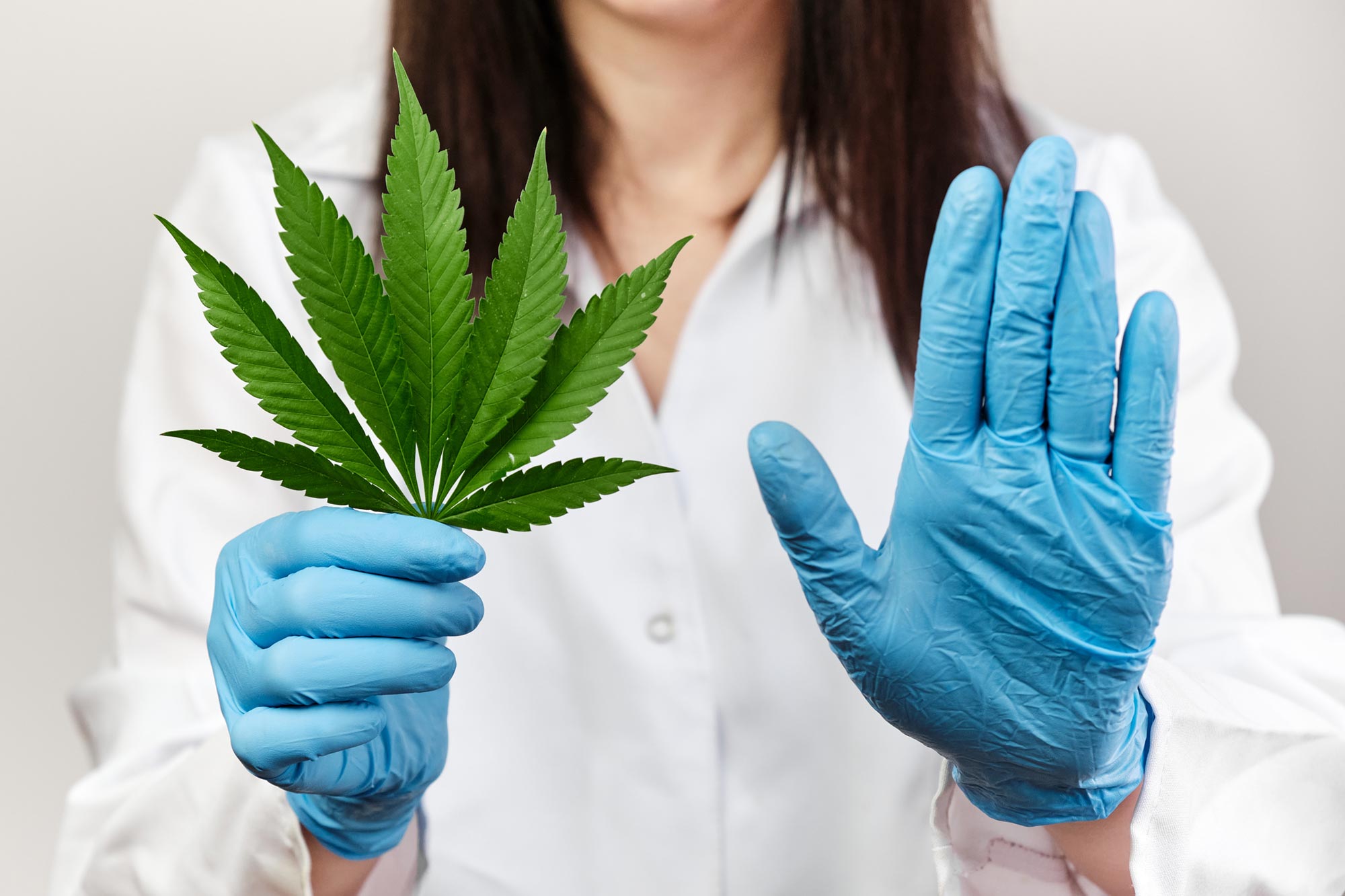
Adolescent cannabis use was linked to higher risks of later psychotic, bipolar, depressive, and anxiety disorders.
A large new study published in JAMA Health Forum on Feb. 20, 2026, reports that teens who use cannabis may have a substantially greater chance of developing serious psychiatric conditions by young adulthood.
The longitudinal study followed 463,396 adolescents ages 13 to 17 through age 26 and found that cannabis use in the past year during adolescence was associated with significantly higher risks of newly diagnosed psychotic disorders, which doubled; bipolar disorders, which doubled; depressive disorders; and anxiety disorders.
Researchers from Kaiser Permanente, the Public Health Institute’s Getting it Right from the Start, the University of California, San Francisco and the University of Southern California conducted the study, which was funded by a grant from NIH’s National Institute on Drug Abuse (R01DA0531920).
Records tracked risk over time
The research used electronic health record data from routine pediatric visits conducted from 2016 through 2023. On average, cannabis use was recorded 1.7 to 2.3 years before a psychiatric diagnosis appeared. Because the study followed adolescents over time, its design adds stronger evidence that cannabis exposure during the teen years may be a risk factor for later mental illness.

“As cannabis becomes more potent and aggressively marketed, this study indicates that adolescent cannabis use is associated with double the risk of incident psychotic and bipolar disorders, two of the most serious mental health conditions,” said Lynn Silver, M.D., program director of the Getting it Right from the Start, a program of the Public Health Institute, and a study co-author. “The evidence increasingly points to the need for an urgent public health response — one that reduces product potency, prioritizes prevention, limits youth exposure and marketing and treats adolescent cannabis use as a serious health issue, not a benign behavior.”
Cannabis is the most commonly used illicit drug among adolescents in the United States. The Monitoring the Future study shows that use increases as students get older, rising from about 8% in 8th grade to 26% in 12th grade. The 2024 National Survey on Drug Use and Health also found that more than 10% of U.S. teens ages 12 to 17 reported cannabis use in the past year. At the same time, average THC levels in California cannabis flower now exceed 20%, far above levels seen in earlier decades, while cannabis concentrates can contain more than 95% THC.

Routine screening broadened evidence
Unlike many earlier studies, this research looked at any self-reported cannabis use in the past year, using universal screening of teens during ordinary pediatric care. It did not limit the analysis to heavy cannabis use or cannabis use disorder.
“Even after accounting for prior mental health conditions and other substance use, adolescents who reported cannabis use had a substantially higher risk of developing psychiatric disorders—particularly psychotic and bipolar disorders,” said Kelly Young-Wolff, Ph.D., lead author of the study and senior research scientist at the Kaiser Permanente Division of Research. “This study adds to the growing body of evidence that cannabis use during adolescence could have potentially detrimental, long-term health effects. It’s imperative that parents and their children have accurate, trusted, and evidence-based information about the risks of adolescent cannabis use.”
Disparities may sharpen the concern
The study also found higher cannabis use among adolescents enrolled in Medicaid and among those living in more socioeconomically deprived neighborhoods. That pattern raises concern that broader cannabis commercialization could worsen existing disparities in mental health.
Reference: “Adolescent Cannabis Use and Risk of Psychotic, Bipolar, Depressive, and Anxiety Disorders” by Kelly C. Young-Wolff, Catherine A. Cortez, Stacey E. Alexeeff, Lynn D. Silver, Rosalie Liccardo Pacula, Natalie E. Slama, Alisa A. Padon, Derek D. Satre, Cynthia I. Campbell, Maria T. Koshy, Monique B. Does and Stacy A. Sterling, 20 February 2026, JAMA Health Forum.
DOI: 10.1001/jamahealthforum. 2025.6839
This study was supported by grant R01 DA0531920 from the NIH/NIDA.
Never miss a breakthrough: Join the SciTechDaily newsletter.
Follow us on Google and Google News.
7 Comments
So it isn’t perfectly harmless and doesn’t treat or cure every disease known to man?😂😂😂
How I wish many more of the youth (and public) will read this article!
Because after 100 years, as tobacco has been found to be a grave disaster to our health, it is sadly now that a more lethal alternative to smoking is being actively promoted to our communities and youth.
Are you actually staying that cannabis is lethal plant?
I love this website for the science content, but articles like these have me second guessing whether or not SciTechDailey is a non-biased science source, or a pay-per-adv “news source”.
You seem to only post anti-cannabis articles. Why is that?
Maybe because it’s a killer that’s why
But smoking tobacco and drinking alcohol is okay?
A brief scan of the reference article failed to reveal any mention of “allergy…MSG…soy or TBHQ,” dietary factors long known to contribute to mental health problems. Also, as a now eighty-two year old adult lifetime non-smoker allergic to multiple foods, food additives and tobacco (only learned of in late 1981) raised in a smoking household and exposed to secondhand smoke on-the-job and in public places until those were banned, I know that cigarette smoke is not nearly as harmful as good quality foods adulterated with toxic FDA approved food additives (above, minimally). Any medical study that doesn’t also factor-in food/tobacco allergies (Dr. Arthur F. Coca, by 1935) and FDA approved food poisoning since the late 1960s is basically worthless ignorant and incompetent propaganda. And, no, I’m not in favor of people smoking, especially any addictive substances, just for so-called “experts” to get it right.