
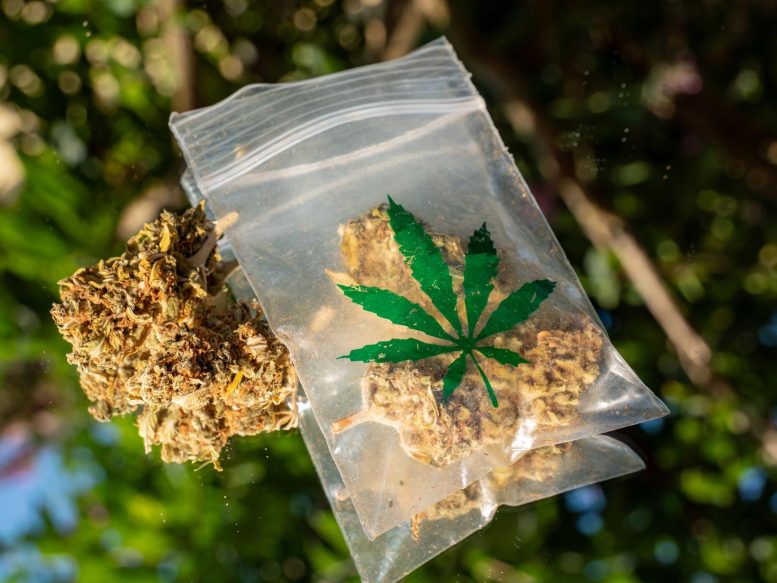
New research from the Addiction and Mental Health Group at the University of Bath highlights challenges for people trying to give up the drug ‘Spice.’
Research published on September 17, 2021, by psychologists at the University of Bath suggests that ‘Spice’ – which contains synthetic drugs originally designed to mimic the effects of cannabis – is more harmful than cannabis and that users are likely to experience more severe withdrawal symptoms when attempting to quit.
Over two thirds (67%) of participants they observed who tried to give up Spice reported experiencing at least three withdrawal symptoms after attempting to quit, including sleep issues, irritability, and low mood. This was significantly worse than for people trying to give up cannabis.
Spice is a colloquial name given to a class of drugs known as ‘synthetic cannabinoid receptor agonists,’ often abbreviated to ‘SCRAs’. These drugs are produced synthetically and are typically sprayed onto an herbal material that looks similar to cannabis and can be smoked.
Higher Potency and Addiction Potential Compared to Cannabis
Due to its ease of accessibility and to avoid detection on drug tests, Spice is sometimes used as a substitute for cannabis (or other drugs), particularly among homeless people or those in prison. Although they act on the same brain receptors, Spice is far more potent than cannabis which may make it more addictive and increase the severity of withdrawal.
Withdrawal is the experience of unpleasant symptoms when abruptly stopping or decreasing the intake of a drug that has been used in large amounts for a long period of time. This occurs as the body attempts to adjust itself to the absence of drug effects, which can last for around two weeks, and may lead people to use more of the drug to provide relief from these symptoms. The more severe the symptoms of withdrawal are, the harder it may be to stop using that drug.
In this study, published in the journal Psychopharmacology (Friday 17 September 2021: 00.01), researchers from the Addiction and Mental Health Group in the University of Bath’s Department of Psychology asked a sample of participants who use both spice and cannabis to compare their effects across different measures.
Their assessments were designed to indicate how likely a drug is to result in long-term harm, such as how severe withdrawal symptoms are, how long the effects last, and how quickly tolerance develops (meaning that larger amounts of the drug are required to produce the same effect as before). They also asked participants which withdrawal symptoms they experienced when attempting to stop.
Faster Onset, Shorter Duration—but Greater Harm
Participants consistently rated the effects of Spice as more harmful than cannabis, noting that these effects were quicker to emerge but had a shorter duration than cannabis. However, participants reported that tolerance to the effects develops more quickly for Spice, meaning that people may have to use larger doses more regularly to achieve the same effect as before.
Participants also rated the withdrawal symptoms as more severe compared to cannabis, meaning that it may be harder for them to quit. The symptoms participants reported experiencing after attempting to stop using spice included sleep issues, irritability, low mood, heart palpitations, and craving (a strong desire to use more of the drug).
The study includes 284 people participating in the Global Drug Survey who previously tried to stop using Spice. This is the largest study of Spice withdrawal ever conducted and the first to compare the severity of symptoms with those of cannabis.
Treatment and Drug Substitution
Sam Craft, lead author and PhD student funded by the Medical Research Council, explained: “Although originally produced as a legal alternative to cannabis, our findings show that Spice is a far more harmful drug and people attempting to quit are likely to experience a range of severe withdrawal symptoms. It’s therefore important that greater effort is made to ensure that Spice is not used as a substitute for cannabis, or any other drug, and people experiencing problems with Spice should be supported with treatment.”
Dr. Tom Freeman, senior author and Director of the Addiction and Mental Health Group at the University of Bath added: “These findings identify severe withdrawal symptoms as a key clinical problem among people using Spice, and highlight the urgent need to develop effective treatments to help people quit.”
Earlier this year, researchers at the University of Bath were awarded £1.3 million to develop a portable device that could be used to give on-the-spot readings for the spice.
Reference: “Clinical withdrawal symptom profile of synthetic cannabinoid receptor agonists and comparison of effects with high potency cannabis” by Sam Craft, Jason A. Ferris, Monica J. Barratt, Larissa J. Maier, Michael T. Lynskey, Adam R. Winstock and Tom P. Freeman, 17 September 2021, Psychopharmacology.
DOI: 10.1007/s00213-021-05945-1
Never miss a breakthrough: Join the SciTechDaily newsletter.
Follow us on Google and Google News.
2 Comments
U of Bath, a reliable source of negative news on cannabis. Wonder where their funding comes from? For the record, marijuana withdrawal is hardly noticeable, imhe. “Spice” of course is another unfortunate consequence of the “war on drugs,” which has certainly prolonged the popularity of drug use among Youth — all that scary publicity only serves to increase drugs’ appeal among the more adventurous ones.
I used Synthetic Cannabis for a couple of years in college, as it was the only widely available drug (we imported it as incense).
Terrible experiences. Bad trips, flashbacks, nearly impossible to quit without needing a “filler” addiction, in my case, rum and prescription medications.
Spice is a viscous vice, designed to be sold to ones with no access to “conventional” drugs, like teenagers and residents of certain countries.