
Close Menu
    Facebook X (Twitter) Instagram
    SciTechDaily
    • Biology
    • Chemistry
    • Earth
    • Health
    • Physics
    • Science
    • Space
    • Technology
    Facebook X (Twitter) Pinterest YouTube RSS
    SciTechDaily
    Home»Biology»Why Bird Nests Attract Flying Insects and Parasites
    Biology

    Why Bird Nests Attract Flying Insects and Parasites

    By FrontiersAugust 4, 2020No Comments3 Mins Read
    Facebook Twitter Pinterest Telegram LinkedIn WhatsApp Email Reddit
    Share
    Facebook Twitter LinkedIn Pinterest Telegram Email Reddit
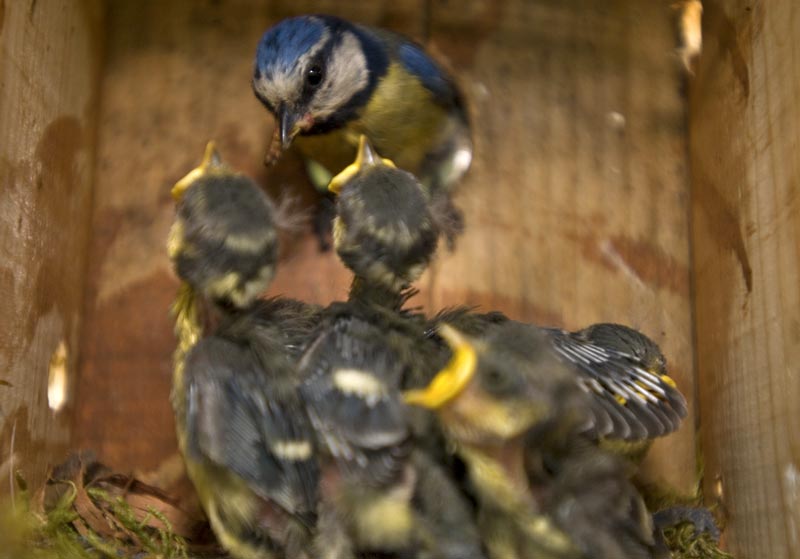
    Blue Tits, Cyanistes caeruleus
    Parent visiting chicks. Credit: Santiago Merino / National Museum of Natural Sciences Madrid

    Researchers in Spain study how disease vectors such as flying midges sense differences in gas concentration in order to locate their hosts.

    Flying insects and parasites are often vectors for disease, but a mosquito needs to first find someone before they can bite them. In a recent study published in Frontiers in Ecology and Evolution, researchers examined bird nests in order to understand how insects and parasites detect gases such as carbon dioxide and methane as a way to locate their hosts.

    The researchers focused on blue tit bird nest boxes located in a deciduous forest in central Spain. They found that the nests contained more biting midges when concentrations of carbon dioxide were higher inside the nest compared to the forest air. “This is important because biting midges are the main vector of Haemoproteus, the most abundant blood parasite infecting birds in our study area,” says Dr. Santiago Merino of the National Museum of Natural Sciences in Madrid, one of the researchers on the study.
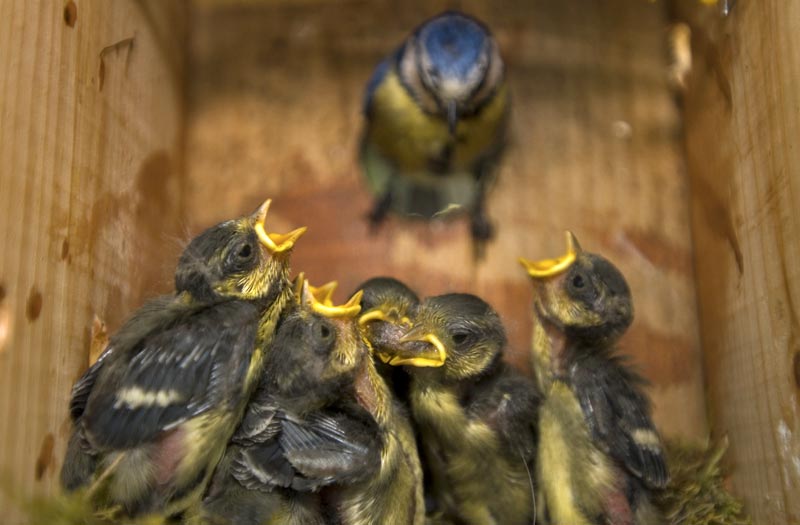
    Blue Tits Begging Chicks
    Begging chicks. Credit: Santiago Merino / National Museum of Natural Sciences Madrid

    With the looming threat of climate change, rising carbon levels will affect every aspect of our ecosystem – from the largest to the smallest organism. “Predictions expect an increase of diseases in northern latitudes due to climate change,” he says, “But factors like gas concentrations and temperature may affect the incidence of diseases,” as well.
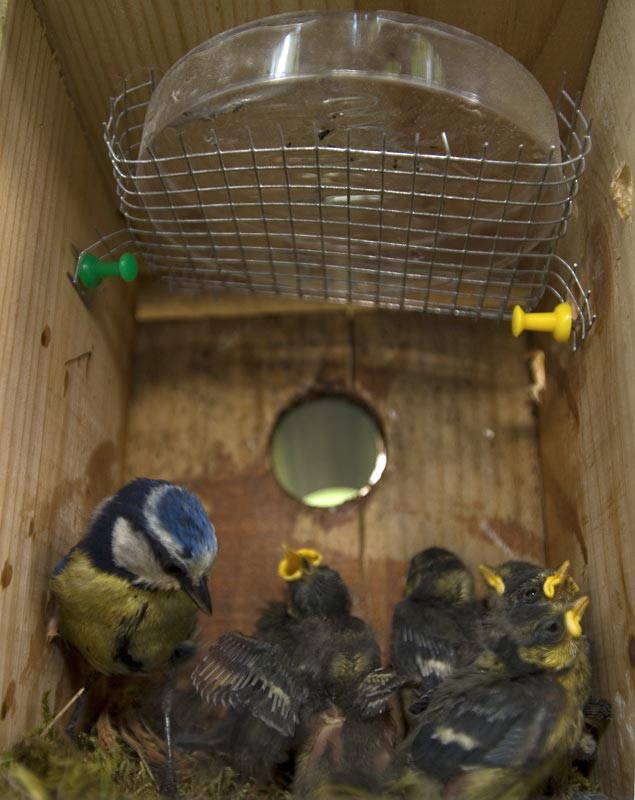
    Blue Tits Feeding Chicks
    Feeding the chicks. Credit: Santiago Merino / National Museum of Natural Sciences Madrid

    The first step to understanding the future of course, is studying the present. “We want to know how the relationship between gas concentrations and parasite attraction is changing,” Merino says, “in order to adjust our predictions on extension of diseases.”

    Bird nesting cavities offered a unique opportunity to study the interaction between gas concentration and parasites since the enclosed space allows for better comparisons. In addition to the positive correlation between carbon dioxide and biting midges, Merino and his colleagues found that there were more mites inside the nests when carbon dioxide was higher, and more black flies when methane was lower. The methane concentration may be related to bacteria in the nesting materials.

    The authors also factored in variables such as temperature, brood size, and time to their analyses. When there were no nestlings present in the nest boxes, carbon dioxide concentration inside the nest was not significantly different compared with the forest air, indicating that the presence of nestlings caused gas fluctuations.

    Merino says that the relationship between humidity and gas concentration is important and, while it was examined in this study, it should be studied further. While the study is limited in its focused approach, the authors would like to collaborate with other researchers working in different environments to see if their results differ in other conditions.

    Reference: “Nest Gasses as a Potential Attraction Cue for Biting Flying Insects and Other Ectoparasites of Cavity Nesting Birds” by Francisco Castaño-Vázquez, Santiago Merino, Soledad Cuezva and Sergio Sánchez-Moral, 5 August 2020, Frontiers in Ecology and Evolution.
    DOI: 10.3389/fevo.2020.00258

    Never miss a breakthrough: Join the SciTechDaily newsletter.
    Follow us on Google and Google News.

    Birds Environment Frontiers Parasites
    Share. Facebook Twitter Pinterest LinkedIn Email Reddit

    Related Articles

    Tick Invasions Take Flight: The Climate Link to Global Pathogen Spread

    Footprint Forensics: How DNA From Polar Bears’ Snow Tracks Aids Conservation

    Historic WWII Shipwreck Has Leaked Many Pollutants Into the Sea, Changing the Ocean Floor Around It

    Creating a Phantom River: Experimental Broadcast of Whitewater River Noise Drives Bats and Birds Away

    Birds Play by Different Evolutionary Rules in the Amazon’s “Sand Forests”

    Revealed: How Bird Wings Adapted to Their Environment and Behavior

    Birds Can Thrive in Urban Environments With Either Big Brains or Frequent Breeding

    Seagulls Favor Food They’ve Seen People Holding

    Feeding Bluebirds in Your Backyard Helps Fend Off Parasites

    Leave A Reply Cancel Reply

    • Facebook
    • Twitter
    • Pinterest
    • YouTube

    Don't Miss a Discovery

    Subscribe for the Latest in Science & Tech!

    Trending News

    New Study Reveals Why Ozempic Works Better for Some People Than Others

    Climate Change Is Altering a Key Greenhouse Gas in a Way Scientists Didn’t Expect

    New Study Suggests Gravitational Waves May Have Created Dark Matter

    Scientists Discover Why the Brain Gets Stuck in Schizophrenia

    Scientists Engineer “Tumor-Eating” Bacteria That Devour Cancer From Within

    Even “Failed” Diets May Deliver Long-Term Health Gains, Study Finds

    NIH Scientists Discover Powerful New Opioid That Relieves Pain Without Dangerous Side Effects

    Collapsing Plasma May Hold the Key to Cosmic Magnetism

    Follow SciTechDaily
    • Facebook
    • Twitter
    • YouTube
    • Pinterest
    • Newsletter
    • RSS
    SciTech News
    • Biology News
    • Chemistry News
    • Earth News
    • Health News
    • Physics News
    • Science News
    • Space News
    • Technology News
    Recent Posts
    • The Surprising Reason You Might Want To Sleep Without a Pillow
    • Household Cats Could Hold the Secret to Fighting Breast Cancer
    • Scientists Say This Natural Hormone Reverses Obesity by Targeting the Brain
    • This 15,000-Year-Old Discovery Changes What We Know About Early Human Creativity
    • 35-Million-Year-Old Mystery: Strange Arachnid Discovered Preserved in Amber
    Copyright © 1998 - 2026 SciTechDaily. All Rights Reserved.
    • Science News
    • About
    • Contact
    • Editorial Board
    • Privacy Policy
    • Terms of Use

    Type above and press Enter to search. Press Esc to cancel.