
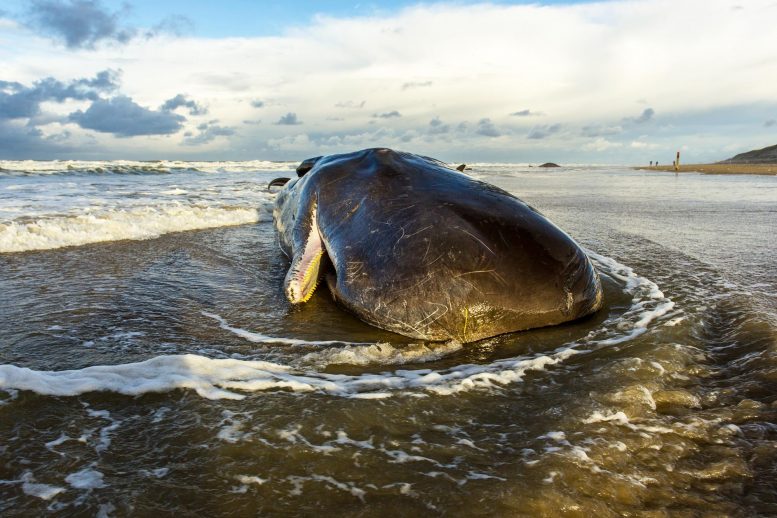
As humanity develops new types of plastics and chemicals, researchers are constantly trying to keep up with understanding how these contaminants affect the environment and wildlife. A new study gives a first look at the presence and potential effects of these pollutants in stranded dolphins and whales along the coast of the southeastern United States.
The extent of pollution in the world’s oceans is bad enough as is, but new types of plastics and chemicals are constantly entering the market — and then inevitably the oceans.
In a recent study in Frontiers in Marine Science, researchers measured the presence of such chemicals in whales and dolphins that washed ashore in Florida and North Carolina. The impacts of many of these contaminants are poorly understood and this study provides a first glimpse of their implications for ocean life. The authors also report some of the highest mercury and arsenic levels recorded to date in stranded dolphins and whales.
“Marine mammals are ecosystem sentinels that reflect anthropogenic threats through their health — which has implications for human health as well,” says lead author Assistant Professor Annie Page-Karjian of the Harbor Branch Oceanographic Institute at Florida Atlantic University, in the United States.
“For example, many of the species in this study prey upon fishes that are also preferred species for human consumption — so monitoring concentrations of contaminants in these animals provide a relatively low-cost snapshot of the potential exposure risk in humans, as well as other marine animals.”
Past research has already shown that plastics, and the chemicals used to create plastics, can severely harm animals’ livers, kidneys, and reproductive health. Because of their place near the top of the food chain, dolphins and whales are among the first species harmed by such pollution.
To study these contaminants in wild animals, Page-Karjian and her collaborators measured the levels of these chemicals in dolphins and whales that washed ashore between 2012 and 2018. Using samples of the animals’ livers and blubber, the authors also correlated their findings to signs of disease and infection.
The stranded animals included 11 different species, providing the first evidence for two rarer species: white-beaked dolphin and Gervais’ beaked whales. Since the stranded animals represented males and females, as well as fetal, young, and adult animals, the authors were also able to look at differences between the groups.
Beyond the toxins found in plastics, such as bisphenol-A, the authors also measured heavy metals such as arsenic, lead, and mercury, which can damage animals’ immune, reproductive, and nervous systems at high concentrations. These results showed that species such as bottlenose dolphins experienced higher amounts of lead and mercury, compared to pygmy sperm whales. Furthermore, female bottlenose dolphins had higher levels of arsenic than their male counterparts.
The current study was limited to blubber and liver samples, and future work is needed to fully understand potential effects on other organs. But these results help establish a baseline for future work, which may help guide future responses to stranded marine animals.
“While exposure to contaminants and toxic elements may not lead directly to stranding, such exposure is thought to impact animal survival through indirect effects on behavior, reproduction, and immunity,” says Page-Karjian. “This study highlights the importance of marine mammal stranding response efforts, and exemplifies why it is necessary to conduct necropsies of these animals and collect and archive tissue samples for future research. In the face of ever-growing consumer chemical industries, toxicology should be consistently integrated into standardized health assessments of free-ranging wildlife.”
Reference: “Anthropogenic Contaminants and Histopathological Findings in Stranded Cetaceans in the Southeastern United States, 2012–2018” by Annie Page-Karjian, Catherine F. Lo, Branson Ritchie, Craig A. Harms, David S. Rotstein, Sushan Han, Sayed M. Hassan, Andreas F. Lehner, John P. Buchweitz, Victoria G. Thayer, Jill M. Sullivan, Emily F. Christiansen and Justin R. Perrault, 5 August 2020, Frontiers in Marine Science.
DOI: 10.3389/fmars.2020.00630
Never miss a breakthrough: Join the SciTechDaily newsletter.
Follow us on Google and Google News.