
Emerging technologies are transforming insect research and environmental surveillance. Utilizing AI to analyze DNA, images, sounds, and flight patterns, we can unlock novel insights into the insect world.
Recent concerns about significant declines in insect populations have prompted researchers to urgently gather data on their current status.
“So far, such data are only available for a few insect groups and for selected regions. To improve on the status quo, we need urgent assessments of all types of insects in all parts of the world,” says Roel van Klink, senior researcher at the German Centre for Integrative Biodiversity Research (iDiv) and the lead editor of the special issue.
Given how numerous insects are, and how hard it is to tell them apart, obtaining complete information on insect trends has remained a tall order. Now technological breakthroughs are paving the way for global insect surveys.
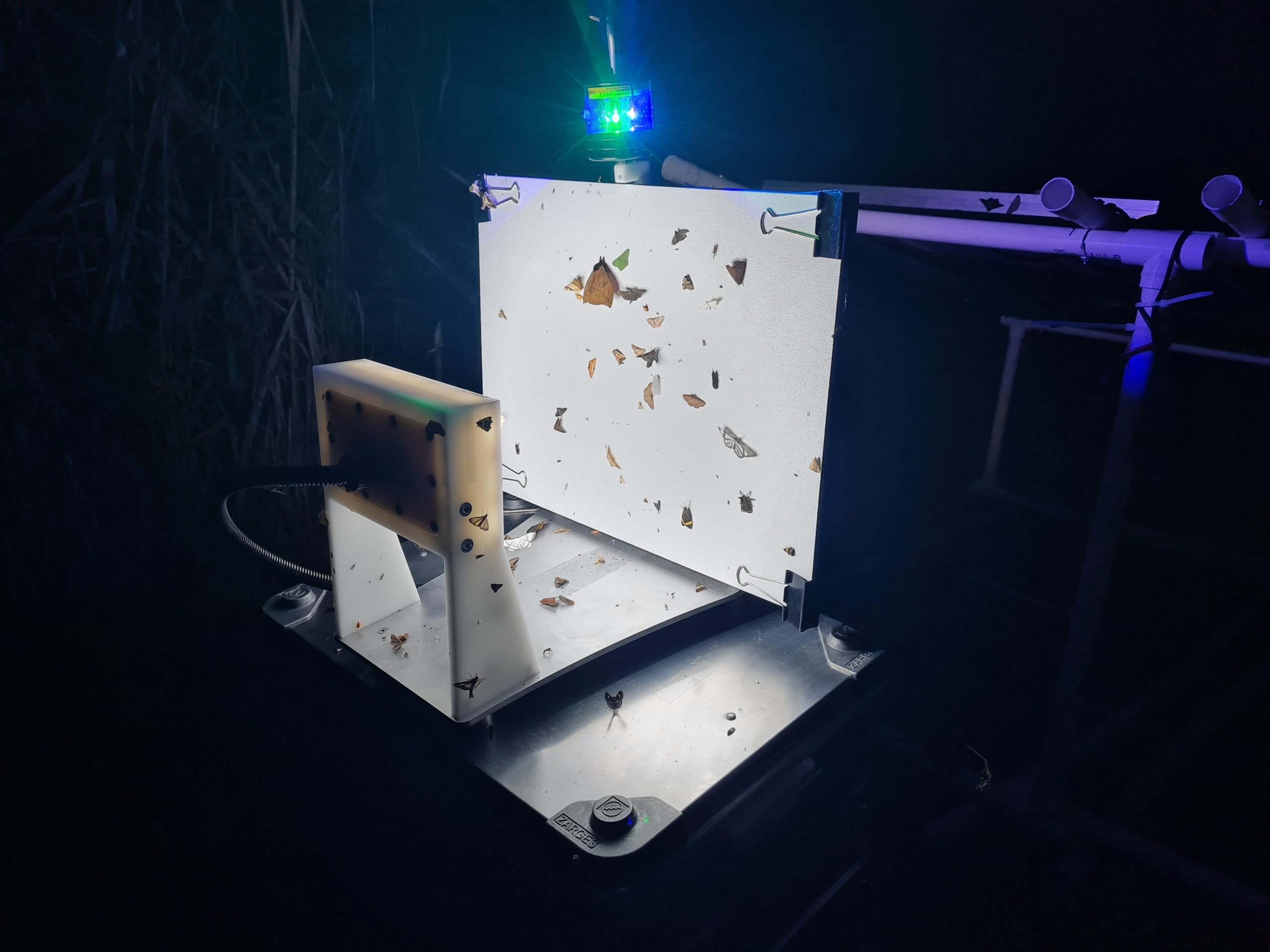
Thanks to technological breakthroughs, we can now use all kinds of different properties of insects to track them. For instance, many insects make sounds, which are characteristic of their species. Using cheap devices spread across the environment, we may record these sounds and then assign them to the insects that produced them. As an alternative, we may attract insects to light then photograph them and identify the images. Using radar or even laser beams, we may sense insects remotely, and identify them based on their size and their wingbeats. Finally, we may extract DNA from insects – or from their traces in the environment, including water or air – and use the sequence of their genes to record and identify them.
The Potential of New Technologies
“These novel methods have enormous potential to close the vast data gaps we have for insects. They can give us new, more, and better data at lower costs in part due to the semi- or fully autonomous data collection. Novel technologies also typically avoid killing insects,” says Toke Thomas Høye, Professor of Ecology at the Department of Ecoscience, Aarhus University, Denmark.
Most importantly, the new methods reduce our dependence on experts, since the people who can tell insects apart are few and overburdened with work. Rather than using their valuable expertise on each individual sample of insects, they can teach computers to do the routine work – then focus on the tasks for which their expertise is truly needed.
What adds to the need for automated processing of insect species is the fact that for most insects, there is no one who knows them. An estimated four out of five insect species are still unknown to science, and thus even lack names. To characterise them all will take over a thousand years if we continue by traditional methods.
“Now, computer-based methods and artificial intelligence can massively speed up the task of describing life on Earth. By teaching computers how to separate insects, we can make sense of billions of images, millions of sound recordings, and trillions of DNA sequences” says Tomas Roslin, Professor of Insect Ecology at the Swedish University of Agricultural Sciences (SLU).
“Together, these technical advances will revolutionize our knowledge about insects. They make surveys of all types of insects feasible. While they have so far been developed in isolation from each other, our special issue is the start of their integration. By combining them, we will gain unprecedented insights into insects across the world.” says Dr Silke Bauer from the Swiss Federal Research Institute (WSL). “However, to allow global insights and equality, we need to make sure that both the technologies themselves and the data generated become accessible to everyone.”
These advances and principles are showcased in a new issue of Philosophical Transactions of the Royal Society B – offering a comprehensive entry port for anyone interested in the insect world and how we may study it.
Reference: “Towards a toolkit for global insect biodiversity monitoring” by Roel van Klink, Julie Koch Sheard, Toke T. Høye, Tomas Roslin, Leandro A. Do Nascimento and Silke Bauer, 24 June 2024, Philosophical Transactions of the Royal Society B.
DOI: 10.1098/rstb.2023.0101
Never miss a breakthrough: Join the SciTechDaily newsletter.
Follow us on Google and Google News.