
Close Menu
    Facebook X (Twitter) Instagram
    SciTechDaily
    • Biology
    • Chemistry
    • Earth
    • Health
    • Physics
    • Science
    • Space
    • Technology
    Facebook X (Twitter) Pinterest YouTube RSS
    SciTechDaily
    Home»Chemistry»Scientists Create “Living Plastic” That Self-Destructs in Just Six Days
    Chemistry

    Scientists Create “Living Plastic” That Self-Destructs in Just Six Days

    By American Chemical SocietyMay 31, 2026No Comments3 Mins Read
    Facebook Twitter Pinterest Telegram LinkedIn WhatsApp Email Reddit
    Share
    Facebook Twitter LinkedIn Pinterest Telegram Email Reddit
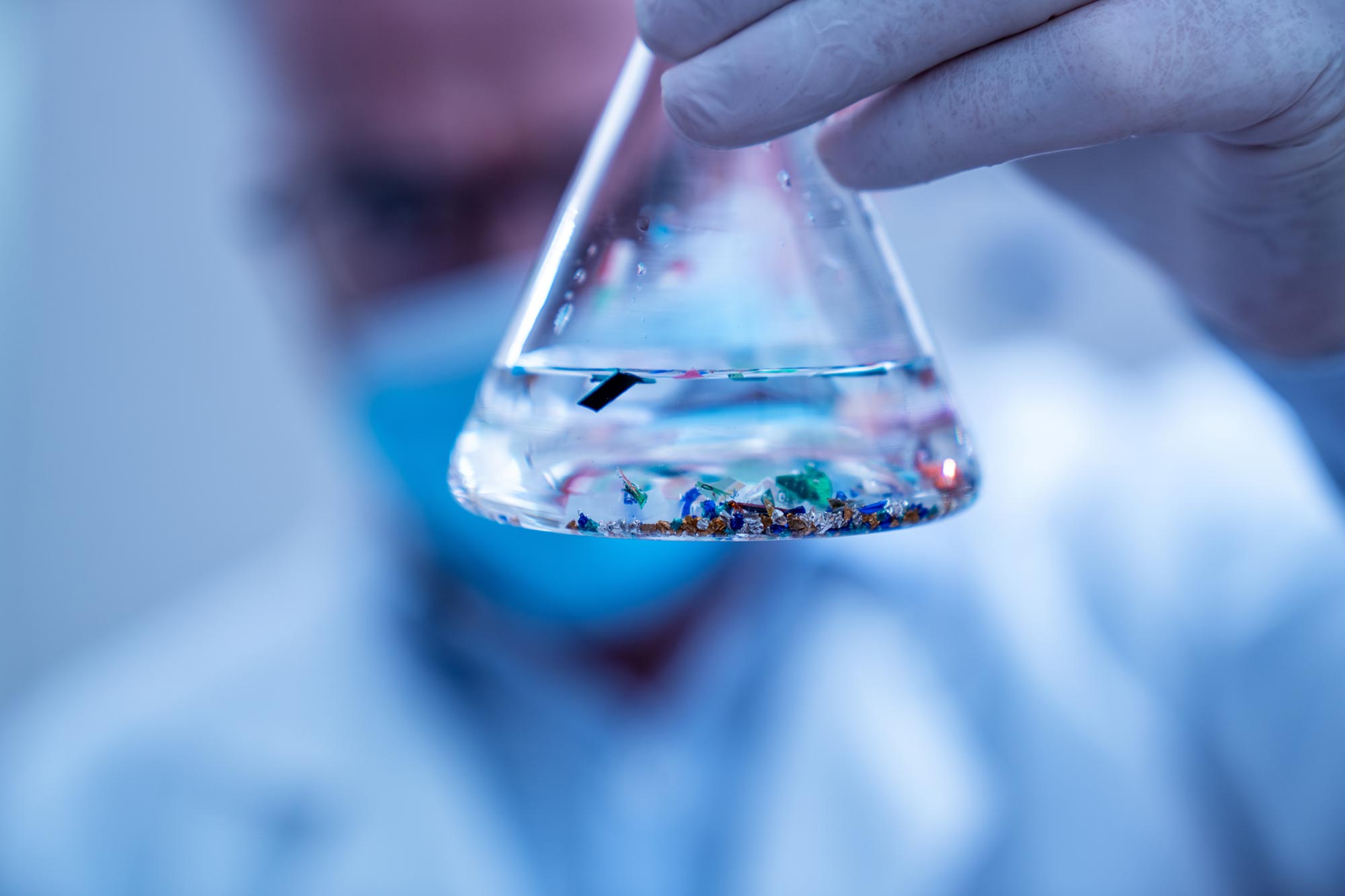
    Scientist Examining Small Plastic Particles Laboratory Flask
    Two enzymes that break down plastic can work together to fully degrade the material within a week. Credit: Shutterstock

    Scientists have developed “living plastics” that can be programmed to break themselves down when triggered.

    Many plastic items are made for one-time use, but the materials can remain in the environment for years. Researchers are exploring a different approach: living plastics, materials built with microbes that can be activated to break down the polymer when needed.

    In a study published in ACS Applied Polymer Materials, a team used two cooperating bacterial strains to fully degrade the plastic in only six days without producing microplastics.

    Plastics could self-destruct

    Zhuojun Dai, a corresponding author on the paper, explains that “the realization that traditional plastics persist for centuries, while many applications, like packaging, are short-lived, led us to ask: Could we build degradation directly into the material’s life cycle?”
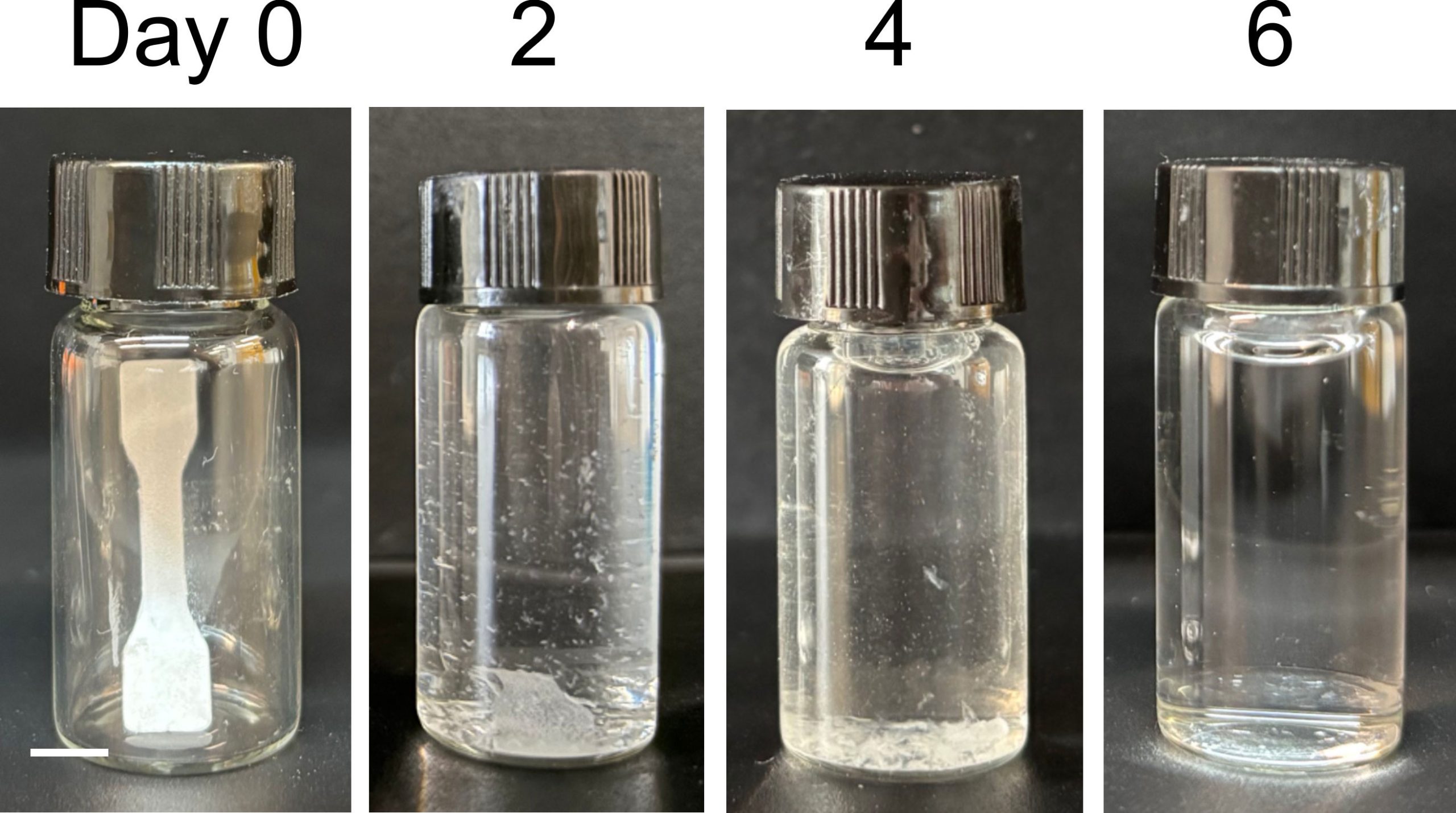
    Living Plastic Degradation Over Six Days
    A living plastic with a pair of cooperative, plastic-busting enzymes degraded the material completely within six days. Credit: Adapted from ACS Applied Polymer Materials 2026, DOI: 10.1021/acsapm.5c04611

    Some microbes make enzymes that can cut long polymer chains into smaller fragments. Since plastics are polymers, researchers can potentially place those enzymes, or the microbes that produce them, directly into living plastic materials.

    “By embedding these microbes, plastics could effectively ‘come alive’ and self-destruct on command, turning durability from a problem into a programmable feature,” explains Dai.

    Two enzymes finished the job

    Earlier efforts mostly depended on one enzyme, but Dai, Jin Geng, Dianpeng Qi and colleagues aimed to make the breakdown process more efficient. They engineered Bacillus subtilis to produce two polymer degrading enzymes that work in sequence. One enzyme cuts long polymer chains into smaller pieces at random points, while the second breaks those smaller pieces down from the ends into their monomer building blocks.

    The researchers combined dormant B. subtilis spores with polycaprolactone (a polymer common in 3D printing and some surgical sutures), allowing the microbes to remain protected until activation. The living plastic that resulted had mechanical properties close to ordinary polycaprolactone films.

    When the researchers added a nutrient broth heated to 122 degrees Fahrenheit (50 degrees Celsius), the spores became active and degraded the plastic completely into its basic building blocks within six days. Because the two enzymes worked together so effectively, the process avoided generating microplastic particles during breakdown.
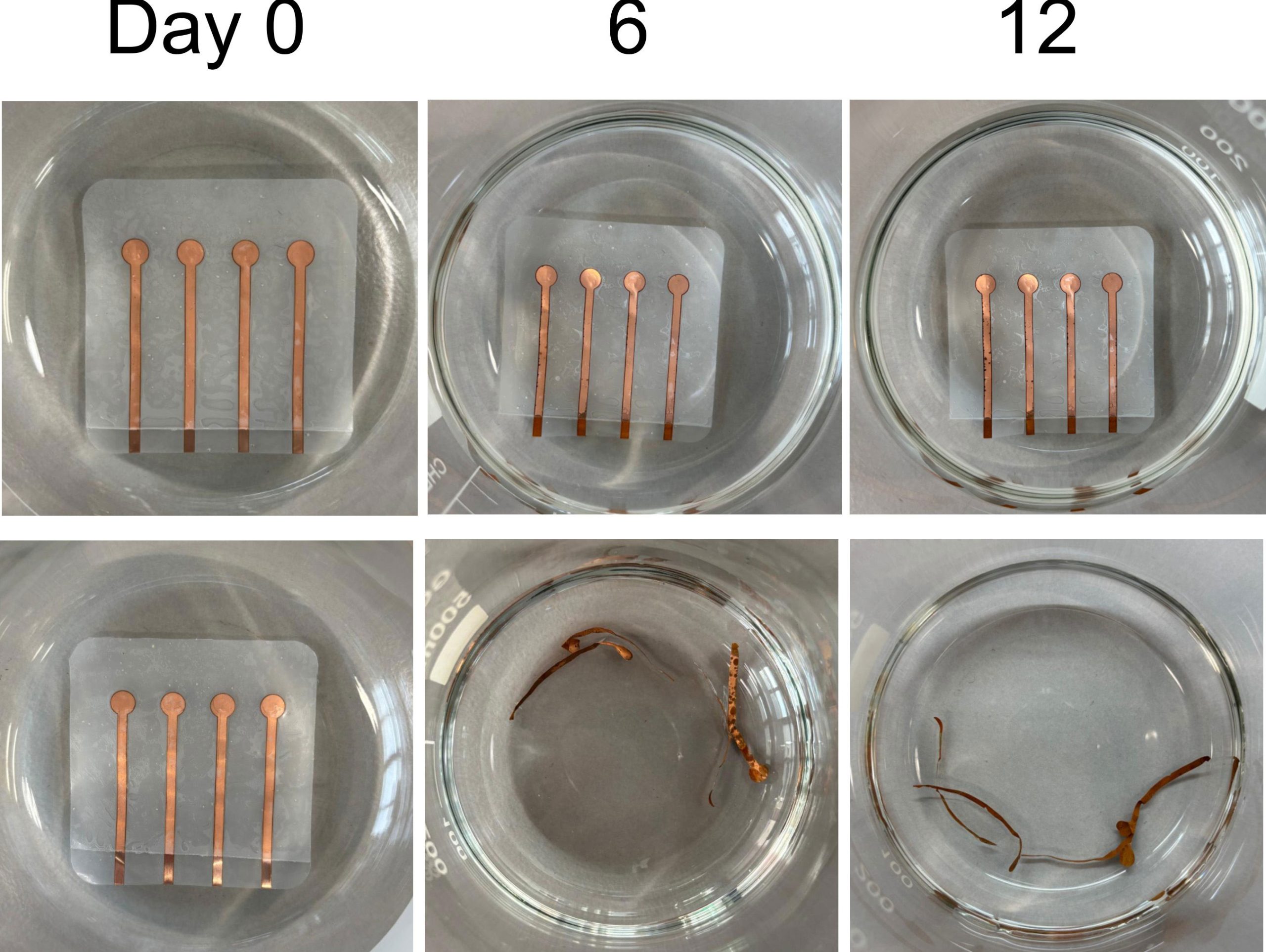
    Living Plastic Degradation Over Twelve Days
    A living plastic with a pair of cooperative, plastic-busting enzymes degraded the material completely within six days. Credit: Adapted from ACS Applied Polymer Materials 2026, DOI: 10.1021/acsapm.5c04611

    Early devices also broke down

    As an early demonstration, the team made a wearable plastic electrode from the living plastic. The device worked as expected and then fully degraded within two weeks.

    Next, the researchers want to create a way to activate the spores in water, where much plastic pollution eventually accumulates. Although the work centered on one polymer, the same general strategy could potentially be adapted for other plastics, including materials often used in single-use products.

    Reference: “Degradable Living Plastics Programmed by Engineered Microbial Consortia” by Chenwang Tang, Jing Sun, Qing Wang, Runtao Zhu, Lin Wang, Guangfa Xiang, Jiaxin Tang, Jie Li, Hang Zhao, Shuhui Li, Junsong Sun, Zhiyuan Liu, Jin Geng, Dianpeng Qi and Zhuojun Dai, 9 April 2026, ACS Applied Polymer Materials.
    DOI: 10.1021/acsapm.5c04611

    Funding from the National Key Research and Development Program of China, the Shenzhen Medical Research Fund, the National Natural Science Foundation of China, the Guangdong Natural Science Funds for Distinguished Young Scholars, and the Shenzhen Science and Technology Program.

    Never miss a breakthrough: Join the SciTechDaily newsletter.
    Follow us on Google and Google News.

    American Chemical Society Biomaterials Biosustainability Green Technology Plastic Sustainability
    Share. Facebook Twitter Pinterest LinkedIn Email Reddit

    Related Articles

    The Surprising Truth: How Long “Biodegradable” Straws Last in Ocean Waters

    Scientists Transform Flies Into Biodegradable Plastic

    A New Method Causes Plastics To Break Down When Exposed to UV Light

    Science, Art, and Sustainability: How To Tie-Dye Cotton With Acorns and Rust

    Turning Trash Into Treasure: Chemists’ Radical Way To Make It Easier, More Profitable To Recycle Plastic

    Sustainable Materials: Creating Valuable Plastics and Chemicals From Waste

    Making Cleaner, Greener, Biodegradable Plastics From Waste Fish Parts

    Protonic Ceramic Fuel Cells Demonstrate Exceptional Power Density and Stability

    Zeolite Catalyst Creates P-Xylene From Biomass

    Leave A Reply Cancel Reply

    • Facebook
    • Twitter
    • Pinterest
    • YouTube

    Don't Miss a Discovery

    Subscribe for the Latest in Science & Tech!

    Trending News

    Massive Study Warns Marijuana Use in Teens Is Linked to Serious Mental Illness

    Scientists Discover a Completely Unexpected Way T Cells Kill Cancer

    Scientists Just Found the Solar System’s Original “Planet Factory”

    Study Warns Widely Used Food Preservatives Linked to High Blood Pressure and Heart Disease

    New Treatment Could Reverse Osteoarthritis Within Weeks

    Physicists Have Measured “Negative Time” in Bizarre Quantum Experiment

    The Deadly Tapeworm Spreading Across America Has Reached the Pacific Northwest

    Could Low Vitamin D Be Making Your Pain Worse?

    Follow SciTechDaily
    • Facebook
    • Twitter
    • YouTube
    • Pinterest
    • Newsletter
    • RSS
    SciTech News
    • Biology News
    • Chemistry News
    • Earth News
    • Health News
    • Physics News
    • Science News
    • Space News
    • Technology News
    Recent Posts
    • Scientists Create “Living Plastic” That Self-Destructs in Just Six Days
    • Scientists Discover Surprising Anemia Benefits of Guava Juice
    • Your Blood May Carry a 700-Million-Year-Old Secret
    • Scientists Discover Some “Zombie Cells” May Actually Help You Live Longer
    • Scientists Discover Two Strange Dead Stars That Defy Astronomical Expectations
    Copyright © 1998 - 2026 SciTechDaily. All Rights Reserved.
    • Science News
    • About
    • Contact
    • Editorial Board
    • Privacy Policy
    • Terms of Use

    Type above and press Enter to search. Press Esc to cancel.