

Scientists discovered that fog droplets can host living bacteria that grow and help remove harmful pollutants from the atmosphere, revealing fog as a surprisingly active microbial environment.
Every breath you take may contain microscopic hitchhikers floating through the atmosphere. Scientists have known for years that bacteria drift through clouds and air currents, but new research suggests some of those microbes are not just surviving in fog. They are thriving in it.
Researchers at Arizona State University discovered that fog droplets can act like tiny floating habitats where bacteria grow, multiply, and even remove harmful pollutants from the air. The findings, published in mBio, challenge the long-held view of fog as chemically passive moisture suspended near the ground.
Instead, fog may function more like a temporary ecosystem with active biological processes happening inside billions of microscopic water droplets.
For cloud researcher Thi Thuong Thuong Cao, the discovery began with a simple but unusual question: could fog actually support life?
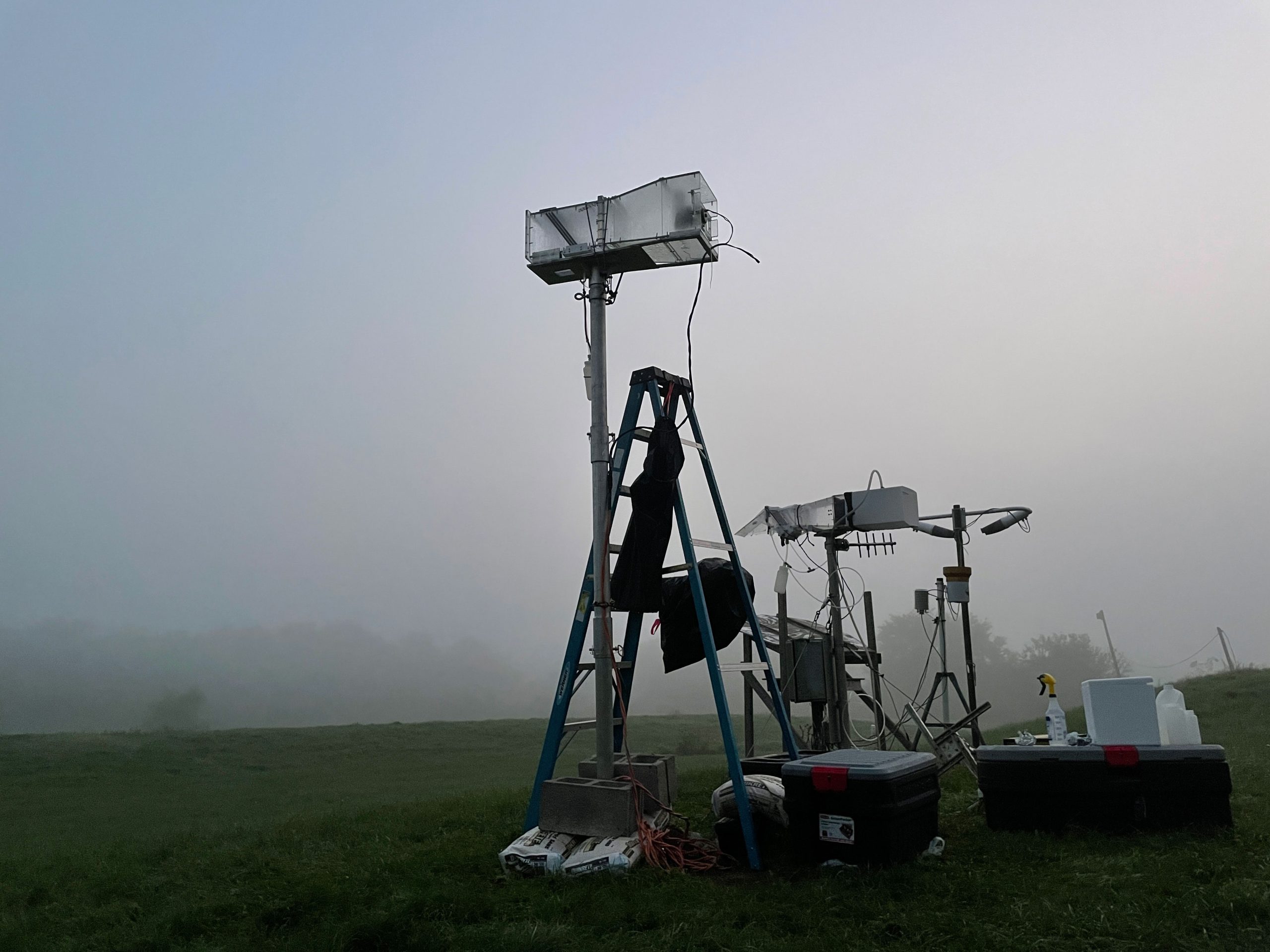
While completing her PhD at Arizona State University, Cao teamed up with microbiologists, chemists, and atmospheric scientists to investigate what happens inside fog at the microscopic level. Her work took her into fog-covered fields in Pennsylvania before sunrise, where she collected samples and later examined them in the lab.
What she found surprised the research team. Certain bacteria inside fog droplets were not dormant passengers carried by the wind. They were actively growing.
Fog as a Temporary Aquatic World
Fog forms when water vapor condenses into tiny liquid droplets suspended in cool air. Each droplet is microscopic, but together they create a unique environment that can briefly resemble a miniature aquatic ecosystem.
Scientists have long detected bacteria in the atmosphere, including in rain clouds and dust plumes that travel across continents. Some microbes can even survive exposure to ultraviolet radiation, freezing temperatures, and severe dehydration while airborne. What remained unclear was whether they could remain biologically active inside fog itself.
“There’s very limited knowledge about what kinds of bacteria are present in fogs, which are like clouds at the ground level,” says Cao, lead author of the study.
The researchers focused on two major questions: which bacteria exist inside fog, and whether those microbes actually grow there.
“If they are growing, then the droplets are a habitat. That’s a mindset change,” says Ferran Garcia-Pichel, co-author of the study and director of the ASU Biodesign Center for Fundamental and Applied Microbiomics.
The team discovered that bacteria appear in fewer than 1% of fog droplets. Yet because fog contains an enormous number of droplets, the total microbial population becomes surprisingly large.
“When you take all of the droplets together, the concentration of bacteria is the same as in the ocean,” says Garcia-Pichel, also a Regents Professor in ASU’s School of Life Sciences.
According to the researchers, a thimble-sized amount of fog water can contain around 10 million bacterial cells.
The Pollution-Eating Bacteria Hidden in Fog
One group of microbes drew particular attention: methylobacteria.
The scientists found that these bacteria became more abundant during fog events compared to dry air conditions. That matters because methylobacteria consume simple carbon compounds, including formaldehyde, a toxic pollutant linked to smog formation and respiratory health risks.
Formaldehyde enters the atmosphere from vehicle emissions, industrial processes, wildfire smoke, and certain household products. In urban environments, it contributes to the complex chemistry that produces ground-level ozone pollution.
The study suggests fog droplets may temporarily become tiny reaction chambers where bacteria help remove some of these pollutants from the air.
“We observed them under the microscope to see that, yes, the bacteria are getting bigger and they’re dividing, so there is growth,” says Cao. “We also found that they’re using the formaldehyde as food to support their growth.”
The bacteria processed formaldehyde so efficiently that researchers initially suspected additional chemical reactions were involved. Instead, the microbes appeared to be breaking down the pollutant both as a food source and as a defense mechanism. At high concentrations, formaldehyde becomes toxic even to the bacteria themselves.
By converting the chemical into carbon dioxide, the microbes effectively reduce harmful buildup inside the droplets.
Why Scientists Studied a Special Type of Fog
Tracking airborne bacteria is difficult because wind constantly shifts the atmosphere. To study how microbial populations changed over time, the researchers needed fog that formed in stable air conditions.
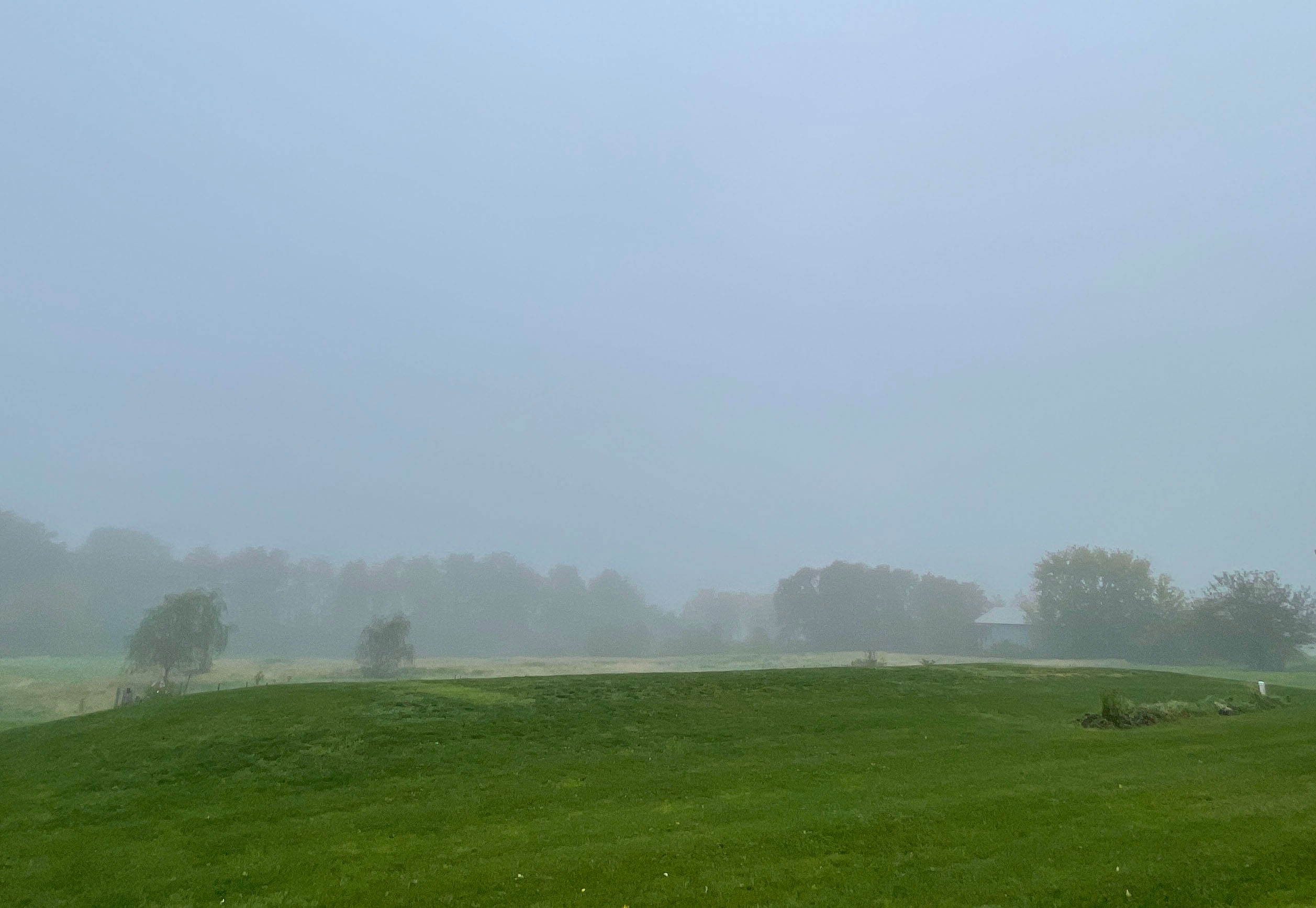
They focused on radiation fog, which develops when the ground cools overnight and chills the air directly above it. Water vapor then condenses into fog close to the surface, especially in humid valleys with calm weather.
Unlike fast-moving storm systems, radiation fog can remain relatively stable for hours, making it easier to observe microbial changes before, during, and after formation.
The work highlights how little scientists still know about the biological side of the atmosphere. Most atmospheric models focus heavily on chemistry and physics, while living microorganisms are often treated as passive particles.
But microbes may be doing far more than scientists realized.
Tiny Microbes Could Influence Air Quality and Climate
The findings could affect several areas of research, including pollution studies, climate science, and even drinking water collection.
In some dry regions around the world, specialized mesh systems harvest fog water as a freshwater source. Fog is often viewed as naturally clean, but the study suggests fog droplets can carry active microbial communities and should likely be treated before consumption.
The research also raises broader questions about the atmosphere itself. If bacteria remain active inside fog and clouds, they may influence chemical reactions that shape air quality and possibly even weather patterns.
“It may be important to consider that besides driving chemical reactions, bacteria also grow inside these droplets. It can change the story rather than just a catalyst, they have other activity there. It can change the way we model everything so far,” Cao says.
Scientists are only beginning to investigate these atmospheric ecosystems.
“It’s relatively new that people are starting to look at biological activities in clouds, so there’s still a lot which we don’t understand,” says Pierre Herckes, co-author of the study and professor in the School of Molecular Sciences.
“At nighttime, for example, there isn’t that much atmospheric chemistry going on. Chemistry is largely driven by the sun and by light. But if the bacteria are still doing their thing even during the nighttime, they can be important.”
Many mysteries remain unanswered. Researchers still do not know how microbial communities differ between coastal fog, mountain fog, urban smog, and cloud systems high in the atmosphere. Scientists also want to understand whether these airborne microbes influence rainfall, pollution cycles, or human health in ways that have gone unnoticed.
“The sky’s the limit, no pun intended,” Garcia-Pichel says.
Reference: “Growth and formaldehyde degradation of photoheterotrophic Methylobacterium within radiation fogs” by Thi Thuong Thuong Cao, Pierre Herckes, Derek Straub, Soumyadev Sarkar and Ferran Garcia-Pichel, 11 May 2026, mBio.
DOI: 10.1128/mbio.00463-26
Never miss a breakthrough: Join the SciTechDaily newsletter.
Follow us on Google and Google News.
3 Comments
So it may be possible clouds also may have living microbes
Yes. And think about the thick clouds that cover Venus. The surface may be too hot for life, but microbes that hitched a ride on board rocks blasted by impacts from Earth, could find a new ecosphere in the cloud layer.
thanks for this