
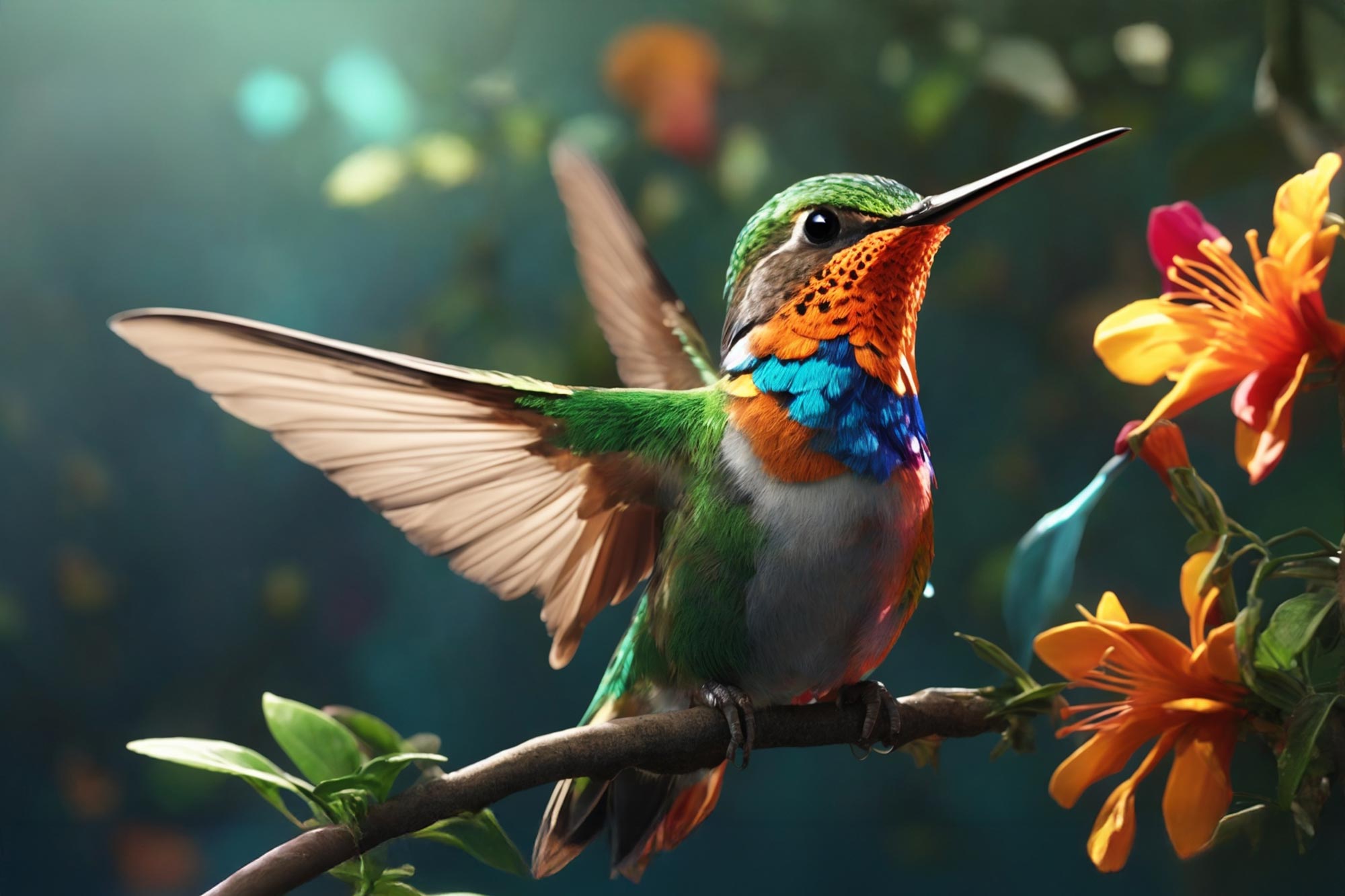
As bees and hummingbirds move from flower to flower collecting nectar and pollinating plants, they may also be consuming small amounts of alcohol.
In the first large-scale study examining alcohol in floral nectar, biologists at the University of California, Berkeley detected ethanol in at least one flower sample from 26 of the 29 plant species they tested. Most of the nectar samples contained only trace amounts, likely created when yeast fermented the sugars naturally present in nectar. One sample reached 0.056% ethanol by weight, which is roughly 1/10 proof.
Hummingbirds May Consume Human Equivalent of One Drink
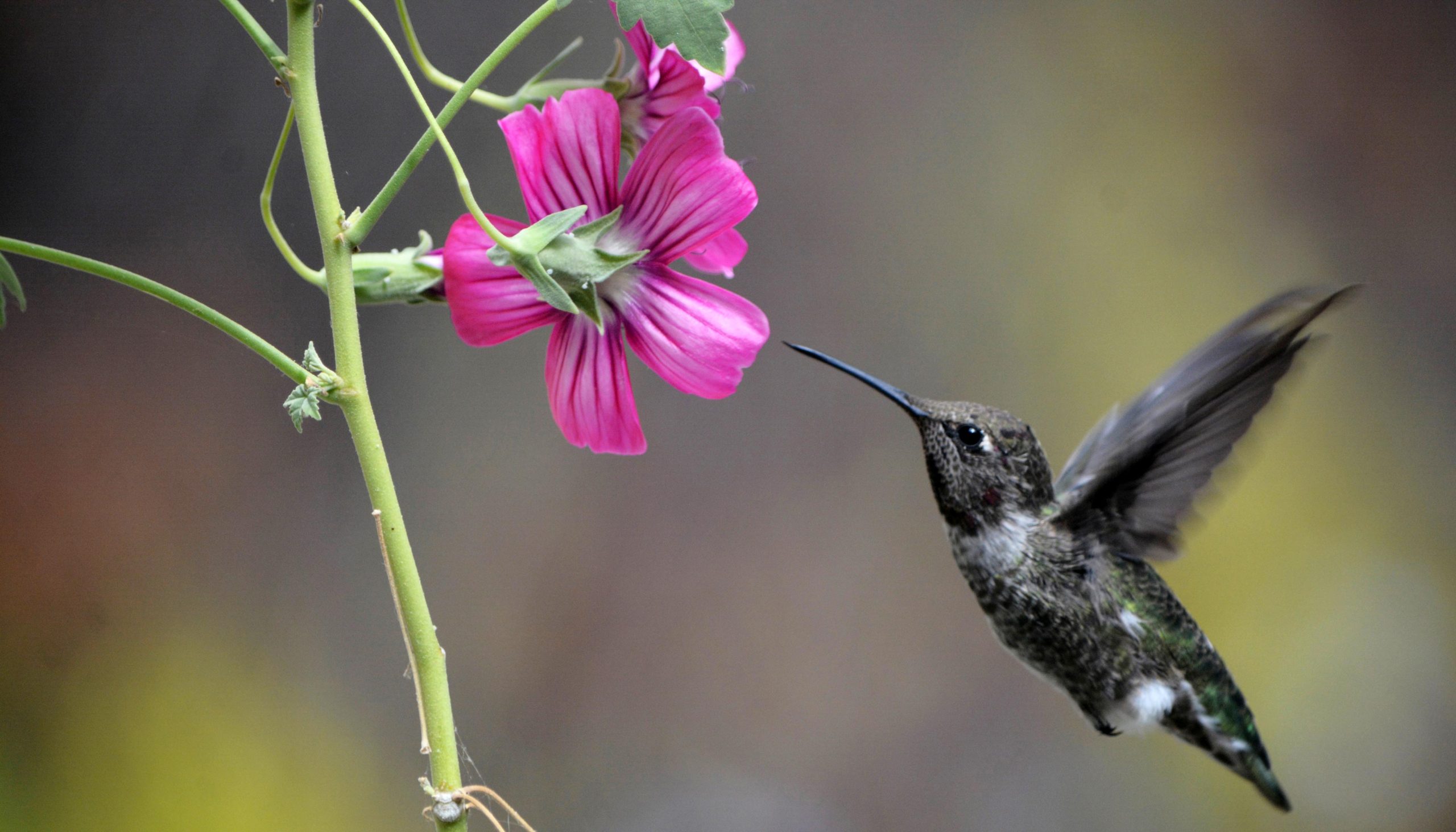
Although the alcohol concentrations are very low, nectar makes up a major part of the diet for many pollinators. Hummingbirds, for instance, consume between 50% and 150% of their body weight in nectar every day. Based on those feeding habits, researchers estimate that an Anna’s hummingbird (Calypte anna), a species commonly found along the Pacific coast, may ingest around 0.2 grams of ethanol per kilogram of body weight daily — about the equivalent of a human consuming one alcoholic beverage.
The animals appear unaffected despite repeatedly consuming fermented nectar throughout the day. Earlier experiments from the same research group found that hummingbirds willingly drink sugar water containing up to 1% alcohol, though they become less interested when concentrations rise higher.
Could Alcohol Affect Pollinator Behavior?
Scientists say the alcohol may still influence animals in subtle ways. Other compounds found naturally in nectar, including caffeine and nicotine, are known to affect the behavior of pollinators.
“Hummingbirds are like little furnaces. They burn through everything really quick, so you don’t expect anything to accumulate in their bloodstream,” said doctoral student Aleksey Maro, who analyzed the nectar alongside postdoctoral fellow Ammon Corl. “But we don’t know what kind of signaling or appetitive properties the alcohol has. There are other things that the ethanol could be doing aside from creating a buzz, like with humans.”
“There may be other kinds of effects specific to the foraging biology of the species in question that could be beneficial,” said Robert Dudley, a UC Berkeley professor of integrative biology. “They’re burning it so fast, I’m guessing that they probably aren’t suffering inebriating effects. But it may also have other consequences for their behavior.”
Maro, Corl and Dudley published the findings in the journal Royal Society Open Science with coauthors Rauri Bowie and Jimmy McGuire, both professors of integrative biology and curators at Berkeley’s Museum of Vertebrate Zoology.
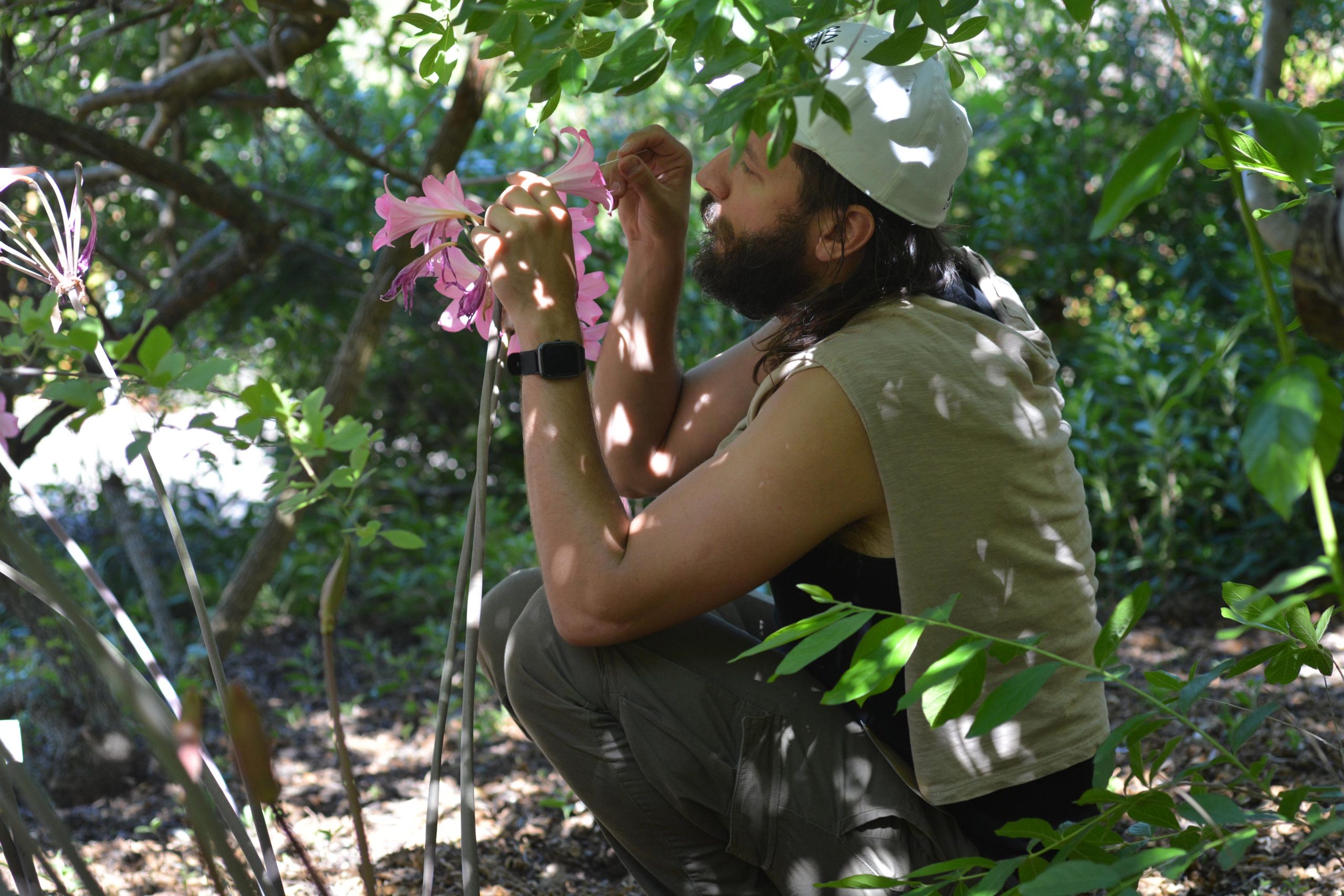
UC Berkeley postdoctoral fellow Ammon Corl sampling nectar from a sapphire tower flower (Puya alpestris) in the UC Botanical Garden in Berkeley, California. Credit: Aleksey Maro/UC Berkeley
Experiments Reveal Alcohol Tolerance
According to Dudley, one of the team’s earlier experiments involved placing alcohol-containing sugar water in a feeder outside his office. The study showed that Anna’s hummingbirds readily drank the solution when alcohol levels stayed below 1% by volume. However, visits to the feeder dropped by about half when the concentration reached 2%.
“Somehow they are metering their intake, so maybe zero to 1% is a more likely concentration that they would find in the wild than anything higher,” he said.
Another experiment, led by former graduate student Cynthia Wang-Claypool, found that feathers from several birds, including Anna’s hummingbirds, contained ethyl glucuronide, which is a metabolic byproduct of ethanol. That finding suggests the birds are not only consuming alcohol but processing it in a manner similar to mammals. Researchers say the results add to growing evidence that many animals, including human ancestors, may have evolved a tolerance for alcohol and in some cases even a preference for it.
“The laboratory experiment was showing that yes, they will drink ethanol in their nectar, though they have some aversion to it if it gets too high,” Corl said. “The feathers are saying that, yes, they will metabolize it. And then this study is saying that ethanol is actually pretty widespread in the nectar they consume.”
Comparing Alcohol Intake Across Species
The scientists collected nectar samples and measured ethanol levels using an enzymatic assay. They then estimated daily alcohol intake for birds living in habitats where these flowers naturally grow. Because reliable nectar consumption data exist for only a few species, the researchers focused on two hummingbird species, including the Anna’s hummingbird, and three species of sunbirds. In South Africa, sunbirds feed on several plant species found in the UC Botanical Garden, including honeybush (Melianthus major). Sunbirds occupy a similar ecological role in Africa as hummingbirds do in the Americas.
The team compared the birds’ estimated alcohol intake with that of other nectar-feeding animals, including the European honeybee and the pen-tailed tree shrew, along with fruit-eating chimpanzees and humans consuming one standard American drink daily (0.14 grams/kg/day).
The pen-tailed tree shrew had the highest estimated intake at 1.4 g/kg/day, while the European honeybee had the lowest at 0.05 g/kg/day. The nectar-feeding birds consumed similar amounts, ranging from 0.19 to 0.27 g/kg/day when feeding on flowers native to their environments.
Interestingly, the feeder experiments suggest Anna’s hummingbirds may actually consume more alcohol from fermented sugar water in artificial feeders (0.30 g/kg/day) than from fermented nectar in flowers.
Evolutionary Adaptations to Ethanol
The study is part of a broader five-year project funded by the National Science Foundation aimed at collecting genetic data from all hummingbird and sunbird species. Researchers hope to better understand how these animals adapted to challenging environments and specialized diets, including high altitudes, sugar-rich nectar and naturally fermented nectar.
“These studies suggest that there may be a broad range of physiological adaptations across the animal kingdom to the ubiquity of dietary ethanol, and that the responses we see in humans may not be representative of all primates or of all animals generally,” Dudley said. “Maybe there are other physiological detoxification pathways or other kinds of nutritional effects of ethanol for animals that are consuming it every day of their lives. That’s the interesting thing — this is chronic through the course of the day, but that’s a lifetime exposure post-weaning. It just means that the comparative biology of ethanol ingestion deserves further study.”
Reference: “Low-level ethanol is widespread within floral nectar” by Aleksey Maro, Ammon Corl, Rauri C. K. Bowie, Jimmy A. McGuire and Robert Dudley, 25 March 2026, Royal Society Open Science.
DOI: 10.1098/rsos.250847
Never miss a breakthrough: Join the SciTechDaily newsletter.
Follow us on Google and Google News.