
Close Menu
    Facebook X (Twitter) Instagram
    SciTechDaily
    • Biology
    • Chemistry
    • Earth
    • Health
    • Physics
    • Science
    • Space
    • Technology
    Facebook X (Twitter) Pinterest YouTube RSS
    SciTechDaily
    Home»Biology»Insects Are Disappearing Even From “Untouched” Landscapes, Study Warns
    Biology

    Insects Are Disappearing Even From “Untouched” Landscapes, Study Warns

    By University of North Carolina at Chapel HillSeptember 16, 2025No Comments3 Mins Read
    Facebook Twitter Pinterest Telegram LinkedIn WhatsApp Email Reddit
    Share
    Facebook Twitter LinkedIn Pinterest Telegram Email Reddit
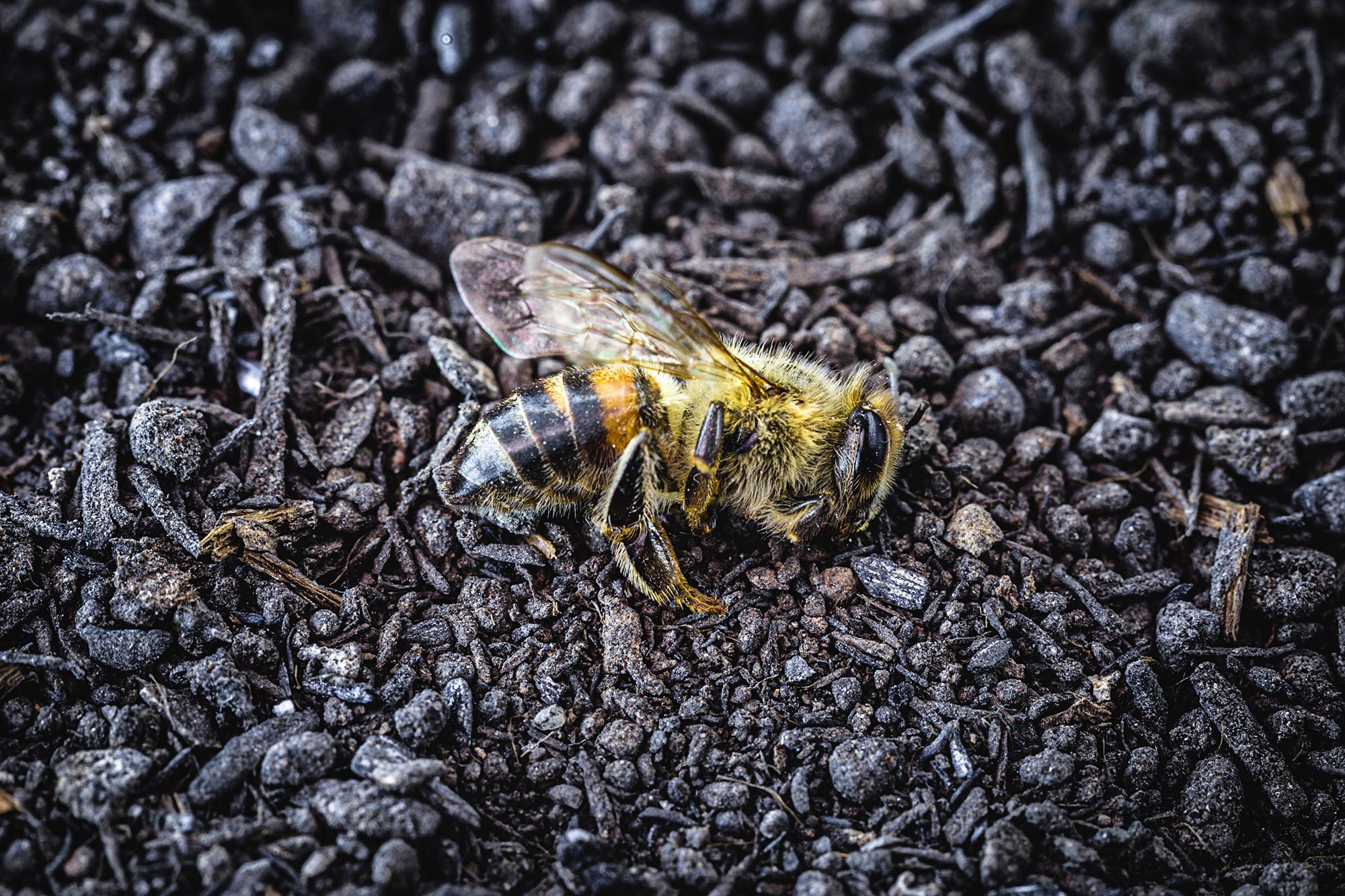
    Dead Bee
    A long-term study shows that insect populations are collapsing even in pristine mountain habitats, pointing to climate change as a key driver of biodiversity loss. Credit: Shutterstock

    Insects in remote ecosystems are declining rapidly. Climate change is likely the cause.

    A recent investigation by the University of North Carolina at Chapel Hill has revealed that insect numbers are falling sharply, even in landscapes with little direct human disturbance. This trend raises serious concerns for the stability of ecosystems that rely on insects for essential functions.

    Keith Sockman, an associate professor of biology at UNC-Chapel Hill, monitored flying insect populations across 15 field seasons between 2004 and 2024 in a subalpine meadow in Colorado. The site provided 38 years of weather records and had experienced minimal human impact. His analysis showed an average annual reduction of 6.6% in insect abundance, which adds up to a 72.4% loss over two decades. The decline was strongly linked to rising summer temperatures.

    Ecological importance of insects

    “Insects have a unique, if inauspicious position in the biodiversity crisis due to the ecological services, such as nutrient cycling and pollination, they provide and to their vulnerability to environmental change,” Sockman said. “Insects are necessary for terrestrial and freshwater ecosystems to function.”

    Colorado Meadow
    Colorado meadow used for Keith Sockman’s 20 year study. Credit: Keith Sockman (UNC-Chapel Hill)

    These results help fill an important gap in global insect research. Although many studies on insect decline emphasize ecosystems heavily altered by humans, far fewer have looked at populations in largely untouched environments. This work shows that sharp declines can still happen in such areas, pointing to climate change as a likely driving factor.

    “Several recent studies report significant insect declines across a variety of human-altered ecosystems, particularly in North America and Europe,” Sockman said. “Most such studies report on ecosystems that have been directly impacted by humans or are surrounded by impacted areas, raising questions about insect declines and their drivers in more natural areas.”

    Mountain ecosystems at risk

    Sockman emphasizes the urgency of these results for biodiversity conservation: “Mountains are host to disproportionately high numbers of locally adapted endemic species, including insects. Thus, the status of mountains as biodiversity hotspots may be in jeopardy if the declines shown here reflect trends broadly.”

    This research highlights the need for more comprehensive monitoring of insect populations in a variety of landscapes and adds urgency to addressing climate change. By showing that even remote ecosystems are not immune, the study underscores the global scale of the biodiversity crisis.

    Reference: “Long-term decline in montane insects under warming summers” by Keith W. Sockman, 4 September 2025, Ecology.
    DOI: 10.1002/ecy.70187

    Never miss a breakthrough: Join the SciTechDaily newsletter.
    Follow us on Google and Google News.

    Biodiversity Climate Change Entomology Insect University of North Carolina at Chapel Hill
    Share. Facebook Twitter Pinterest LinkedIn Email Reddit

    Related Articles

    Desert Secrets: Scientist Discovers 16 New Grasshopper Species in U.S. and Mexico

    The Future of Entomology: New Technology Revolutionizes Insect Research

    Cheers to Biodiversity: Beetle With Bottle-Opener Genitalia Discovered

    Weather Anomalies and Insects: First-of-a-Kind Study Unveils Surprising Patterns

    Worldwide Decline in Quantity and Diversity of Insects in the Light of Land Use and Climate

    “Something Is Happening to the Bees” – 25% of Known Bee Species Haven’t Appeared in Public Records Since the 1990s

    Scientists’ Warning to Humanity on Insect Extinctions – Vital to Environment

    Lights Out? Fireflies Face Multiple Serious Extinction Threats

    Species Moving in Response to Climate Change, but Many Have Nowhere to Go

    Leave A Reply Cancel Reply

    • Facebook
    • Twitter
    • Pinterest
    • YouTube

    Don't Miss a Discovery

    Subscribe for the Latest in Science & Tech!

    Trending News

    Scientists May Have Found the Key to Jupiter and Saturn’s Moon Mystery

    Scientists Uncover Brain Changes That Link Pain to Depression

    Saunas May Do More Than Raise Body Temperature – They Activate Your Immune System

    Exercise in a Pill? Metformin Shows Surprising Effects in Cancer Patients

    Hidden Oceans of Magma Could Be Protecting Alien Life

    New Study Challenges Alzheimer’s Theories: It’s Not Just About Plaques

    Artificial Sweeteners May Harm Future Generations, Study Suggests

    Splashdown! NASA Artemis II Returns From Record-Breaking Moon Mission

    Follow SciTechDaily
    • Facebook
    • Twitter
    • YouTube
    • Pinterest
    • Newsletter
    • RSS
    SciTech News
    • Biology News
    • Chemistry News
    • Earth News
    • Health News
    • Physics News
    • Science News
    • Space News
    • Technology News
    Recent Posts
    • Researchers Capture Quantum Interference in One of Nature’s Rarest Atoms
    • Ancient DNA Reveals Irish Goats Have a 3,000-Year-Old Lineage Still Alive Today
    • Historians Reveal Secrets of the Strange Hat Wars That Shook Early Modern England
    • “A Plague Is Upon Us”: The Mass Death That Changed an Ancient City Forever
    • This Strange Material Can Turn Superconductivity on and off Like a Switch
    Copyright © 1998 - 2026 SciTechDaily. All Rights Reserved.
    • Science News
    • About
    • Contact
    • Editorial Board
    • Privacy Policy
    • Terms of Use

    Type above and press Enter to search. Press Esc to cancel.