
Urbanization and farming drive insect declines despite benefits from warmer temperatures.
Worldwide, the quantity and diversity of insects are declining: scientists have reported more and more evidence for this in recent years. In politics and society, these findings have raised great concern.
Researchers attribute the decline in insect numbers on the one hand to changes in land use, for example to the increase in large monocultures such as maize and rape, but also cite climate change with increased temperatures and drought as a cause.
Previous Data Have Weaknesses
However, these findings seem to have weaknesses, says animal ecologist Professor Jörg Müller from the Biocentre of Julius-Maximilians-Universität Würzburg (JMU) in Bavaria, Germany. Among other things, the underlying studies so far do not represent the diversity of insect species well enough or only consider short periods of time and small areas.
A research team of the Bavarian LandKlif network, coordinated by JMU, now wanted to remedy this shortcoming. The results of the study have been published in the journal Nature Communications. They show that urbanization is another key factor for the overall decline of insects.
Study at 179 Sites From Low to High Elevations
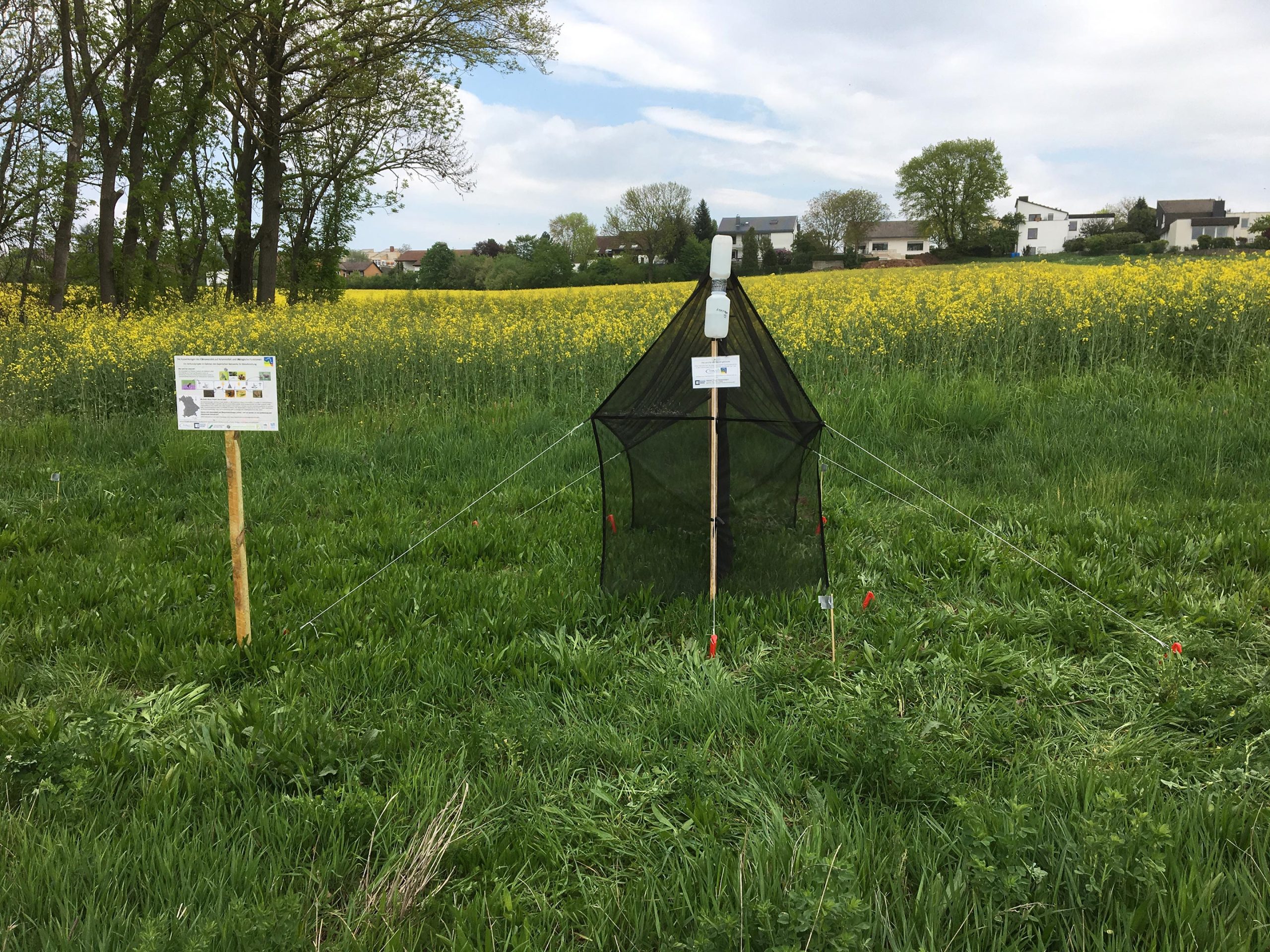
From Lower Franconia to Upper Bavaria, the researchers placed traps to collect flying, crawling, and jumping insects in spring 2019. These Malaise traps were located at 179 sites, from the lowlands to elevations above 1100 meters in the Bavarian Forest and the Alps. They were located in forests, on meadows, and fields as well as in settlements, embedded in semi-natural, agricultural, and urban landscapes.
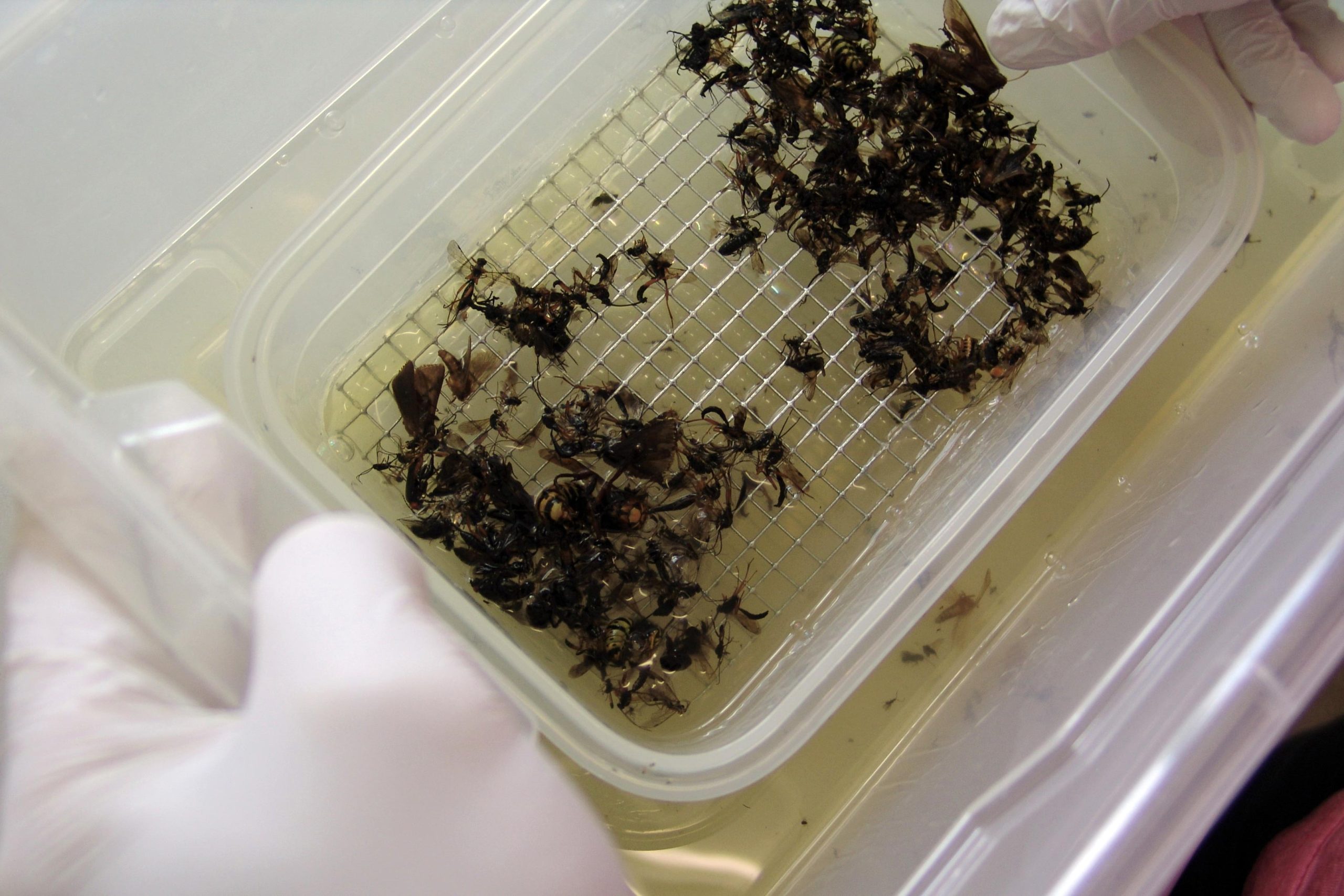
The researchers emptied the traps every 14 days for an entire vegetation period. They determined the biomass of the insects caught and identified the individual species using DNA sequencing.
Insects Benefit From Higher Temperatures
“In this study, we were able for the first time to disentangle the impact of climate and land use on insects in a Central European landscape,” explains Jörg Müller. “Interestingly, temperature at the local site, as well as annual temperature, have only positive effects on the biomass and diversity of insect populations. The form of land use, on the other hand, has different effects on biomass and diversity.”
“We observed the largest difference in insect biomass between semi-natural and urban environments. In the city, the biomass was 42 percent lower. Insect diversity was 29 percent lower in agricultural environments compared to semi-natural habitats. There were even 56 percent fewer endangered species in agricultural areas,” says Johannes Uhler, JMU PhD student and first author of the study.
Consequences for Insect Conservation
“These contrasting patterns of biomass and species diversity are an important warning sign for researchers,” summarizes Uhler: For insect monitoring, one should not conclude that a decline in biomass also means a decline in species diversity, and vice versa.
Based on its new findings, the JMU researchers recommend creating more green spaces in urban environments to increase insect biomass. Existing agri-environmental schemes should be further expanded to improve biodiversity and forest habitats should be promoted.
The LandKlif Research Network
Established in 2018, the Bavarian LandKlif research network is active in semi-natural, agricultural, and urban landscapes in five climate zones in Bavaria – from the dry-warm regions in Lower Franconia to the high altitudes of the Bavarian Forest and Berchtesgaden National Parks. Its aim is to identify options for mitigating climate change and adapting to changing climatic conditions. The network coordinator is Professor Ingolf Steffan-Dewenter from the JMU Biocentre. The Free State of Bavaria is funding the network with 2.6 million euros.
Reference: “Relationship of insect biomass and richness with land use along a climate gradient” by Johannes Uhler, Sarah Redlich, Jie Zhang, Torsten Hothorn, Cynthia Tobisch, Jörg Ewald, Simon Thorn, Sebastian Seibold, Oliver Mitesser, Jérôme Morinière, Vedran Bozicevic, Caryl S. Benjamin, Jana Englmeier, Ute Fricke, Cristina Ganuza, Maria Haensel, Rebekka Riebl, Sandra Rojas-Botero, Thomas Rummler, Lars Uphus, Stefan Schmidt, Ingolf Steffan-Dewenter and Jörg Müller, 12 October 2021, Nature Communications.
DOI: 10.1038/s41467-021-26181-3
Never miss a breakthrough: Join the SciTechDaily newsletter.
Follow us on Google and Google News.
1 Comment
“… but also cite climate change with increased temperatures and drought as a cause.”
What would a ‘science’ article be if it didn’t draw attention to a negative aspect of warming? Of course, as the atmosphere warms, it allows greater evaporation. If drought worsens in some locations, then precipitation must increase in others. So far, locusts don’t seem to be affected!
It shouldn’t be a great surprise that there are fewer insects in urban areas. There is less variety and abundance of food. Also, many insects decide that a higher purpose in life is to serve as a radiator or windshield decoration.
What is surprising is that the authors acknowledge the politically incorrect observation, “Interestingly, temperature at the local site as well as annual temperature have only positive effects on the biomass and diversity of insect populations.”