
Close Menu
    Facebook X (Twitter) Instagram
    SciTechDaily
    • Biology
    • Chemistry
    • Earth
    • Health
    • Physics
    • Science
    • Space
    • Technology
    Facebook X (Twitter) Pinterest YouTube RSS
    SciTechDaily
    Home»Space»A European Push to the Moon and Beyond
    Space

    A European Push to the Moon and Beyond

    By European Space Agency (ESA)October 12, 2021No Comments4 Mins Read
    Facebook Twitter Pinterest Telegram LinkedIn WhatsApp Email Reddit
    Share
    Facebook Twitter LinkedIn Pinterest Telegram Email Reddit
    Orion Spacecraft
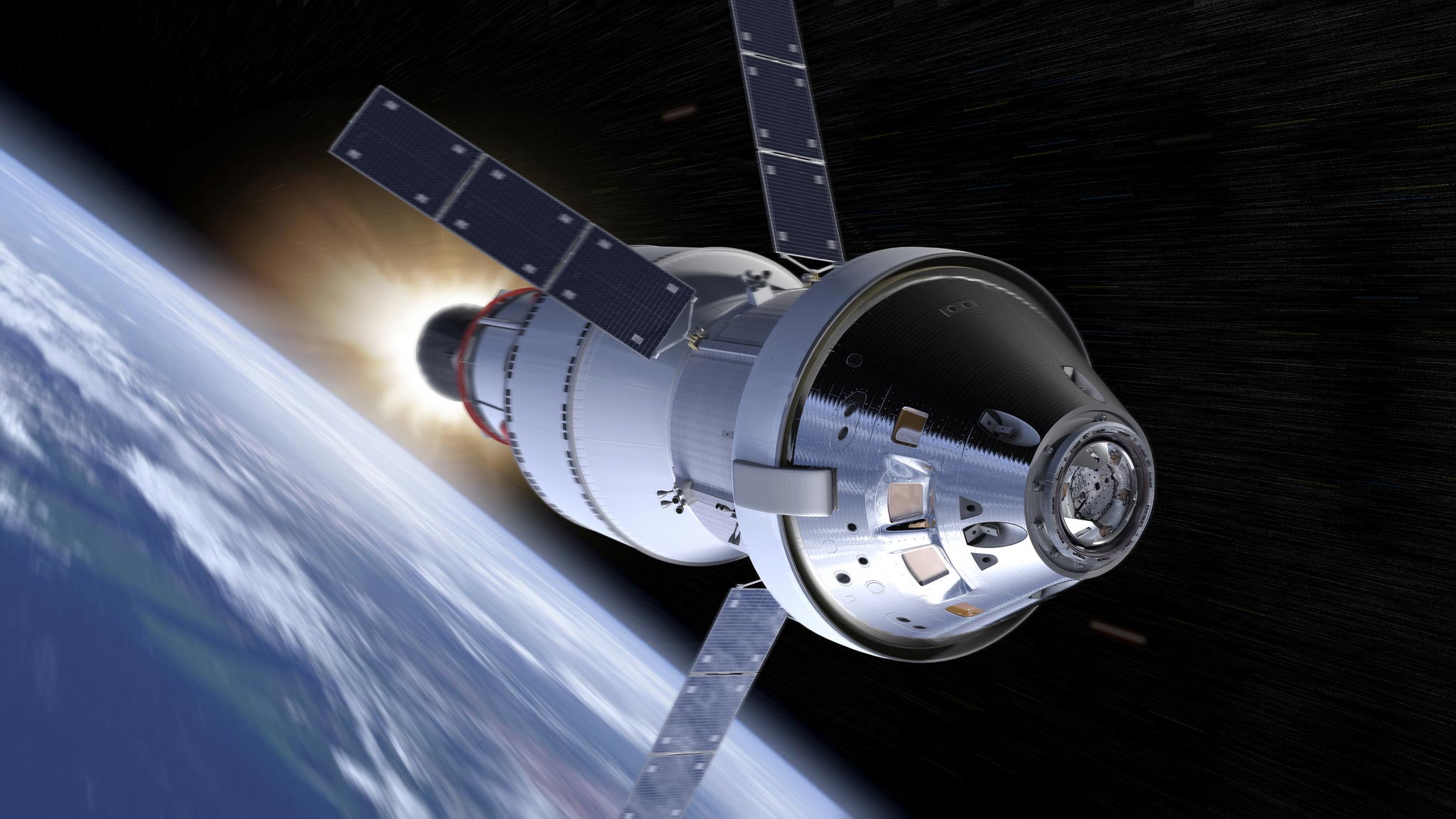
    During Artemis I, Orion will venture thousands of miles beyond the moon during an approximately three week mission. Credit: NASA

    The European Space Agency (ESA) is providing the European Service Module (ESM) that powers and sustains NASA’s Orion spacecraft, marking Europe’s critical role in the Artemis program.

    The European Space Agency is playing a vital role in humankind’s return to the Moon. In a few months, NASA will launch Artemis I from the Kennedy Space Center. The uncrewed mission will carry NASA’s Orion spacecraft incorporating ESA’s European Service Module (ESM-1), built and tested by Airbus Bremen, in Germany, with the help of 10 European nations. ESM-1’s main engine and 32 thrusters will propel Orion into orbit around the Moon and return it to Earth.

    As Artemis I prepares for launch, the second European Service Module (ESM-2) is about to ship to the US with ESM-3 also currently under construction. The second Artemis mission, however, has a crucial difference: it will carry four astronauts for a lunar flyby. ESM-2 will provide propulsion, power, oxygen, water, and life support as well as controlling the temperature in the orbiting crew module. ESM-3 will go one step further and put the first person on the Moon for 50 years.


    This film features soundbites from: Matthias Gronwoski, Chief Engineer Orion ESM, Airbus; Rachid Amerkrane, Project Manager Orion ESM, Airbus; Philippe Deloo, ESM Programme Manager, ESA. Credit: ESA

    Orion ESM
    An artist’s impression of the Orion crew capsule with ESA’s service module. The module sits directly below the capsule and provides propulsion, power, thermal control, and water and air for four astronauts. The solar array spans 19 m and provides enough to power two households. A little over 5 m in diameter and 4 m high, it weighs 13.5 tonnes. The 8.6 tonnes of propellant will power one main engine and 32 smaller thrusters. Credit: ESA–D. Ducros

    Artemis I, formerly Exploration Mission-1, will be the first integrated test of NASA’s deep space exploration systems: the Orion spacecraft, Space Launch System (SLS) rocket and the ground systems at Kennedy Space Center in Cape Canaveral, Florida. The first in a series of increasingly complex missions, Artemis I will be an uncrewed flight test that will provide a foundation for human deep space exploration, and demonstrate our commitment and capability to extend human existence to the Moon and beyond.

    During this flight, the spacecraft will launch on the most powerful rocket in the world and fly farther than any spacecraft built for humans has ever flown. It will travel 280,000 miles (450,000 kilometers) from Earth, thousands of miles beyond the Moon over the course of about a three-week mission. Orion will stay in space longer than any ship for astronauts has done without docking to a space station and return home faster and hotter than ever before.

    “This is a mission that truly will do what hasn’t been done and learn what isn’t known,” said Mike Sarafin, Artemis I mission manager at NASA Headquarters in Washington. “It will blaze a trail that people will follow on the next Orion flight, pushing the edges of the envelope to prepare for that mission.”
    Orion European Service Module
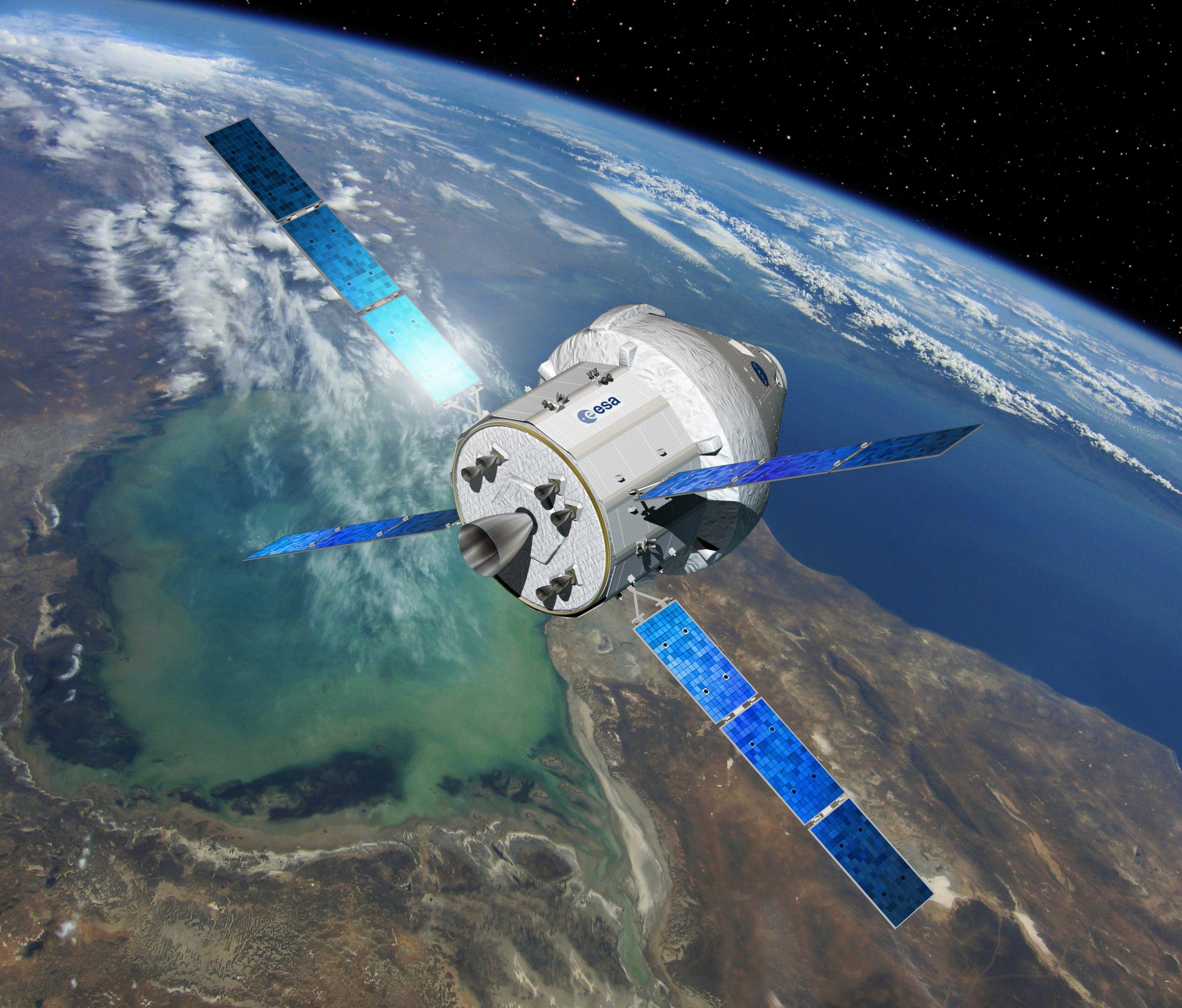
    The Orion crew transport vehicle’s European Service Module (ESM) is the spacecraft’s powerhouse, supplying it with electricity, propulsion, thermal control, air, and water in space. Credit: NASA

    For the first time, NASA will use a European-built system as a critical element to power and propel an American spacecraft. The spacecraft’s service module is being provided by ESA (European Space Agency) and its partner Airbus Defence and Space, extending NASA’s international cooperation from the International Space Station into deep space exploration. The service module is ESA’s contribution to NASA’s Orion spacecraft that will send astronauts to the Moon and beyond.


    NASA’s Orion spacecraft will take astronauts to destinations at or beyond low Earth orbit. In January 2013, it was announced that ESA would provide the European Service Module (ESM) for Orion’s first uncrewed mission. Derived from ESA’s Automated Transfer Vehicle cargo spacecraft, the ESM will provide life support, propulsion, and structural functions for Orion. In February 2017, a contract was signed for a second ESM to be used on Orion’s first crewed flight, which will carry astronauts beyond the Moon and back. Credit: ESA

    Never miss a breakthrough: Join the SciTechDaily newsletter.
    Follow us on Google and Google News.

    ARTEMIS Mission European Space Agency NASA Orion Spacecraft
    Share. Facebook Twitter Pinterest LinkedIn Email Reddit

    Related Articles

    NASA’s Orion Spacecraft for Artemis III Hits Major Milestone at Kennedy

    Artemis I: Mega Moon Rocket Ready for Launch

    Artemis I: NASA’s Bold Plans to Travel Beyond the Moon [Video]

    Welding Underway on Orion Crew Module for First Artemis Mission Landing Astronauts on the Moon

    Orion Spacecraft Ready to Fuel Up for NASA’s Artemis I Mission Beyond the Moon

    Six Incredible Space Missions to Look Forward to in 2021

    NASA Selects New Orion Program Manager: Catherine Koerner

    Orion Spacecraft Passes Tests – Ready for Final Artemis I Launch Preparations

    Orion Spacecraft Returns to Kennedy Space Center for Final Preparations Before Artemis I Launch

    Leave A Reply Cancel Reply

    • Facebook
    • Twitter
    • Pinterest
    • YouTube

    Don't Miss a Discovery

    Subscribe for the Latest in Science & Tech!

    Trending News

    Breakthrough Bowel Cancer Trial Leaves Patients Cancer-Free for Nearly 3 Years

    Natural Compound Shows Powerful Potential Against Rheumatoid Arthritis

    100,000-Year-Old Neanderthal Fossils in Poland Reveal Unexpected Genetic Connections

    Simple “Gut Reset” May Prevent Weight Gain After Ozempic or Wegovy

    2.8 Days to Disaster: Scientists Warn Low Earth Orbit Could Suddenly Collapse

    Common Food Compound Shows Surprising Power Against Superbugs

    5 Simple Ways To Remember More and Forget Less

    The Atomic Gap That Could Cost the Semiconductor Industry Billions

    Follow SciTechDaily
    • Facebook
    • Twitter
    • YouTube
    • Pinterest
    • Newsletter
    • RSS
    SciTech News
    • Biology News
    • Chemistry News
    • Earth News
    • Health News
    • Physics News
    • Science News
    • Space News
    • Technology News
    Recent Posts
    • After 37 Years, the World’s Longest-Running Soil Warming Experiment Uncovers a Startling Climate Secret
    • NASA Satellite Captures First-Ever High-Res View of Massive Pacific Tsunami
    • ADHD Isn’t Just a Deficit: Study Reveals Powerful Hidden Strengths
    • Scientists Uncover “Astonishing” Hidden Property of Light
    • Scientists Discover Stem Cells That Could Regrow Teeth and Bone
    Copyright © 1998 - 2026 SciTechDaily. All Rights Reserved.
    • Science News
    • About
    • Contact
    • Editorial Board
    • Privacy Policy
    • Terms of Use

    Type above and press Enter to search. Press Esc to cancel.