
Close Menu
    Facebook X (Twitter) Instagram
    SciTechDaily
    • Biology
    • Chemistry
    • Earth
    • Health
    • Physics
    • Science
    • Space
    • Technology
    Facebook X (Twitter) Pinterest YouTube RSS
    SciTechDaily
    Home»Space»Perseids Meteor Shower on the Way – But There’s a Big Problem
    Space

    Perseids Meteor Shower on the Way – But There’s a Big Problem

    By NASAAugust 5, 20224 Comments3 Mins Read
    Facebook Twitter Pinterest Telegram LinkedIn WhatsApp Email Reddit
    Share
    Facebook Twitter LinkedIn Pinterest Telegram Email Reddit
    Perseid Meteor Shower Time Lapse Photo
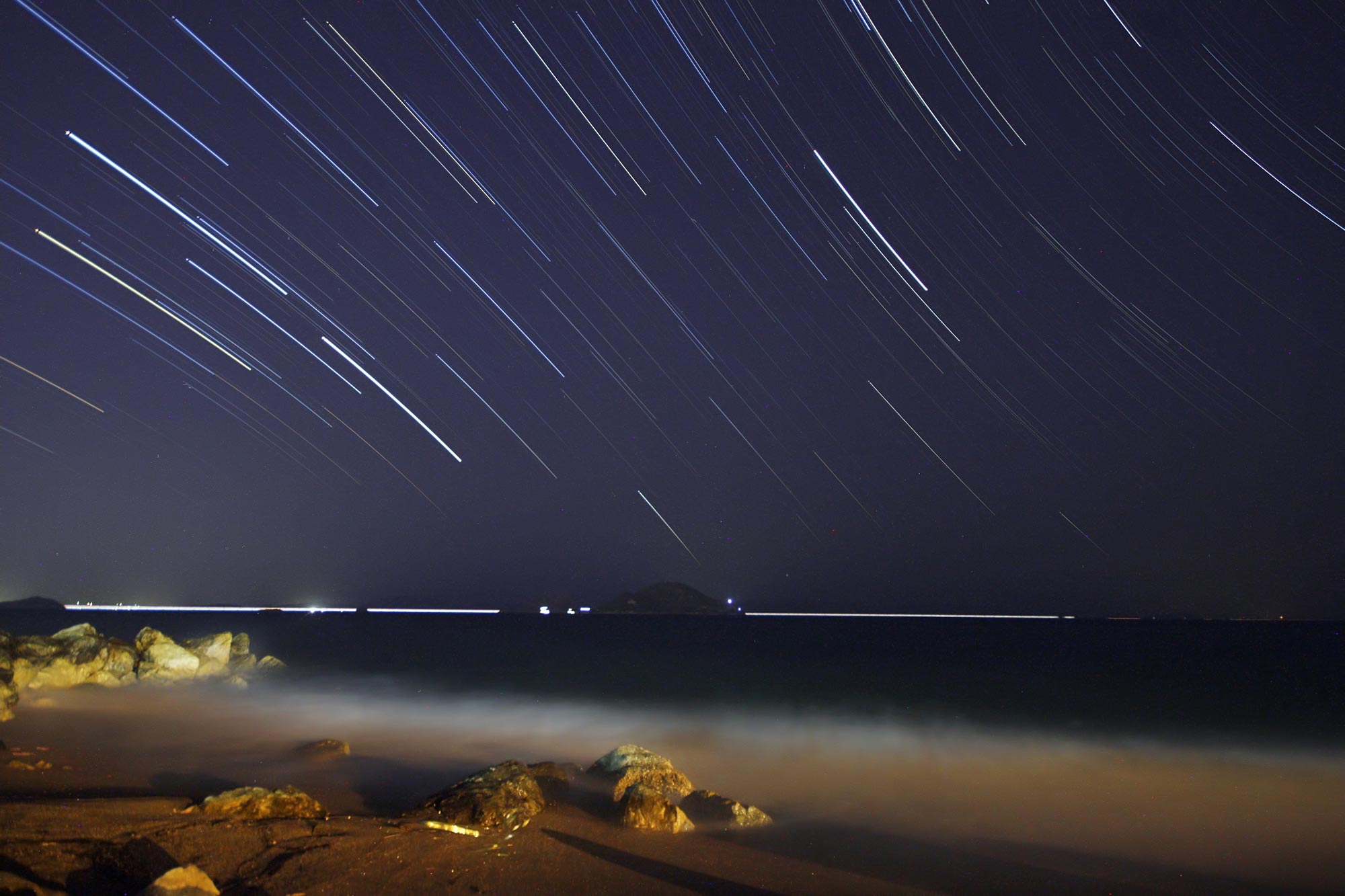
    Perseid meteor shower time-lapse photo.

    Often bringing one of the most vivid annual meteor showers visible in Earth’s night sky, the Perseids will peak on August 12 and 13. Usually, it delivers 50-100 “shooting stars” per hour at its height, putting on an impressive show. There’s just one problem this year: the full Moon.

    “Sadly, this year’s Perseids peak will see the worst possible circumstances for spotters,” said NASA astronomer Bill Cooke, who leads the Meteoroid Environment Office at NASA’s Marshall Space Flight Center in Huntsville, Alabama. “Most of us in North America would normally see 50 or 60 meteors per hour,” he said, “but this year, during the normal peak, the full Moon will reduce that to 10-20 per hour at best.”

    Because the Moon is so much brighter than anything else in the night sky, it will wash out all but the very brightest Perseids as they streak through our atmosphere and burn up far overhead.
    Perseid Meteors Light Up the Sky in 2009
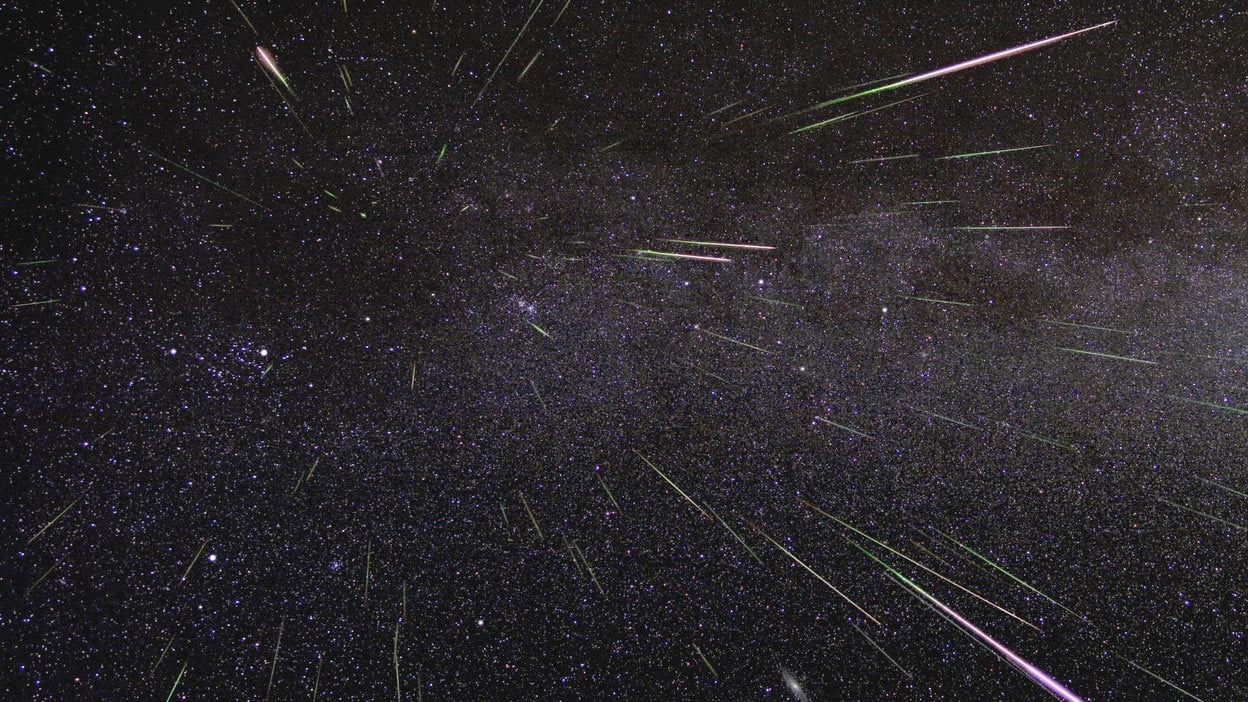
    A shower of Perseid meteors lights up the sky in 2009 in this NASA time-lapse image. Credit: NASA/JPL

    As the full Moon subsides, the Perseids will begin to weaken around August 21-22 and cease completely by September 1. They’re the debris remnants of Comet Swift-Tuttle, a lumbering “snowball” composed of ice, rock, and dust, which orbits our Sun every 133 years. The comet itself was last visible to us in 1992 and won’t pass our way again for over 100 years: not until 2125.

    How far back sightings of the Perseids actually go remains a matter of some disagreement, Cooke said. The comet itself wasn’t identified until 1862, but the meteor shower was seen over medieval Europe. The annual event came to be known as “the Tears of St. Lawrence,” named for the last of seven Roman church deacons martyred by the emperor Valerian in August of the year 258.

    So, while this is probably not the best year to make a special trip in order to see the Perseids, if you find yourself outside between midnight and dawn on August 13, don’t forget to look up anyway.  Because you never know – you might just catch one of the bright Perseid meteors that defies the glare of the Moon. Also, be aware that the occasional early Perseid can streak across the sky as much as a week beforehand.

    If you want to know what else is in the sky for August 2022, check out the latest “What’s Up” video from Jet Propulsion Laboratory:


    What are some skywatching highlights in August 2022? The daily parade of four naked-eye planets in the mornings comes to an end this month. But there are still lots of great highlights, especially if you have access to binoculars. Plus, Saturn and Jupiter are returning to nighttime skies! The outlook for the Perseid meteors isn’t great due to a full moon on the peak night of August 12, but still it’s worth keeping an eye out for early Perseids after midnight the week before. And August is a great month to learn an easy-to-spot constellation – Cygnus the swan.

    Never miss a breakthrough: Join the SciTechDaily newsletter.
    Follow us on Google and Google News.

    Astronomy Meteors NASA Perseid Meteor Shower Popular
    Share. Facebook Twitter Pinterest LinkedIn Email Reddit

    Related Articles

    Perseid Peak: Witness the Meteor Shower Spectacle Illuminating the Night Sky

    Don’t Miss: Perseid Meteor Shower Spectacle Lights Up the Night Sky

    Don’t Miss: Best Meteor Shower of the Year Peaks This Weekend

    Don’t Miss: Eta Aquariid Meteor Shower Outburst Peak – Up to 160 Meteors per Hour

    Don’t Miss: Total Lunar Eclipse and Leonid Meteor Shower

    Spectacular New Tau Herculids Meteor Shower May Light Up the Skies Over North America

    Don’t Miss the Geminid Meteor Shower – And Check Out NASA’s Live Meteor Camera

    Don’t Miss: Hunter’s, Blood Moon and Orionid Meteor Shower

    Don’t Miss “Prime Time” for the Perseid Meteor Shower

    4 Comments

    1. Linda cote on August 6, 2022 9:51 am

      Put a blanket over the moon

      Reply
    2. Myxomatosis on August 7, 2022 11:56 am

      Instead of a blanket, you can assist yourself by making a viewer of sorts. Make a thick, black, cardboard “Moon Blocker.”

      Reply
    3. Jim Jones Camp on August 7, 2022 12:07 pm

      Why all this “moonhate”?

      Reply
    4. Polly Goldberg on August 7, 2022 1:49 pm

      It’s shaming that you have political ads on your site. Science should be your focus, not ads for an anti-science former president.

      Reply
    Leave A Reply Cancel Reply

    • Facebook
    • Twitter
    • Pinterest
    • YouTube

    Don't Miss a Discovery

    Subscribe for the Latest in Science & Tech!

    Trending News

    Artificial Sweeteners May Harm Future Generations, Study Suggests

    Splashdown! NASA Artemis II Returns From Record-Breaking Moon Mission

    What If Consciousness Exists Beyond Your Brain

    Scientists Finally Crack the 100-Million-Year Evolutionary Mystery of Squid and Cuttlefish

    Beyond “Safe Levels”: Study Challenges What We Know About Pesticides and Cancer

    Researchers Have Found a Dietary Compound That Increases Longevity

    Scientists Baffled by Bizarre “Living Fossil” From 275 Million Years Ago

    Your IQ at 23 Could Predict Your Wealth at 27, Study Finds

    Follow SciTechDaily
    • Facebook
    • Twitter
    • YouTube
    • Pinterest
    • Newsletter
    • RSS
    SciTech News
    • Biology News
    • Chemistry News
    • Earth News
    • Health News
    • Physics News
    • Science News
    • Space News
    • Technology News
    Recent Posts
    • 34-Million-Year-Old Snake Found in Wyoming Rewrites Our Understanding of Evolution
    • Prehistoric “Vomit Fossil” Reveals Never-Before-Seen Flying Reptile
    • Scientists Discover Bizarre Crocodile Relative That Walked on Two Legs
    • How Quantum Mechanics Went From Baffling Theory to Revolutionizing Modern Technology
    • Scientists May Have Found the Key to Jupiter and Saturn’s Moon Mystery
    Copyright © 1998 - 2026 SciTechDaily. All Rights Reserved.
    • Science News
    • About
    • Contact
    • Editorial Board
    • Privacy Policy
    • Terms of Use

    Type above and press Enter to search. Press Esc to cancel.