
Close Menu
    Facebook X (Twitter) Instagram
    SciTechDaily
    • Biology
    • Chemistry
    • Earth
    • Health
    • Physics
    • Science
    • Space
    • Technology
    Facebook X (Twitter) Pinterest YouTube RSS
    SciTechDaily
    Home»Space»Peak of Perseid Showers Captured by European Space Agency’s Meteor Camera [Video]
    Space

    Peak of Perseid Showers Captured by European Space Agency’s Meteor Camera [Video]

    By European Space AgencyAugust 13, 2020No Comments3 Mins Read
    Facebook Twitter Pinterest Telegram LinkedIn WhatsApp Email Reddit
    Share
    Facebook Twitter LinkedIn Pinterest Telegram Email Reddit
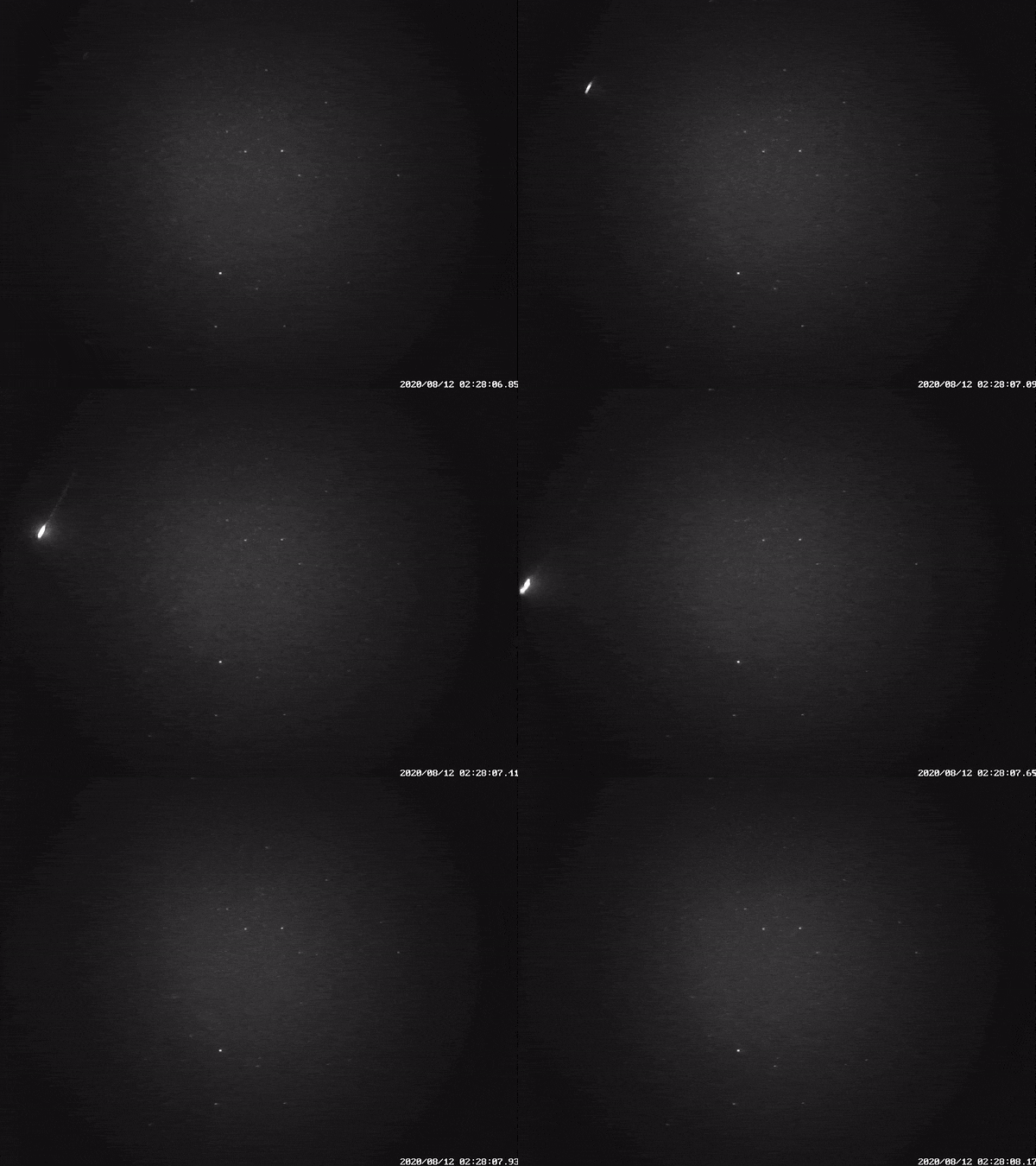
    Perseid Showers ESA Meteor Camera
    A Perseid meteor captured by the LIC1 camera of the Canary Long-Baseline Observatory (CILBO) on Tenerife in the early hours of August 12, 2020. The image-intensified (night vision) video camera, operated by ESA’s Meteor Research Group, provides a 22 x 28 degree field of view. The recordings allow researchers to determine the precise trajectory of each meteor and identify their orbit around the Sun and ultimately the body from which they originated. Credit: ESA/Meteor Research Group/ CILBO

    The LIC1 camera of the Canary Long-Baseline Observatory (CILBO) on Tenerife captured the peak of the 2020 Perseid meteor shower in mid-August, detecting dozens of meteors in a single night. One of the most spectacular annual meteor showers, the Perseids, made of debris from comet Swift-Tuttle, has been observed by sky-watchers for thousands of years.

    The image-intensified (night vision) video camera, operated by ESA’s Meteor Research Group, provides a 22 x 28 degree field of view. On the night of August 11, it captured an overall 61 meteors, 45 of which were classified as Perseids. On the night of August 10, it detected 37 meteors in total, about half of which were Perseids.

    Such recordings of meteors allow researchers to determine the precise trajectory of each meteor, identify their orbit around the Sun, and ultimately the body from which they originated.

    Meteoroids are pieces of rock shed by comets or asteroids. Upon entering Earth’s atmosphere, they create the visual display called a meteor. The typical altitude of meteors is around 80 to 120 km above Earth’s surface.

    The annual Perseid meteor shower occurs in the months of July and August and peaks around mid-August. The Perseids are among the brightest meteor showers and probably the most popular among amateur observers in the Northern Hemisphere since they can be easily observed thanks to usually favorable weather conditions. In fact, observations of Perseids go back to at least 69 BCE.

    The Perseids are named after the constellation Perseus as they appear to be coming from the direction of this constellation.
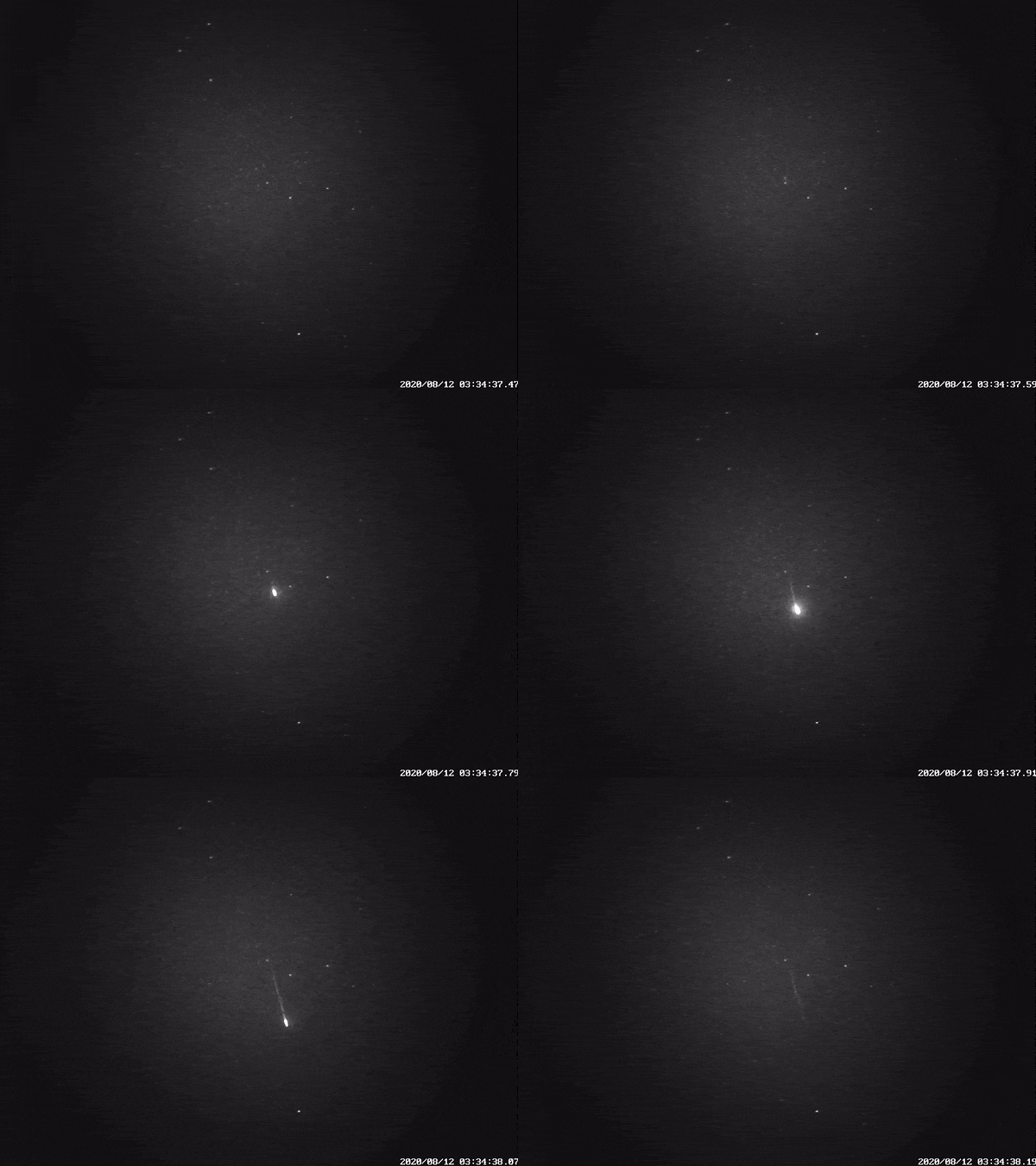
    Perseid Meteor ESA Camera
    Perseid meteor captured by ESA’s Canary Islands camera. Credit: ESA/Meteor Research Group/ CILBO

    While the most famous, Perseids are not the most interesting meteor shower for scientists. For example, the Leonids, which occur in mid-November, can cause every approximately 33 years meteor storms with 1000 meteors crossing the atmosphere every hour.

    The Meteor Research Group operates another camera setup on La Palma, monitoring the same volume in the atmosphere. The cameras use the meteor detection software MetRec to record the data.

    Never miss a breakthrough: Join the SciTechDaily newsletter.
    Follow us on Google and Google News.

    Astronomy European Space Agency Meteors Perseid Meteor Shower
    Share. Facebook Twitter Pinterest LinkedIn Email Reddit

    Related Articles

    Perseid Peak: Witness the Meteor Shower Spectacle Illuminating the Night Sky

    Don’t Miss: Perseid Meteor Shower Spectacle Lights Up the Night Sky

    Don’t Miss: Best Meteor Shower of the Year Peaks This Weekend

    Don’t Miss: Perseid Meteor Shower – “Conditions This Year Couldn’t Be More Perfect”

    Perseids Meteor Shower on the Way – But There’s a Big Problem

    Feared Apophis Impact Ruled Out – Asteroid Will Pass Close Enough to Earth to See With Naked Eye

    Spectacular Return to the Veil Nebula

    Tantalizing Evidence: Is the Nearest Star Cluster to the Sun Being Destroyed?

    Hubble Spots a Peculiar Sight: Unusual Spiral Galaxy With a Heavy Arm

    Leave A Reply Cancel Reply

    • Facebook
    • Twitter
    • Pinterest
    • YouTube

    Don't Miss a Discovery

    Subscribe for the Latest in Science & Tech!

    Trending News

    Popular Vitamin B3 Supplements May Help Cancer Cells Survive, Scientists Warn

    Scientists Discover Strange Property of Rice and Turn It Into a Smart Material

    NASA Artemis II Skips Burn As Astronaut Captures Stunning View of Earth

    NASA’s Artemis II: Humans Just Left Earth Orbit for the First Time Since 1972

    What Causes Chronic Pain? Scientists Identify Key Culprit in the Brain

    Semaglutide Shows Surprising Mental Health Benefits in Massive 100,000-Person Study

    This Liquid Snapped Instead of Flowing and Scientists Were Shocked

    Breakthrough Alzheimer’s Drug Rewires the Brain Instead of Just Clearing Plaques

    Follow SciTechDaily
    • Facebook
    • Twitter
    • YouTube
    • Pinterest
    • Newsletter
    • RSS
    SciTech News
    • Biology News
    • Chemistry News
    • Earth News
    • Health News
    • Physics News
    • Science News
    • Space News
    • Technology News
    Recent Posts
    • Astronomers Discover the Most Pristine Star Ever Found
    • New Study Suggests Gravitational Waves May Have Created Dark Matter
    • Scientists Solve 60-Year-Old Mystery of Strange Magnetic Surges Above the Moon
    • Scientists Discover How Multiple Sclerosis Kills Brain Cells
    • Scientists Discover Why the Brain Gets Stuck in Schizophrenia
    Copyright © 1998 - 2026 SciTechDaily. All Rights Reserved.
    • Science News
    • About
    • Contact
    • Editorial Board
    • Privacy Policy
    • Terms of Use

    Type above and press Enter to search. Press Esc to cancel.