
Close Menu
    Facebook X (Twitter) Instagram
    SciTechDaily
    • Biology
    • Chemistry
    • Earth
    • Health
    • Physics
    • Science
    • Space
    • Technology
    Facebook X (Twitter) Pinterest YouTube RSS
    SciTechDaily
    Home»Space»Don’t Miss “Prime Time” for the Perseid Meteor Shower
    Space

    Don’t Miss “Prime Time” for the Perseid Meteor Shower

    By NASAAugust 10, 2021No Comments3 Mins Read
    Facebook Twitter Pinterest Telegram LinkedIn WhatsApp Email Reddit
    Share
    Facebook Twitter LinkedIn Pinterest Telegram Email Reddit
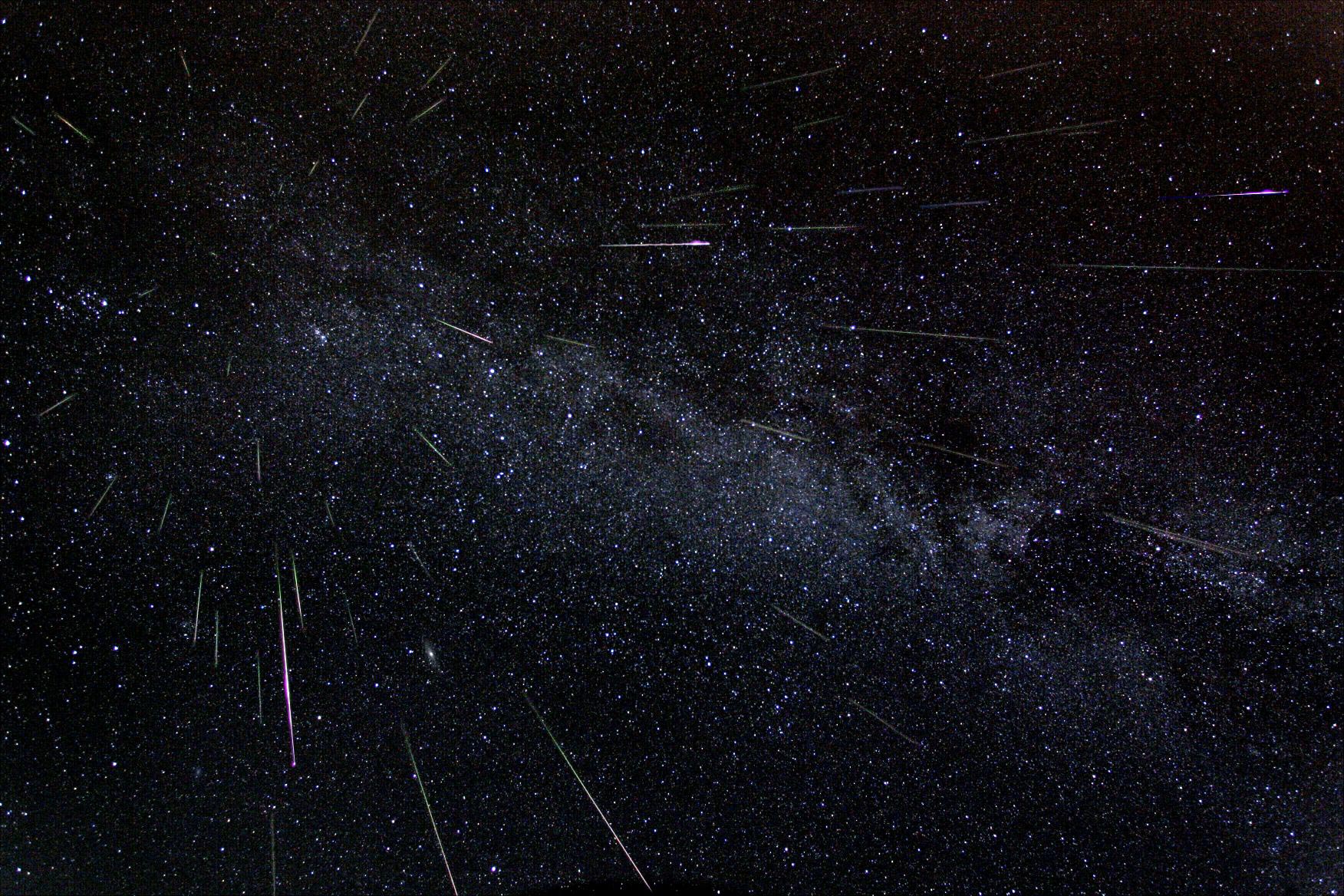
    Perseid Meteor Shower Fred Bruenjes
    Astronomer Fred Bruenjes recorded a series of many 30 second long exposures spanning about six hours on the night of August 11 and early morning of August 12, 2004 using a wide-angle lens. Combining those frames which captured meteor flashes, he produced this dramatic view of the Perseids of summer. There are 51 Perseid meteors in the composite image, including one seen nearly head-on. Credit: Fred Bruenjes

    The best-known meteor shower of the year should be a good time this year on the peak night of August 11, with no bright Moon to interfere.

    August brings the best-known meteor shower of the year, the Perseids. This annual meteor shower happens each year as Earth crosses the debris trail of comet Swift-Tuttle. Most of these meteors are grains of dust up to the size of a pea, and they create fabulous “shooting stars” as they burn up in Earth’s atmosphere.
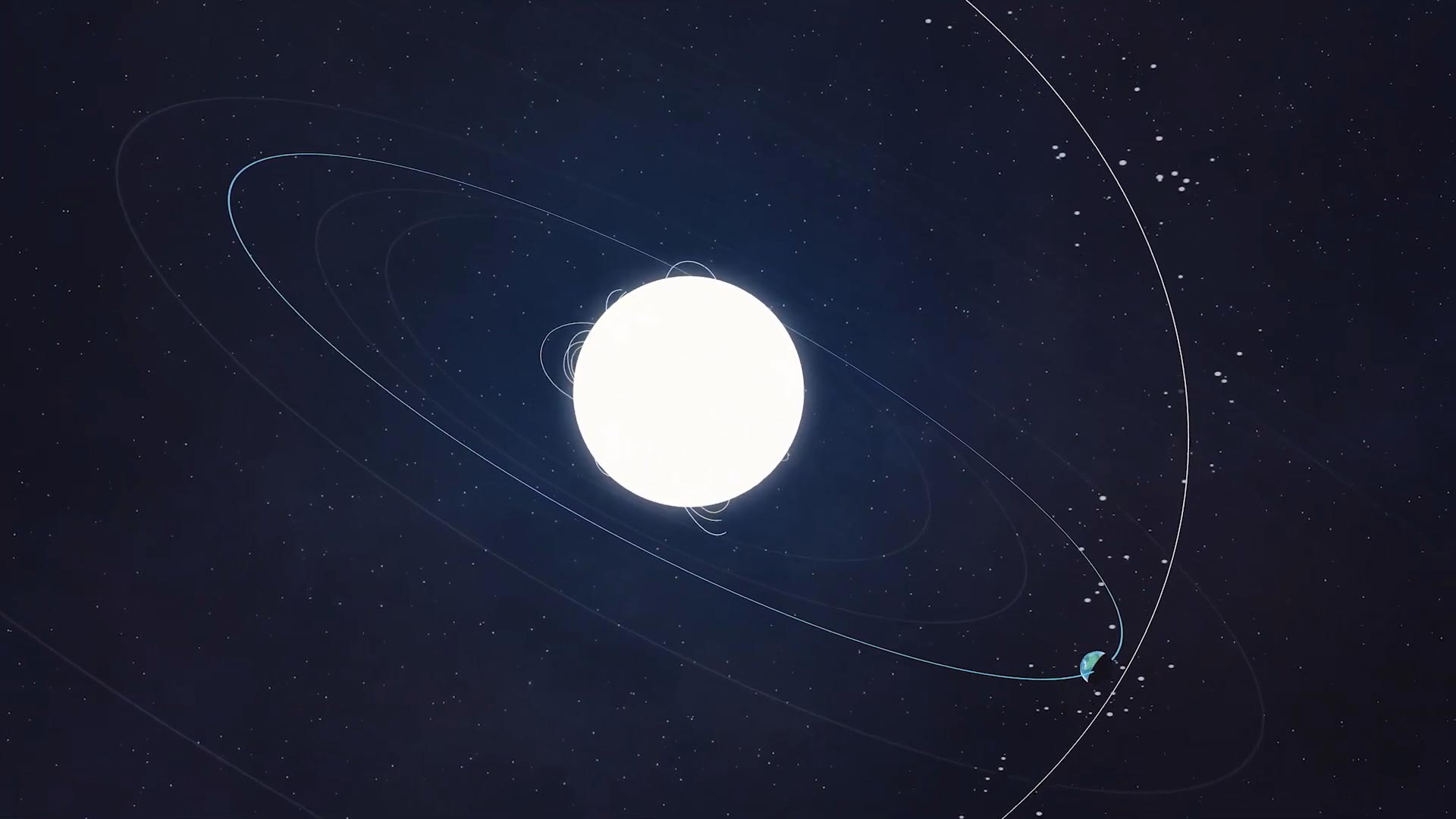
    Perseid Meteor Shower Comet Swift Tuttle
    We experience the Perseid meteor shower each year as Earth passes through the stream of debris left behind in the orbit of Comet Swift-Tuttle. Credit: NASA/JPL-Caltech

    The Perseids have been observed for at least 2,000 years and are associated with the comet Swift-Tuttle, which orbits the sun once every 133 years. Every August, the Earth passes through a cloud of the comet’s orbital debris. This debris field — mostly created hundreds of years ago — consists of bits of ice and dust shed from the comet which burn up in Earth’s atmosphere to create one of the premier meteor showers of the year.
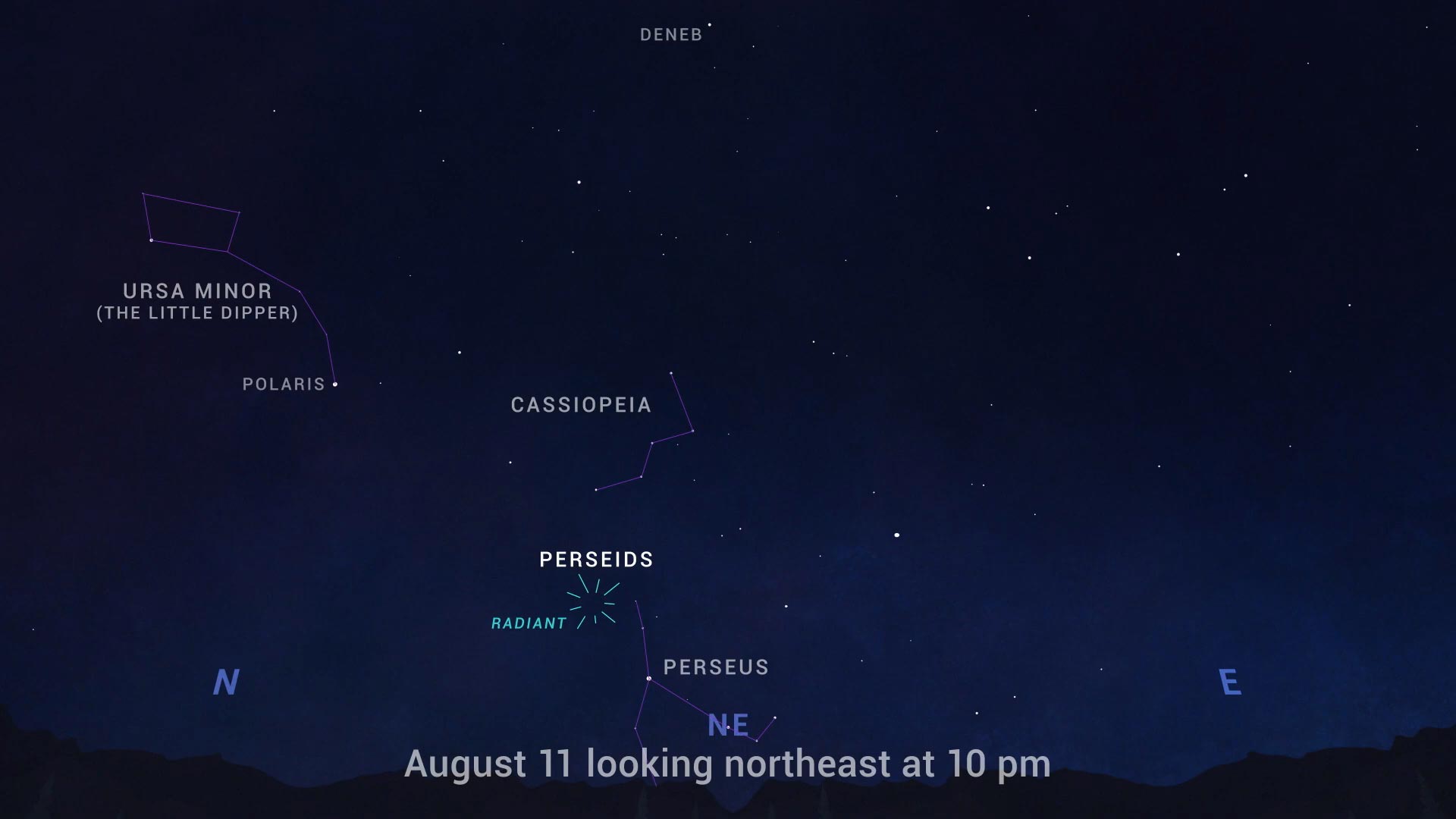
    Perseid Meteor Shower August 2021
    Meteor showers appear to radiate from a point called the radiant, though they can streak across the sky anywhere above you. For the Perseids, this point is in the constellation Perseus. Credit: NASA/JPL-Caltech

    Although Perseids can be seen from mid-July through late August, the most likely time to see any is a couple of days on either side of the peak. This year the peak falls on the night of August 11th, and into the pre-dawn hours of August 12th. (Think of that as “prime time” for the Perseids.) Under really dark skies, you could see almost one per minute near the time of maximum activity.

    This year’s peak night for the Perseids benefits from a Moon that sets early in the evening, so it won’t interfere with the fainter meteors. But before it sets that evening, be sure to check out that gorgeous crescent Moon in the west after sunset with the brilliant planet Venus.
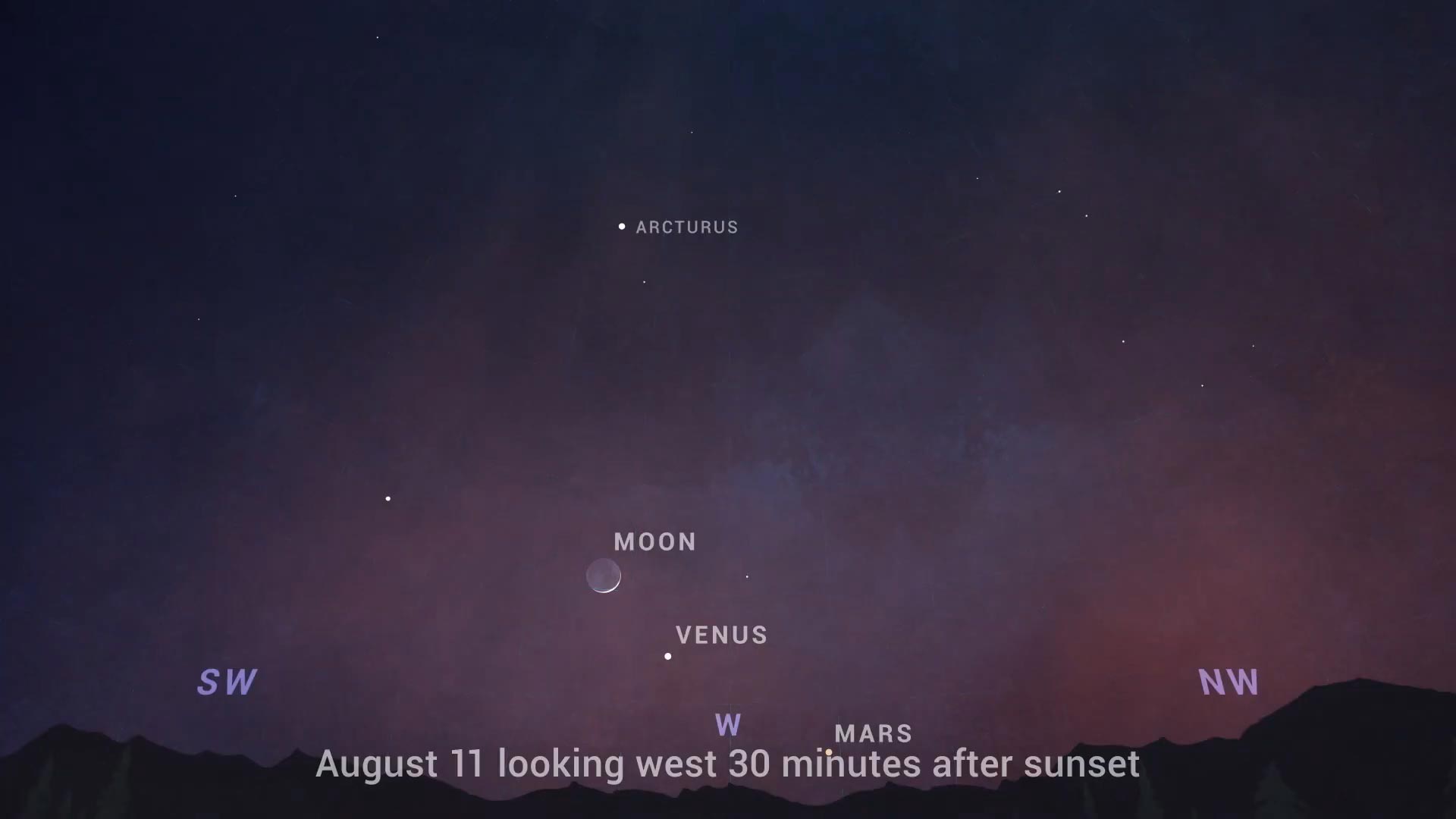
    August 2021 Astronomy
    On the night the Perseids peak, check out a beautiful scene with the crescent Moon near Venus in the west following sunset. Credit: NASA/JPL-Caltech

    To enjoy the Perseid meteor shower, just find a safe, dark location away from bright city lights. Lie down or recline with your feet facing roughly toward the north and look up. The meteors appear to radiate from around the constellation Perseus, but they can streak across the sky anywhere above you.

    NASA also has a way for you to catch some Perseids online. NASA’s Meteor Watch team plans a live stream overnight on August 11. Visit this link for more details. 


    Never miss a breakthrough: Join the SciTechDaily newsletter.
    Follow us on Google and Google News.

    Astronomy NASA Perseid Meteor Shower Popular
    Share. Facebook Twitter Pinterest LinkedIn Email Reddit

    Related Articles

    Don’t Miss: Venus and Jupiter Glow Together in a Rare Morning Alignment

    Perseid Peak: Witness the Meteor Shower Spectacle Illuminating the Night Sky

    Don’t Miss: Perseid Meteor Shower Spectacle Lights Up the Night Sky

    Don’t Miss: Best Meteor Shower of the Year Peaks This Weekend

    Don’t Miss: Perseid Meteor Shower and a Rare Super Blue Moon

    Perseids Meteor Shower on the Way – But There’s a Big Problem

    Hubble Uses Moon As “Mirror” to Study Earth’s Atmosphere – Proxy in Search of Potentially Habitable Planets Around Other Stars

    “Deflated Croissant” – Uncovering the True Shape of Our Solar System

    NASA TV Will Broadcast Perseid Meteor Shower Program

    Leave A Reply Cancel Reply

    • Facebook
    • Twitter
    • Pinterest
    • YouTube

    Don't Miss a Discovery

    Subscribe for the Latest in Science & Tech!

    Trending News

    Artificial Sweeteners May Harm Future Generations, Study Suggests

    Splashdown! NASA Artemis II Returns From Record-Breaking Moon Mission

    What If Consciousness Exists Beyond Your Brain

    Scientists Finally Crack the 100-Million-Year Evolutionary Mystery of Squid and Cuttlefish

    Beyond “Safe Levels”: Study Challenges What We Know About Pesticides and Cancer

    Researchers Have Found a Dietary Compound That Increases Longevity

    Scientists Baffled by Bizarre “Living Fossil” From 275 Million Years Ago

    Your IQ at 23 Could Predict Your Wealth at 27, Study Finds

    Follow SciTechDaily
    • Facebook
    • Twitter
    • YouTube
    • Pinterest
    • Newsletter
    • RSS
    SciTech News
    • Biology News
    • Chemistry News
    • Earth News
    • Health News
    • Physics News
    • Science News
    • Space News
    • Technology News
    Recent Posts
    • Why Losing Too Much Fat Can Be Just As Dangerous as Obesity
    • Beef vs. Chicken: Surprising Results From New Prediabetes Study
    • Alzheimer’s Breakthrough: Scientists Discover Key Protein May Prevent Toxic Protein Clumps in the Brain
    • Scientists Discover New Way To Make Protein Shakes Taste Better
    • Scientists Break Optical Limits With Quantum Dot-Powered Nanoscopy
    Copyright © 1998 - 2026 SciTechDaily. All Rights Reserved.
    • Science News
    • About
    • Contact
    • Editorial Board
    • Privacy Policy
    • Terms of Use

    Type above and press Enter to search. Press Esc to cancel.