
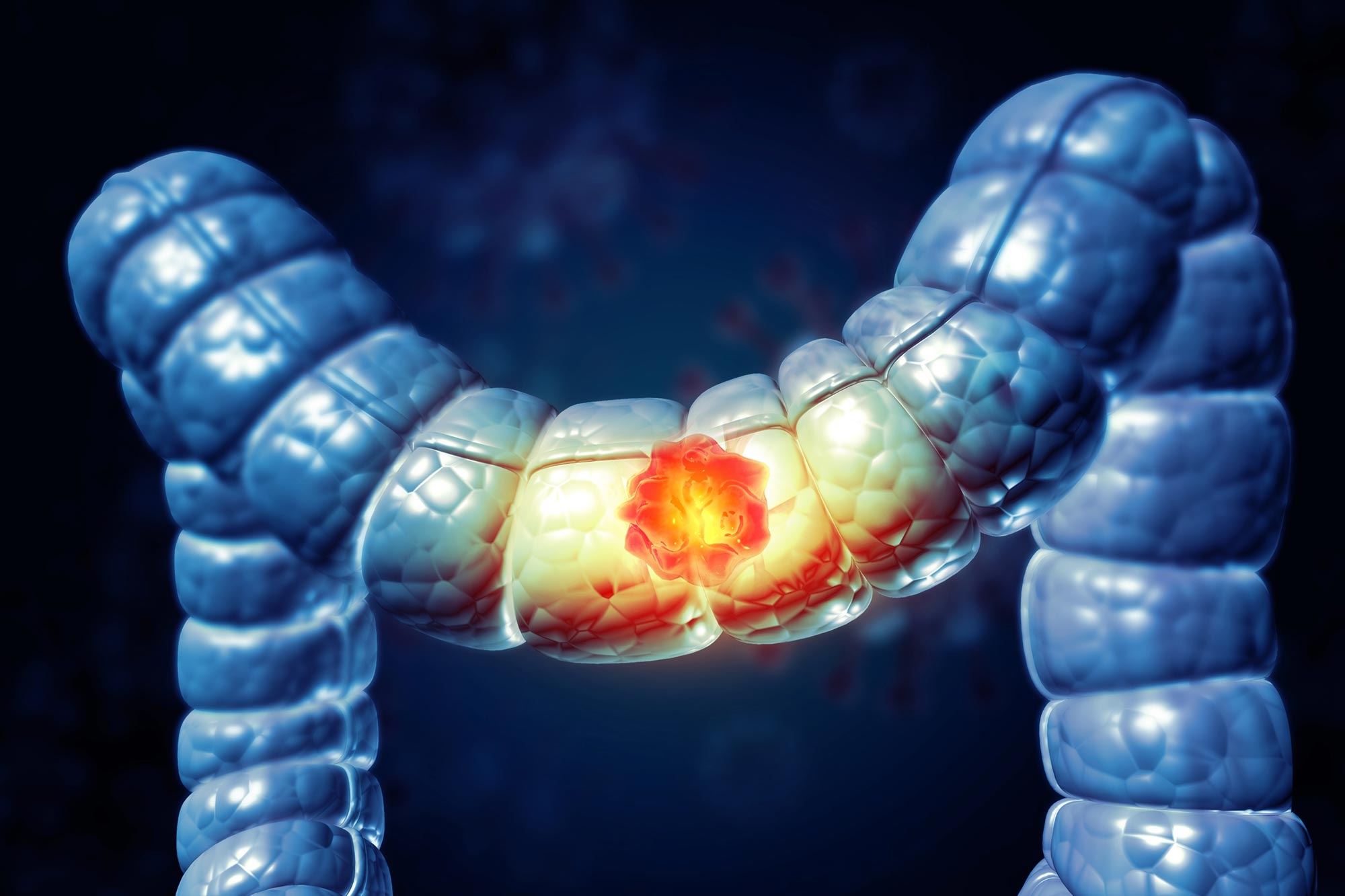
A new study reveals the hidden mechanism a common gut bacterium uses to damage the colon, solving a mystery that has puzzled scientists for years.
Researchers have known since a landmark 2009 study that the common gut bacterium Bacteroides fragilis can promote colon tumor growth that may lead to colorectal cancer. The bacterium does this by releasing a toxin that damages the colon lining. However, scientists had not understood exactly how the toxin attaches to colon cells.
Now, a research team led by scientists at the Johns Hopkins Kimmel Cancer Center, Bloomberg~Kimmel Institute for Cancer Immunotherapy, and the Johns Hopkins University School of Medicine has uncovered the missing step. Their study, published in Nature, found that the B. fragilis toxin known as BFT must first bind to a host receptor called claudin-4 before it can harm cells. The research received partial funding from the National Institutes of Health.
“We’ve made several attempts over time to identify the receptor, so this is an exciting moment,” says senior author Cynthia Sears, M.D., Bloomberg~Kimmel Professor of Cancer Immunotherapy and professor of medicine at Johns Hopkins. “Understanding how bacterial toxins work can open doors to new approaches for detection and therapy for associated diseases, including diarrhea, colorectal cancer, and bloodstream infections.”
The discovery has already helped researchers develop a molecular decoy that blocked the toxin’s harmful effects in animal studies, suggesting a possible way to prevent B. fragilis damage in the colon.
Decades-Long Search Reveals Claudin-4 Receptor
B. fragilis is found in up to 20% of healthy people and is highly effective at triggering colon inflammation and tumor formation. Earlier research from Sears’ lab showed that BFT causes chronic gut inflammation by cutting E-cadherin, a protein that helps maintain the colon’s protective barrier.
In a previous Nature Medicine study, Sears and her colleagues demonstrated that BFT activity contributes to colon tumor development. However, the toxin did not seem to attach directly to E-cadherin, suggesting another mechanism was involved.
To uncover that mechanism, Maxwell White, an M.D./Ph.D. candidate in the Sears lab, led a genomewide CRISPR screen in collaboration with Matthew Waldor’s lab at Harvard Medical School. By systematically disabling genes in colon epithelial cells, the researchers identified claudin-4 as the critical link. When claudin-4 was removed, BFT could no longer bind to the cells, leaving E-cadherin unaffected.
“It took a while to get the assay working and validate the approach, but once we were able to do the screen, claudin-4 was a clear, resounding top hit,” says White. “That was an exciting moment.”
Unexpected Toxin Binding Mechanism Confirmed
Sears says the receptor discovery came as a surprise because many researchers had expected the receptor to be a signaling protein, such as a G-coupled protein receptor, which claudin-4 is not. After reviewing existing research, the team could not find another toxin that operates this way. Most proteases attach directly to their targets instead of binding to a separate receptor first.
To confirm the physical interaction between the toxin and receptor, the Johns Hopkins team collaborated with structural biologists F. Xavier Gomis-Rüth and Ulrich Eckhard at the Molecular Biology Institute of Barcelona. Through biophysical analysis, White and the Barcelona researchers showed that BFT and claudin-4 form a strong one-to-one complex in a test tube, providing the first direct evidence of the binding interaction.
The researchers then expanded the work into living systems through a collaboration with Min Dong’s lab at Harvard Medical School. Working with Kang Wang and colleagues in Dong’s lab, the team studied how the toxin behaves in the complex environment of the gut using mouse models.
Decoy Protein Blocks Toxin Damage in Mice
The team created a decoy version of claudin-4, a soluble protein containing claudin-4 sequences, to prevent the toxin from attaching to colon cells. BFT was bound to the decoys instead of the actual receptor, and the strategy successfully protected mice from toxin-related damage.
“This approach could be iterated upon with small molecules or other biologics that have better pharmacological properties,” says White. The team is now exploring which molecular approaches might be most successful to block the toxin.
The scientists say one important question still remains unanswered. Although they identified the receptor and confirmed the binding process, they have not yet captured the precise experimental structure of the interaction between BFT and claudin-4. Current AI modeling systems such as AlphaFold were unable to fully resolve the interaction.
Reference: “A pro-carcinogenic bacterial toxin binds claudin-4 to cleave E-cadherin” by Maxwell T. White, Kang Wang, Hailong Zhang, Ulrich Eckhard, Karthik Hullahalli, Jason Chen, Shaoguang Wu, Abby L. Geis, Jie Zhang, Jessica Queen, F. Xavier Gomis-Ruth, Matthew K. Waldor, Min Dong and Cynthia L. Sears, 22 April 2026, Nature.
DOI: 10.1038/s41586-026-10375-0
The research was supported by the Bloomberg~Kimmel Institute for Cancer Immunotherapy, Janssen Research and Development, Cancer Research UK, the National Institutes of Health (grant numbers R01 AI042347, R01 NS080833, R01 NS117626, R01 AI170835 and R01 AI189789) and the Howard Hughes Medical Institute.
Sears receives royalties for writing and reviewing for UpToDate. This arrangement is managed by The Johns Hopkins University in accordance with its conflict-of-interest policies.
Never miss a breakthrough: Join the SciTechDaily newsletter.
Follow us on Google and Google News.
3 Comments
What about CDIF ?
I have tumor in my colon ,recto I think maybe later this to became cancer I’m taking tremfya.
Please send me the studies on how I can get rid of BF in my gut through dietary means. Prebiotics, elimination of x, ect..