
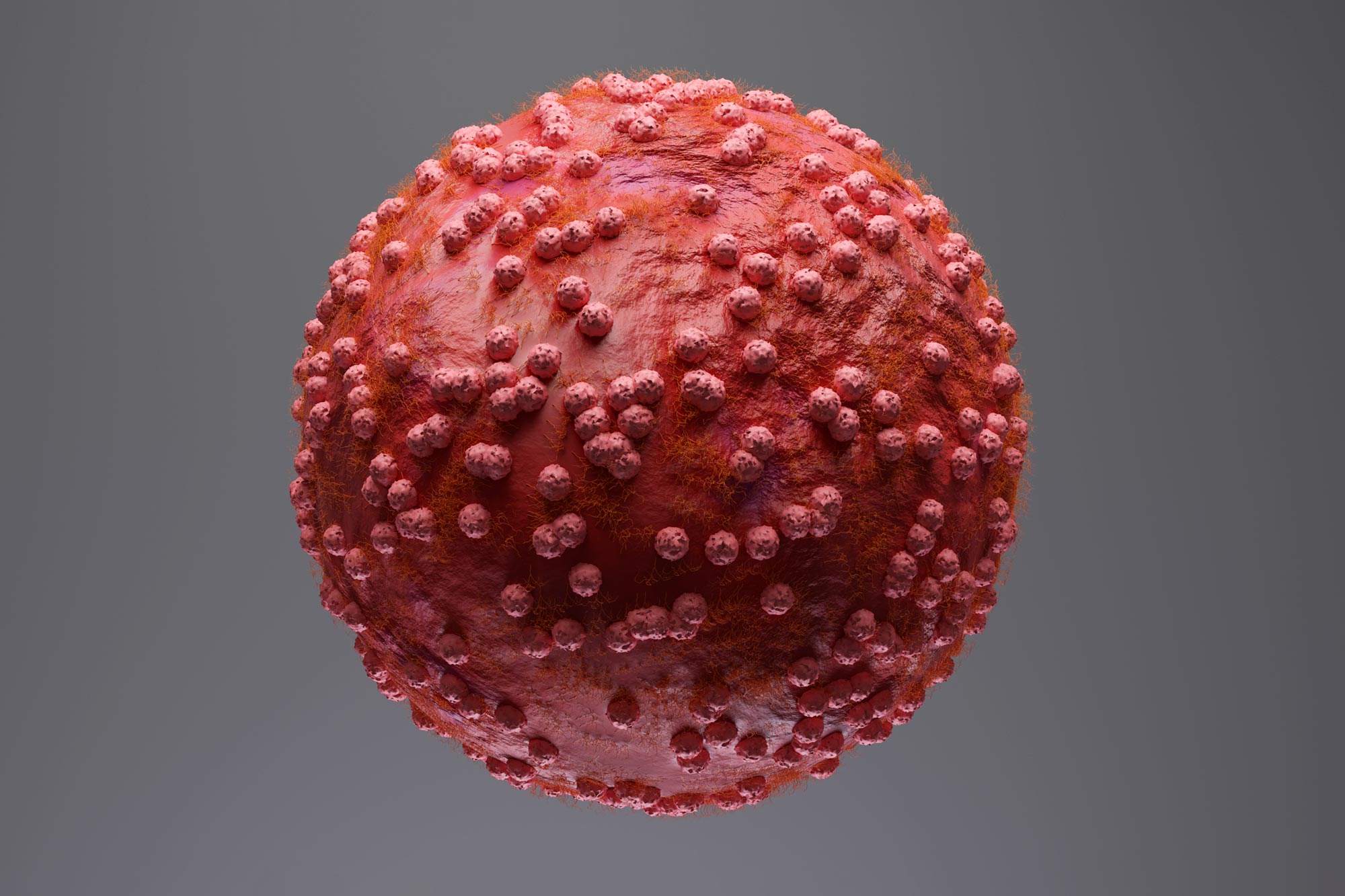
A rare hantavirus outbreak linked to a South Atlantic cruise is drawing global attention to the Andes strain’s unusual ability to spread between people.
A rare and deadly hantavirus outbreak linked to the expedition cruise ship MV Hondius has set off an international public health investigation after at least three passengers died and others became ill during a South Atlantic voyage. Officials in several countries are now tracking and monitoring passengers because the outbreak involves Andes virus, an uncommon hantavirus strain that, unlike most others, can sometimes spread between people during close contact.
To explain what is known and what remains uncertain, Scott Pegan, a professor of biomedical sciences at the UC Riverside School of Medicine, addresses key questions about hantavirus in the Q&A below. Pegan studies emerging infectious diseases, how viruses interact with the immune system, and the development of vaccines and antiviral treatments, with a particular focus on coronaviruses and Crimean-Congo hemorrhagic fever virus. He is also a lieutenant colonel in the U.S. Army Reserve, an Operation Iraqi Freedom combat veteran, and the author of numerous scientific papers on infectious disease therapies and immunology.

Q. What is hantavirus and how does it spread?
Hantavirus is a catch-all term used to describe a family of viruses that can cause either hemorrhagic fever with renal syndrome (HFRS) or hantavirus pulmonary syndrome (HPS). These viruses are found worldwide, with those in the Americas causing HPS in humans, while those found in Africa, Asia, and Europe generally cause HFRS.
In the U.S., the primary strain responsible for most disease cases is the Sin Nombre virus, found in the Western U.S., along with other strains such as the New York virus in the Eastern U.S. In South America, the Andes virus is a notable hantavirus strain. The case fatality rate for hantavirus pulmonary syndrome (HPS) is approximately 40% among those who develop severe disease. The reservoir for these viruses is small rodents.
Typically, hantavirus outbreaks are small, and human-to-human transmission does not readily occur. Most cases result from exposure to infected rodents. This can occur through physical contact with infected rodents (e.g., bites or scratches), ingestion of food contaminated by rodents, or exposure to virus-containing urine, feces, saliva, blood, or other bodily fluids that become aerosolized when cleaning rodent-infested areas.
The recent outbreak involving Andes virus has drawn attention because this hantavirus appears to be transmitted more readily from human to human than other hantaviruses. However, the mode of transmission in these cases remains similar to that of other hantaviruses. This type of transmission occurs through exchanges of bodily fluids associated with close contact, much like its bunyavirus relative, Crimean-Congo hemorrhagic fever virus, which is a focus of my research. In this form of transmission, the virus can spread via respiratory droplets, but this is generally considered distinct from true airborne transmission.
Q. What makes hantavirus particularly concerning in confined environments like cruise ships, and how does transmission risk differ from more common respiratory viruses?
As with Andes virus and other hantaviruses, close proximity plays a key role in human-to-human transmission. A confined space such as a cruise ship cabin — especially among family members — can present a higher risk of transmission from an infected individual.
Unlike measles and SARS-CoV-2, which are highly contagious and considered airborne, Andes virus is not in the same category of transmissibility. At the height of the COVID-19 pandemic, one infected person could, on average, infect 15–20 others. In contrast, those infected with Andes virus typically infect fewer than one other person on average. In this case, the confined environment of the cruise ship likely played an important role in facilitating transmission.
Q. Many people associate hantavirus with rural rodent exposure. Are there misconceptions the public should understand about how outbreaks can occur in travel or hospitality settings?
In the U.S., most outbreaks have occurred in rural environments because this is where rodent–human contact most commonly occurs. Farms, ranches, and other agricultural areas generally have resident rodent populations that can serve as reservoirs for these viruses. Successful public health and sanitation efforts in the U.S. have limited rodent–human interactions in many other settings.
However, this can create a false sense of security that people in non-rural areas are not at risk. The key factor with hantaviruses, whether Andes virus or Sin Nombre virus, is rodent–human contact.
Public health and sanitation efforts in some countries outside the U.S. and other developed nations can be significantly less robust or less effective, which may increase risk in certain environments.
Q. What symptoms should travelers and clinicians watch for after a potential hantavirus exposure, and how quickly can the illness become serious?
Early symptoms of hantavirus infection are generally flu-like, including fatigue, muscle aches, and fever. Dizziness and gastrointestinal symptoms such as abdominal pain, nausea, and diarrhea may also occur. These initial symptoms typically begin 1 to 8 weeks after exposure.
Four to ten days after symptom onset, hantavirus pulmonary syndrome can become more severe and clinically apparent, with coughing and shortness of breath rapidly progressing to respiratory failure. Blood tests can be used to diagnose infection, but they are typically most reliable when performed more than 72 hours after symptom onset.
For travelers and clinicians, it is important that when early flu-like symptoms occur alongside recent travel to areas of concern or exposure to environments where rodent–human interaction is likely, the patient be evaluated for possible hantavirus infection.
Q. How can people protect themselves from hantavirus? Is there a vaccine?
The best way to protect against Andes virus and other hantaviruses is to limit exposure to rodents and to individuals exhibiting flu-like symptoms. There is currently no approved vaccine or specific treatment for New World hantaviruses in the United States. Many research groups, including ours, are developing vaccine platforms that could serve as a basis for an Andes virus vaccine.
Vaccines for a limited number of Old World hantaviruses, such as Hantavax, are available in some countries. However, these vaccines are not considered broadly effective against most hantaviruses, including those found in the Americas, such as Andes virus.
For those infected, supportive care, such as intubation and mechanical ventilation, typically plays a central role in treatment.
Q. What lessons should the cruise industry and public health agencies learn from this outbreak to better prevent or respond to future zoonotic disease events?
The outbreak of Andes virus has renewed attention within the field on the need to minimize rodent–human interactions and to take signs of respiratory illness more seriously. More broadly, it highlights the importance of moving beyond the assumption that a patient simply has the flu or a minor illness and instead ensuring that more serious infections are considered and appropriately ruled out.
Never miss a breakthrough: Join the SciTechDaily newsletter.
Follow us on Google and Google News.
1 Comment
Not. Falling. For. This. Again!