
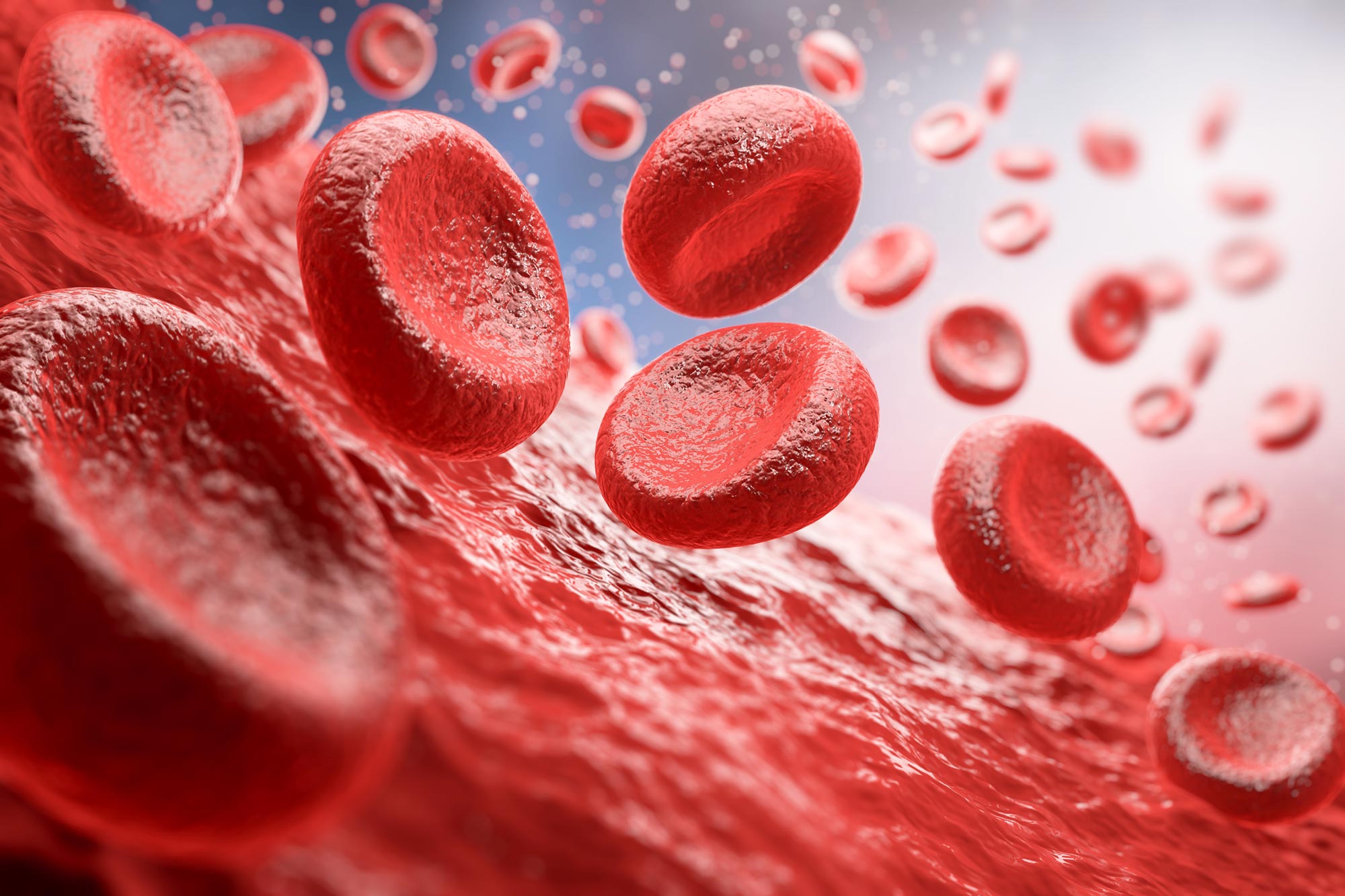
A decades-long search to identify a mysterious blood antigen has led researchers to a hidden genetic difference found in a tiny number of people.
A rare blood type mystery that has puzzled scientists for over 50 years has finally been solved, and the breakthrough could make blood transfusions safer for patients around the world.
Researchers in the United Kingdom and Israel have identified the genetic cause behind the elusive AnWj blood group, leading to the recognition of an entirely new blood group system called MAL. The discovery not only ends a decades-long scientific search, but also opens the door to improved screening for people with extremely rare blood types who may face dangerous transfusion reactions.
The findings were led by NHS Blood and Transplant through its International Blood Group Reference Laboratory (IBGRL) in Bristol, with contributions from the University of Bristol and several international partners. The study was published in Blood, the journal of the American Society of Hematology.
Beyond ABO: The Hidden Complexity of Blood
Most people know their blood type as A, B, AB, or O, along with positive or negative Rh status. But those familiar categories represent only a small part of human blood diversity.
Scientists have now identified 47 blood group systems containing more than 360 known blood antigens. These antigens are molecules found on the surface of red blood cells, and even tiny differences between donors and recipients can sometimes trigger severe immune reactions.
The newly recognized MAL blood group system centers on the AnWj antigen, a rare blood marker first identified in 1972. The name “AnWj” comes from the first patients found to produce the antibody, Anton and Wj.
For more than 50 years, researchers could detect the antigen but could not determine which gene created it.
A Medical Puzzle Finally Solved
Using whole exome sequencing, which analyzes all protein-coding regions of DNA, the team discovered that inherited AnWj-negative individuals carry deletions in both copies of the MAL gene.
That gene produces a small membrane protein called Mal, which plays roles in cell membrane stability and cellular transport. Researchers found that people with normal AnWj-positive blood express the full-length Mal protein on their red blood cells, while AnWj-negative individuals do not.
To confirm the finding, scientists inserted the normal MAL gene into blood cell lines in the lab. Those cells began producing the AnWj antigen. Mutated versions of the gene failed to do so, providing strong proof that the Mal protein is directly responsible for the blood group.
The work also demonstrated that Mal alone is enough to produce the AnWj antigen, resolving earlier theories that linked the blood type to other genes.
Why This Discovery Matters
The vast majority of people, more than 99.9%, are AnWj-positive. But for the tiny number who are AnWj-negative, receiving incompatible blood could trigger a serious transfusion reaction.
Until now, identifying these individuals has been extremely difficult because the genetic basis of the blood group was unknown.
The discovery means new genetic tests can now be developed to identify rare donors and patients before transfusions take place. Researchers say these tests could eventually be integrated into existing blood typing platforms.
This is especially important because many AnWj-negative cases are not inherited. Certain blood disorders and cancers can temporarily suppress the Mal protein, causing patients to appear AnWj-negative even though they do not carry the rare genetic form.
The inherited version itself appears to be extraordinarily uncommon. The study identified only five genetically AnWj-negative individuals, including members of an Arab-Israeli family. Researchers suspect there may be additional undiagnosed cases worldwide now that testing is possible.
Importantly, people born with the inherited MAL deletion are otherwise healthy.

A Discovery Decades in the Making
The breakthrough relied on advances in DNA sequencing technology that did not exist when the antigen was first discovered.
Louise Tilley, Senior Research Scientist at NHS Blood and Transplant, spent nearly two decades investigating the mystery.
“The genetic background of AnWj has been a mystery for more than 50 years, and one which I personally have been trying to resolve for almost 20 years of my career,” Tilley said. “It represents a huge achievement, and the culmination of a long team effort, to finally establish this new blood group system and be able to offer the best care to rare, but important, patients.”
She added that the research was particularly difficult because inherited cases are so rare.
“We would not have achieved this without exome sequencing, as the gene we identified wasn’t an obvious candidate and little is known about Mal protein in red cells.”
Ash Toye, Professor of Cell Biology at the University of Bristol, said the discovery highlights how modern genetic tools are transforming transfusion medicine.
“It’s really exciting we were able use our ability to manipulate gene expression in the developing blood cells to help confirm the identity of the AnWj blood group, which has been an outstanding puzzle for half a century,” he said.
Nicole Thornton, Head of IBGRL Red Cell Reference at NHS Blood and Transplant, described the project as one of the organization’s most challenging investigations.
“There is so much work that goes into proving that a gene does actually encode a blood group antigen, but it is what we are passionate about, making these discoveries for the benefit of rare patients around the world,” Thornton said.
The discovery has now also been formally recognized by the International Society of Blood Transfusion (ISBT), which ratified MAL as the world’s 47th official blood group system.
Why Rare Blood Research Is Increasingly Important
Although rare blood types affect only a small number of people, identifying them has become increasingly important as medicine grows more personalized and globally connected.
Patients with uncommon blood groups often rely on specially matched donors, sometimes from entirely different countries. Blood banks worldwide maintain rare donor registries to help locate compatible blood during emergencies or complex medical treatments.
Researchers say discoveries like MAL continue to shrink the number of unexplained blood antigens left in medicine, improving both transfusion safety and understanding of human genetics.
Reference: “Deletions in the MAL gene result in loss of Mal protein, defining the rare inherited AnWj-negative blood group phenotype” by Louise A Tilley, Vanja Karamatic Crew, Tosti J Mankelow, Samah A AlSubhi, Benjamin Jones, Abigail Borowski, Vered Yahalom, Lilach Finkel, Belinda K Singleton, Piers J Walser, Ashley Mark Toye, Timothy J Satchwell, Nicole M Thornton, 18 August 2024, Blood.
DOI: 10.1182/blood.2024025099
Never miss a breakthrough: Join the SciTechDaily newsletter.
Follow us on Google and Google News.
35 Comments
Why isn’t research being done concerning the spiked protein introduced with the covid inoculations? There’s been enough damage reported
Yes I agree I have RHn blood group since having 3 shots COVID injections my health has suffered
What about if your someone who has less red blood cells and more white ones what blood group are U then?
or how can this affect a person who needs a donor or blood transfusion ?
I believe that you can have any blood type , but am afraid you are describing anemia here: you mention more white cells and less red cells… O Rh negative blood type tends to have less red blood cells because of the blood group profile , but this is still not an illness, whereas if a person has got more white cells ( abnormally high) usually is meant to be anemic!
Thank You for your tireless
Research which will help humanity so much.
I agree
High white counts are usually associated with infections.
Enough fiction more readily. Cite. When you cannot, guess what truth to this reality you’re reaching for!
Research is being done. The spike protein from COVID vaccines has been studied by universities, regulators, and independent labs, especially regarding rare side effects like myocarditis. The concern is not ignored. What often causes confusion is that many reported injuries online are still being investigated, and reports alone do not prove the vaccine caused them. Some people feel the response has been too slow, but scientific studies on vaccine safety and spike protein effects are ongoing.
Rare ? Idk about that.
I have Rh negative blood. How do I get tested for this?
Donate blood and request a donor card
This will help in the medical questions of he otology to better treat those with such rare cases of recognized blood typed It will help in all fields of medical technology and medical theology of fund new treatment methods for the individual with such rare blood types by actually identifying the markers and devising medical treatment plans to help the individual with these rare forms of blood types – Thank you
I agree
How do you know it isn’t?
I believe there are other genes in the human/animal that would prevent abnormally of the human cells and could fight Cancer.
It’s amazing what people can do when they work together to solve a problem. I suspect we are genetically modified apes and that something made it possible for us to become modern type humans. Now assumed to be at least 230k old.
That, thankfully, sets the bar lower for us as a species.
What about if your someone who has less red blood cells and more white ones what blood group are U then?
or how can this affect a person who needs a donor or blood transfusion ?
You would not need a transfusion you would be dead already – ratio of red to white cells is about 600 red to 1 white cell
Did they count the parasite’s in your blood it can make redblood cells terribly less. Because it is eaten by parasites
I just read my last lab results and apparently I have someone eating my white cells, plus large red cells and slow growth of platelets. And so so much more. But I was instrested to learn the eating of my white cells
Reports and reports that are fiction in a gullible self-overheating market are different! Citations that don’t chase up in this universe might be an issue if you want research on them.
Maybe this Tiny group of AnWj is the group of people who are born of Alien encounters?
thanks for this
Impressive!
Kudos
The knowledge you were given is not but little (as compared to the knowledge of God)
The knowledge you were given is not but little (as compared to the knowledge of God Quran: 18:111
Thank you for your long years of persistent research it is so important. at 86, retired nurse
I have seen death because of blood transfusions.
Is it possible that Aenemias,
chrones, and bone marrow could be related to your research, especially the mal formed red white and platelets?.
This doesn’t seem to be a “blood type”, just a minor mutation that effects a few people.
Knowing about it, how it works, how to detect is very important.
Not a blood type.
The human body has a gene LZTR1 or so I have been told…that suppresses tumor growth in cancer?
If this is true then is there currently research into this gene and the genetics of that ? why or how that it helps some people to suppresses cancer cells from growth ? Are we really talking about this and looking into the future of how this could help people? Or is just the luck of the family genetics that some people have this genetic mutation and some don’t? It’s odd if we’re not even researching the possibility that this could possibly be a real thing to help people survive cancer? Just wondering if anyone knows any information about this?
Is AnWj has any connection with O negative blood ? Or there is any kind of risk for O negative blood groupers
So, how does one go about finding out if we’re one of those fortunate enough to have that gene?
No I did not, I have not.
How about all these male babies that are being born now with any male DNA? Sincerely covid is it from the vaccine? Has any more research figured it out yet. All these mutilated things being found now its concerning to say the least!
I have B Rh negative blood and had an anaphylactic attack to a blood transfusion in my 30’s. I have always said there was something slightly off with the blood and my body reacted. Really interested in this finding as it might be the answer.