
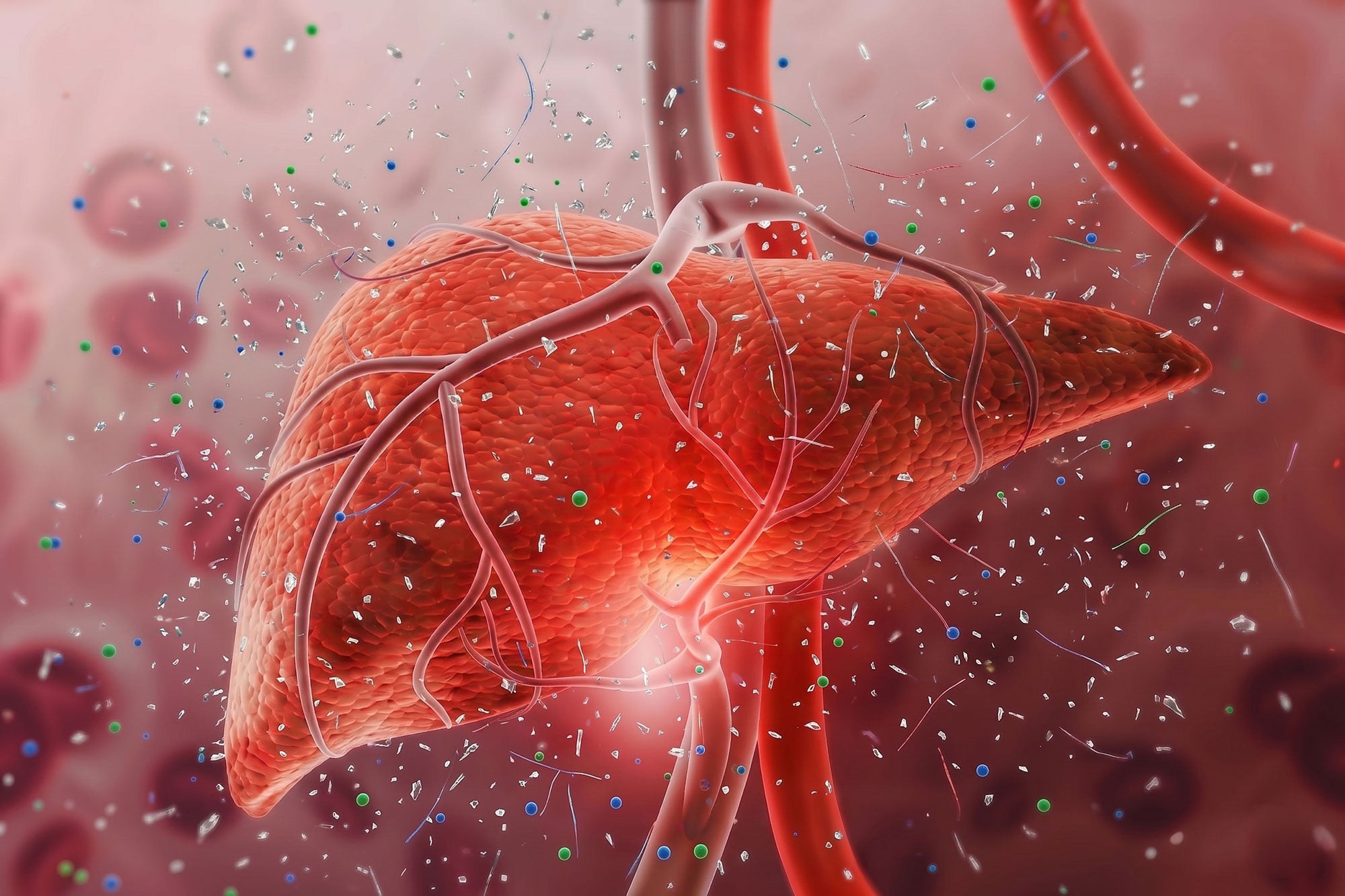
Scientists warn that microplastics accumulating in the liver may worsen liver disease and pose a growing global health threat.
Microplastics may be doing more than polluting oceans and ecosystems — scientists now believe they could also be accumulating in the human liver and contributing to the growing global burden of liver disease.
Researchers studying environmental and human health are investigating whether these microscopic plastic particles, already detected in humans and wildlife, may trigger harmful biological changes linked to chronic liver damage.
A new review published in Nature Reviews Gastroenterology & Hepatology was led by scientists at the University of Plymouth’s recently established Centre of Environmental Hepatology.
After analyzing a broad range of previous studies, the researchers found strong evidence that exposure to microplastics and nanoplastics can cause oxidative stress, inflammation, and fibrogenesis in animals. These effects closely resemble the characteristics of advanced liver disease in humans.
Researchers Warn Microplastics Could Trigger Liver Damage
Because the liver serves as the body’s main filtration system, processing and detoxifying substances people consume, scientists say these particles could also transport microbial pathogens, antimicrobial resistance determinants, endocrine-disrupting chemicals, and cancer-causing additives into the body.
The researchers introduced the term “plastic-induced liver injury” and called for more studies into whether these particles could worsen alcohol-related liver disease and metabolic dysfunction associated with steatotic liver disease, a condition that affects more than one-third of the global population.
Lead author Professor Shilpa Chokshi, Professor of Experimental Hepatology and Director of the Centre of Environmental Hepatology, has spent more than 20 years developing treatments for chronic liver disease.
Microplastics May Be Fueling the Global Rise in Liver Disease
Professor Chokshi said, “Liver disease is rising globally and is now responsible for 1 in 25 deaths worldwide. While established risk factors such as obesity and harmful alcohol use remain central, they do not fully explain the scale or pace of this increase.
“This has led us to consider additional environmental factors, including micro- and nanoplastics, which may interact with existing disease processes and amplify liver injury. There is already strong evidence that plastics can accumulate and cause harm in the livers of animals, raising an important question: why should humans be any different?”
The review also identified major research obstacles, including technical limitations, knowledge gaps, and unresolved priorities that currently make it difficult to fully understand plastic-induced liver injury.
Researchers additionally outlined key studies needed to better measure the impact of microplastics and nanoplastics on the liver and stressed the need for closer collaboration between environmental and health experts.
Plastics Could Amplify Existing Liver Disease
Professor Chokshi added, “What this article shows is that we now have a growing body of evidence that plastics can accumulate in human tissues and have been implicated in a range of medical conditions. From my perspective, having spent over two decades developing therapeutics for liver disease, the liver acts as the body’s gatekeeper—processing and detoxifying what we are exposed to.
“In an increasingly plastic-laden world, where plastics are closely associated with our food, water, and air, these exposures may not only reach the liver but also interact with existing disease processes and amplify harm. If this is the case, it is something we need to investigate in much greater detail.”
Researchers Urge Safer Plastics Amid Liver Health Concerns
Co-author Professor Richard Thompson, OBE, FRS, Professor of Marine Biology at the University of Plymouth, heads the university’s International Marine Litter Research Unit and serves as co-coordinator of the Scientists’ Coalition for an Effective Plastics Treaty. He has spent the past 30 years studying the sources and effects of microplastics and advocating for global action to reduce future plastic production.
“This is further evidence that plastic pollution is, without question, a global environmental and health challenge,” he said. “While some uncertainties about the absolute level of harm to the human liver remain, the fact that plastics are present at all—and the wider evidence of harm caused by plastic pollution—necessitates urgent action.
“The solutions unquestionably lie in ensuring the plastic products we make bring essential benefit to society and that those essential plastic products are safer—for example, in terms of their chemical composition—and far more sustainable, shedding fewer micro- and nanoparticles than is currently the case.”
Environmental Hepatology Focuses on Plastic-Linked Liver Damage
Environmental hepatology is an emerging field that studies how environmental exposures, including air, water, soil, diet, and consumer products, affect liver health throughout life.
The Center of Environmental Hepatology (CEH) brings together scientists, clinicians, and environmental researchers to produce evidence that can improve prevention strategies, support public policy, and help improve patient outcomes.
The Center of Environmental Hepatology (CEH) brings together scientists, clinicians, and environmental researchers to produce evidence that can improve prevention strategies, support public policy, and help improve patient outcomes.
Using human liver samples, researchers will study the cellular and molecular changes caused by plastic exposure under both healthy and disease-related conditions. The project will also examine how plastics affect hepatocyte function, disrupt the gut barrier, trigger inflammation, and promote fibrosis.
Reference: “Microplastics, nanoplastics and liver disease: an emerging health concern?” by Shilpa Chokshi, Ashwin Dhanda, Matthew E. Cramp and Richard Thompson, 7 April 2026, Nature Reviews Gastroenterology & Hepatology.
DOI: 10.1038/s41575-026-01188-7
Never miss a breakthrough: Join the SciTechDaily newsletter.
Follow us on Google and Google News.
1 Comment
The solution is simple, the clean up is another thing. STOP producing plastic!