
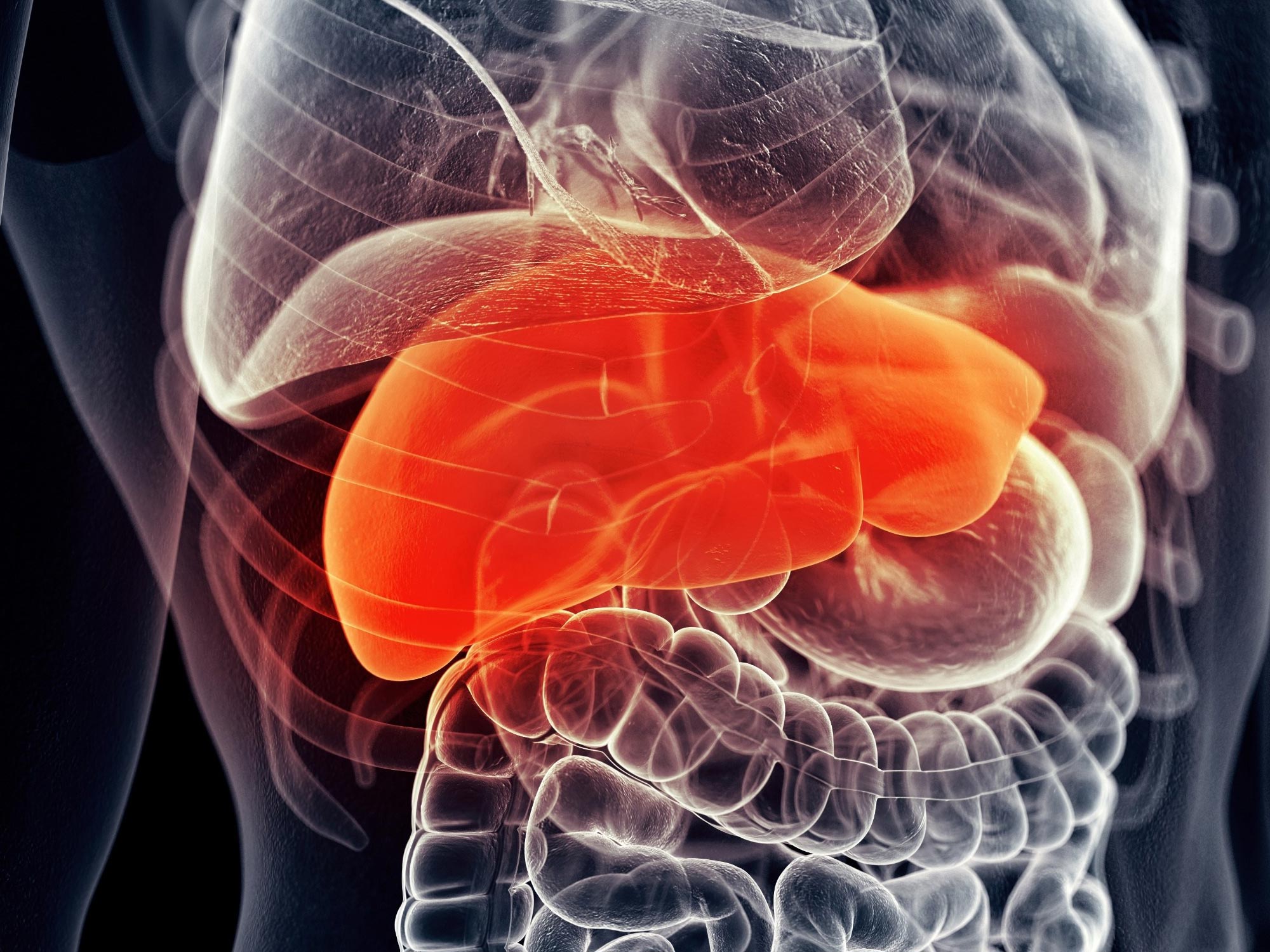
Scientists have uncovered why severely damaged livers can continue failing even after a person stops drinking alcohol.
The human liver is famous for its ability to regenerate. Ancient myths even referenced its seemingly endless capacity to heal. But in people with severe alcohol-related liver disease, that recovery system can suddenly fail, leaving the organ unable to repair itself even after drinking stops.
Now, scientists at the University of Illinois Urbana-Champaign, Duke University, and the Chan Zuckerberg Biohub Chicago say they have uncovered a major reason why.
In a study published in Nature Communications, the researchers found that chronic alcohol damage traps liver cells in a dysfunctional “in-between” state. Instead of fully regenerating or continuing their normal jobs, the cells become stuck midway through the repair process, gradually contributing to liver failure.
The discovery sheds light on one of the deadliest forms of liver disease and could eventually lead to new treatments that help damaged livers recover without transplantation.
Why the Liver Stops Healing
Under normal conditions, the liver can regrow after injury or even after part of it is surgically removed. To do this, mature liver cells temporarily rewind into a more flexible, fetal-like state that allows them to multiply before returning to their specialized roles.
But the new research shows that in alcohol-associated hepatitis and cirrhosis, the process breaks down halfway through.
Instead of completing regeneration, liver cells become trapped in a stalled state that is neither fully functional nor capable of healthy growth.
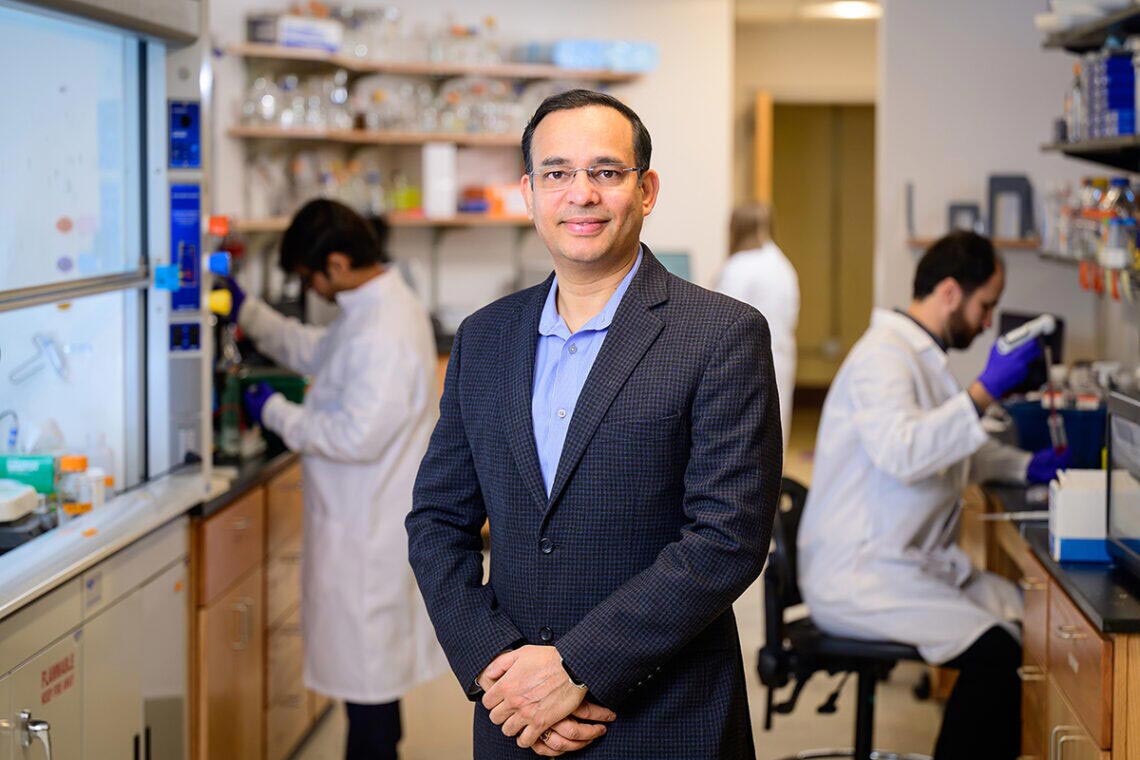
“They are neither functional adult cells nor proliferative progenitor cells. Since they are not functioning, more pressure builds on the remaining cells. So they try to regenerate, and they’re all ending up in this unproductive quasi-progenitor state, and that’s what is causing liver failure,” said University of Illinois graduate students Ullas Chembazhi and Sushant Bangru, co-first authors of the study.
This may help explain a frustrating medical mystery. Doctors have long observed that some patients continue progressing toward liver failure even after they stop drinking alcohol entirely.
“We knew that the liver stops functioning and stops regenerating in patients with alcohol-related hepatitis and cirrhosis, even when a patient has discontinued consuming alcohol, but we didn’t know why,” said University of Illinois biochemistry professor Auinash Kalsotra, who co-led the study with Duke University School of Medicine professor Anna Mae Diehl.
Today, liver transplantation is often the only lifesaving option once advanced liver failure develops.
A Breakdown in the Cell’s Editing System
To understand what was happening inside diseased livers, the researchers analyzed healthy and damaged human liver tissue using several advanced genetic tools, including RNA sequencing and chromatin accessibility profiling.
Their investigation pointed to a hidden problem deep inside the cell’s genetic machinery: widespread RNA missplicing.
Before cells can build proteins, RNA instructions copied from DNA must be edited through a process called splicing. Scientists often compare the process to film editing, where sections are cut and rearranged to produce a working final product. If the editing goes wrong, cells may still produce proteins, but the proteins can malfunction or end up in the wrong location.
The team discovered that alcohol-associated liver disease disrupts this editing system across thousands of genes.
“In comparing the samples, we saw RNA was getting misspliced broadly in alcohol-related liver disease, across thousands of genes, and it was affecting major functions of proteins,” Kalsotra said.
One protein drew particular attention: ESRP2, a molecule that helps control how RNA is spliced in liver cells. Diseased livers had sharply reduced levels of ESRP2, and the consequences were severe.
Without proper splicing, critical proteins involved in liver repair lost the molecular instructions that tell them where to go inside the cell. Some became stranded in the cytoplasm instead of reaching the nucleus, where they normally activate regeneration programs.
“Due to missplicing, key proteins that are required for productive liver regeneration were getting stuck in the cytoplasm, when they needed to be in the nucleus,” Kalsotra explained.

Inflammation Hijacks Liver Repair
The researchers traced the problem even further and found that chronic inflammation appears to drive the entire breakdown.
As alcohol damages liver tissue, immune cells and structural support cells flood the organ and release inflammatory molecules, including high levels of TGF-β, a signaling protein known to influence wound healing and scarring.
That inflammatory environment suppresses ESRP2 and interferes with normal regeneration pathways, including the WNT and Hippo signaling systems that help control cell growth and tissue repair.
Over time, the liver becomes crowded with abnormal quasi-progenitor cells that no longer carry out essential liver functions such as detoxification, nutrient processing, and protein production.
In experiments using liver cell cultures, the scientists blocked one of the inflammatory signaling pathways and saw ESRP2 levels rebound. RNA splicing also improved, suggesting the damage may not be irreversible.
A Possible New Direction for Treatment
The findings could open the door to a completely different strategy for treating alcohol-related liver disease.
Rather than focusing only on symptoms or scar tissue, future therapies might target the molecular signals disrupting RNA splicing and regeneration itself.
The study also suggests that misspliced RNA molecules could someday serve as early warning biomarkers, helping doctors identify which patients are at greatest risk of progressing toward liver failure.
Alcohol-associated liver disease is currently one of the leading causes of liver-related death worldwide, contributing to roughly 3 million deaths each year. Cases of severe alcohol-associated hepatitis have also risen sharply in recent years, particularly among younger adults.
Researchers say understanding why the liver loses its regenerative power could ultimately change how these patients are treated.
“I’m hopeful these findings will become a launching pad for future clinical studies,” Kalsotra said. “And if we can correct the splicing defects, then maybe we can improve recovery and restore damaged livers.”
Reference: “Dysregulated RNA splicing impairs regeneration in alcohol-associated liver disease” by Ullas V. Chembazhi, Sushant Bangru, Rajesh Kumar Dutta, Diptatanu Das, Brandon Peiffer, Subhashis Natua, Katelyn Toohill, Aurelia Leona, Ishita Purwar, Anuprova Bhowmik, Yogesh Goyal, Zhaoli Sun, Anna Mae Diehl and Auinash Kalsotra, 10 September 2025, Nature Communications.
DOI: 10.1038/s41467-025-63251-2
The National Institutes of Health supported this work through grants R01-AA010154, R01-HL126845, R21-HD104039, R01-AA010154, 5R01-DK077794, 1R56-DK1343340 and R24 AA025017.
Never miss a breakthrough: Join the SciTechDaily newsletter.
Follow us on Google and Google News.
6 Comments
Was daignose with hipertites b 3 years ago.I stop drinking at once for 8 months.That same time on my birtday in November had a drink stop after the weekend.Start drinking last year on my brothers funeral keep on drinking untill easter this year.
Can i still enjoy drinking without damaging my liver
No.
No.Alcohol is an acceptance,petrol on the bonfire
This is not good cant even drink without hurting your liver? I have cut back but this does worry me…is there any medication that might help?
Im 30 & im at end stage liver failure waiting on a donor.
“Scientists have uncovered why severely damaged livers can continue failing even after a person” CLAIMS TO HAVE STOPPED “drinking alcohol.”
[48-1/2 years sober] “Oh, what a tangled web we weave when first we practice to deceive.” I have seen such trickery among alcoholics that you would not believe it. So, I don’t believe a word of this.