
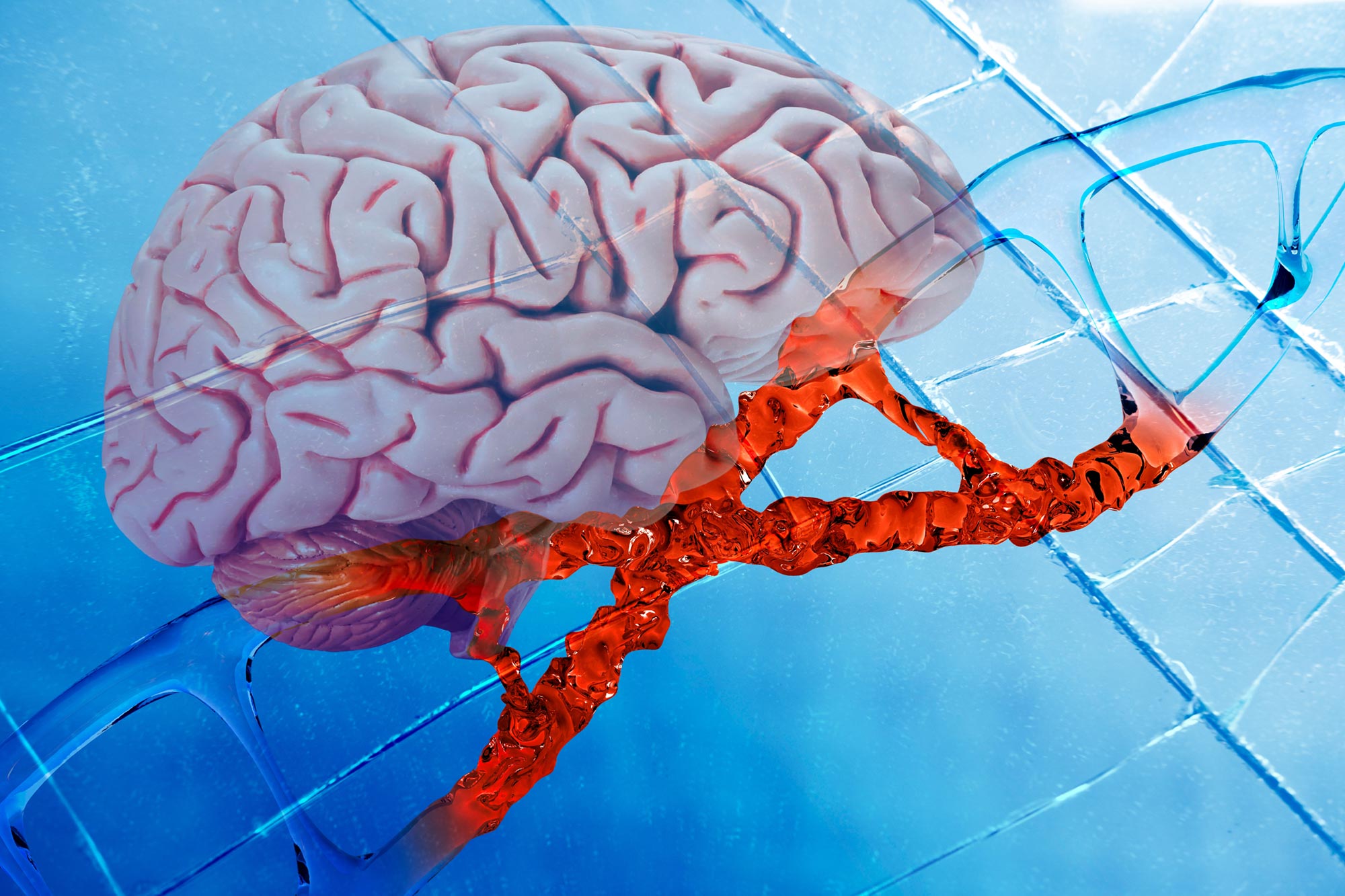
Researchers have identified tiny genetic “switches” that appear to play a surprisingly large role in human language ability.
Researchers at University of Iowa Health Care have identified specific genetic sequences that play an unusually large role in human language ability. These sequences developed before humans and Neanderthals split from a common ancestor.
Jacob Michaelson, PhD, senior author of the study and a professor of psychiatry and neuroscience, describes language as a defining feature of Homo sapiens. While many animals communicate, humans have a unique ability to create and adapt language. His team, including first author Lucas Casten, PhD, set out to understand how genetic regulatory elements called Human Ancestor Quickly Evolved Regions (HAQERs) influenced this development.
“What we’re seeing is how a very small part of the genome can have an outsized influence, not just on who we were as a species, but on who we are as individuals,” He explains that HAQERs make up less than one-tenth of one percent of the genome, yet they have about 200 times more impact on language ability than other regions.
These regions help build the brain’s biological structure, or “hardware,” while language itself functions as the “software.”
Decades of Research and DNA Analysis
The findings, published in Science Advances, build on research from the 1990s led by Bruce Tomblin, PhD. Tomblin studied 350 students in Iowa, carefully recording their language abilities and collecting saliva samples for future DNA analysis. Years later, Michaelson’s lab used those samples in NIH-funded research to examine how genetic differences relate to language skills.
This analysis allowed the team to explore how HAQERs affect a person’s ability to use language.
“These aren’t genes we’re talking about. They’re regulatory regions that act like the volume knob on genes,” Michaelson explains. He adds that the findings connect to earlier work on the FOXP2 gene, which was once thought to play a major role in language disorders. “So, if the HAQERs are like volume knobs that can be turned, FOXP2 is one of the hands that is turning these volume knobs.”
To study these effects in more detail, the researchers created an evolutionary-stratified polygenic score (ES-PGS), which separates genetic influences based on when they appeared in evolutionary history. Using computational methods, they analyzed changes across 65 million years.
Ancient Genetic Traits and Neanderthal Links
The results showed that these genetic “volume knobs” were also present in Neanderthals and may have been even more pronounced in them than in modern humans. This suggests that HAQERs are ancient features that contributed to language-related abilities, even though Neanderthals likely differed in overall cognitive function.
“This HAQERs aspect, a sliver of the genome, has remained relatively constant, even as other aspects have been going up and up and up to make modern humans smarter and smarter,” Michaelson says. “We can say humans at least had the ‘hardware’ for language earlier than what we previously thought.”
Combined with archaeological evidence that Neanderthals had culture and organized societies, these findings suggest they may have used complex forms of communication.
This raises an important question: if HAQERs are so important for language, why did they stop evolving instead of continuing to change?
Evolutionary Tradeoffs and Brain Development Limits
The answer appears to involve balancing selection. HAQER-related genetic signals leveled off over time, while other genes linked to cognitive ability continued to evolve. The researchers believe HAQERs support fetal brain development in ways that also increase brain and skull size. Before modern medicine, larger head size made childbirth more dangerous, raising the risk of death for both mother and child.
“We think that early humans maxed out this pathway to developing the kind of brain that could be a vessel for language, and they hit that ceiling pretty early on and then remained stable, while other aspects of genetics that improve brain development for higher intelligence but don’t directly affect fetal brain size continued to evolve,” Michaelson says.
In other words, human evolution involved a tradeoff. The biological foundation for language could not improve further through HAQERs without increasing risks during childbirth.
Future Research and Environmental Influences
Michaelson’s team plans to continue this work by studying the same group of participants, who now have families of their own. This expanded dataset could provide new insight into how language ability is passed down.
“One of the things we’re interested in is disentangling the environmental input from the genetic input when thinking about how a child masters language,” Michaelson says. He notes that children raised in language-rich environments often show stronger language skills. “Using that family structure, we hope to separate the direct genetic effects on language and what researchers call ‘genetic nurture,’ where the parents’ genetics influence the environment they create for their kids.”
The researchers also plan to use advanced statistical tools to better isolate how much of language development comes from environmental factors, which could have important clinical applications.
Reference: “Ancient regulatory evolution shapes individual language abilities in present-day humans” by Lucas G. Casten, Tanner Koomar, Taylor R. Thomas, Jin-Young Koh, Dabney Hofammann, Savantha Thenuwara, Allison Momany, Marlea O’Brien, Jeffrey C. Murray, J. Bruce Tomblin and Jacob J. Michaelson, 22 April 2026, Science Advances.
DOI: 10.1126/sciadv.aed5260
The research was funded in part by grants from the National Institute on Deafness and Other Communication Disorders and the National Institute of General Medical Sciences, both part of the National Institutes of Health, and the Roy J. Carver Charitable Trust.
Never miss a breakthrough: Join the SciTechDaily newsletter.
Follow us on Google and Google News.
2 Comments
Does this research demonstrate a socio-cultural effect? Does a genetic language characteristic influence social values and behavior? For example, does the genetic language structure that produces the German language, build a preference for technology, math, engineering and science?
My Polish Dad spoke 6 or 7 languages:- Polish, English, French, Spanish, Italian, Russian, & possibly Bulgarian. I only speak English but can usually make myself understood at a basic level of friendliness in most situations even when I don’t speak the language.