
The findings highlight a new frontier in “precision nutrition,” where biomarkers could help personalize diets to support better health and longer life.
A new study from researchers at the USC Leonard Davis School of Gerontology suggests that part of the Mediterranean diet’s health benefits may come from tiny proteins produced inside mitochondria, pointing to a possible link between diet, cellular aging, and disease risk.
Led by Roberto Vicinanza, Instructional Associate Professor of Gerontology at USC Leonard Davis, the study found that people who followed a Mediterranean-style diet more closely had higher levels of two mitochondrial microproteins, humanin and SHMOOSE. Both have been associated with protection against cardiovascular disease and neurodegeneration.
“These microproteins may act as molecular messengers that translate what we eat into how our cells function and age,” Vicinanza said. “It’s a new biological pathway that helps explain why the Mediterranean diet is so powerful.”
Diet, Mitochondria, and Aging
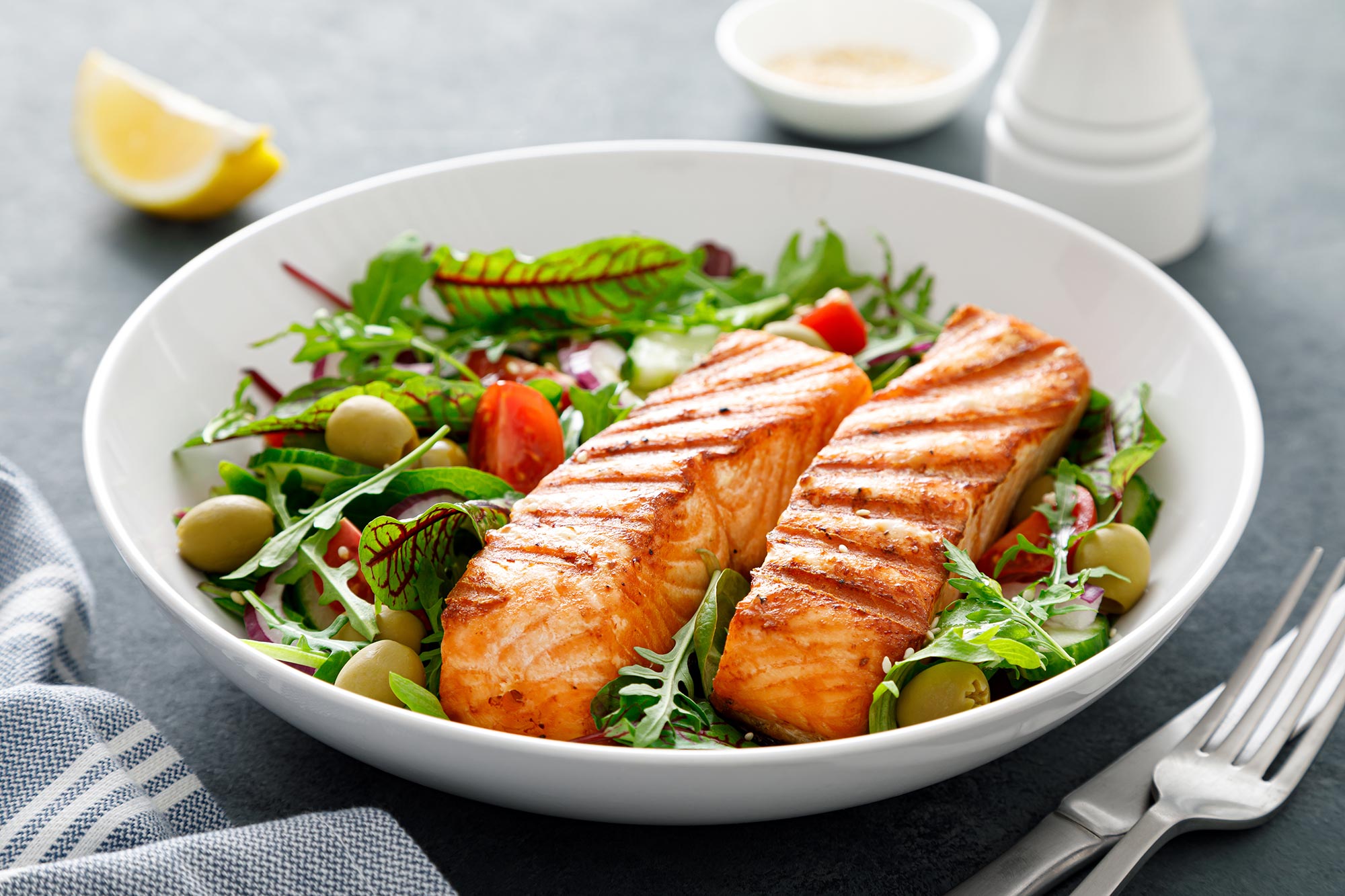
The Mediterranean diet is rich in olive oil, fish, legumes, fruits, and vegetables, and it has long been linked to lower risks of heart disease, diabetes, and cognitive decline. Scientists are still working to understand exactly how it produces these benefits.
For the new study, researchers examined blood samples from older adults who varied in how closely they followed the diet. Participants with the strongest adherence had much higher levels of humanin and SHMOOSE, along with lower markers of oxidative stress, an important contributor to aging and chronic disease.

The researchers also saw that particular foods seemed to be connected with these microproteins. Olive oil, fish, and legumes were linked to higher humanin levels, while olive oil and lower consumption of refined carbohydrates were associated with higher SHMOOSE.
“These findings suggest that specific components of the Mediterranean diet may directly influence mitochondrial biology,” said USC Leonard Davis School Dean and USC Distinguished Professor Pinchas Cohen, the study’s senior author. “Humanin and SHMOOSE could serve as biomarkers for adherence to the Mediterranean diet and have clinical significance.”
A New Role for Mitochondrial Microproteins
The work builds on more than two decades of research led by Cohen, who helped pioneer the discovery of peptides that come from mitochondria.
Unlike typical proteins encoded by nuclear DNA, these microproteins are made from small open reading frames in the mitochondrial genome, areas that were once assumed to have no function.
Humanin is among the best studied of these molecules. Cohen and colleagues first identified it in 2003, and later work has connected it with better insulin sensitivity, cardiovascular protection, longevity, and preserved cognitive function.
Cohen’s lab later discovered SHMOOSE (Small Human Mitochondrial ORF Over SErine tRNA), a microprotein associated with brain health. A genetic variant of SHMOOSE has been tied to higher Alzheimer’s disease risk, while the normal form appears to help protect neurons from damage related to amyloid.
“These peptides are emerging as key regulators of aging biology,” Cohen said. “They connect mitochondrial function to diseases like Alzheimer’s and heart disease and now, potentially, to nutrition.”
Linking Diet to Cardioprotection
The study also identified a possible connection between humanin and Nox2, an enzyme that generates harmful reactive oxygen species.
Higher levels of humanin were linked with lower Nox2 activity, suggesting that the peptide may help limit oxidative stress and support cardiovascular protection.
The researchers suggest the Mediterranean diet may act through two related pathways: reducing oxidative stress directly while also increasing mitochondrial microproteins that help suppress damaging biological processes.
“This could represent a new cardioprotective mechanism of the Mediterranean diet,” Vicinanza said.
From the Lab to Global Advocacy
Outside the laboratory, Vicinanza has worked to promote the Mediterranean diet internationally, connecting his research with a wider effort to present the diet as a model for health, culture, and sustainability. He has collaborated with the Municipality of Pollica in Italy, a UNESCO Mediterranean Diet emblematic community, to support creation of the International Day of the Mediterranean Diet at the United Nations.
The observance will take place each year on November 16 and is intended to raise global awareness of the diet’s health, cultural, and environmental value. Vicinanza said that the mission fits with the study’s findings.
“We’re connecting centuries-old dietary traditions with cutting-edge molecular biology,” Vicinanza said. “It supports the idea that healthy eating patterns with little to no ultra-processed foods reflect how humans have eaten over long periods and may create conditions to which mitochondria—ancient cellular organelles—are likely adapted.”
Toward Precision Nutrition and Healthy Aging
Although the study was small and observational, the results point toward a growing area in “precision nutrition,” where biological markers such as mitochondrial microproteins could one day help guide diets designed to improve health and support longer life.
Future studies will test whether specific dietary interventions can directly raise humanin, SHMOOSE, and related peptide levels, and whether those shifts lead to lower disease risk.
“Our goal is to move from observing associations to understanding causality,” Vicinanza said. “If we can harness these pathways, we may be able to design nutritional strategies that promote healthy aging at the molecular level.”
Reference: “Mediterranean diet adherence is associated with mitochondrial microproteins Humanin and SHMOOSE; potential role of the Humanin–Nox2 interaction in cardioprotection” by Roberto Vicinanza, Vittoria Cammisotto, Junxiang Wan, Kelvin Yen, Francesco Violi, Pasquale Pignatelli and Pinchas Cohen, 30 December 2025, Frontiers in Nutrition.
DOI: 10.3389/fnut.2025.1727012
The work was funded by the USC Daryl and Irwin Simon Nutrition for Alzheimer’s Disease Prevention Research Fund (to Vicinanza), the Hanson-Thorell Family Research Award (to Vicinanza), National Institutes of Health grant P30AG094848 (to Cohen), and PRIN 2022 grant 000031_23_PP_PIGNATELLI_PRIN_2022-B53D23021240006 (to Pignatelli).
Never miss a breakthrough: Join the SciTechDaily newsletter.
Follow us on Google and Google News.
1 Comment
thanks for this