
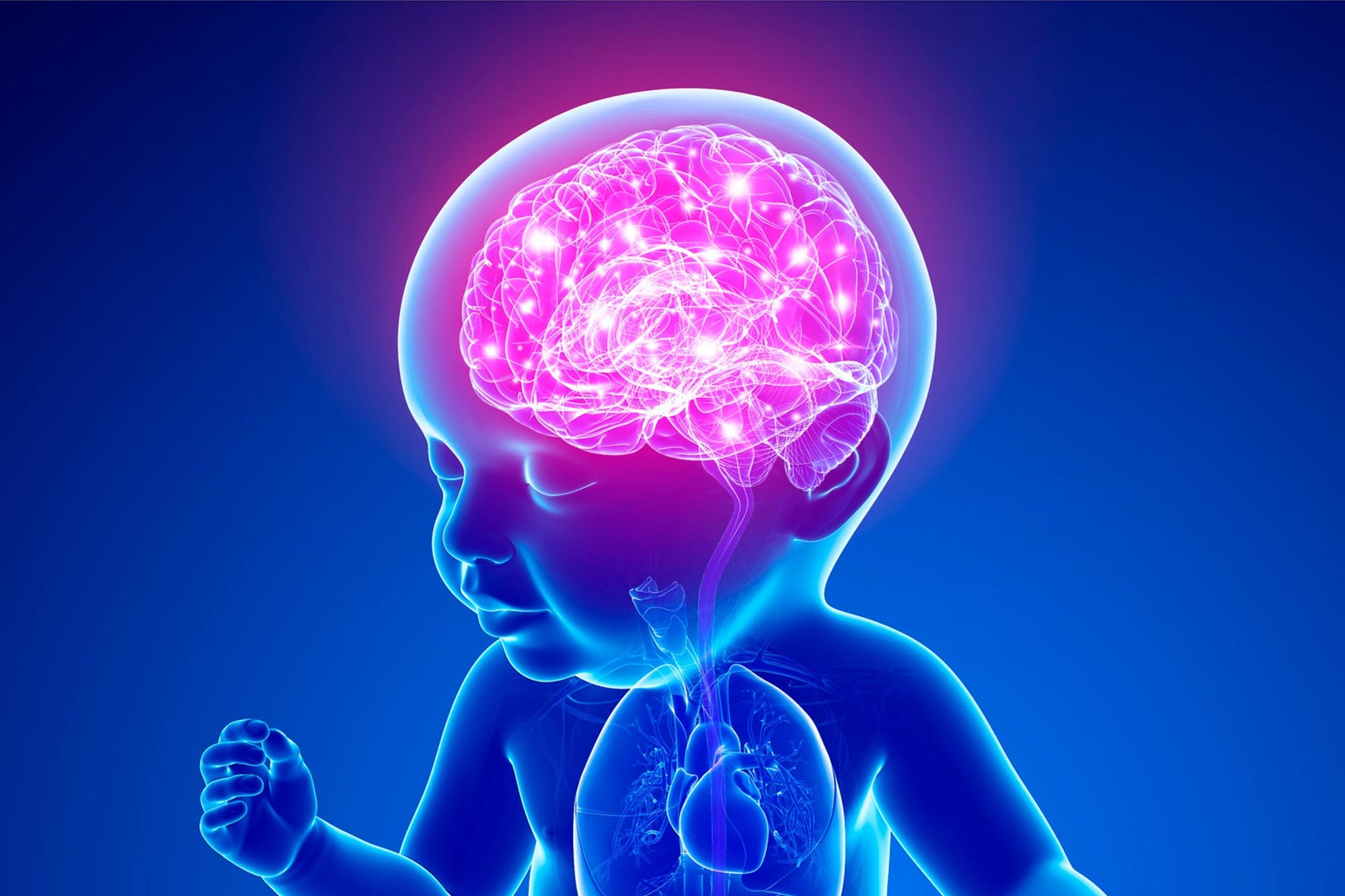
A study found that early-life epigenetic changes and gut microbiome development are closely linked and may shape the risk of ASD and ADHD. Some gut bacteria appeared to offer protective effects against these conditions.
From the moment a baby is born, trillions of microbes begin colonizing the gut while molecular “switches” in the body help control which genes are active.
Now, researchers have found that these two systems, the gut microbiome and epigenetics, may work together in ways that influence early brain development and could shape the risk of neurodevelopmental conditions later in childhood.
The study, published in the journal Cell Press Blue, showed that epigenetic changes present at birth can affect how an infant’s gut microbiome develops during the first year of life. The researchers also identified specific epigenetic patterns and gut microbes linked to signs of autism spectrum disorder (ASD) and attention-deficit/hyperactivity disorder (ADHD) at age three. Some microbes even appeared to play a protective role, potentially reducing the effects associated with certain epigenetic risk patterns.
“Certain bacteria seem to offer protection, which is exciting because it suggests there could be ways to support a child’s development through diet or probiotics in the future,” says senior author and gastroenterologist Francis Ka Leung Chan of The Chinese University of Hong Kong.
Early childhood is a critical period for both brain development and immune system maturation. While previous studies have shown that epigenetic changes and the infant gut microbiome can each influence long-term health, far less is known about how the two systems interact during the earliest stages of life.
Early-Life Epigenome and Microbiome Interaction
“We wanted to see how the epigenome and microbiome interact in early life and if their interaction could influence a child’s risk of developing neurodevelopmental conditions like ASD and ADHD,” says co-senior author and public health researcher Hein Min Tun of The Chinese University of Hong Kong. “We discovered a kind of conversation happening: a baby’s epigenetic setting at birth can influence their risk for neurodevelopmental disorders, but the presence of certain ‘good’ bacteria in their gut can step in and modify the risk.”
The researchers analyzed DNA methylation patterns, a form of epigenetic change, using umbilical cord blood samples from 571 infants. They combined these findings with gut microbiome data collected from 969 infants at 2, 6, and 12 months of age, as well as samples from the parents during the third trimester of pregnancy.
When the children reached 36 months of age, the team used behavioral questionnaires to evaluate neurodevelopment and explore possible connections between the microbiome, epigenome, and early signs of ASD and ADHD.
The results showed that an infant’s epigenome at birth was linked to factors such as delivery method, gestation length, maternal allergies, and having older siblings. However, it was not influenced by the parents’ gut microbiomes. In contrast, microbiome development was associated with delivery method, antibiotic exposure, breastfeeding, and older siblings. Babies delivered by Cesarean section showed different DNA methylation patterns in genes involved in immune function and brain development.
DNA Methylation Linked to Gut Microbiome Diversity
The researchers also found that epigenetic patterns present at birth affected how the microbiome developed during the first year of life. Infants with higher DNA methylation levels in immune genes related to pathogen recognition tended to have less diverse gut microbiomes by 12 months of age.
The behavioral assessments further showed that signs of ASD and ADHD in 3-year-old children were connected to specific epigenetic markers and certain gut microbes.
Some microbial species appeared to reduce these effects. Infants with epigenetic patterns linked to ASD or ADHD were less likely to show signs of the conditions if they acquired Lachnospira pectinoschiza and Parabacteroides distasonis, respectively, during their first year.
Probiotics and Early Interventions for Neurodevelopment
“The foundations for brain health are laid very early, even before birth,” says Tun. “However, we don’t want people to think this means a child’s developmental path is fixed at birth. These are complex conditions with many causes, and we’ve only uncovered a small piece of a very large puzzle.”
The researchers are continuing to track the children involved in the study to better understand how these early-life factors may influence health later on. They also note that laboratory studies are still needed to confirm the relationship between gut microbes and neurodevelopment.
“The ultimate goal is to develop safe, non-intrusive early interventions such as specific probiotics or live biotherapeutics, that could help nurture a healthy gut microbiome and potentially reduce the risk of neurodevelopmental challenges,” says first author and gastroenterologist Siew Chien Ng of The Chinese University of Hong Kong.
Reference: “Epigenome-microbiome interplay in early life associates with infants’ neurodevelopmental outcomes” by Siew Chien Ng, Ye Peng, Lin Zhang, Shilin Zhao, Oscar Wong, Xin Liu, Hang Li, Jie Zhu, Yingzhi Liu, Qi Su, Wing Hung Tam, Tak Yeung Leung, Sandra Chan, Patrick Leung, Jessica Yuet-Ling Ching, Pui-Kuan Cheong, Long Ip, Amy Mei Kam Chang, Xi Zhang, Xueqi Wu, Yuzhou Chen, Shuai Yan, Whitney Tang, Chun Pun Cheung, Ting Fan Leung, Hein Min Tun and Francis Ka Leung Chan, 10 April 2026, Cell Press Blue.
DOI: 10.1016/j.cpblue.2026.100009
This research was supported by funding from InnoHK, the Government of Hong Kong, the D. H. Chen Foundation, and the New Cornerstone Science Foundation.
Never miss a breakthrough: Join the SciTechDaily newsletter.
Follow us on Google and Google News.
11 Comments
Since ADHD is primarily a neurological developmental disorder hindering a “normal rate” of brain matter growth throughout the fetus’s & infant’s maturation … OR … the skull is too big throughout the fetus’s & infant’s maturation for a “normal rate” of brain matter growth to fill it in sync with the body’s growth … then saying “the fetus’s biome is responsible throughout fetal stages” ignores the knowledge that biome growth only develops 1-2 weeks prior to (and at the moment) of birth … AND … that most of the infant’s biome is sourced from the mother (with the father’s biome contributing to infants via exhaled air in the first 1 year) (https://pmc.ncbi.nlm.nih.gov/articles/PMC5583026/). And not only that, but ignores solid statistics showing 80% of children of ADHD received that brain matter growth “stunting” by 1 or both parents.
This study seems to be one of correlation but not causation, since you can’t have an ADHD gut biome without the genetic & atmospheric conditions (both in utero & post-utero) brought TO the infant from both parents in the starting months. Sometimes researchers should concentrate upon further understanding facts rather than futilely search for unsubstantiated origins. 🙂
Large population studies across many countries have repeatedly failed to show a causal link between childhood vaccines and autism. The original paper that launched that fear decades ago was later retracted for serious ethical and scientific problems. The “gut culture” argument often comes from an older theory that autism was caused by intestinal inflammation from vaccines. Researchers did investigate it, but the evidence did not hold up well under larger, better-controlled studies. There are also a few scientific inaccuracies in the comment:
Food proteins are not generally used as “adjuvants.” Adjuvants are substances added to enhance immune response, such as aluminum salts in some vaccines. Tiny residual food proteins can sometimes remain from manufacturing processes, but that is different from being an intentional adjuvant. “Regressive autism” is a real developmental pattern for some children, meaning skills are lost after a period of typical development, but this has not been reliably tied to vaccines.
Lymphoma/cancer claims are especially unsupported. If vaccines broadly caused lymphoma, we would expect extremely clear population-level signals by now because vaccines are administered to hundreds of millions of people.
You all just hate autistic/ADHD people. Good luck surviving as a human species without neurodivergents.
ADHD isn’t a disease to be prevented, it’s a normal genetic difference that’s been with man likely since the dawn of time. Its utterly hateful and repulsive to have people keep trying to make a name for themselves by trying to prove otherwise.
Autism nor ADHD need to be cured.
I have Autism lvl 2.
I work a job,make friends and so much more
Im fine and many other with these conditions are perfectly okay.
Nor is autism. This is just sad
It’s too bad that they haven’t gotten down to the root cause… iodine deficiency disorder. Critically essential for fetal brain development. Needs to be a worldwide implementation of some sort of iodine consumption campaign… like when they iodized table salt in 1922. It was a worldwide consensus of science, needs reviewed again for a different alternative for today’s fast food/boxed food consumption.
Correlation is not proof, this study does not establish that gut bacteria cause or prevent autism or ADHD.
What an asinine title for an article.
Choline is the missing link in adhd, until mow no one has explored properly the relationship with the type 2 diabatic during the gestation amd the overgrowrh effects on the. CHilds brain
Disgusting! This world needs all the wonderfull adhd” etc … just much
As non adhd’s .
I am multitalented with add an i am
Proud to be born this way . Thanks god.
The problem is not add , the problem is about people who are closed minded
Not to notice that adhd is a plus in the world
Not a so called illness to be cured