
Close Menu
    Facebook X (Twitter) Instagram
    SciTechDaily
    • Biology
    • Chemistry
    • Earth
    • Health
    • Physics
    • Science
    • Space
    • Technology
    Facebook X (Twitter) Pinterest YouTube RSS
    SciTechDaily
    Home»Biology»Gut Microbial Enterotypes Form a Spectrum Rather than Distinct Groups
    Biology

    Gut Microbial Enterotypes Form a Spectrum Rather than Distinct Groups

    By SciTechDailyMarch 22, 2012No Comments2 Mins Read
    Facebook Twitter Pinterest Telegram LinkedIn WhatsApp Email Reddit
    Share
    Facebook Twitter LinkedIn Pinterest Telegram Email Reddit
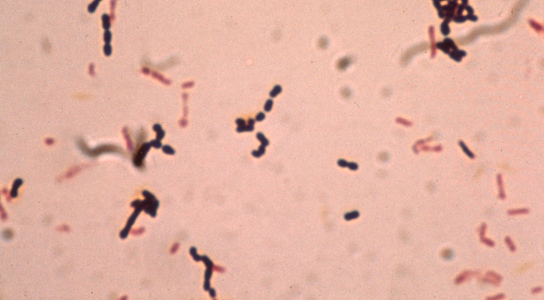
    bacteroides-fragilis
    Bacteroides fragilis, part of the intestinal flora

    Trillions of bacteria populate our intestines. While these communities vary between humans, a study published last year in the journal Nature indicated that they may fall into just three distinct types. However, new data presented at the International Human Microbiome Congress in Paris suggests that the boundaries between enterotypes are fuzzier than previously thought.

    Each of the three enterotypes was characterized by high levels of a single microbial genus, Bacteroides, Prevotella, and Ruminococcus.
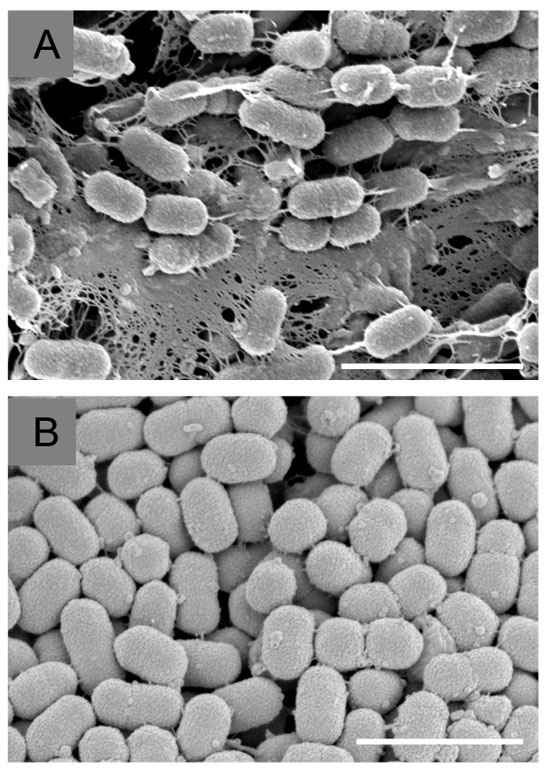
    prevotella-intermedia
    Cell surface structures of Prevotella intermedia strains 17 (A) and 17-2 (B).

    Manimozhiyan Arumugam, molecular biologist at the European Molecular Biology Laboratory in Heidelberg, Germany, the author of the original paper, and his team repeated the analysis of 663 Danish and Spanish adults.

    The results show that a genus of archae, called Methanobrevibacter, joins Ruminococcus as a defining microbe in the third enterotype. The separation between this cluster and Bacteroides is no longer clear. However, they remain distinct from the Prevotella.
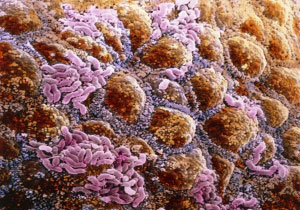
    gut-floraDan Knights, a computational biologist at the University of Colorado at Boulder, told the conference that discrete enterotypes may not exist at all. His team studied the intestinal flora of 1,200 adults and found a continuum of communities, from Bacteroides-driven ones to Prevotella-driven ones. His results will be published in the journal PLoS Computational Biology.

    There is a gradient and the enterotypes are concentrated within that, states Knights. The boundaries may be blurred but the differences between the extremes are still there. The actual structure within this gradient is what needs to be defined as well as studying the microbial flora of more people.

    Enterotypes might affect how much a person is at risk of disease or responds to different drugs. Last year in the journal Science, it was discovered that the Bacteroides enterotype is associated with diets high in fat or protein while Prevotella is associated with a high-carbohydrate diet.

    Never miss a breakthrough: Join the SciTechDaily newsletter.
    Follow us on Google and Google News.

    Enterotypes Gut Microbial
    Share. Facebook Twitter Pinterest LinkedIn Email Reddit

    Related Articles

    Living With Roommates Might Be Changing Your Gut Microbiome Without You Knowing

    This Diet–Gut Interaction Could Transform Fat Into a Calorie-Burning Machine

    Scientists Say This Popular Food Could Help Your Body Get Rid of Microplastics

    Your Gut Microbes May Be Quietly Transforming How Your Brain Works

    Harvard Study Unlocks New Potential Treatments for Diabetes and Obesity

    Your Gut Gas Could Be Making You Absorb More Calories

    Scientists Have Discovered a “Sixth Sense” That Links the Gut and Brain in Real Time

    AI Decodes the Secret Language of Your Gut Bacteria

    Shocking Discovery: How Bad Bacteria Use Electrical Signals To Invade the Gut

    Leave A Reply Cancel Reply

    • Facebook
    • Twitter
    • Pinterest
    • YouTube

    Don't Miss a Discovery

    Subscribe for the Latest in Science & Tech!

    Trending News

    Scientists Say This Simple Supplement May Actually Reverse Heart Disease

    Warming Oceans Could Trigger a Dangerous Methane Surge

    This Simple Movement Could Be Secretly Cleaning Your Brain

    Male Birth Control Breakthrough: Scientists Find Way To Turn Sperm Production Off and Back On

    A Common Vitamin Could Hold the Key to Treating Fatty Liver Disease

    New Research Shows Vitamin B12 May Hold the Key to Healthy Aging

    These Simple Daily Habits Can Quickly Improve Blood Pressure and Heart Risk Factors

    A Common Nutrient May Play a Surprising Role in Anxiety

    Follow SciTechDaily
    • Facebook
    • Twitter
    • YouTube
    • Pinterest
    • Newsletter
    • RSS
    SciTech News
    • Biology News
    • Chemistry News
    • Earth News
    • Health News
    • Physics News
    • Science News
    • Space News
    • Technology News
    Recent Posts
    • Scientists Just Exposed a 300 Million-Year-Old Fossil Mistake
    • Ravens Don’t Follow Wolves, They Predict Them
    • This Common Knee Surgery May Be Doing More Harm Than Good
    • Scientists Discover a New Way To Control Metals at the Atomic Scale
    • Scientists Create “Quantum Sound” Device That Works Near Absolute Zero
    Copyright © 1998 - 2026 SciTechDaily. All Rights Reserved.
    • Science News
    • About
    • Contact
    • Editorial Board
    • Privacy Policy
    • Terms of Use

    Type above and press Enter to search. Press Esc to cancel.