
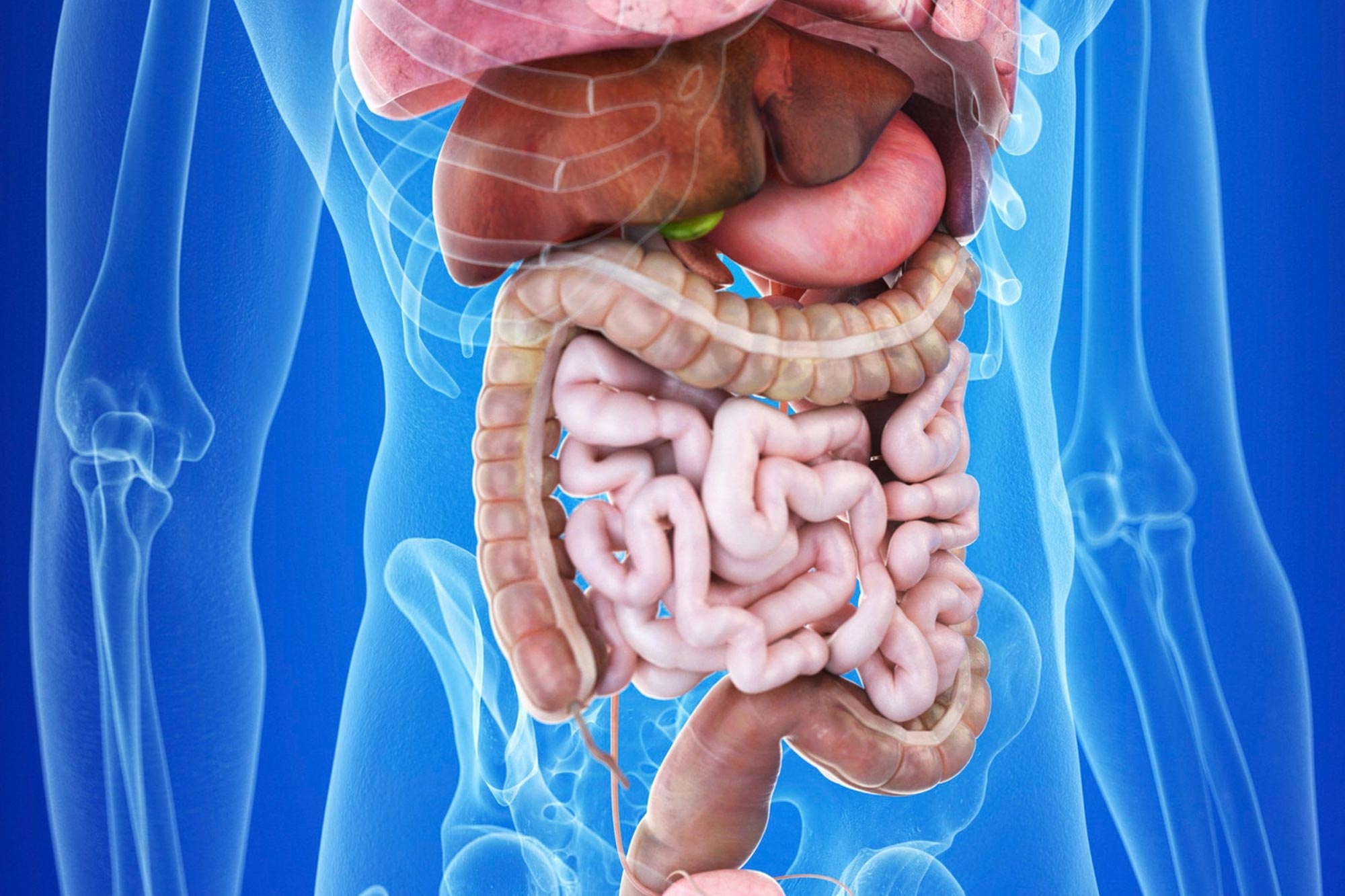
According to a newly published study, many autistic children harbor Sutterella bacteria in their digestive tract, contrary to non-autistic children. While this research provides a clear correlation, further study is needed to determine if this difference in digestive tract microorganisms is a cause or effect of autism and what role it plays in this developmental disorder.
The underlying reason autism is often associated with gastrointestinal problems is an unknown, but new results to be published in the online journal mBio on January 10 reveal that the guts of autistic children differ from other children in at least one important way: many children with autism harbor a type of bacteria in their guts that non-autistic children do not. The study was conducted by Brent Williams and colleagues at the Mailman School of Public Health at Columbia University.
Earlier work has revealed that autistic individuals with gastrointestinal symptoms often exhibit inflammation and other abnormalities in their upper and lower intestinal tracts. However, scientists do not know what causes the inflammation or how the condition relates to the developmental disorders that characterize autism. The research results appearing in mBio indicate the communities of microorganisms that reside in the gut of autistic children with gastrointestinal problems are different than the communities of non-autistic children. Whether or not these differences are a cause or effect of autism remains to be seen.
“The relationship between different microorganisms and the host and the outcomes for disease and development is an exciting issue,” says Christine A. Biron, the Brintzenhoff Professor of Medical Science at Brown University and editor of the study. “This paper is important because it starts to advance the question of how the resident microbes interact with a disorder that is poorly understood.”
Bacteria belonging to the group Sutterella represented a relatively large proportion of the microorganisms found in 12 of 23 tissue samples from the guts of autistic children, but these organisms were not detected in any samples from non-autistic children. Why this organism is present only in autistic kids with gastrointestinal problems and not in unaffected kids is unclear.
“Sutterella has been associated with gastrointestinal diseases below the diaphragm, and whether it’s a pathogen or not is still not clear,” explains Jorge Benach, Chairman of the Department of Microbiology at Stony Brook University and a reviewer of the report. “It is not a very well-known bacterium.”
In children with autism, digestive problems can be quite serious and can contribute to behavioral problems, making it difficult for doctors and therapists to help their patients. Autism, itself, is poorly understood, but the frequent linkage between this set of developmental disorders and problems in the gut is even less so.
Benach says the study was uniquely powerful because they used tissue samples from the guts of patients. “Most work that has been done linking the gut microbiome with autism has been done with stool samples,” says Benach, but the microorganisms shed in stool don’t necessarily represent the microbes that line the intestinal wall. “What may show up in a stool sample may be different from what is directly attached to the tissue,” he says.
Tissue biopsy samples require surgery to acquire and represent a difficult process for the patient, facts that underscore the seriousness of the gastrointestinal problems many autistic children and their families must cope with.
Benach emphasizes that the study is statistically powerful, but future work is needed to determine what role Sutterella plays, if any, in the problems in the gut. “It is an observation that needs to be followed through,” says Benach.
Reference: “Application of novel PCR-based methods for detection, quantitation, and phylogenetic characterization of Sutterella species in intestinal biopsy samples from children with autism and gastrointestinal disturbances” by Brent L. Williams, Mady Hornig, Tanmay Parekh, W. Ian Lipkin, 10 January 2012, mBio.
DOI: 10.1128/mBio.00261-11
Never miss a breakthrough: Join the SciTechDaily newsletter.
Follow us on Google and Google News.
3 Comments
And what did Wakefield find? Same damn thing.
Yes. Obviously clear to me now. The most intense and concentrated network of blood capillaries in the human body is in the area of the small intestine where nutrients are absorbed into the body. Bacterial flora play a significant, if not vital, role in the breakdown and assimilation of essential key nutrients. And, since proteins are one of the keys to nervous system health, it makes sense that these bacteria play an important role.
My assumption would be that it is not a cause of autism, but a result of the chronic anxiety and stress of having to adjust to what is socially acceptable. By the time I entered kindergarten, I had chronic constipation and allergies. Both of which were very stress related. The older I got and the higher the expectations… the more frequent the symptoms surfaced. Since I lived in a small town in the 1970’s and 80’s… I had no possible concept of having AuDHD until my exposure to YouTube videos in the last year.
I am now 58 years old and through the videos… I have found a way to like and accept myself more after decades of beating myself up for not being a “properly functioning female” (at least according to Midwestern standards 😉)