
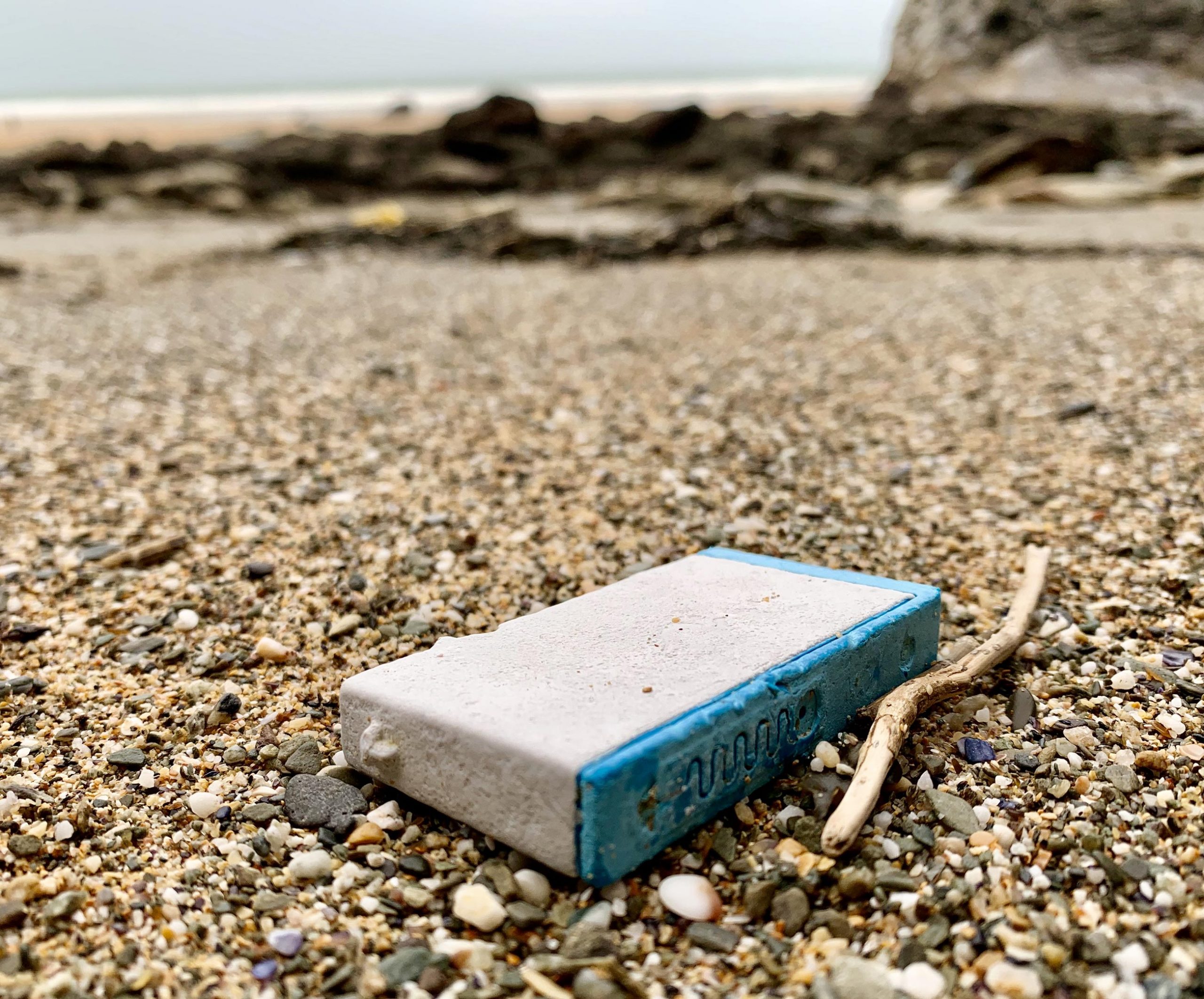
Lost printer cartridges became global microplastic pollutants, exposing flaws in ocean waste laws.
A ship’s container lost overboard in the North Atlantic has resulted in printer cartridges washing up everywhere from the coast of Florida to northern Norway, a new study has shown.
It has also resulted in the items weathering to form microplastics that are contaminated with a range of metals such as titanium, iron, and copper.
Global Reach of a Single Spill
The spillage is thought to have happened around 1,500 km (930 mi) east of New York, in January 2014, with the first beached cartridges reported along the coastline of the Azores in September the same year.
Since then, around 1,500 more have been reported on social media, with the greatest quantities along the coastlines of the UK and Ireland but also as far south as Cape Verde and north to the edge of the Arctic Circle.
The study was conducted by the University of Plymouth and the Lost at Sea Project, who have previously worked together on research suggesting LEGO bricks could survive in the ocean for up to 1,300 years.

For this new research, they combined sightings data reported by members of the public and oceanographic modeling tools to show how the cartridges reached their resting place.
Some were carried by the Azores and Canary currents around the North Atlantic Gyre, while others were transported northwards with the North Atlantic and Norwegian currents.
Writing in the journal Environmental Pollution, the researchers say the dates of first sightings suggested the cartridges traveled on average between 6 cm and 13 cm per second (0.13 to 0.29 miles per hour), demonstrating how quickly buoyant items can be dispersed across the oceans.
Through microscopic and X-ray fluorescence analyses, they also revealed a high degree of exterior weathering that resulted in the cartridge surfaces becoming chalky and brittle.
This has resulted in the formation of microplastics rich in titanium, the chemical fouling of interior ink foams by iron oxides, and, in some cases, the presence of an electronic chip containing copper, gold, and brominated compounds.
Electronic Waste and Regulatory Gaps
Significantly, the study’s authors say, the latter characteristic renders cartridges as electrical and electronic waste and means the finds are not governed by current, conventional regulations on plastic cargo lost at sea.
Lead author Dr. Andrew Turner, Associate Professor (Reader) in Environmental Sciences at the University of Plymouth, said: “Cargo spillages are not common, but estimates suggest there could be several thousand containers lost at sea every year. They can cause harm to the seabed but, once ruptured, their contents can have an impact both where they are lost and – as shown in this study – much more widely. This research has also shown once again how plastics not designed to be exposed to nature can break down and become a source of microplastics in the environment. It also calls into question the relevance and robustness of current instruments and conventions that deal with plastic waste and its accidental loss at sea.”
Tracey Williams, founder of the Cornwall-based Lost at Sea Project, added: “This study also highlights the potential usefulness of social media-led citizen science to marine research. Over many years, members of the public have helped us to show the amount of plastic in our seas and on our beaches. It is something people care passionately about and are committed to trying to solve.”
Reference: “Transport, weathering and pollution of plastic from container losses at sea: Observations from a spillage of inkjet cartridges in the North Atlantic Ocean” by Andrew Turner, Tracey Williams and Tom Pitchford, 12 April 2021, Environmental Pollution.
DOI: 10.1016/j.envpol.2021.117131
Never miss a breakthrough: Join the SciTechDaily newsletter.
Follow us on Google and Google News.
1 Comment
Pollution of the Earth & its oceans is FAR more serious than the fake Climate Change nonsense. We are being “gaslighted” by the media on C.C., meanwhile the main problem of pollution rarely gets mentioned.