

- To fight antibiotic resistance more antimicrobials are needed to treat bacterial biofilms, which protect an infection from antibiotics.
- Using the ‘Balds eyesalve’ medieval mixture containing everyday natural ingredients such as garlic, researchers from the University of Warwick have found it was effective against five bacteria that cause modern-day biofilm infections
- This proves that future discovery of antibiotics from natural products could be enhanced by studying combinations of ingredients
Antibiotic resistance is an increasing battle for scientists to overcome, as more antimicrobials are urgently needed to treat biofilm-associated infections. However, scientists from the School of Life Sciences at the University of Warwick say research into natural antimicrobials could provide candidates to fill the antibiotic discovery gap.
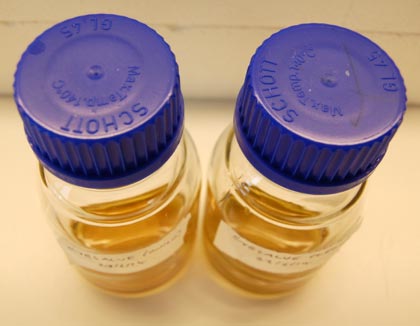
Bacteria can live in two ways, as individual planktonic cells or as a multicellular biofilm. Biofilm helps protect bacteria from antibiotics, making them much harder to treat, one such biofilm that is particularly hard to treat is those that infect diabetic foot ulcers.
Researchers at the University of Warwick, Dr. Freya Harrison, Jessica Furner-Pardoe, and Dr. Blessing Anonye, have looked at natural remedies for the gap in the antibiotic market, and in the paper, ‘Anti-biofilm efficacy of a medieval treatment for bacterial infection requires the combination of multiple ingredients’ published in the journal Scientific Reports today (July 28, 2020), researchers say medieval methods using natural antimicrobials from every day ingredients could help find new answers.
The Ancientbiotics research team was established in 2015 and is an interdisciplinary group of researchers including microbiologists, chemists, pharmacists, data analysts, and medievalists at Warwick, Nottingham, and in the United States.

Building on previous research done by the University of Nottingham on using medieval remedies to treat MRSA, the researchers from the School of Life Sciences at University of Warwick reconstructed a 1,000-year-old medieval remedy containing onion, garlic, wine, and bile salts, which is known as ‘Bald’s eyesalve,’ and showed it to have promising antibacterial activity. The team also showed that the mixture caused low levels of damage to human cells.
They found that Bald’s eyesalve remedy was effective against a range of Gram-negative and Gram-positive wound pathogens in planktonic culture. This activity is maintained against the following pathogens grown as biofilms:
- Acinetobacter baumanii- commonly associated with infected wounds in combat troops returning from conflict zones.
- Stenotrophomonas maltophilia- commonly associated with respiratory infections in humans
- Staphylococcus aureus- a common cause of skin infections including abscesses, respiratory infections such as sinusitis, and food poisoning.
- Staphylococcus epidermidis- a common cause of infections involving indwelling foreign devices such as a catheter, surgical wound infections, and bacteremia in immunocompromised patients.
- Streptococcus pyogenes – causes numerous infections in humans including pharyngitis, tonsillitis, scarlet fever, cellulitis, rheumatic fever, and post-streptococcal glomerulonephritis.
All of these bacteria can be found in the biofilms that infect diabetic foot ulcers and which can be resistant to antibiotic treatment. These debilitating infections can lead to amputation to avoid the risk of the bacteria spreading to the blood to cause lethal bacteremia.
The Bald’s eyesalve mixtures use of garlic, which contains allicin, can explain activity against planktonic cultures, however, garlic alone has no activity against biofilms, and therefore the anti-biofilm activity of Bald’s eyesalve cannot be attributed to a single ingredient and requires the combination of all ingredients to achieve full activity.
Dr. Freya Harrison, from the School of Life Sciences at the University of Warwick comments: “We have shown that a medieval remedy made from onion, garlic, wine, and bile can kill a range of problematic bacteria grown both planktonically and as biofilms. Because the mixture did not cause much damage to human cells in the lab, or to mice, we could potentially develop a safe and effective antibacterial treatment from the remedy.
“Most antibiotics that we use today are derived from natural compounds, but our work highlights the need to explore not only single compounds but mixtures of natural products for treating biofilm infections. We think that future discoveries of antibiotics from natural products could be enhanced by studying combinations of ingredients, rather than single plants or compounds. In this first instance, we think this combination could suggest new treatments for infected wounds, such as diabetic foot and leg ulcers. ”
Jessica Furner-Pardoe, from the Medical School at the University of Warwick comments: “Our work demonstrates just how important it is to use realistic models in the lab when looking for new antibiotics from plants. Although a single component is enough to kill planktonic cultures, it fails against more realistic infection models, where the full remedy succeeds.”
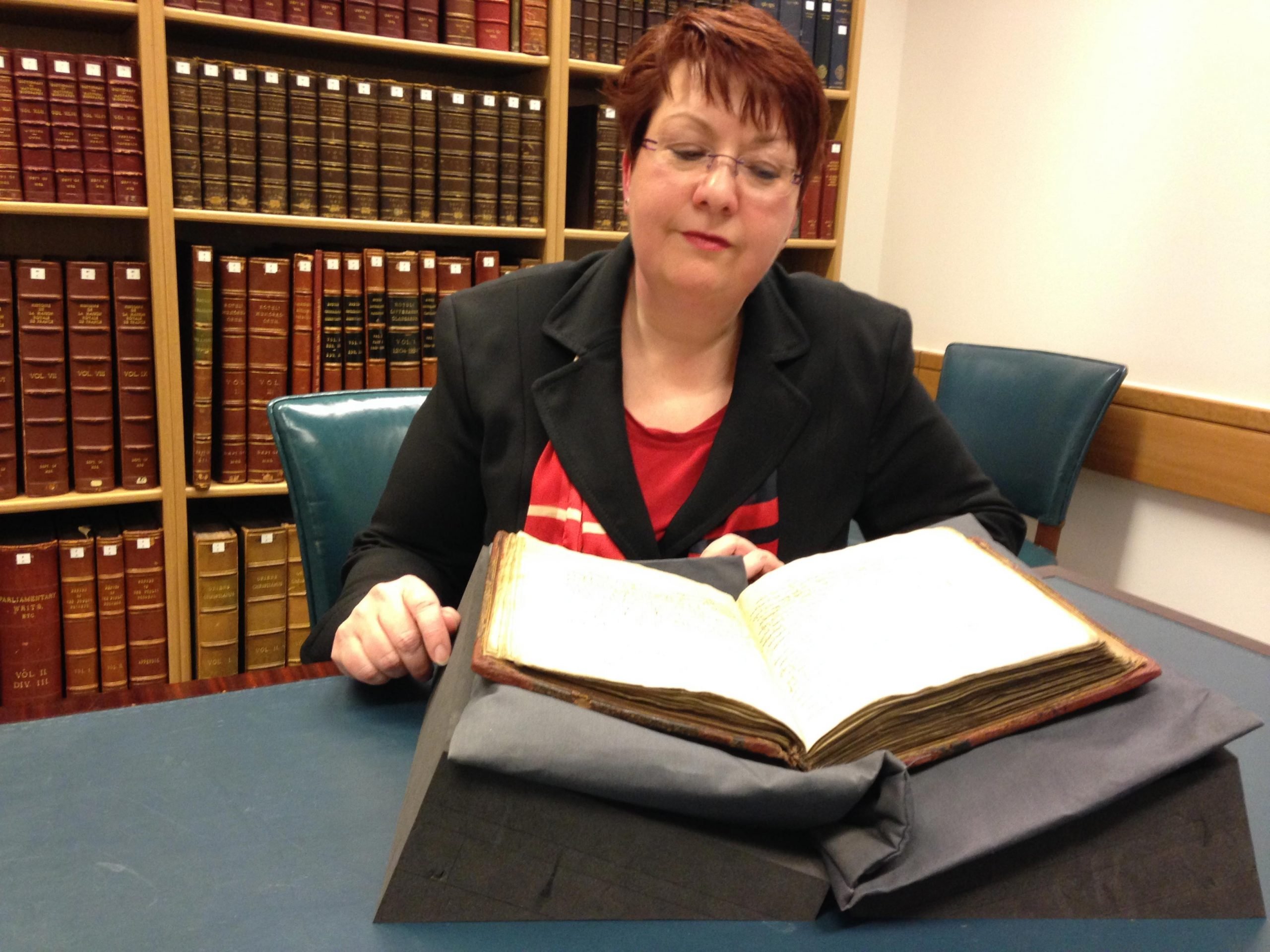
In previous research Christina Lee, from the School of English at the University of Nottingham, had examined the Bald’s Leechbook, an Old English leatherbound volume in the British Library, to see if it really works as an antibacterial remedy. The Leechbook is widely thought of as one of the earliest known medical textbooks and contains Anglo-Saxon medical advice and recipes for medicines, salves, and treatments.
Christina adds: “Bald’s eyesalve underlines the significance of medical treatment throughout the ages. It shows that people in Early Medieval England had at least some effective remedies. The collaboration which has informed this project shows the importance of the arts in interdisciplinary research.”
Reference: “Anti-biofilm efficacy of a medieval treatment for bacterial infection requires the combination of multiple ingredients” by Jessica Furner-Pardoe, Blessing O. Anonye, Ricky Cain, John Moat, Catherine A. Ortori, Christina Lee, David A. Barrett, Christophe Corre and Freya Harrison, 28 July 2020, Scientific Reports.
DOI: 10.1038/s41598-020-69273-8
Never miss a breakthrough: Join the SciTechDaily newsletter.
Follow us on Google and Google News.
7 Comments
There are probably many effective remedies for common medical problems which were used hundreds of years ago in European or Asian countries which contemporary mankind has forgotten about and which we should resurrect–or adapt to our current needs.
No surprise. Many people still use homeopathic medicine with great success. I have used them and dramatically lowered my cholesterol and high blood pressure. The pharmaceutical companies don’t want people to know about natural medicine because it will reduce their profits. Do some research.
E.L.- Thank you for a practical, level- headed reflection.
V.P.A.- Your spam is tiresome as it undermines medicine.
This site- Asked why at in early 30’s I had (at 30%) less fatty tissue around my heart. Conversation brought up not being unable to afford fast food or driving but a diet higher in Olive Oil (and coresponding less butter) from a mother crediting being raised around Italians. Also: Basil, Oregano, Thyme, Balsalmic Vinigar, Tomatoes, Garlic, Onions, and I grow Rosemary, Sage, and follow the advice of less salt; more flavor. The little things may kill, but I don’t have to eat them. With love, A future Diabeteic.
Nice article! Thanks for sharing this post with us. I really enjoyed reading this post and very helpful for me. Thanks and keep sharing. https://tagband.co.uk/what-are-skin-tags-and-why-do-they-form/
Great article! Thanks for sharing the informative article. In your article I have gain great knowledge about new treatment for modern day infections.
hey, idealistic blog on oleaginous loss. similar helped.
The antimicrobial activity of allicin as a chemical has been known for nearly a century and is well studied (Chet Cavallito, 1944), as is the general class of thiosulfinates. Adding a strong surfactant (eg, bile acids) to a mixture containing allicin is unsurprisingly a potentiator as bile acids are known to break biofilms. This is an interesting empirical example of the effect of formulation on the efficacy of a pharmaceutical active, and should be followed up; there might indeed be a good antibacterial here, IF this witch’s brew can be developed into a safe and effective product which can pass current requirements. That said, there’s really nothing surprising here. Both thiosulfinates and bile acids have been well studied for many years. Every drug developer, from chemist making new actives to the formulator of the finished dosage form, is well aware that formulation affects efficacy and applies those learnings daily. Herbal remedies are a long recognized and well mined source of leads for modern drug development as well. However, the eventual impact of this particular re-discovery is overstated here. It’s almost certain that this mixture will never reach commercial viability or use; the odds are many thousands to one against such a success. Allicin is not a particularly good antimicrobial (it’s very labile) and the surfactant potentiation is likely not strong enough to make allicin or other thiosulfinates an effective drug when compared to others now available. A lovely academic exercise, though.