
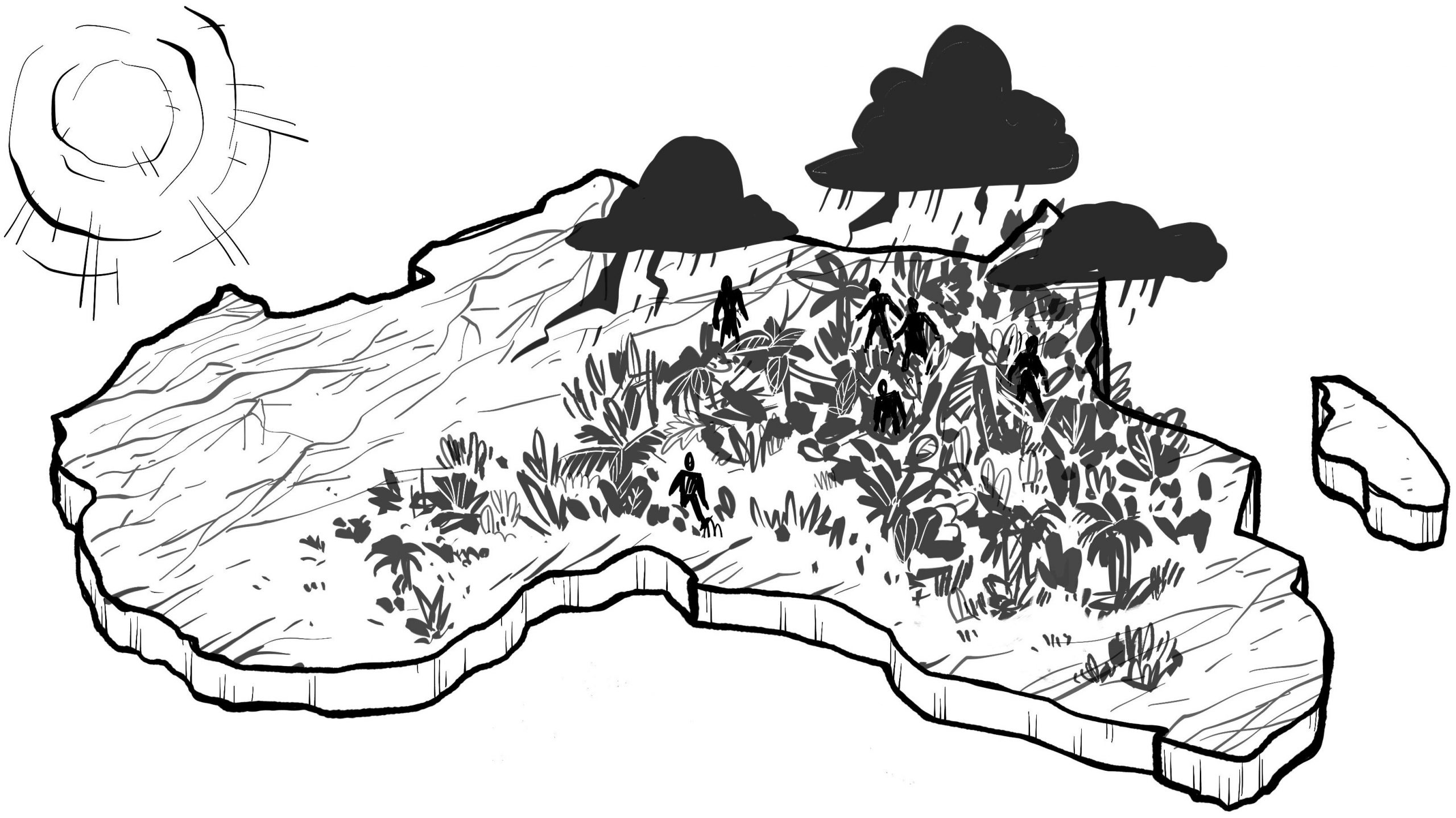
Ancient El Niño patterns, not glacial cycles, shaped Africa’s climate and influenced early human evolution by creating shifting habitats and stable ecotones.
While it is widely accepted that climate change drove the evolution of our species in Africa, the exact character of that climate change and its impacts are not well understood. Glacial-interglacial cycles strongly impact patterns of climate change in many parts of the world, and were also assumed to regulate environmental changes in Africa during the critical period of human evolution over the last ~1 million years. The ecosystem changes driven by these glacial cycles are thought to have stimulated the evolution and dispersal of early humans.
A paper published in Proceedings of the National Academy of Sciences of the United States of America (PNAS) this week challenges this view. Dr. Kaboth-Bahr and an international group of multidisciplinary collaborators identified ancient El Niño-like weather patterns as the drivers of major climate changes in Africa. This allowed the group to re-evaluate the existing climatic framework of human evolution.
Walking With the Rain
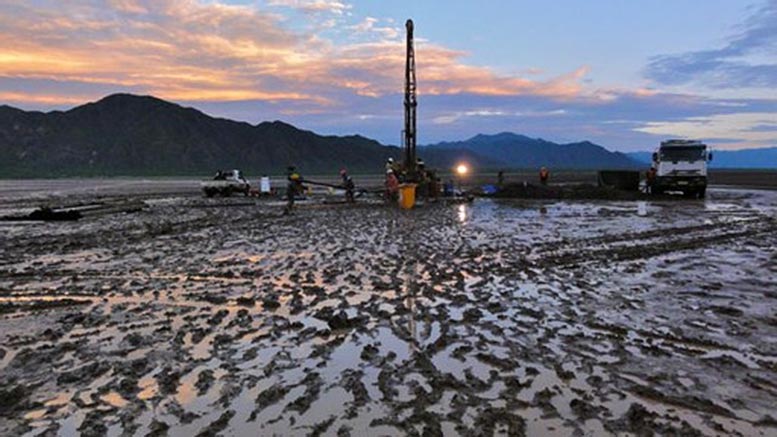
Dr. Kaboth-Bahr and her colleagues integrated 11 climate archives from all across Africa covering the past 620 thousand years to generate a comprehensive spatial picture of when and where wet or dry conditions prevailed over the continent. “We were surprised to find a distinct climatic east-west ‘seesaw’ very akin to the pattern produced by the weather phenomena of El Niño, that today profoundly influences precipitation distribution in Africa,” explains Dr. Kaboth-Bahr, who led the study.

The authors infer that the effects of the tropical Pacific Ocean on the so-called “Walker Circulation” — a belt of convection cells along the equator that impact the rainfall and aridity of the tropics — were the prime driver of this climate seesaw. The data clearly shows that the wet and dry regions shifted between the east and west of the African continent on timescales of approximately 100,000 years, with each of the climatic shifts being accompanied by major turnovers in flora and mammal fauna.
“This alternation between dry and wet periods appeared to have governed the dispersion and evolution of vegetation as well as mammals in eastern and western Africa,” explains Dr. Kaboth-Bahr. “The resultant environmental patchwork was likely to have been a critical component of human evolution and early demography as well.”
The scientists are keen to point that although climate change was certainly not the sole factor driving early human evolution, the new study nevertheless provides a novel perspective on the tight link between environmental fluctuations and the origin of our early ancestors.
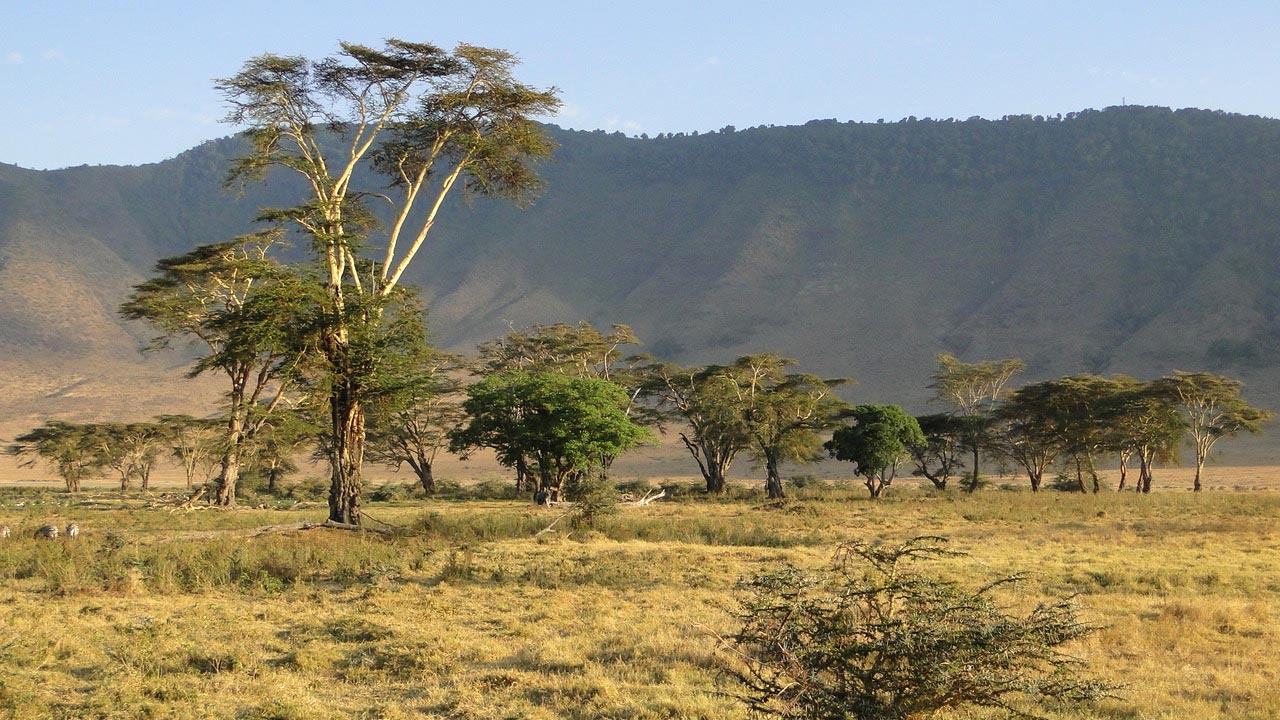
“We see many species of pan-African mammals whose distributions match the patterns we identify, and whose evolutionary history seems to articulate with the wet-dry oscillations between eastern and western Africa,” adds Dr. Eleanor Scerri, one of the co-authors and an evolutionary archaeologist at the Max Planck Institute for the Science of Human History in Germany. “These animals preserve the signals of the environments that humans evolved in, and it seems likely that our human ancestors may have been similarly subdivided across Africa as they were subject to the same environmental pressures.”
Ecotones: The Transitional Regions Between Different Ecological Zones
The scientists’ work suggests that a seesaw-like pattern of rainfall alternating between eastern and western Africa probably had the effect of creating critically important ecotonal regions — the buffer zones between different ecological zones, such as grassland and forest.
“Ecotones provided diverse, resource-rich, and stable environmental settings thought to have been important to early modern humans,” adds Dr. Kaboth-Bahr. “They certainly seem to have been important to other faunal communities.”
To the scientists, this suggests that Africa’s interior regions may have been critically important for fostering long-term population continuity. “We see the archaeological signatures of early members of our species all across Africa,” says Dr. Scerri, “but innovations come and go and are often re-invented, suggesting that our deep population history saw a constant saw-tooth like pattern of local population growth and collapse. Ecotonal regions may have provided areas for longer term population continuity, ensuring that the larger human population kept going, even if local populations often went extinct.”
“Re-evaluating these patterns of stasis, change, and extinction through a new climatic framework will yield new insights into the deep human past,” says Dr. Kaboth Bahr. “This does not mean that people were helpless in the face of climatic changes, but shifting habitat availability would certainly have impacted patterns of demography, and ultimately the genetic exchanges that underpin human evolution.”
Reference: “Paleo-ENSO influence on African environments and early modern humans” by Stefanie Kaboth-Bahr, William D. Gosling, Ralf Vogelsang, André Bahr, Eleanor M. L. Scerri, Asfawossen Asrat, Andrew S. Cohen, Walter Düsing, Verena Foerster, Henry F. Lamb, Mark A. Maslin, Helen M. Roberts, Frank Schäbitz and Martin H. Trauth, 31 May 2021, Proceedings of the National Academy of Sciences.
DOI: 10.1073/pnas.2018277118
Never miss a breakthrough: Join the SciTechDaily newsletter.
Follow us on Google and Google News.
2 Comments
It should be “The scientists were keen to point *out* that . . .”
More garbage from the Darwinian nut jobs.