
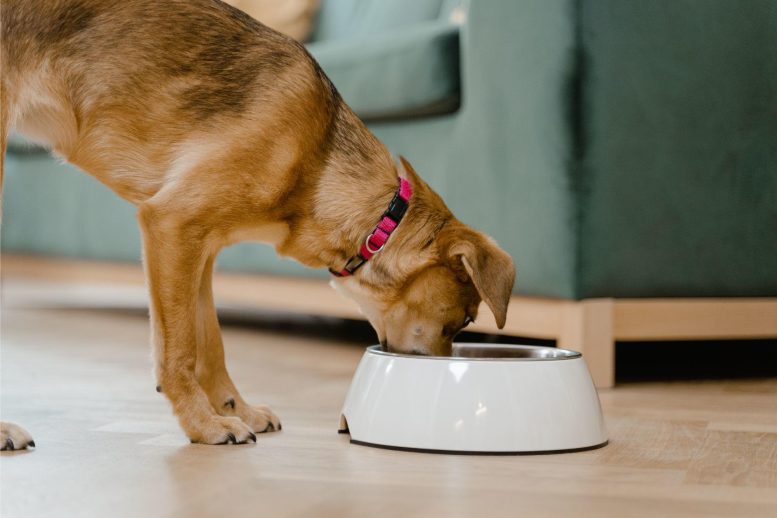
Researchers examined samples of unprocessed pheasant dog food and found that a significant number of these samples contained elevated levels of lead, which could potentially endanger the health of dogs if consumed regularly.
Lead is a toxic metal that negatively affects the body systems of people and animals, with the nervous system being particularly sensitive. Despite the potential risk to animal welfare from high dietary lead levels, the use of lead shot for hunting land-dwelling game birds, such as pheasants, is still lawful in the UK. While humans consume most of these pheasants, a portion also ends up in pet food.
In a study conducted by researchers at the University of Cambridge, they scrutinized 90 specimens derived from three different raw dog food products made from pheasants procured in the UK. They discovered that a striking 77% of the samples contained lead levels exceeding the legally permitted maximum residue level (MRL) in animal feed. The average lead concentrations in the three products were about 245, 135, and 49 times greater than the MRL.
The results were recently published in the journal Ambio.
“We were already aware that lead concentrations in pheasant meat sold for human consumption are often far higher than would be permitted in other meats like chicken, beef, or pork,” said lead author Professor Debbie Pain of Cambridge’s Zoology Department. “However, we were surprised to find that lead concentrations in raw pheasant dog food products were so much higher”
Lead Concentrations Far Exceed Safe Limits
The mean lead concentration in the raw pheasant dog food analyzed was 34 times higher than that recently reported in pheasant meat sold for people to eat, which itself is considered to be too high. Researchers say this could be because raw pheasant meat is normally minced when used for dog food whereas whole birds or pheasant breasts are generally sold for human consumption. Mincing may fragment lead shot, increasing the number of small lead particles in the meat and the potential for lead to be absorbed into the bloodstream.
The researchers say that dogs eating food with such high concentrations of lead, especially if they are fed it frequently or as their main diet, are at risk of harm to their health. Puppies are particularly vulnerable both because young animals tend to absorb more of the lead they swallow than full-grown animals, and the developing nervous system is particularly affected by lead.
The scientists tested five pheasant-based dog food products. Three of these were raw meat products, one was a dried pheasant and partridge product, and one was a processed tinned pheasant and goose-based product. Three equivalent chicken-based pet food products (raw meat, dried, and processed) were also assessed.
In addition to the raw pheasant dog food, levels of lead above the MRL were identified in some samples of the dried pheasant-based product, although the mean concentration was far lower than in the raw products. None of the samples from the chicken-based products or the tinned pheasant and goose-based products contained unacceptable levels of lead.
Raw Meat Diets and the Prevalence of Lead Contamination
The popularity of raw meat diets for pets is increasing across the UK – a nation that is home to an estimated 13 million dogs and 12 million cats. The researchers found that raw dog food including pheasant meat was widely available in the UK. Raw pheasant pet food was sold by 34% of the 50 online raw pet food suppliers they checked – 71% of these stated that the meat may contain shot.
“The fact that most samples from three randomly sampled raw pheasant pet food products had very high lead concentrations and that our recent research on shot types used to kill pheasants found that 94% are shot with lead, suggests that this is a far broader issue than for just these three products,” said co-author Professor Rhys Green. “However, some producers may source pheasants that have not been shot with lead, and owners could ask about this when buying pet food.”
The study of shot types in pheasants sold for human consumption is part of a body of research assessing the effectiveness of a voluntary ban in the UK on lead shotgun ammunition to shoot wild quarry, which is being phased in over a five-year period from February 2020. Nine major shooting organisations committed to this, for sustainability reasons, considering wildlife, and the environment, and also to ensure a market for the healthiest game products.
Cambridge scientists have consistently found compliance with the voluntary ban to be low, which is in line with other studies investigating other voluntary bans. However, a total ban in Denmark has been shown to be very effective.
A ban on the sale and use of lead gunshot, along with restrictions on lead bullets, is currently being considered under the UK REACH Chemicals Regulation.
Reference: “Lead concentrations in commercial dogfood containing pheasant in the UK” by Deborah J. Pain, Rhys E. Green, Nicola Bates, Maider Guiu and Mark A. Taggart, 3 May 2023, Ambio.
DOI: 10.1007/s13280-023-01856-x
The analytical costs of this research were funded by Wild Justice.
Never miss a breakthrough: Join the SciTechDaily newsletter.
Follow us on Google and Google News.