
Close Menu
    Facebook X (Twitter) Instagram
    SciTechDaily
    • Biology
    • Chemistry
    • Earth
    • Health
    • Physics
    • Science
    • Space
    • Technology
    Facebook X (Twitter) Pinterest YouTube RSS
    SciTechDaily
    Home»Chemistry»LEGO Bricks Could Survive in the Ocean for Up to 1,300 Years
    Chemistry

    LEGO Bricks Could Survive in the Ocean for Up to 1,300 Years

    By University of PlymouthMarch 16, 2020No Comments3 Mins Read
    Facebook Twitter Pinterest Telegram LinkedIn WhatsApp Email Reddit
    Share
    Facebook Twitter LinkedIn Pinterest Telegram Email Reddit
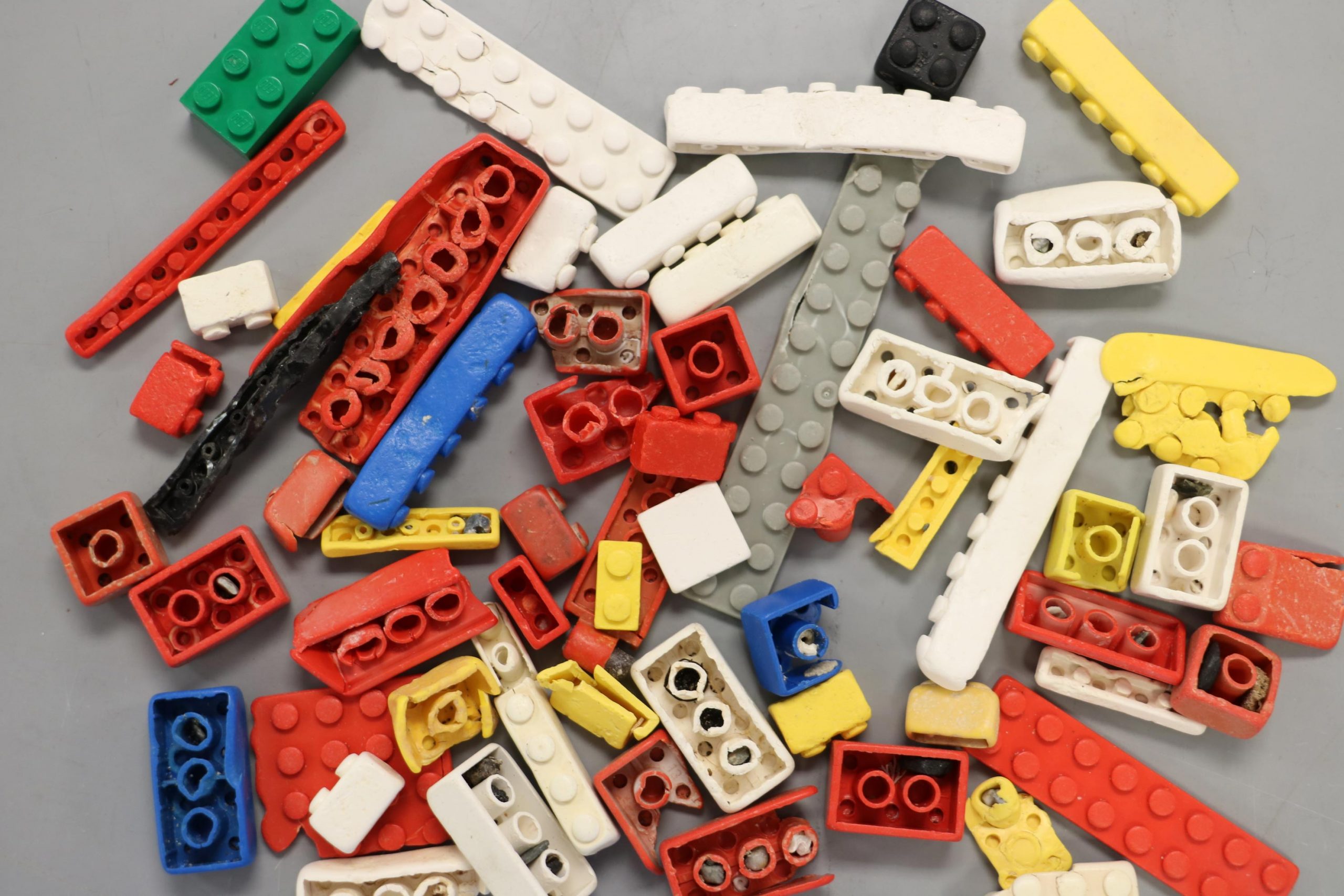
    Weathered LEGO Bricks
    Detailed analysis has estimated a LEGO brick could survive in the ocean for as many as 1,300 years. Credit: Andrew Turner, University of Plymouth

    A LEGO brick could survive in the ocean for as many as 1,300 years, according to new research.

    A study led by the University of Plymouth examined the extent to which items of the ever-popular children’s toy were worn down in the marine environment.

    By measuring the mass of individual bricks found on beaches against equivalent unused pieces and the age of blocks obtained from storage, researchers estimated that the items could endure for anywhere between 100 and 1,300 years.

    They say it once again reinforces the message that people need to think carefully about how they dispose of everyday household items.

    The research, published in the journal Environmental Pollution on February 29, 2020, focused on bricks of LEGO found washed up on the coastlines of South West England.

    Over the past decade, voluntary organizations from Cornwall – including Rame Peninsula Beach Care and the LEGO Lost at Sea Project – have retrieved thousands of pieces and other plastic waste during regular beach cleans.

    Previous studies have indicated that many of these could have either been lost during beach visits or entered the environment via the household waste process.

    For this particular study, 50 pieces of weathered LEGO – constructed of acrylonitrile butadiene styrene (ABS) and collected from beaches – were washed and then weighed in labs at the University, with the size of the studs also being measured.

    The chemical characteristics of each block were then determined using an X-ray fluorescence (XRF) spectrometer, with the results used to confirm the age of individual pieces based on the presence of certain elements no longer in use.

    By pairing those items with unweathered sets purchased in the 1970s and 80s, researchers were able to identify levels of wear and – as a result – how long the pieces might continue to endure in the marine environment.

    The study was led by Dr Andrew Turner, Associate Professor (Reader) in Environmental Sciences, who has previously conducted extensive research into the chemical properties of items washed up as marine litter.

    He said: “LEGO is one of the most popular children’s toys in history and part of its appeal has always been its durability. It is specifically designed to be played with and handled, so it may not be especially surprising that despite potentially being in the sea for decades it isn’t significantly worn down. However, the full extent of its durability was even a surprise to us.

    “The pieces we tested had smoothed and discolored, with some of the structures having fractured and fragmented, suggesting that as well as pieces remaining intact they might also break down into microplastics. It once again emphasizes the importance of people disposing of used items properly to ensure they do not pose potential problems for the environment.”

    Reference: “Weathering and persistence of plastic in the marine environment: Lessons from LEGO” by Andrew Turner, Rob Arnold and Tracey Williams, 29 February 2020, Environmental Pollution.
    DOI: 10.1016/j.envpol.2020.114299

    Never miss a breakthrough: Join the SciTechDaily newsletter.
    Follow us on Google and Google News.

    Microplastics Pollution Polymers University of Plymouth
    Share. Facebook Twitter Pinterest LinkedIn Email Reddit

    Related Articles

    MIT Unveils a Biodegradable Alternative to Microplastic Beads

    Everyday Plastic Products – Such As Coffee Cups – Release Trillions of Microscopic Particles Into Water

    Polymer-Eating Enzymes Make “Biodegradable” Plastics Truly Compostable

    Mount Everest: Microplastics in the Death Zone

    Devices Can Reduce Fibers Produced From Washing Machines by Up to 80%

    Fluorocarbon Bonds Are No Match for New Light-Powered Nanocatalyst

    New Biodegradable Adhesive Provides Environmentally Friendly Alternative

    “Venus Flytrap” Bio-Sensors Engineered to Snare Pollutants

    98% of Plastics Entering the Oceans Go Missing Each Year – Here’s the Likely Culprit

    Leave A Reply Cancel Reply

    • Facebook
    • Twitter
    • Pinterest
    • YouTube

    Don't Miss a Discovery

    Subscribe for the Latest in Science & Tech!

    Trending News

    Millions Take These IBS Drugs, But a New Study Finds Serious Risks

    Scientists Unlock Hidden Secrets of 2,300-Year-Old Mummies Using Cutting-Edge CT Scanner

    Bread Might Be Making You Gain Weight Even Without Eating More Calories

    Scientists Discover Massive Magma Reservoir Beneath Tuscany

    Europe’s Most Active Volcano Just Got Stranger – Here’s Why Scientists Are Rethinking It

    Alzheimer’s Symptoms May Start Outside the Brain, Study Finds

    Millions Take This Popular Supplement – Scientists Discover a Concerning Link to Heart Failure

    The Universe Is Expanding Too Fast and Scientists Can’t Explain Why

    Follow SciTechDaily
    • Facebook
    • Twitter
    • YouTube
    • Pinterest
    • Newsletter
    • RSS
    SciTech News
    • Biology News
    • Chemistry News
    • Earth News
    • Health News
    • Physics News
    • Science News
    • Space News
    • Technology News
    Recent Posts
    • Scientists Say a Hidden Structure May Exist Inside Earth’s Core
    • Doctors Surprised by the Power of a Simple Drug Against Colon Cancer
    • Why Popular Diabetes Drugs Like Ozempic Don’t Work for Everyone: The “Genetic Glitch”
    • Scientists Create Improved Insulin Cells That Reverse Diabetes in Mice
    • Scientists Stunned After Finding Plant Thought Extinct for 60 Years
    Copyright © 1998 - 2026 SciTechDaily. All Rights Reserved.
    • Science News
    • About
    • Contact
    • Editorial Board
    • Privacy Policy
    • Terms of Use

    Type above and press Enter to search. Press Esc to cancel.