
Close Menu
    Facebook X (Twitter) Instagram
    SciTechDaily
    • Biology
    • Chemistry
    • Earth
    • Health
    • Physics
    • Science
    • Space
    • Technology
    Facebook X (Twitter) Pinterest YouTube RSS
    SciTechDaily
    Home»Science»Build a High-Resolution Microscope From LEGO and Affordable Phone Parts
    Science

    Build a High-Resolution Microscope From LEGO and Affordable Phone Parts

    By University of GöttingenJune 25, 2021No Comments3 Mins Read
    Facebook Twitter Pinterest Telegram LinkedIn WhatsApp Email Reddit
    Share
    Facebook Twitter LinkedIn Pinterest Telegram Email Reddit
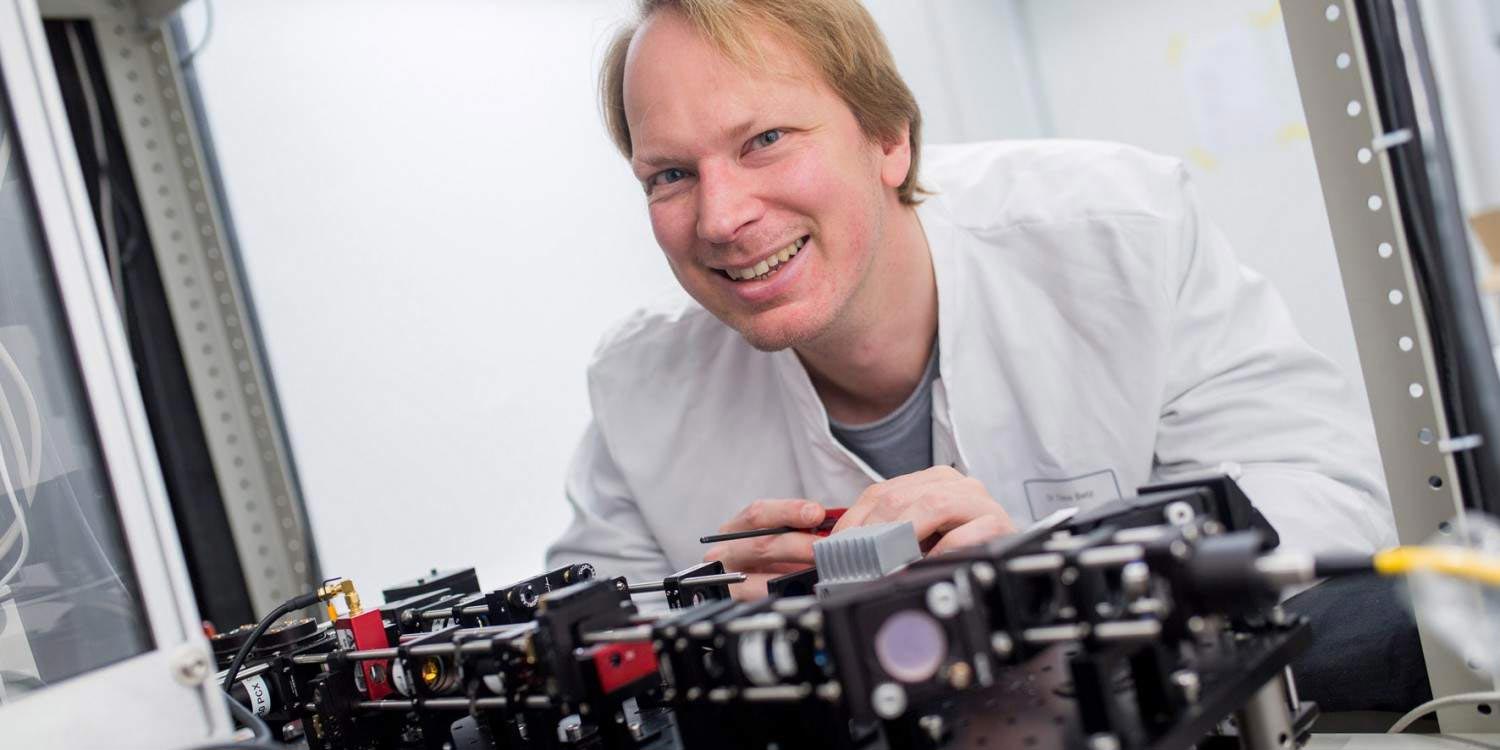
    Timo Betz
    Professor Timo Betz. Credit: Peter Lessman

    Research led by Göttingen University shows constructing microscope improves children’s understanding.

    Microscopy is an essential tool in many fields of science and medicine. However, many groups have limited access to this technology due to its cost and fragility. Now, researchers from the Universities of Göttingen and Münster have succeeded in building a high-resolution microscope using nothing more than children’s plastic building bricks and affordable parts from a mobile phone. They then went on to show that children aged 9-13 had significantly increased understanding of microscopy after constructing and working with the LEGO® microscope. Their results were published in The Biophysicist.
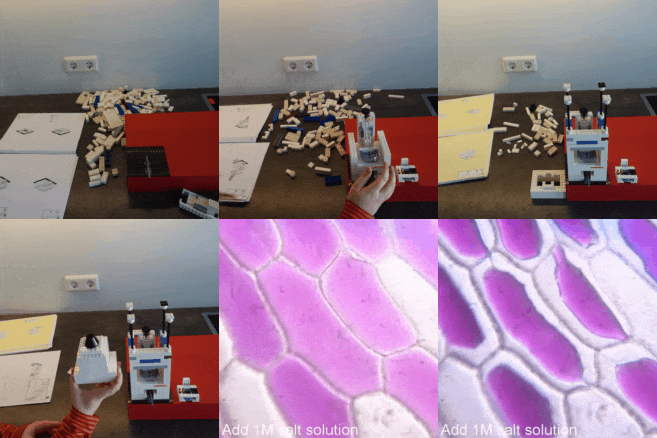
    Building LEGO Microscope
    Researchers built a high-resolution microscope using just children’s plastic building bricks and bits from a mobile phone. They showed that children aged 9-13 increased their understanding of microscopy by building it. Credit: Timo Betz

    The researchers designed a fully functional, high-resolution microscope with capabilities close to a modern research microscope. Apart from the optics, all parts were from the toy brick system. The team realized that the lenses in modern smartphone cameras, which cost around €4 each, are of such high quality that they can make it possible to resolve even individual cells.

    The scientists produced instructions for building the microscope as well as a step-by-step tutorial to guide people through the construction process whilst learning about the relevant optical characteristics of a microscope. The researchers measured children’s understanding through questionnaires given to a group of 9-13 year olds.

    Study Shows Major Boost in Science Understanding

    The researchers found that children given the parts and plans to construct the microscope themselves significantly increased their knowledge of microscopy. For this particular study, the researchers, whose day-to-day research focuses on fundamental biophysical processes, benefitted from the input and enthusiasm of their 10-year-old co-author.

    “An understanding of science is crucial for decision-making and brings many benefits in everyday life, such as problem-solving and creativity,” says Professor Timo Betz, University of Göttingen. “Yet we find that many people, even politicians, feel excluded or do not have the opportunities to engage in scientific or critical thinking. We wanted to find a way to nurture natural curiosity, help people grasp fundamental principles and see the potential of science.”
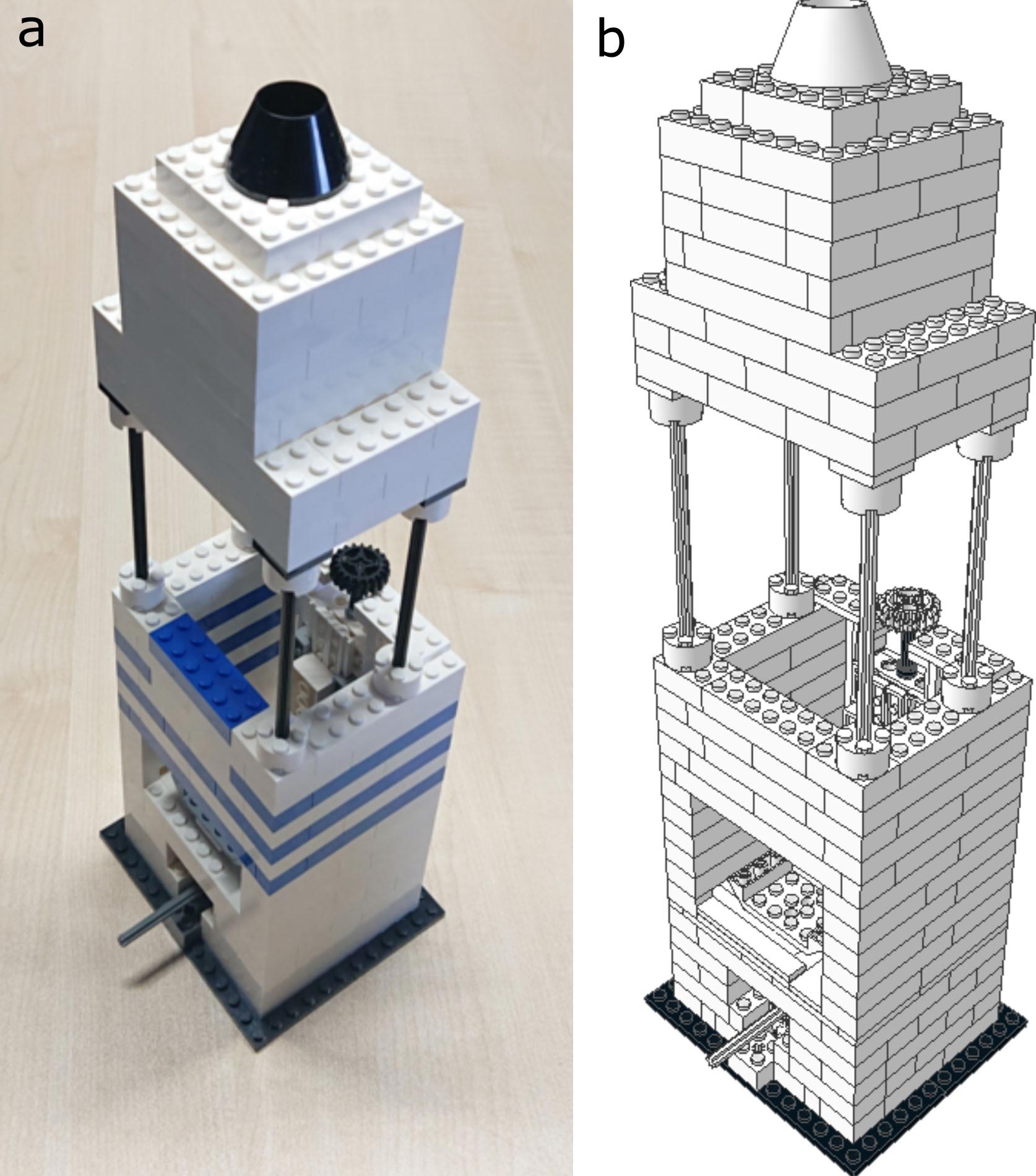
    LEGO Microscope
    High-resolution microscope built from LEGO and bits of phone. Credit: Timo Betz

    Discovery Through Play

    The researchers stayed in contact with the children and monitored their progress: after they had constructed the main parts, they discovered that the lenses can act as magnifying glasses. After exploring this, and realizing that a good light source was important, they initially found it tricky to align two magnifying glasses. However, once they had achieved this, the lenses generated tremendous magnification. This enabled the children to literally “play” with the microscope: make their own adaptations; explore how the magnification works; and discover the exciting world of the micro-cosmos for themselves.

    “We hope that this modular microscope will be used in classrooms and homes all over the world to excite and inspire children about science,” continues Betz. “We have shown that scientific research does not need to be separate from everyday life. It can be enlightening, educational and fun!”

    All plans and instructions are available in English, German, Dutch and Spanish. They are free to access here: https://github.com/tobetz/LegoMicroscope

    Reference: “Designing a high-resolution, LEGO-based microscope for an educational setting” by Bart E. Vos, Emil Betz Blesa and Timo Betz, June 2021, The Biophysicist.
    DOI: 10.35459/tbp.2021.000191

    Never miss a breakthrough: Join the SciTechDaily newsletter.
    Follow us on Google and Google News.

    Education Imaging LEGO Microbiology Optics University of Göttingen
    Share. Facebook Twitter Pinterest LinkedIn Email Reddit

    Related Articles

    From Science Fiction to Reality: Simple Lens Swap Turns Ordinary Cameras Into Hyperspectral Devices

    ‘Whispering Gallery’ Effect Allows Light to Be Stored and Controls Electron Beams

    Twisting Affects Transmission Behavior of Photonic Crystal Fibers

    Arsenic-Tolerant GFAJ-1 Bacterium Still Needs Phosphorous

    Laser Beams Used to Create Filament Paths Could Potentially Direct Lightning

    “Mediocre to Awful” State Science Standards Could Jeopardize U.S. Competitiveness

    Scientists Discover Dead Hydrothermal Vents Contain Life

    Relative Refutation of the Claim of Arsenic-Based Life

    Mathematics and LEGO: The Deeper Meaning of Combined Systems and Networks

    Leave A Reply Cancel Reply

    • Facebook
    • Twitter
    • Pinterest
    • YouTube

    Don't Miss a Discovery

    Subscribe for the Latest in Science & Tech!

    Trending News

    Monster Storms on Jupiter Unleash Lightning Beyond Anything on Earth

    Scientists Create “Liquid Gears” That Spin Without Touching

    The Simple Habit That Could Help Prevent Cancer

    Millions Take These IBS Drugs, But a New Study Finds Serious Risks

    Scientists Unlock Hidden Secrets of 2,300-Year-Old Mummies Using Cutting-Edge CT Scanner

    Bread Might Be Making You Gain Weight Even Without Eating More Calories

    Scientists Discover Massive Magma Reservoir Beneath Tuscany

    Europe’s Most Active Volcano Just Got Stranger – Here’s Why Scientists Are Rethinking It

    Follow SciTechDaily
    • Facebook
    • Twitter
    • YouTube
    • Pinterest
    • Newsletter
    • RSS
    SciTech News
    • Biology News
    • Chemistry News
    • Earth News
    • Health News
    • Physics News
    • Science News
    • Space News
    • Technology News
    Recent Posts
    • Simple Blood Test May Predict Alzheimer’s Years Before Brain Scans Show Signs
    • Scientists Say Adding This Unusual Seafood to Your Diet Could Reverse Signs of Aging
    • U.S. Waste Holds $5.7 Billion Worth of Crop Nutrients
    • Scientists Say a Hidden Structure May Exist Inside Earth’s Core
    • Doctors Surprised by the Power of a Simple Drug Against Colon Cancer
    Copyright © 1998 - 2026 SciTechDaily. All Rights Reserved.
    • Science News
    • About
    • Contact
    • Editorial Board
    • Privacy Policy
    • Terms of Use

    Type above and press Enter to search. Press Esc to cancel.