
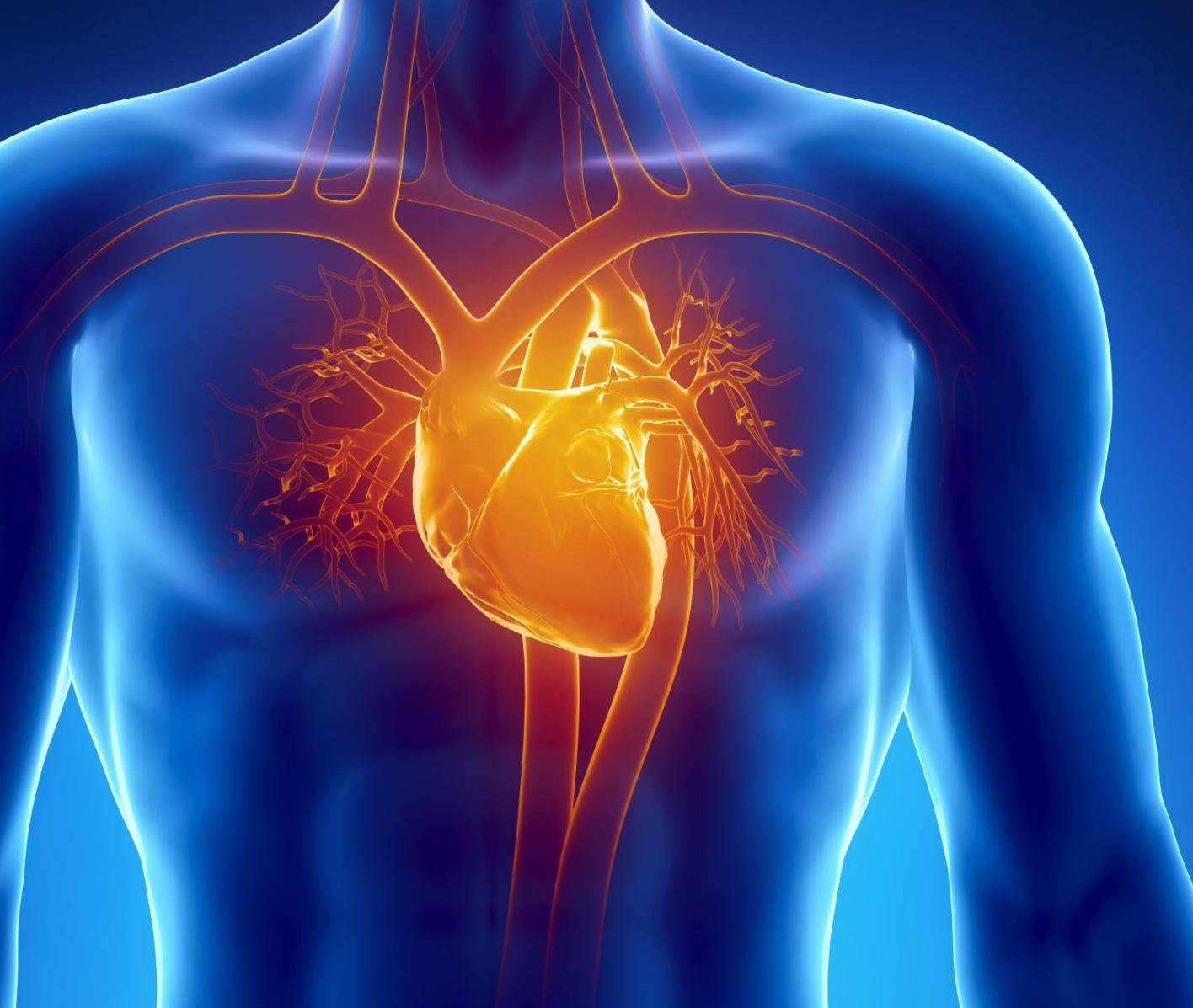
Researchers discovered that exercise changes heart-related nerve structures in surprisingly uneven ways.
Your workout may be changing your heart in ways scientists never realized. Beyond strengthening muscles and improving endurance, exercise appears to rewire the nervous system that controls the heartbeat itself, and it does so differently on the left and right sides of the body.
In a surprising discovery, researchers found that regular aerobic exercise reshapes tiny nerve clusters linked to the heart, creating dramatic side-specific changes that could eventually influence how doctors treat arrhythmias, chronic chest pain, and even stress-related “broken-heart” syndrome.
Exercise Alters the Heart’s Nerve Network
The study, led by the University of Bristol and published in Autonomic Neuroscience, focused on the stellate ganglia, paired bundles of sympathetic nerve cells located in the lower neck and upper chest. These nerve hubs help regulate heart rate and blood pressure by sending signals that can speed up the heart during stress or physical activity. Scientists sometimes describe them as part of the body’s automatic “fight or flight” circuitry.
Although exercise is already known to improve cardiovascular health and lower resting heart rate, far less is understood about how physical activity physically reshapes the nerves controlling the heart. These findings suggest the nervous system may be far more adaptable than previously thought.
Using advanced 3D imaging and stereological analysis, researchers examined the stellate ganglia in rats after 10 weeks of moderate treadmill exercise. The results revealed a striking imbalance between the two sides of the body. Exercised rats developed roughly four times more neurons in the right stellate ganglion than in the left, a pattern not seen in untrained animals.
Left and Right Sides Responded Differently
At the same time, the neurons themselves changed in opposite ways depending on location. Cells on the left side grew substantially larger, increasing by about 1.8-fold, while neurons on the right side became slightly smaller. The overall volume of the nerve clusters also shrank after training.
The findings challenge the long-standing assumption that exercise affects the autonomic nervous system uniformly. Instead, the study suggests the nervous system responds to exercise in a surprisingly uneven way, with the left and right sides undergoing distinct structural changes over time.
Lead author Augusto Coppi, Senior Lecturer in Veterinary Anatomy at the University of Bristol, said: “The discovery points to a previously hidden left-right pattern in the body’s ‘autopilot’ system that helps run the heart.
“These nerve clusters act like the heart’s dimmer switch and we’ve shown that regular, moderate exercise remodels that switch in a side-specific way. This could help explain why some treatments work better on one side than the other and, in future, help doctors target therapies more precisely and effectively.”
Potential Implications for Heart Treatments
That possibility could have important medical implications. Cardiologists already target the stellate ganglia in some severe heart conditions by using nerve blocks or denervation procedures to reduce excessive sympathetic activity. These treatments are sometimes used for dangerous arrhythmias, difficult-to-control angina, and Takotsubo cardiomyopathy, commonly known as “broken-heart” syndrome, a temporary heart condition often triggered by extreme emotional or physical stress.
Coppi noted that the research remains at an early stage and was conducted in rats, meaning human studies will be needed before the findings can influence clinical care. Researchers next plan to investigate how these structural changes affect heart function during exercise and rest, and whether the same left-right patterns appear in larger animals and people using noninvasive measurements.
Coppi added: “Understanding these left-right differences could help us personalize treatments for heart rhythm disorders and angina. Our next step is to test how these structural changes map onto function and whether similar patterns appear in larger animals and humans.”
Reference: “Asymmetric neuroplasticity in stellate ganglia: Unveiling side-specific adaptations to aerobic exercise” by Fernando Vagner Lobo Ladd, Aliny Antunes Barbosa, Renato Albuquerque de Oliveira Cavalcanti, Mariana Pereira de Melo, Andrzej Loesch and A. Augusto Coppi, December 2025, Autonomic Neuroscience: Basic and Clinical.
DOI: 10.1016/j.autneu.2025.103338
Never miss a breakthrough: Join the SciTechDaily newsletter.
Follow us on Google and Google News.