
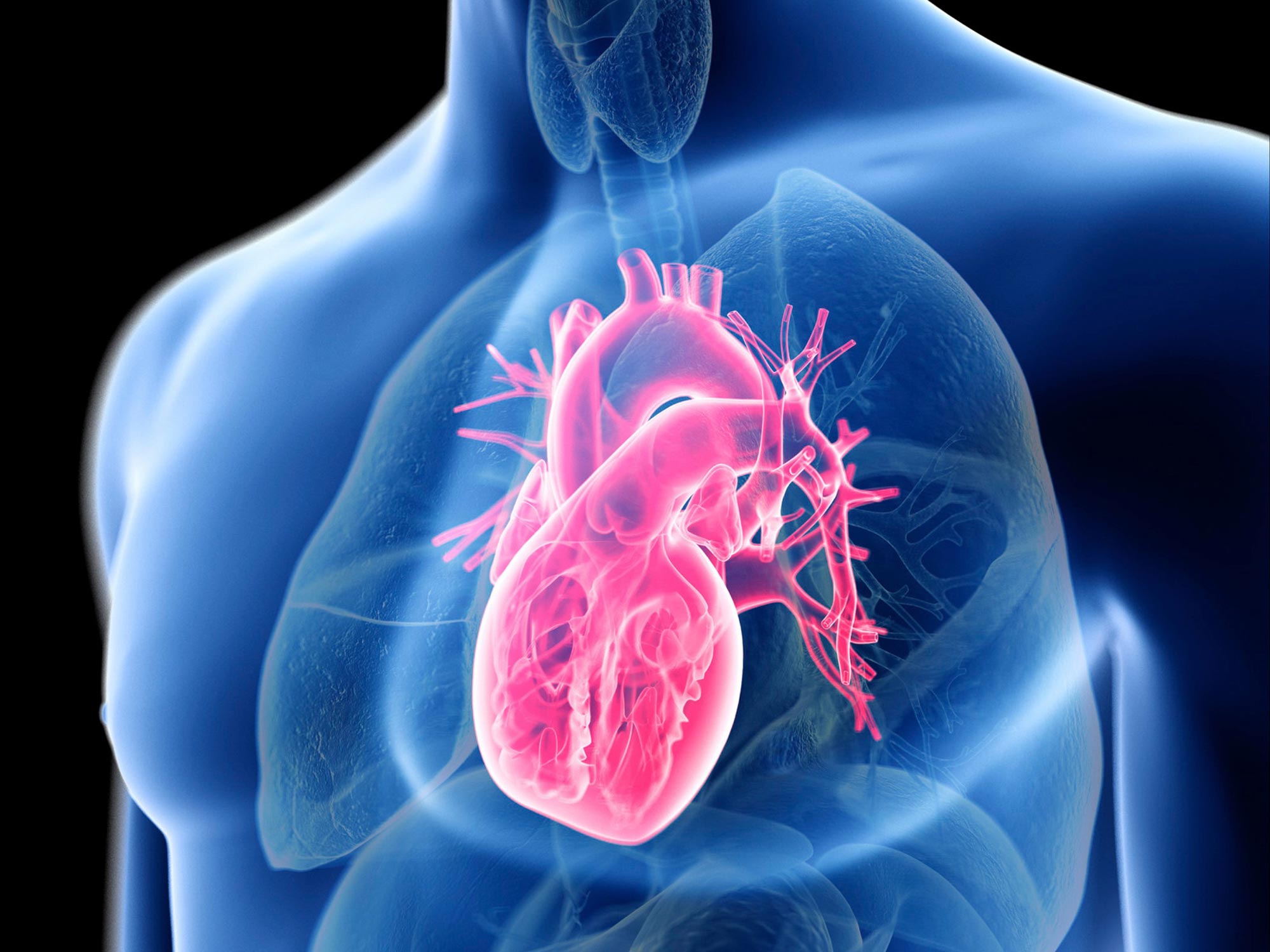
New research suggests that regular aerobic exercise doesn’t just benefit the heart muscle, but subtly rewires the nerves that control how the heart works.
Regular physical activity does more than improve heart strength. New research shows that it also alters the network of nerves that regulate how the heart functions, a finding that could lead to more precise and effective treatments for common heart conditions.
The study, led by researchers at the University of Bristol (UK), provides the first evidence that moderate aerobic exercise changes the nerves that control the heart in different ways on the left and right sides. The findings were recently published in the journal Autonomic Neuroscience.
By revealing these clear differences between the two sides of the heart’s nerve control system, the research may eventually help improve treatment for conditions such as irregular heart rhythms, chest pain, angina pain, and ‘broken-heart’ syndrome.
A hidden left–right divide emerges
Study lead author Dr. Augusto Coppi, Senior Lecturer in Veterinary Anatomy at the University of Bristol, said: “The discovery points to a previously hidden left–right pattern in the body’s ‘autopilot’ system that helps run the heart.
“These nerve clusters act like the heart’s dimmer switch and we’ve shown that regular, moderate exercise remodels that switch in a side-specific way. This could help explain why some treatments work better on one side than the other and, in the future, help doctors target therapies more precisely and effectively.”
The research was carried out in collaboration with the University College London (UCL) in the UK and the University of São Paulo (USP) and Federal University of São Paulo (UNIFESP) in Brazil. The team used advanced three dimensional quantitative imaging methods known as stereology. Their results showed that rats trained over a 10-week period developed roughly four times more nerves, called neurons, in the cardiovascular nerve cluster on the right side of the body compared with the left, when measured against untrained rats. At the same time, neurons on the left side nearly doubled in size, while those on the right became slightly smaller.
Implications for treating heart disorders
Dr. Coppi explained: “Irregular heart rhythms, known as arrhythmias, stress-induced ‘broken‑heart’ syndrome, and certain types of chest pain are often treated by dialling down overactive stellate ganglia – the paired small nerve hubs in the lower neck/upper chest area that send ‘go faster’ signals to the heart.
“By mapping how exercise changes these ganglia on each side, the study offers clues that could one day fine‑tune procedures like nerve blocks or denervation to the side most likely to help. The findings are early-stage and in rats, so clinical studies would need to follow.”
Toward more precise, personalized therapies
The researchers are now planning studies to link these structural changes to how the heart actually behaves at rest and during exercise. They will then look for the same left–right pattern in other animal models and in people using non‑invasive markers. This will help ascertain whether targeting one side of the nerve cluster could make treatments such as stellate nerve blocks or denervation more effective for arrhythmias, stress‑induced ‘broken‑heart’ syndrome, and difficult‑to‑treat angina.
Dr. Coppi added: “Understanding these left-right differences could help us personalize treatments for heart rhythm disorders and angina. Our next step is to test how these structural changes map onto function and whether similar patterns appear in larger animals and humans.”
Reference: “Asymmetric neuroplasticity in stellate ganglia: Unveiling side-specific adaptations to aerobic exercise” by Fernando Vagner Lobo Ladd, Aliny Antunes Barbosa, Renato Albuquerque de Oliveira Cavalcanti, Mariana Pereira de Melo, Andrzej Loesch and A. Augusto Coppi, December 2025, Autonomic Neuroscience: Basic and Clinical.
DOI: 10.1016/j.autneu.2025.103338
Never miss a breakthrough: Join the SciTechDaily newsletter.
Follow us on Google and Google News.
6 Comments
Or one could just do aerobic exercise several times a week.
Meanwhile cardiologists ignore anemia, kidney and liver test results. It’s only about Rx’s with significant, harmful side-effects: leg weakness, shortness of breath, lethargy, disabling the 15% LVEF patient from exercise. I dropped the Rx’s, exercise, walk 4-11 miles, lift 20 bags of 1 cu ft soil, and do strenuous gardening.
Already walking every day
agreed…my experience exactly since beginning daily aerobic (except sunday day of rest) 50 yrs ago…today feel btr than ever altho nobody ever believes me on ths, but is true…81 yrs aug 6…feels wonderful 👍⛹️♂️🇺🇲💖
Thank you for staring’ physical activity’ in the article instead of exercise. I’ve challenged my doctor, who insists on my walking aimlessly, that my working in my shop is the same. When I’m handling large pieces of wood and things I’ve made, my heart rate goes up, my breathing increases, and my watch asks me what exercise I’m doing. Some days it tells me to slow down as I’m over exercising.
One doesn’t have to exercise to be physically fit… Just active.
I’m 65 and have always worked with horses. There is no gym work out that can compete with daily cleaning of stalls, walking horses 5 to 8 miles for turn out, lifting and pushing 50 lb bags of feed or 30-40 lb hay bales. My regular job requires sitting at a computer. The 5 to 6 hours of daily barn chores keeps me quite healthy. Just keep moving with purpose.