
Close Menu
    Facebook X (Twitter) Instagram
    SciTechDaily
    • Biology
    • Chemistry
    • Earth
    • Health
    • Physics
    • Science
    • Space
    • Technology
    Facebook X (Twitter) Pinterest YouTube RSS
    SciTechDaily
    Home»Biology»Scientists Say This Popular Food Could Help Your Body Get Rid of Microplastics
    Biology

    Scientists Say This Popular Food Could Help Your Body Get Rid of Microplastics

    By National Research Council of Science and TechnologyMarch 30, 2026No Comments3 Mins Read
    Facebook Twitter Pinterest Telegram LinkedIn WhatsApp Email Reddit
    Share
    Facebook Twitter LinkedIn Pinterest Telegram Email Reddit
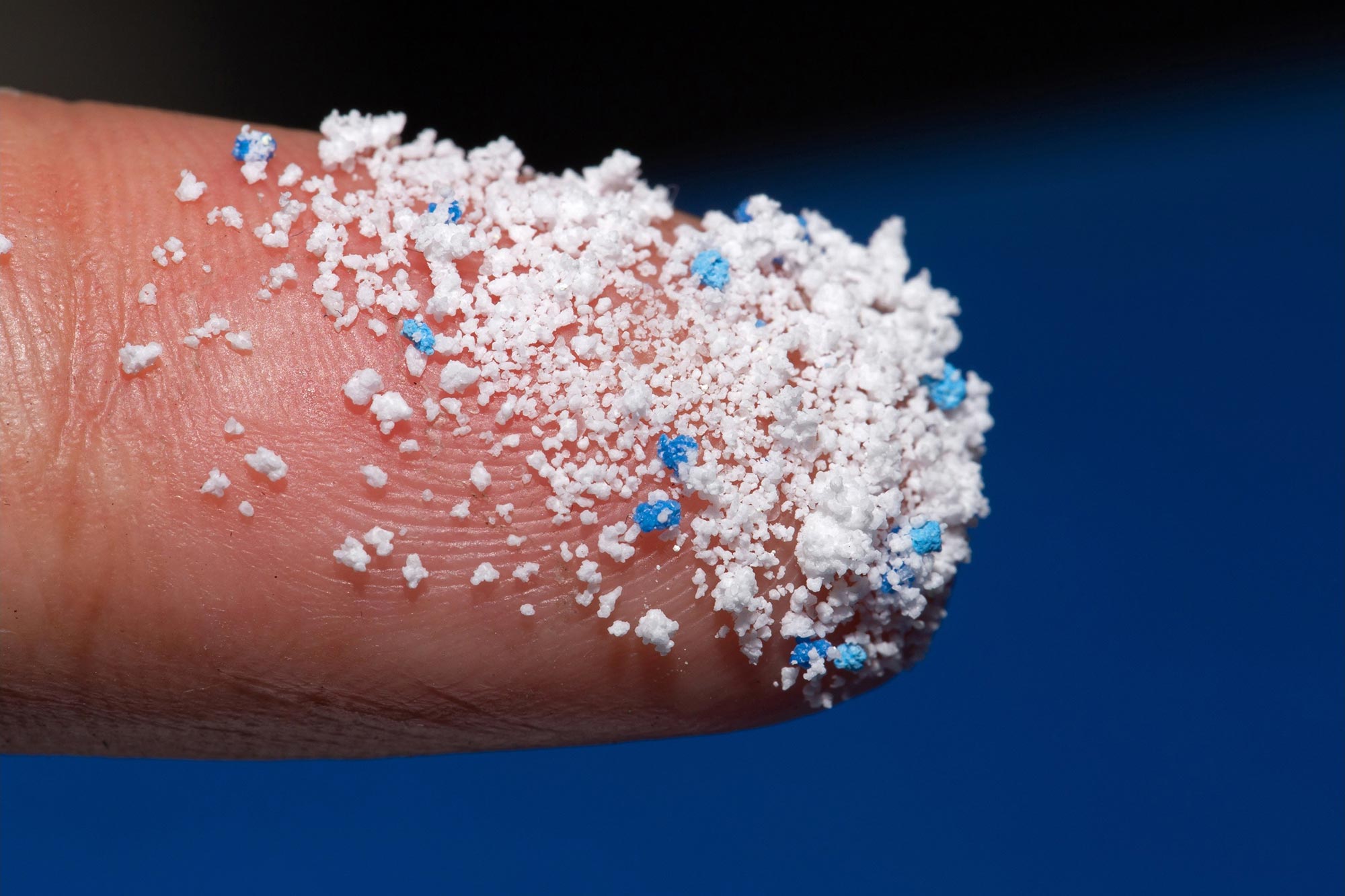
    Microplastic on Finger
    Researchers have identified a kimchi-derived lactic acid bacterium capable of binding nanoplastics in the gut, potentially aiding their removal from the body. Credit: Stock

    Researchers found that a bacterium from kimchi can bind and help expel nanoplastics from the body, showing promise as a probiotic approach to reducing plastic accumulation.

    Scientists in South Korea have identified a surprising ally in the fight against plastic pollution inside the human body: a microbe commonly found in kimchi. Researchers at the World Institute of Kimchi (President: Hae Choon Chang) report that this bacterium can latch onto nanoplastics and microplastics in the gut, potentially helping carry them out of the body before they spread further.

    Nanoplastics, which measure less than 1 micrometer (one-thousandth of a millimeter, about 0.00004 inches), and microplastics, which are slightly larger plastic particles measuring less than 5 millimeters (0.2 inches), are formed as larger plastics break down in the environment.

    They are now widely detected in food and drinking water, raising concerns about long-term exposure. Because they are so small, these particles may pass through the intestinal lining and accumulate in organs such as the brain and kidneys, where their health effects are still being investigated.

    A research team led by Drs. Se Hee Lee and Tae Woong Whon at WiKim examined how well a kimchi-derived lactic acid bacterium, Leuconostoc mesenteroides CBA3656, can bind to polystyrene nanoplastics (PS-NPs).
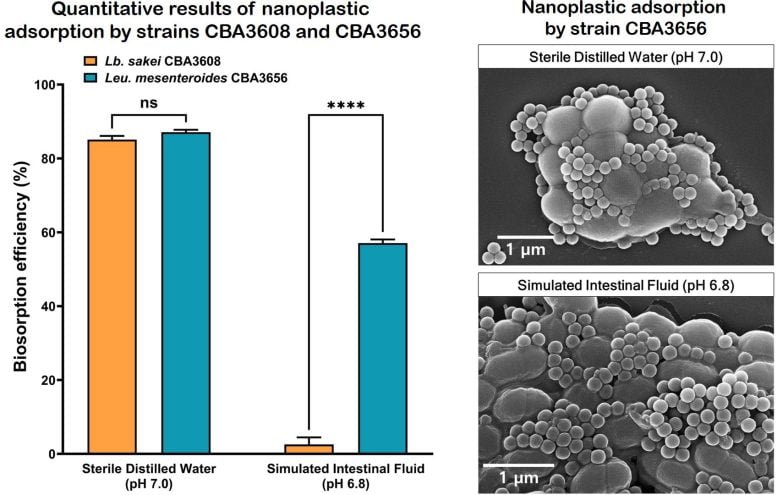
    Mechanism of nanoplastic biosorption by kimchi lactic acid bacteria
    Mechanism of nanoplastic biosorption by kimchi lactic acid bacteria. Credit: World Institute of Kimchi (WiKim)

    Kimchi-Derived Bacteria Shows Strong Nanoplastic Binding

    In laboratory tests, strain CBA3656 achieved an adsorption rate of 87%, similar to the reference strain Latilactobacillus sakei CBA3608 (85%). The difference became clear under conditions designed to mimic the human intestine. The adsorption rate of strain CBA3608 dropped to 3%, while strain CBA3656 retained a much higher level of 57%. This suggests the kimchi-derived strain can continue binding nanoplastics in environments similar to the human gut.

    Further evidence came from experiments using germ-free mice. Compared with mice that did not receive probiotics, both male and female mice given strain CBA3656 showed more than twice the amount of nanoplastics in their feces. This finding indicates the probiotic may help remove nanoplastics by binding to them in the intestine.
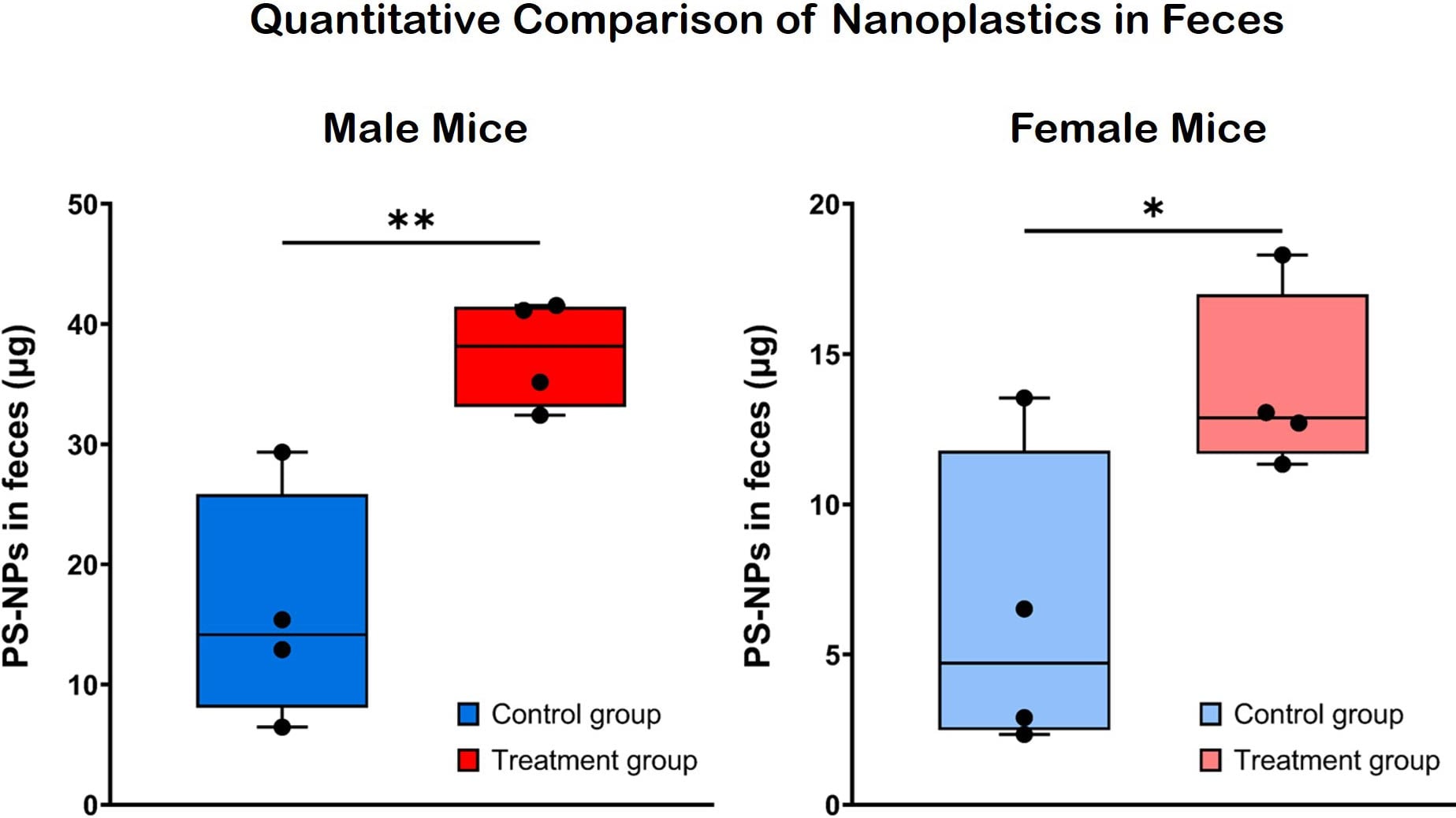
    Increased Nanoplastic Excretion in Mice Treated with Kimchi Probiotics
    Increased nanoplastic excretion in mice treated with kimchi probiotics. Credit: World Institute of Kimchi (WiKim)

    Probiotic Evidence from Animal Studies

    The study demonstrates that lactic acid bacteria from kimchi may interact with environmental micropollutants, expanding their role beyond fermentation. These results point to possible biological pathways for reducing nanoplastic buildup in the gastrointestinal tract.

    “Plastic pollution is increasingly recognized not only as an environmental issue but also as a public health concern,” said Dr. Sehee Lee, the lead researcher of the study. “Our findings suggest that microorganisms derived from traditional fermented foods could represent a new biological approach to address this emerging challenge. We will continue to expand the scientific value of kimchi microbial resources to contribute to public health and environmental solutions.”

    Reference: “Efficient biosorption of nanoplastics by food-derived lactic acid bacterium” by Jisu Lee, Min Ji Lee, Mi-Ja Jung, Yeon Bee Kim, Yujin Kim, Jeong Ui Yun, Sohee Nam, Young Joon Oh, Tae Woong Whon and Se Hee Lee, 15 February 2026, Bioresource Technology.
    DOI: 10.1016/j.biortech.2026.134234

    Never miss a breakthrough: Join the SciTechDaily newsletter.
    Follow us on Google and Google News.

    Bacteria Gut Microbiology Microplastics Plastic Popular Probiotic
    Share. Facebook Twitter Pinterest LinkedIn Email Reddit

    Related Articles

    Experiment Proves Bacteria Really Eat Plastic – Broken Down Into Harmless Substances

    Plastic Pollution in the Ocean May Harbor Novel Antibiotics

    Microbiologists Have Found a Way to Use Bacteria to Remove Microplastics From the Environment

    Microbiologists Discover Bacteria That Feed on Metal, Ending a Century-Long Search

    Revealing the Structure of Bacterial Hitchhikers on Plastic Trash in the Ocean

    Sugar Targets Microbe Linked to Lean and Healthy People

    New Research Shows Human Intestinal Bacteria Can Trigger Multiple Sclerosis

    Microbiota in Pregnant Women Looks Like Those of People with Diabetes

    Superoxide Reacts With Manganese to Aid in Environmental Cleanup

    Leave A Reply Cancel Reply

    • Facebook
    • Twitter
    • Pinterest
    • YouTube

    Don't Miss a Discovery

    Subscribe for the Latest in Science & Tech!

    Trending News

    Bone-Strengthening Discovery Could Reverse Osteoporosis

    Scientists Uncover Hidden Trigger Behind Stem Cell Aging

    Scientists Find Way to Reverse Fatty Liver Disease Without Changing Diet

    Could Humans Regrow Limbs? New Study Reveals Promising Genetic Pathway

    Scientists Reveal Eating Fruits and Vegetables May Increase Your Risk of Lung Cancer

    Scientists Reverse Brain Aging With Simple Nasal Spray

    Scientists Uncover Potential Brain Risks of Popular Fish Oil Supplements

    Scientists Discover a Surprising Way To Make Bread Healthier and More Nutritious

    Follow SciTechDaily
    • Facebook
    • Twitter
    • YouTube
    • Pinterest
    • Newsletter
    • RSS
    SciTech News
    • Biology News
    • Chemistry News
    • Earth News
    • Health News
    • Physics News
    • Science News
    • Space News
    • Technology News
    Recent Posts
    • 4,000-Year-Old Tablets Reveal Lost Magic, Medicine, and Ancient Kings
    • AI Meets Quantum Computing and the Predictions Get Scary Accurate
    • Wind Farms Are Disrupting Ocean Currents, Moving Millions of Tons of Mud Each Year
    • Scientists Discover Massive Magma Reservoir Beneath Tuscany
    • Scientists Create “Neurobots” – Living Machines With Their Own Nervous Systems
    Copyright © 1998 - 2026 SciTechDaily. All Rights Reserved.
    • Science News
    • About
    • Contact
    • Editorial Board
    • Privacy Policy
    • Terms of Use

    Type above and press Enter to search. Press Esc to cancel.