
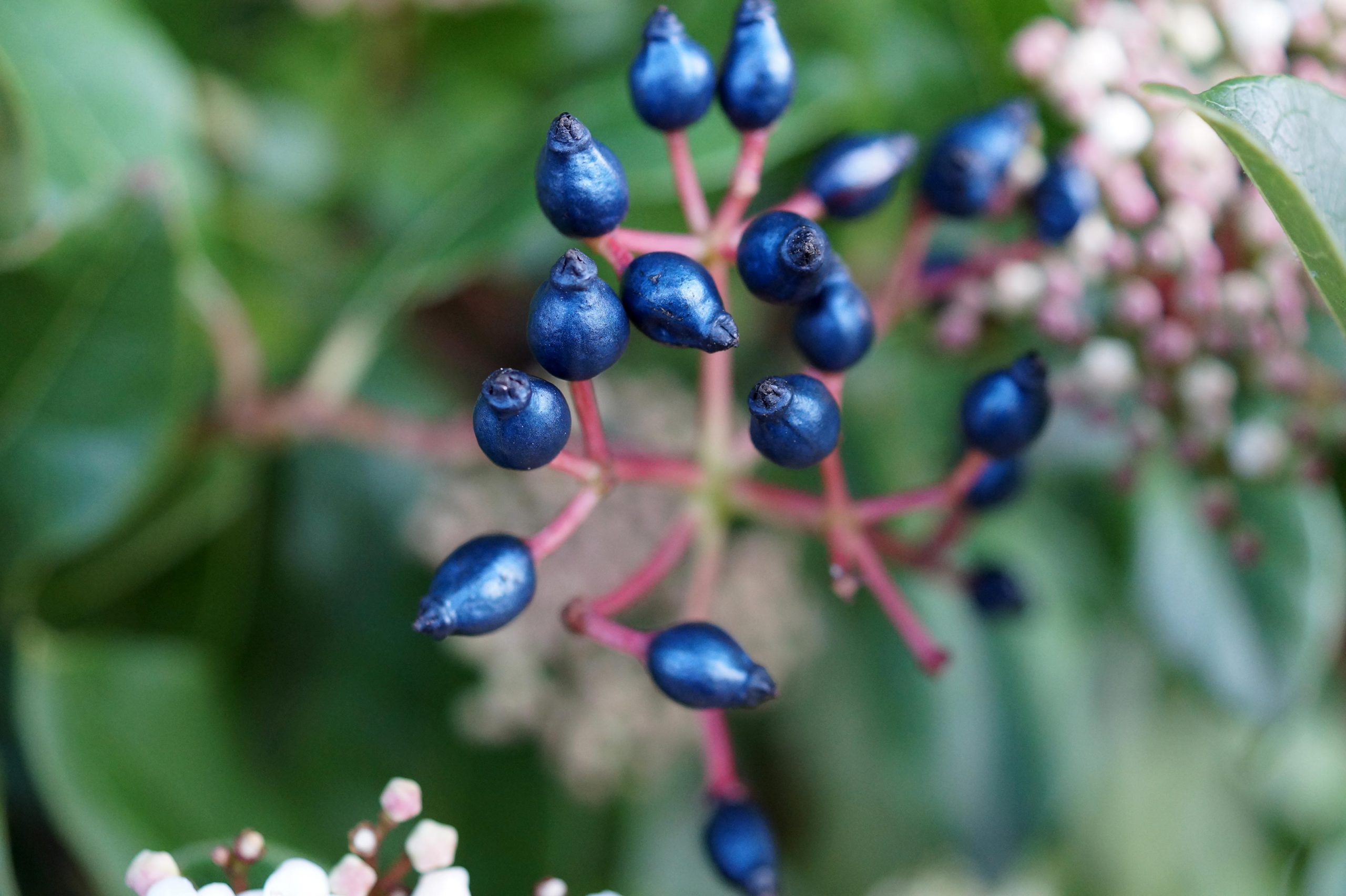
Researchers have found that a common plant owes the dazzling blue color of its fruit to fat in its cellular structure, the first time this type of color production has been observed in nature.
The plant, Viburnum tinus, is an evergreen shrub widespread across the UK and the rest of Europe, which produces metallic blue fruits that are rich in fat. The combination of bright blue color and high nutritional content make these fruits an irresistible treat for birds, likely increasing the spread of their seeds and contributing to the plant’s success.
The researchers, led by the University of Cambridge, used electron microscopy to study the structure of these blue fruits. While there are other types of structural color in nature — such as in peacock feathers and butterfly wings — this is the first time that such a structure has been found to incorporate fats, or lipids. The results are reported in the journal Current Biology.
“Viburnum tinus plants can be found in gardens and along the streets all over the UK and throughout much of Europe — most of us have seen them, even if we don’t realize how unusual the color of the fruits is,” said co-first author Rox Middleton, who completed the research as part of her Ph.D. at Cambridge’s Department of Chemistry.
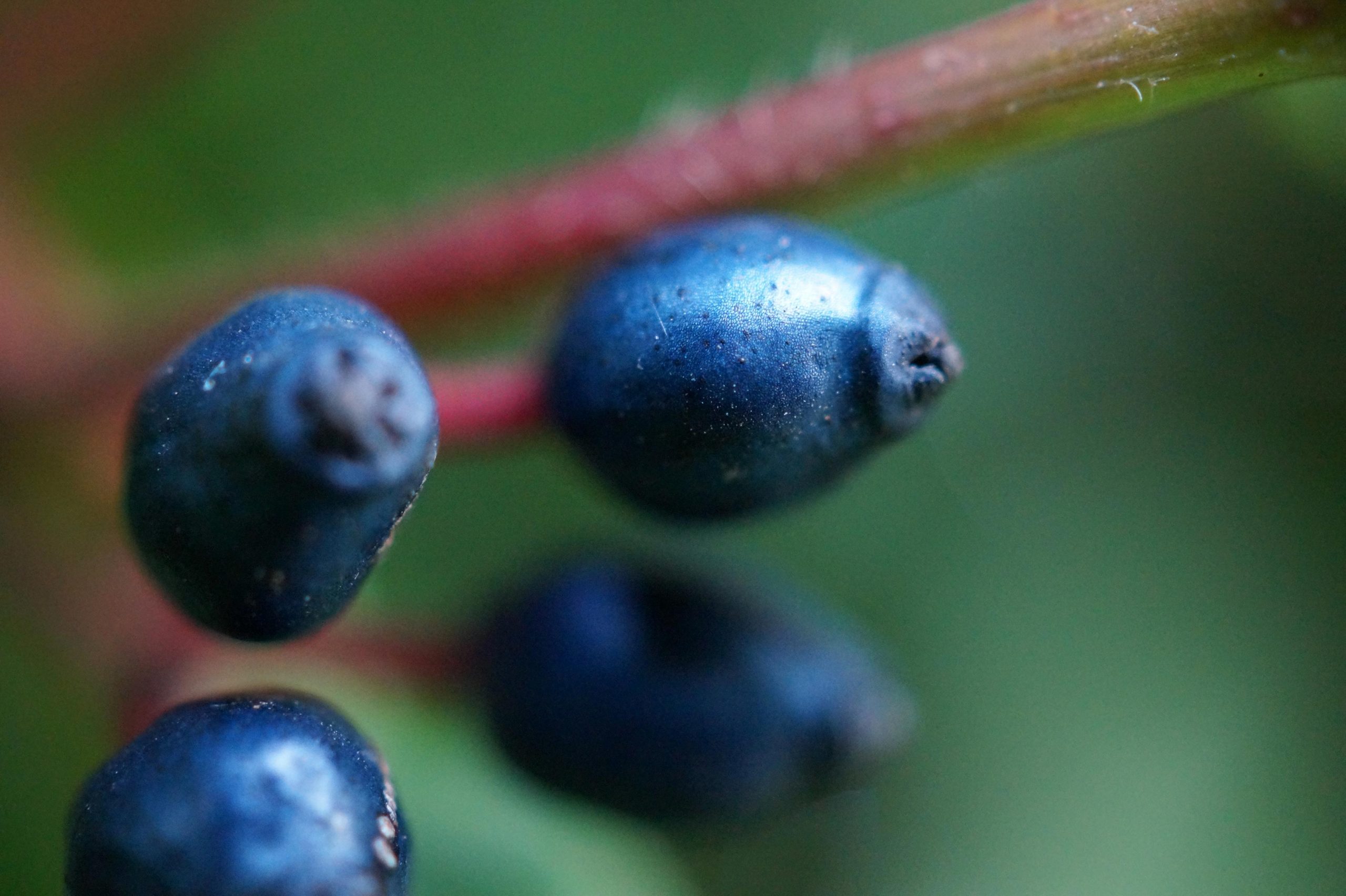
Most colors in nature are due to pigments. However, some of the brightest and most colorful materials in nature — such as peacock feathers, butterfly wings and opals — get their color not from pigments, but from their internal structure alone, a phenomenon known as structural color. Depending on how these structures are arranged and how ordered they are, they can reflect certain colors, creating color by the interaction between light and matter.
“I first noticed these bright blue fruits when I was visiting family in Florence,” said Dr. Silvia Vignolini from Cambridge’s Department of Chemistry, who led the research. “I thought the color was really interesting, but it was unclear what was causing it.”
“The metallic sheen of the Viburnum fruits is highly unusual, so we used electron microscopy to study the structure of the cell wall,” said co-first author Miranda Sinnott-Armstrong from Yale University. “We found a structure unlike anything we’d ever seen before: layer after layer of small lipid droplets.”
The lipid structures are incorporated into the cell wall of the outer skin, or epicarp, of the fruits. In addition, a layer of dark red anthocyanin pigments lies underneath the complex structure, and any light that is not reflected by the lipid structure is absorbed by the dark red pigment beneath. This prevents any backscattering of light, making the fruits appear even more blue.
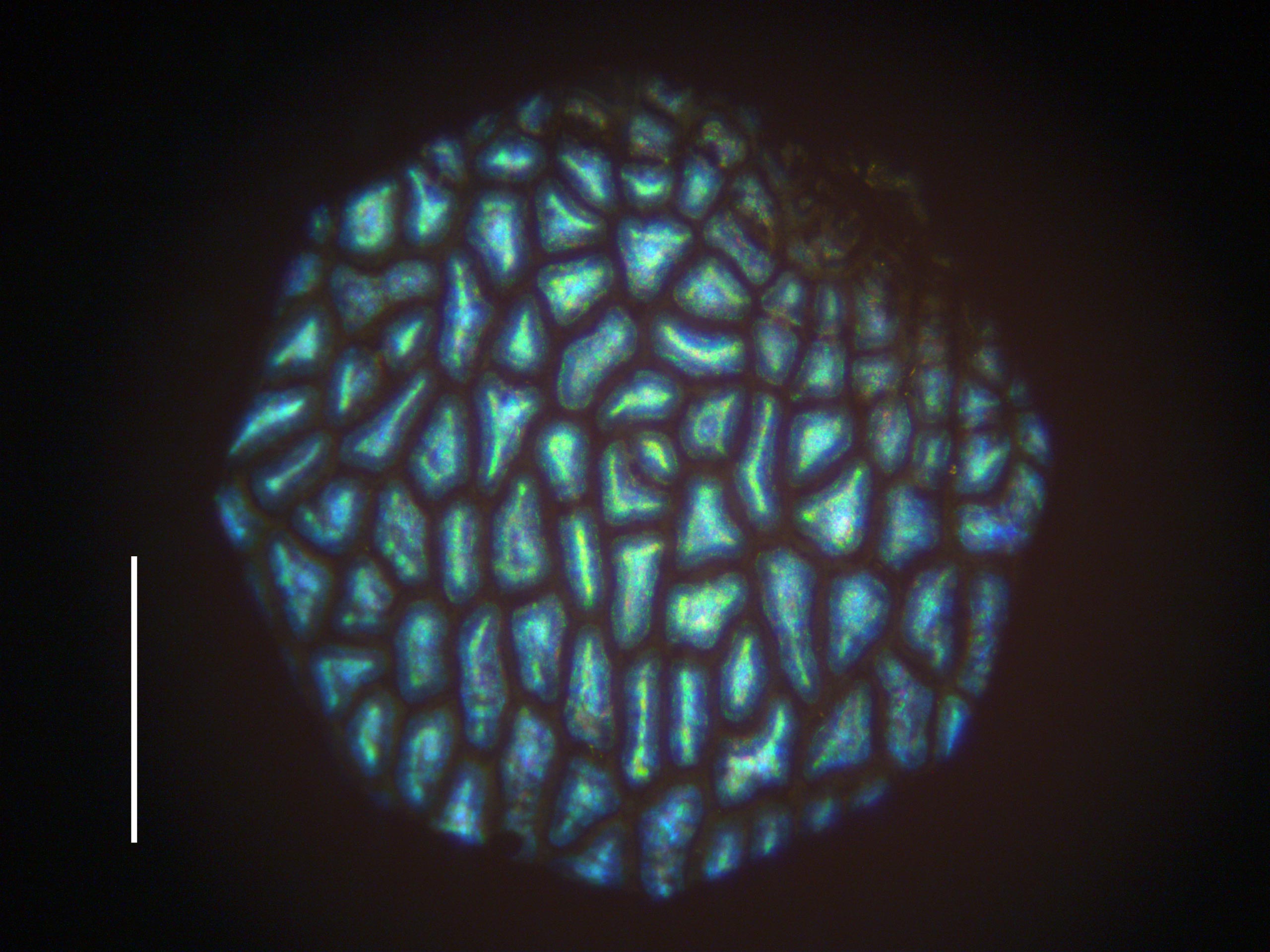
The researchers also used computer simulations to show that this type of structure can produce exactly the type of blue color seen in the fruit of Viburnum. Structural color is common in certain animals, especially birds, beetles, and butterflies, but only a handful of plant species have been found to have structurally colored fruits.
While most fruits have low-fat content, some — such as avocadoes, coconuts, and olives — do contain lipids, providing an important, energy-dense food source for animals. This is not a direct benefit to the plant, but it can increase seed dispersal by attracting birds.
The color of the Viburnum tinus fruits may also serve as a signal of its nutritional content: a bird could look at a fruit and know whether it is rich in fat or in carbohydrates based on whether or not it is blue. In other words, the blue color may serve as an ‘honest signal’ because the lipids produce both the signal (the color) and the reward (the nutrition).
“Honest signals are rare in fruits as far as we know,” said Sinnott-Armstrong. “If the structural color of Viburnum tinus fruits are in fact honest signals, it would be a really neat example where color and nutrition come at least in part from the same source: lipids embedded in the cell wall. We’ve never seen anything like that before, and it will be interesting to see whether other structurally colored fruits have similar nanostructures and similar nutritional content.”
One potential application for structural color is that it removes the need for unusual or damaging chemical pigments — color can instead be formed out of any material. “It’s exciting to see that principle in action — in this case the plant uses a potentially nutritious lipid to make a beautiful blue shimmer. It might inspire engineers to make double-use colors of our own,” said Vignolini.
Reference: “Viburnum tinus Fruits Use Lipids to Produce Metallic Blue Structural Color” by Rox Middleton, Miranda Sinnott-Armstrong, Yu Ogawa, Gianni Jacucci, Edwige Moyroud, Paula J. Rudall, Chrissie Prychid, Maria Conejero, Beverley J. Glover, Michael J. Donoghue and Silvia Vignolini, 6 August 2020, Current Biology.
DOI: 10.1016/j.cub.2020.07.005
The research was supported in part by the European Research Council, the EPSRC, the BBSRC and the NSF.
Never miss a breakthrough: Join the SciTechDaily newsletter.
Follow us on Google and Google News.