
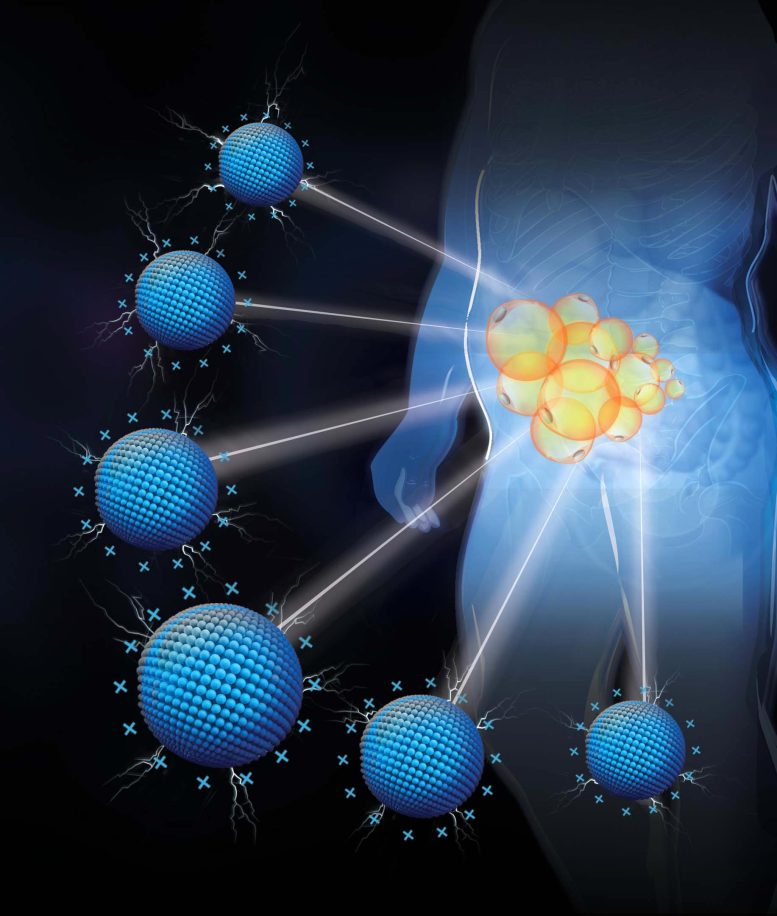
Positively Charged Nanomaterials Treat Obesity Anywhere You Want
Columbia University researchers discover that the cationic-charged P-G3 reduces fat at targeted locations by inhibiting the unhealthy lipid storage of enlarged fat cells.
For a long time, scientists have been working on how to treat obesity, a serious condition that can lead to diabetes, hypertension, chronic inflammation, and cardiovascular diseases. Studies have also revealed a strong correlation between obesity and cancer. In fact, recent data show that smoking, drinking alcohol, and obesity are the biggest contributors to cancer worldwide.
The development of fat cells, which are produced from a tiny fibroblast-like progenitor, not only activates the fat cells’ specific genes but also grows them by storing more lipids (adipocytes and adipose tissue). In fact, lipid storage is the defining function of a fat cell. But the storage of too much lipid can make fat cells unhealthy and lead to obesity.
Challenges in Targeting Fat Cells
For many people, the ability to target fat cells and safely uncouple unhealthy fat formation from healthy fat metabolism would be a dream come true. A major challenge in obesity treatment is that fat tissue is not continuous in the body but is found piece by piece in “depots.” Moreover, it has been difficult to target in a depot-specific manner, pinpointed at the exact location.
There are two main kinds of fat. Visceral fat is internal tissue that surrounds the stomach, liver, and intestines. Subcutaneous fat is found under the skin anywhere in the body. Visceral fat produces potbellies, while subcutaneous fat can create chin jowls, arm fat, etc. To date, there has been no way to specifically treat visceral adipose tissue. Additionally, current treatments for subcutaneous fat like liposuction are invasive and destructive.
New Studies Use Cationic Nanonmaterials To Target Fat
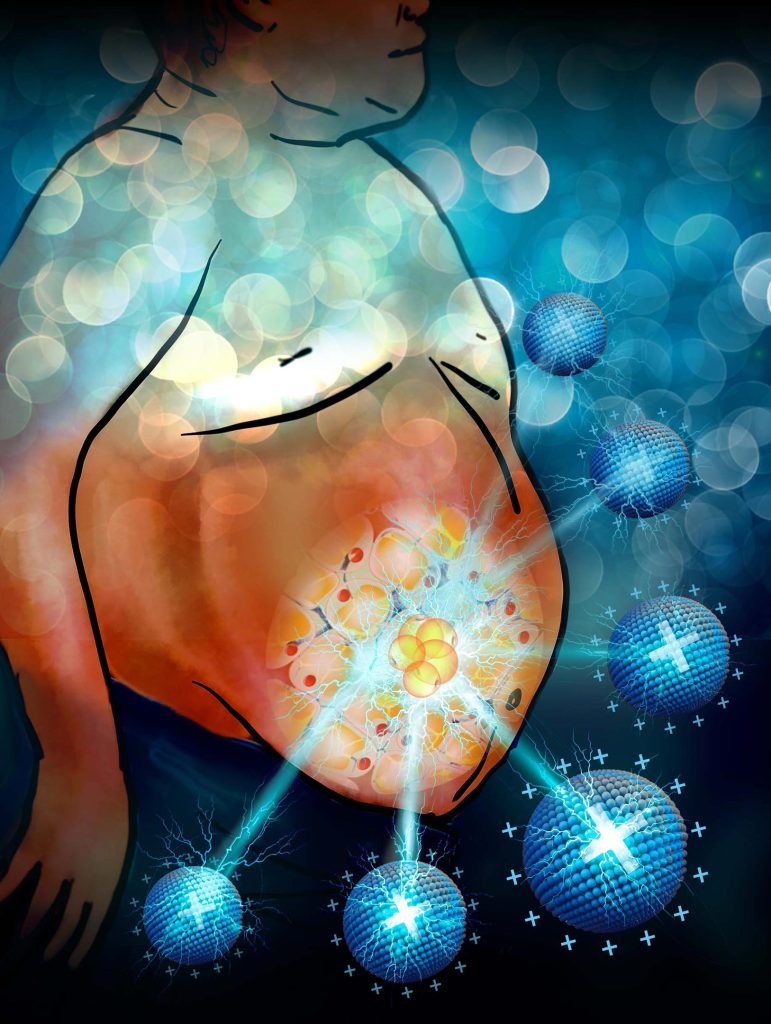
Two new studies from researchers at Columbia Engineering and Columbia University Irving Medical Center (CUIMC) may have the answer to targeting fat cells depot-specifically and healthily. The papers demonstrate a new method to treat obesity by using cationic nanomaterials that can target specific areas of fat and inhibit the unhealthy storage of enlarged fat cells. The materials remodel fat rather than destroying it, as, for example, liposuction does.
The first paper, which was published on December 1 in the journal Nature Nanotechnology, focuses on visceral adiposity, or belly fat. The second paper, published online on November 28 in the journal Biomaterials, focuses on fat underneath the skin as well as chronic inflammation associated with obesity.
The team of researchers, led by Li Qiang, associate professor of pathology and cell biology at CUIMC, and Kam Leong, Samuel Y. Sheng Professor of Biomedical Engineering and of systems biology at CUIMC, recognized that adipose tissue contains large amounts of negatively charged extracellular matrix (ECM) to hold fat cells. They thought that this negatively charged ECM network might provide a highway system of sorts for positively charged molecules. So they took a positively charged nanomaterial, PAMAM generation 3 (P-G3), and injected it into obese mice. The P-G3 quickly spread throughout the tissue and the team was excited that their method to specifically target visceral fat worked.
Unexpected Results
And then something intriguing happened: P-G3 shut off the lipid storage program in fat cells and the mice lost weight. This was totally unexpected, given the well-established function of P-G3 in neutralizing negatively charged pathogens, such as DNA/RNA cell debris, to alleviate inflammation.
“Our approach is unique—It departs from the pharmacological or surgical approaches,” says Qiang, who specializes in obesity and adipocyte biology. “We used cationic charge to rejuvenate healthy fat cells, a technique no one has ever used to treat obesity. I think this novel strategy will open the door to healthier and safer reduction of fat.”
P-G3 Helps New Fat Cell Formation and Also Inhibits the Unhealthy Lipid Storage of Enlarged Fat Cells
In these two studies, the researchers discovered that the cationic material, P-G3, could do an intriguing thing to fat cells—while it helped new fat cell formation, it also uncoupled lipid storage from the housekeeping functions of fat cells. And because it inhibits the unhealthy lipid storage of enlarged fat cells, the mice had more metabolically healthy, young, small fat cells like those found in newborns and athletes. The researchers found that this uncoupling function of P-G3 also holds true in human fat biopsies, signifying the potential of translation in humans.
“With P-G3, fat cells can still be fat cells, but they can’t grow up,” said Leong, a pioneer in using polycation to scavenge pathogens. “Our studies highlight an unexpected strategy to treat visceral adiposity and suggest a new direction of exploring cationic nanomaterials for treating metabolic diseases.”
New Applications for Drug Delivery, Gene Therapy, and Aesthetics
Now that they can selectively target visceral fat, Leong and Qiang envision several applications. The Biomaterials study demonstrates a simple approach that could be used for aesthetic purposes; like Botox, P-G3 can be locally injected into a specific, subcutaneous fat depot. The investigators, who have patents pending, are now engineering P-G3 into various derivatives to improve the efficacy, safety, and depot specificity.
What the researchers are particularly excited about is developing P-G3 into a platform that can deliver drugs and gene therapies specifically to a given fat depot. This may repurpose many drugs from systemic safety concerns, such as Thiazolidinediones (TZDs), a potent but unsafe drug that is a strong modulator of fat and used to treat type 2 diabetes—but it has been linked to heart failure and banned in several countries.
“We’re very excited to discover that cationic charge is the secret to targeting adipose tissue,” Qiang said. “Now we can shrink fat in a depot-specific manner—anywhere we want—and in a safe way without destroying fat cells. This is a major advance in treating obesity.”
References:
“Selective targeting of visceral adiposity by polycation nanomedicine” by Qianfen Wan, Baoding Huang, Tianyu Li, Yang Xiao, Ying He, Wen Du, Branden Z. Wang, Gregory F. Dakin, Michael Rosenbaum, Marcus D. Goncalves, Shuibing Chen, Kam W. Leong and Li Qiang, 1 December 2022, Nature Nanotechnology.
DOI: 10.1038/s41565-022-01249-3
“Polycationic PAMAM ameliorates obesity-associated chronic inflammation and focal adiposity” by Baoding Huang, Qianfen Wan, Tianyu Li, Lexiang Yu, Wen Du, Carmen Calhoun, Kam W. Leong and Li Qiang, 28 November 2022, Biomaterials.
DOI: 10.1016/j.biomaterials.2022.121850
Never miss a breakthrough: Join the SciTechDaily newsletter.
Follow us on Google and Google News.
10 Comments
I am interested in any Trials or Test Studies as a candidate.
Sounds dangerous, Botox will stop you from gaining wait my killing off your fat cells, I think this could cause serious health problems! Perhaps cancer
Despite their basic premise (“For a long time, scientists have been working on how to treat obesity, a serious condition that can lead to diabetes, hypertension, chronic inflammation, and cardiovascular diseases.”) being wrong perhaps (in the absence of more dangerous side effects) it can prove to be a valuable new way to treat morbidly obese people. However, with most obesity in persons of reasonable diet and lifestyle being a product of medically unrecognized, unresearched and undiagnosed allergy reactions aggravated with FDA approved ‘cultured-free’ MSG (minimally; others), prevention via affordable, convenient and reliable allergy testing and the reversal of a few FDA toxic food additive approvals would be vastly superior, in the long run.
Sign me up for trials!
I’m interested in the study
I find your research fascinating! Injecting into specific areas brings me to question once the cells have been transformed does the P-53 move throughout the body to find the next area? How do you manage the P-53 if it’s injected into several different areas? Does it all eventually find itself within the body or once it enters the lipoids does the body dispose of it?
I am interested in being in the first human trials.
I would be totally interested in any trials there are
I would be totally interested in any studies or trials that are being conducted.
I would love any information on upcoming clinical trials.